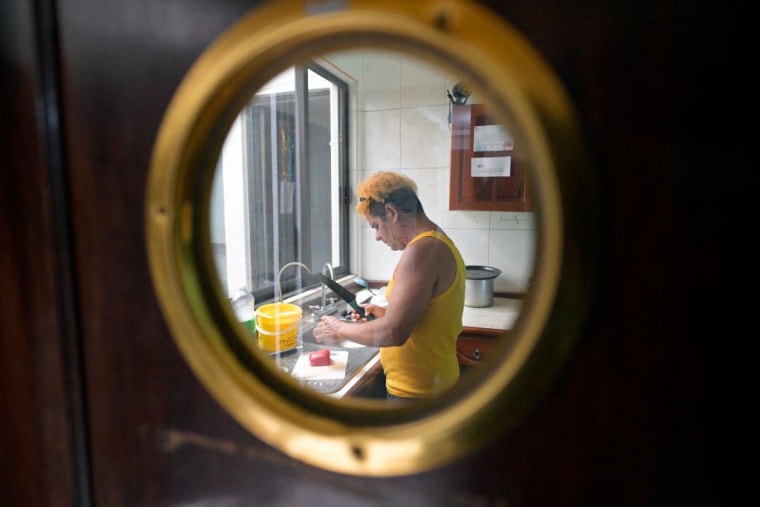
A Norwegian transgender politician, representing the Green Party (MDG), has advocated for transgender Americans to be granted asylum in Norway due to the anti-trans discrimination they are facing in the US.
Karina Ødegård, who is on track to becoming Norway’s first transgender member of parliament, has told Norwegian newspaper Afterposten that the challenges faced by trans people in the US are similar to the persecution experienced by marginalised groups in 1930s Germany.
Referring to the rise of fascism in Europe and the persecution of Jewish people and other minorities, she said: “What would we have done in the 1930s if we knew what was about to happen? That’s where we are now. Then we have to act,” she said.
Ødegård has said that in contrast to the US, the state and healthcare system in Norway helped her to be herself.
“One thing is that you see [in the US] the development of an illiberal democracy. I find that extremely problematic. Then it gets even worse because the Trump administration has singled out transgender people as scapegoats to be hanged and removed,” she explained.
This comes after President Trump signed a raft of executive orders targeting trans people, preventing them from serving in the military, banning trans women from participating in women’s sports, and requiring official documents to only list their gender registered at birth.
LGBTQ+ rights in Norway
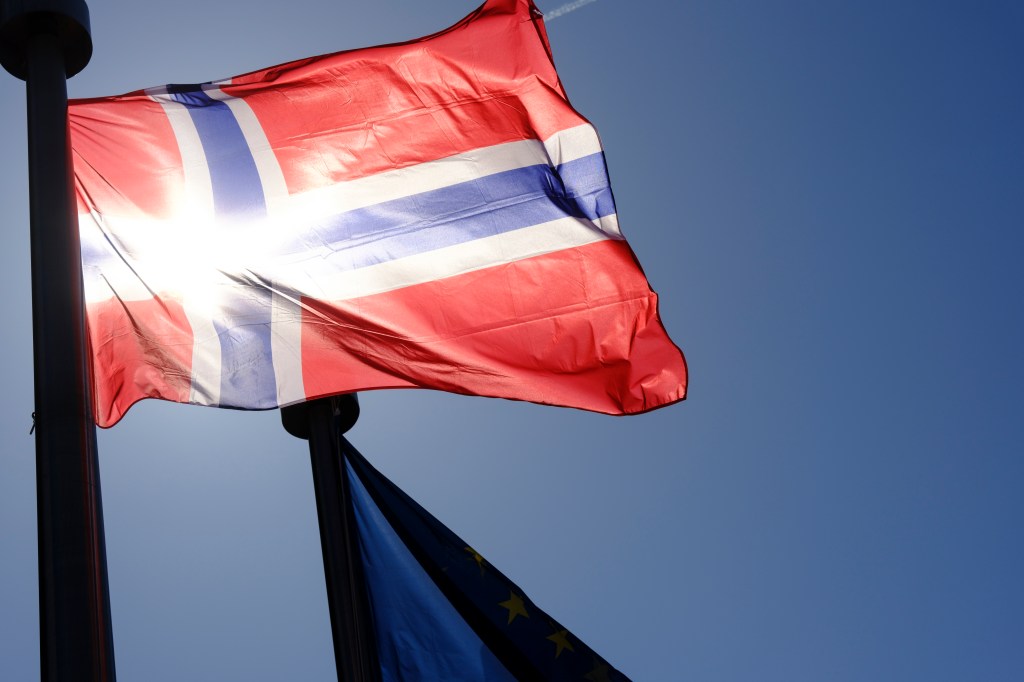
Norway is considered very safe for LGBTQ+ people. (Getty)
Norway is generally considered to be a very LGBTQ+ friendly country, as it was one of the first countries to pass an anti-discrimination law that explicitly included sexual orientation in 1981.
Also, same-sex marriage and adoption has been legal there since 2009.
Unfortunately, Norway doesn’t yet legally recognise non-binary identities, nor does it offer gender-affirming care for under-18s, stating a “lack of comprehensible research” despite the majority of Norwegian people believing that it should be accessible.
Norway has laws (The Tenancy Act, the Housing Association Act and the Residential Building Association Act) that all prohibit housing discrimination on the basis of sexual orientation. Married and committed same-sex couples are permitted to adopt under Norwegian law, and self-ID is also allowed: to change their gender, trans citizens only have to send a notification to the National Population Register.
Hungary’s parliament on Monday passed an amendment to the constitution that allows the government to ban public events by LGBTQ+ communities, a decision that legal scholars and critics call another step toward authoritarianism by the populist government.
The amendment, which required a two-thirds vote, passed along party lines with 140 votes for and 21 against. It was proposed by the ruling Fidesz-KDNP coalition led by populist Prime Minister Viktor Orbán.
Ahead of the vote — the final step for the amendment — opposition politicians and other protesters attempted to blockade the entrance to a parliament parking garage. Police physically removed demonstrators, who had used zip ties to bind themselves together.
The amendment declares that children’s rights to moral, physical and spiritual development supersede any right other than the right to life, including that to peacefully assemble. Hungary’s contentious “child protection” legislationprohibits the “depiction or promotion” of homosexuality to minors aged under 18.
That law also allows authorities to use facial recognition tools to identify people who attend prohibited events — such as Budapest Pride — and can come with fines of up to 200,000 Hungarian forints ($546).
Dávid Bedő, a lawmaker with the opposition Momentum party who participated in the attempted blockade, said before the vote that Orbán and Fidesz for the past 15 years “have been dismantling democracy and the rule of law, and in the past two or three months, we see that this process has been sped up.”
He said as elections approach in 2026 and Orbán’s party lags in the polls behind a popular new challenger from the opposition, “they will do everything in their power to stay in power.”
Opposition lawmakers used air horns to disrupt the vote, which continued after a few moments.
Hungary’s government has campaigned against LGBTQ+ communities in recent years, and argues its “child protection” policies, which forbid the availability to minors of any material that mentions homosexuality, are needed to protect children from what it calls “woke ideology” and “gender madness.”
Critics say the measures do little to protect children and are being used to distract from more serious problems facing the country and mobilize Orbán’s right-wing base ahead of elections.
“This whole endeavor which we see launched by the government, it has nothing to do with children’s rights,” said Dánel Döbrentey, a lawyer with the Hungarian Civil Liberties Union, calling it “pure propaganda.”
Constitution recognizes two sexes
The new amendment also states that the constitution recognizes two sexes, male and female, an expansion of an earlier amendment that prohibits same-sex adoption by stating that a mother is a woman and a father is a man.
The declaration provides a constitutional basis for denying the gender identities of transgender people, as well as ignoring the existence of intersex individualswho are born with sexual characteristics that do not align with binary conceptions of male and female.
In a statement on Monday, government spokesperson Zoltán Kovács wrote that the change is “not an attack on individual self-expression, but a clarification that legal norms are based on biological reality.”
Döbrentey, the lawyer, said it was “a clear message” for transgender and intersex people: “It is definitely and purely and strictly about humiliating people and excluding them, not just from the national community, but even from the community of human beings.”
The amendment is the 15th to Hungary’s constitution since Orbán’s party unilaterally authored and approved it in 2011.
Facial recognition to identify demonstrators
Ádám Remport, a lawyer with the HCLU, said that while Hungary has used facial recognition tools since 2015 to assist police in criminal investigations and finding missing persons, the recent law banning Pride allows the technology to be used in a much broader and problematic manner. That includes for monitoring and deterring political protests.
“One of the most fundamental problems is its invasiveness, just the sheer scale of the intrusion that happens when you apply mass surveillance to a crowd,” Remport said.
“More salient in this case is the effect on the freedom of assembly, specifically the chilling effect that arises when people are scared to go out and show their political or ideological beliefs for fear of being persecuted,” he added.
Suspension of citizenship
The amendment passed Monday also allows for Hungarians who hold dual citizenship in a non-European Economic Area country to have their citizenship suspended for up to 10 years if they are deemed to pose a threat to public order, public security or national security.
Hungary has taken steps in recent months to protect its national sovereignty from what it claims are foreign efforts to influence its politics or even topple Orbán’s government.
The self-described “illiberal” leader has accelerated his longstanding efforts to crack down on critics such as media outlets and groups devoted to civil rights and anti-corruption, which he says have undermined Hungary’s sovereignty by receiving financial assistance from international donors.
In a speech laden with conspiracy theories in March, Orbán compared people who work for such groups to insects, and pledged to “eliminate the entire shadow army” of foreign-funded “politicians, judges, journalists, pseudo-NGOs and political activists.”
March 31 marks the International Day of Transgender Visibility, a moment to celebrate the achievements and resilience of trans people around the world, while acknowledging the ongoing challenges they face in enjoying the full range of their human rights.
Today, Human Rights Watch is publishing a map that tracks some of these gains in Mexico, and highlights areas where there is still work to be done. The map shows that 22 out of Mexico’s 32 states have legislated to create an administrative procedure for legal gender recognition for trans people. This allows them to modify their identity documents to accurately reflect their gender identity.
The recognition of one’s gender identity is a human right. Without it, for many trans people, any request for documents is fraught with the potential for discrimination, violence, and humiliation. Human Rights Watch has documented such violations in schools, medical clinics, and the labor market in the Mexican states of Guanajuato and Tabasco.
In Mexico, the judiciary has played a crucial role in recognizing this right. In a landmark ruling in 2019, the Supreme Court laid out clear guidelines to states on legal gender recognition. The court extendedthis right to all children in 2022. The Inter-American Court of Human Rights also found that states have an obligation to guarantee a simple and accessible procedure for trans people, including children, to have their gender legally recognized.
In Mexico, states have the authority to determine their laws in civil, family, and registration matters, which include implementing reforms for gender recognition. But in some states, political inaction has hindered progress. Eight states in Mexico have no procedure for gender recognition. Two others have procedures in practice, but not yet enshrined in law.
Even in states with gender recognition, more needs to be done. Only seven states extend legal gender recognition to children. Only three have explicitly recognized non-binary identities in their legislation.
Decision-makers in all remaining Mexican states should create legal gender recognition procedures so that trans people can enjoy their full human rights. Mexico has a real opportunity to serve as a model of progress and inclusion in this challenging landscape for the LGBT rights movement.
The organizers of WorldPride in Washington, D.C., may issue a warning to transgender people from other countries about traveling to the capital for the event as the Trump administration targets the trans community with policies like the military ban on transgender servicemembers and requiring passports to match a person’s sex at birth.
“It’s possible that we may actually issue a statement telling trans folks internationally not to come, or if they come, they come at their own risk,” Capital Pride Alliance Executive Director Ryan Bos said.
The Trump administration said it only recognizes two unchangeable sexes: male and female.
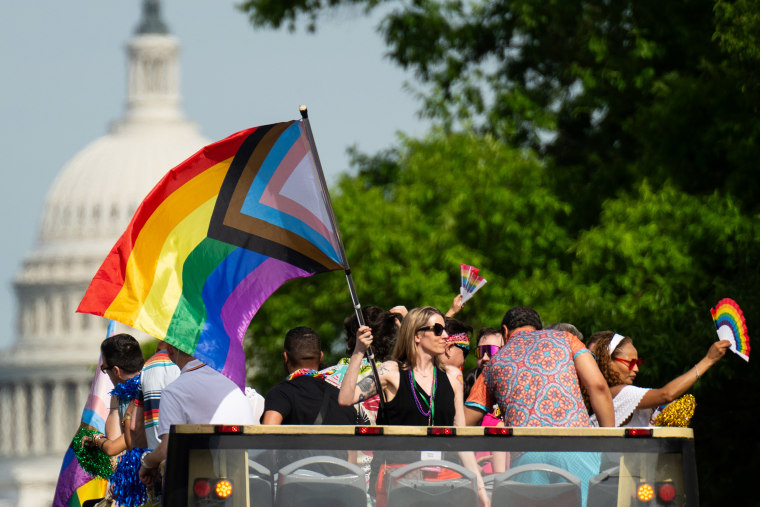
Pride in Washington, D.C., on June 8, 2024. Bill Clark / CQ-Roll Call, Inc via Getty Images file
“This is something that my community faces every day, is worrying whether or not this space is gonna be safe for them,” Advocates for Trans Equality Senior National Organizer Devon Ojeda said.
Ojeda said he and his trans friends often worry about being targeted or harassed, and he understands if people decide not to attend WorldPride out of safety concerns. But, he added, it’s also important for the community to come together.
“I also am in the mindset of always continuing to be in these spaces — to say I am trans, I am visible. You’re not going to take that away from me,” he said.
Organizers of this year’s WorldPride — an international celebration that is held in a new location about every two years — expect about 2 million people to attend this year’s event in D.C., which will run from May 17 to June 8.
Extensive safety measures for the event include fencing, security checks, police officers and web surveillance to monitor for online threats.
Russia’s General Prosecutor on Thursday banned the Elton John AIDS Foundation from operating in the country, claiming it’s part of an effort “by the ‘collective West’ to discredit traditional values and escalate social tensions” in Russia.
The ban stopped short of deeming the foundation an “extremist” group under the umbrella of a 2023 order by Russia’s Supreme Court designating the so-called “international LGBT social movement” as an “extremist organization.”
That declaration paved the way for increased persecution of LGBTQ+ activists throughout the country and abroad, adding to “gay propaganda” laws that were already erasing LGBTQ+ identity from public life in Russia.
The Elton John AIDS Foundation is registered in both the U.S. and Britain as non-governmental organizations. Both NGOs are now officially designated as “undesirable organizations” in Russia. The designation exposes foundation staff and partners to potential criminal prosecution.
John established his namesake foundation in 1992 to increase access to health care related to HIV/AIDS and address anti-LGBTQ+ stigma associated with the disease. The foundation has raised more than $600 million to support over 3,100 projects in 95 countries, including Russia.
According to Rospotrebnadzor, the Russian federal agency for public health and consumer rights, more than 1.2 million people in the country carry the HIV virus, the highest per capita rate in Europe.
John has a large fan base in Russia, where he’s performed multiple sold-out concerts. He’s also been outspoken about what he calls unacceptable discrimination against gay people by Russian authorities.
In 2014, John published an open letter condemning Russia’s “gay propaganda” law, enacted the year before and expanded in successive legislation.
“When a musician plays along with the promoters of democracy, you get propaganda,” the General Prosecutor’s office said in an overtly political statement announcing the ban of the NGOs, posted to its official Telegram channel and reported by Reuters. “And if Elton John is at the piano, it is not just anti-Russian propaganda.”
In a separate statement on its website, the prosecutor’s office pointed to the foundation’s promotion of “non-traditional sexual relationships, Western family models, and gender reassignment.”
The statement also accused the foundation of taking part in what it called a coordinated Western campaign to “denigrate Russia” over its war in Ukraine, referred to by its official designation as a “special military operation.”
President Vladimir Putin has portrayed the battles against both Ukraine and the “international LGBT social movement” as twin fronts in an existential struggle with a decadent West.
LGBTQ+ activists Maeve Alcina Pieescu and Maryam Ravish were arrested by the Taliban last month while trying to flee Afghanistan. According to the U.K.-based human rights non-profit the Peter Tatchell Foundation, the two women face possible torture and execution.
“They are expected to be tortured to reveal the names of other LGBTs and sentenced to a long jail term or possibly executed,” said Nemat Sadat, CEO of Afghan LGBT+ network Roshaniya, which is working with the foundation to press for the two women’s release.
In a March 31 press release, the Peter Tatchell Foundation said that 19-year-old Ravish and 23-year-old Pieescu, who is trans, had planned to board a flight from Kabul to Iran with Ravish’s 20-year-old partner Parwen Hussaini on March 20.
“When Maryam and Maeve went to board the plane, they were detained by the Taliban’s intelligence unit who searched their phones and discovered LGBT+ content,” Sadat said. “Maeve and Maryam were beaten by the Taliban.”
According to Sadat, Ravish’s family had forced her to marry a man. Pieescu had been trying to help her escape the country “at great personal risk.”
Hussaini, a Roshaniya member, was able to board the flight in Iran as of March 31. She later recorded a video in which she said that since Pieescu’s and Ravish’s arrest, both her own and Ravish’s family have threatened her life. She also said that Pieescu’s family in Afghanistan has “dismissed” Roshaniya’s offer to work with them to secure her release.
However, Pieescu’s Michigan-based sister, Susan Battaglia, provided a statement to the Peter Tatchell Foundation saying that she is “distraught” over her sister’s imprisonment.
“My family in Afghanistan is very anxious about Maeve being tortured and killed,” Battaglia said. “During the Taliban’s interrogation, Maeve confessed that she is not a Muslim and doesn’t believe in Islam. This is scary for our family since the penalty for apostasy — under Sharia law — is death. We ask from [sic] the world governments to demand that Maeve be released from prison and safely leave the country.”
Hussaini said that while she has had no word from Ravish and does not know “what situation they are in now,” it is possible that the two women have been put in solitary confinement and could be sentenced to death by stoning.
The Taliban returned to power following the U.S. military withdrawal from Afghanistan in 2021, instituting an immediate return to its interpretation of Sharia law. As Sadat noted, under Taliban rule, homosexuality is forbidden and women are required to have a male chaperone if they wish to leave their homes.
In October 2023, Afghan LGBTQ+ rights group Rainbow Afghanistan detailed the harrowing abuses queer people in the country have faced since 2021. In an open letter, the group said that LGBTQ+ Afghans had been tortured, stoned to death, sexually assaulted, and forced into heterosexual marriages, among other atrocities, while “a large number of members of the LGBT community lost their lives due to suicide.” The group called on the United Nations and international human rights organizations to act.
Hussaini described the threat that she, Pieescu, and Ravish face from the Taliban and their own relatives as “existential.”
“We ask human rights organizations and international LGBT+ organizations that work towards helping LGBT+ people to please work with us to pursue our freedom and save our loved ones from harm’s way,” she said.
Sadat, similarly, called on Human Rights Watch, Amnesty International, OutRight International, ILGA Asia, Stonewall, Rainbow Railroad, and the Human Rights Campaign to “spread the word about the arrest of Mariam and Maeve and pressure the Taliban regime to release these two brave LGBT+ Afghan human rights defenders.”
Trinidad and Tobago has reinstated its ban on homosexuality, which was lifted by the Caribbean nation’s High Court in 2018.
That year, the High Court in the Christian-majority nation ruled in a lawsuit brought by LGBTQ+ activist Jason Jones that Sections 13 and 16 of the Sexual Offenses Act are “irrational and illegal” because they violate the rights to privacy and freedom of expression.
“What I think the judge pointed out was ‘here every creed and race find an equal place,’ and I think we must all come together now and embrace each other in true love and respect,” Jones said at the time.
But on March 25, the Court of Appeals reversed that decision, saying that only Parliament can overturn the country’s ban on homosexuality. The Court of Appeals also reduced the maximum sentence associated with homosexuality to five years in prison. Prior to 2018, the maximum penalty was 25 years in prison.
“Judges cannot change the law,” Tuesday’s ruling states. “We give effect to Parliament’s intention…. It is, therefore, left to Parliament to repeal the criminalization of buggery and the related offense of gross indecency by legislation. It is an emotive issue which engages vibrant discussion in the court of public opinion.”
“Parliament is ultimately responsible for ensuring that laws reflect the evolving standards of a democratic society. That is their role and function. Any provisions found to be unconstitutional must be taken from the statute books by Parliament through legislative reform and not by judicial overreach.”
Jones spoke out against the Court of Appeals decision.
“We are talking about the rights of some 100,000 LGBTQIA+ citizens in [Trinidad and Tobago],” he told Trinidad and Tobago Newsday. “Why are we spending all this money and retaining these laws?”
“The modernization of our democracy is at stake here, and this is the beginning of this modernization.”
In the original 2018 case, religious conservatives argued that God’s wrath would be visited on Trinidad and Tobago if the anti-homosexuality laws were overturned. Conservatives argued that legalizing homosexuality would violate their religious beliefs.
The judge said the ruling “is not an assessment or denial of the religious beliefs of anyone.”
Christian conservatives also told the press that they’re worried about “homosexual rights trumping heterosexual rights.”
Each year, Rainbow Railroad receives more than ten thousand requests for help from LGBTQI+ individuals facing violence and persecution worldwide. These firsthand accounts provide unparalleled insight into the urgent realities of forced displacement and the systemic barriers preventing LGBTQI+ persons from accessing safety.
Our unique data not only informs direct interventions but also strengthens global advocacy. By analyzing trends in displacement, resettlement, and protection gaps, we advance policy solutions that challenge discriminatory asylum systems, push for inclusive refugee protections, and hold governments accountable.
At a time when anti-LGBTQI+ laws are intensifying and asylum pathways are shrinking, our work underscores a critical truth: the protection of LGBTQI+ refugees is a matter of fundamental human rights. The following policy recommendations outline urgent actions that states, international organizations, and multilateral bodies must take to ensure that LGBTQI+ forcibly displaced persons are not left behind.
Recommendations for states, international organizations, and multilateral bodies:
Strengthen partnerships with LGBTQI+ civil society by funding and supporting organizations with direct access to LGBTQI+ FDPs to enhance protection, service provision, and advocacy efforts.
Establish and expand dedicated LGBTQI+-specific resettlement pathways, including government-assisted and private sponsorship programs, to ensure sustainable and long-term protection solutions.
Develop targeted resettlement pathways for LGBTQI+ internally displaced persons (IDPs), recognizing that many remain at extreme risk within their countries of origin and require urgent solutions.
Implement flexible protection pathways for LGBTQI+ Human Rights Defenders (HRDs), offering both short-term emergency relocation and long-term resettlement options based on individual protection needs.
Hold states accountable for failing to meet international resettlement commitments and for undermining access to asylum, including through carrier sanctions and externalized border enforcement measures that disproportionately impact LGBTQI+ asylum seekers.
Increase funding for LGBTQI+ civil society organizations and regional networks to strengthen in-transit support systems and develop durable South-South resettlement pathways.
Appoint and empower Special Envoys on LGBTQI+ issues within key states and multilateral bodies to coordinate international responses to LGBTQI+ forced displacement.
Strengthen crisis response mechanisms by integrating LGBTQI+ protection into broader humanitarian frameworks, ensuring that LGBTQI+ FDPs are not overlooked in emergency response planning.
Expand multilateral coordination efforts, including investing in mechanisms such as the Queer Forced Displacement Initiative (QFDI), to enhance knowledge-sharing, capacity-building, and policy development across international actors.
Ana Esquivel no longer feels like her heart stops every time she sees a police officer.
“We’ve been told that they won’t harass or mistreat us here, but back home, if a male name is spotted on your ID, you could spend the night detained,” said the 50-year-old transgender woman. She fled Cuba fearing for her safety and arrived in Mexico earlier this year.
Esquivel settled in the southern city of Tapachula, hoping to dodge the Trump’s administration crackdown on migration and reach the United States. But unlike many who turned back after their Border Patrol appointments got canceled, returning home is not an option for LGBTQ migrants.
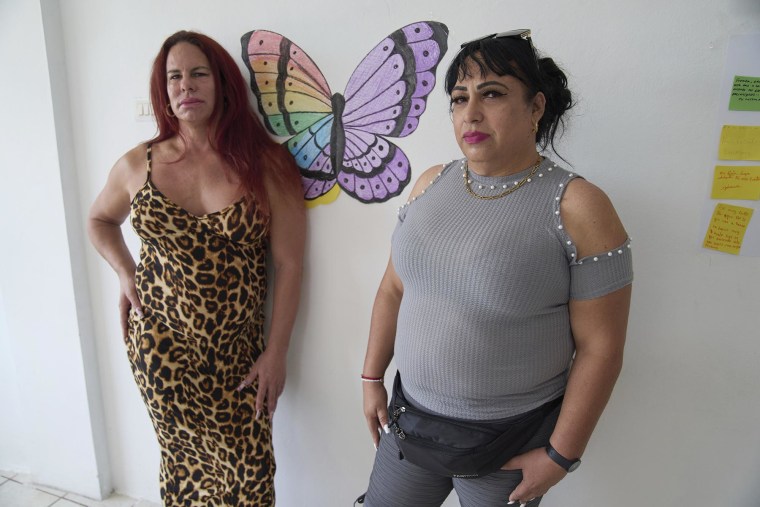
Transgender women Rachel Perez, left, and Ana Esquivel, who applied for asylum in Mexico, at Casa Frida.Moises Castillo / AP
“The LGBT population doesn’t necessarily leave their countries for the same reasons as others,” said Mariana de la Cruz, operations director at Casa Frida, a shelter that supports LGBTQ migrants and lost 60% of its funds after President Donald Trump ordered the suspension of foreign assistance programs in January.
“They leave due to discrimination and violence based on their gender identity,” de la Cruz said. “Beyond economic reasons or the American Dream, they leave because they need to survive.”
The flux of migrants at the Southern Mexican border with Guatemala dipped after Trump announced plans to restrict refugees and asylum seekers, contending he wants to stop illegal entry and border crime. The Mexican Commission for Refugee Aid in Tapachula has not updated its public data since December 2024, but the transformation is clear.
Hundreds of migrants no longer flood a public square, waiting for a response to their refugee applications. And though lines still form around the commission’s headquarters, locals say the crowds are smaller.
At a nearby Catholic shelter, administrator Herber Bermúdez said they have hosted up to 1,700 migrants at a time, but it’s closer to 300 with the shutdown of CBP One, the U.S. border app that facilitated legal entry into the country.
“The change was substantial,” Bermúdez said. “By Jan. 20, we had around 1,200 people, but as the app stopped working, people started heading back to their countries.”
In contrast, help requests addressed to Casa Frida have not dropped.
“All of the people we support were victims of violence,” said Sebastián Rodríguez, who works at the shelter. “They can’t go back.”
In Tapachula since 2022, Casa Frida staff review on average 80 applications per month, assessing the most at-risk. According to Rodríguez, nonbinary and transgender migrants are frequently vulnerable to attacks.
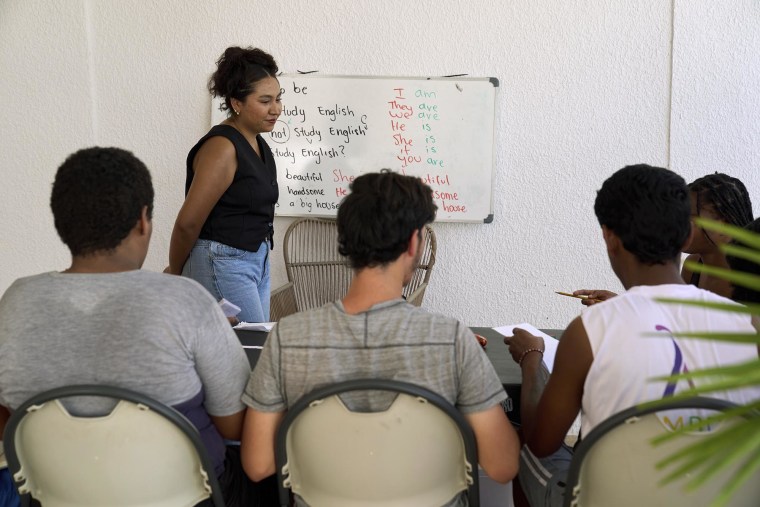
Itzel Aguilar teaches English to migrants at Casa Frida in Tapachula.Moises Castillo / AP
The shelter doesn’t have enough resources to help everyone, but they bring on about 70 new people monthly and can support up to 200 LGBTQ people at any given time.
Several migrants recently told The Associated Press they were kidnapped by cartel members as they set foot in Mexico and had to give up their possessions to be released.
LGBTQ people face more violence, Rodríguez said. Transgender women often dress as men to avoid mockery and being spotted by criminals. If they are spared and reach a shelter, staff assign them to male dorms. If they leave and try to rent a room elsewhere, landlords seem unhospitable or demand unthinkable fees.
“That’s why programs like ours are needed,” Rodríguez said.
According to the shelter, about 40% of its population was affected by the end of CBP One app and the mass cancellation of appointments.
“Some people feel discouraged and hopeless,” Rodríguez said. “But many have applied for asylum in Mexico.”
Among its services, Casa Frida can provide a roof and meals for up to 12 people for three months. The organization’s other programs can help several more migrants by providing legal guidance on remaining in Mexico, advice on finding temporary jobs with inclusive environments, psychological counseling and tips for renting apartments under fair conditions.
“Most people just think of us as a shelter, but providing refuge is only the core of what we do,” Rodríguez said. “Our goal is to reintegrate violence victims into society.”
The shelter operates in three locations: Mexico City, where it was founded in 2020 and mostly supports locals; Tapachula, which mainly receives migrants from Cuba, Honduras, Venezuela, El Salvador, Perú and Haiti; and Monterrey, where those at grave risk are transferred to be safe at an undisclosed address.
Cuban Rasiel Elias Fernandez cooks at Casa Frida in Mexico City last year.Alfredo Estrella / AFP via Getty Images
Manuel Jiménez, 21, was welcomed at the Mexico City station in February. He arrived from a state near the capital when harassment by family members became unbearable.
Jiménez initially hoped to reach the U.S. and he traveled north in November 2024. All went well until border patrol officers detained him in Arizona and he was deported. But it was dangerous for him to stay in his hometown.
“Someone told me about this shelter because I wanted to find a place where I could feel at peace,” said Jiménez, who identifies as bisexual. “Back home, there were people who wanted to hurt me, verbally and physically.”
Now living at Casa Frida, he started working at a nearby restaurant and hopes to save money that will enable him to find a home of his own.
Back in Tapachula, Esquivel applied for Mexican refugee status. Around 85% of Casa Frida’s migrants get a positive response, so she’s optimistic. Maybe one day, she hopes, she could go back to school, land a job and relocate.
“I want to stay here and become part of this country,” Esquivel said. “I want to do it the right way and I’m grateful to Casa Frida for helping me get there.”
She learned about the shelter from another trans woman who also fled Cuba after feeling threatened by police.
“I was nearly arrested,” said Rachel Pérez, 51. “In Cuba, we are discriminated and persecuted. We leave in search for a better life.”
According to Esquivel, she was accused of prostitution — which is not illegal under Cuban law — for repeatedly walking alone at night. Police warned her a few times, but she kept going out until she was detained and transferred to a male prison.
“I was raped there,” said Esquivel, who remained imprisoned for a year. “I was only 21 and the inmates abused me. Within time, I learned how to defend myself, but those were very difficult times I won’t forget.”
Staff at Casa Frida constantly updates their protocols to help migrants like Esquivel. But keeping operations running has proved challenging due to the U.S. aid cuts. According to De la Cruz, worrisome notifications popped by Jan. 24, and a few weeks later, 60% of their budget was gone.
“We’ve been looking everywhere to find new sustainability alternatives,” she said. “We are part of a network focused on LGBT mobility in Latin America and the Caribbean — 13 organizations in 10 countries — and at least 50% of them took a hit.”
Funding campaigns and ongoing meetings with European and local leaders might bring a solution, but concerns haven’t ceased and the team could significantly diminish its operations.
“Nothing is written in stone and we don’t know what could happen next,” De la Cruz said.
A new study has shown that a number of terrorist groups are targeting LGBTQ+ communities.
The research, published in PS: Political Science & Politics, and led by extremism expert Dr Jared Dmello from the University of Adelaide’s School of Social Sciences, showed that extremist groups with contrasting ideologies overlapped in their hatred of LGBTQ+ people.
“We found a wide variety of extremist groups, which on the surface have nothing in common, are actually engaging in similar attacks on the same marginalised communities, Dmello was quoted as saying by Cosmos magazine.
“Both Islamic extremist groups and far-right terrorist groups actively target the queer community through propaganda and violence.
‘Similar tactics and propaganda used to justify attacks’
“It was quite surprising to me just how much the far-right and Islamic extremists are engaging in similar tactics, messaging and propaganda to justify their attacks against the LGBTQ+ community.
“Sadly, this reflects broader political movements around the world that also target the human rights of this increasingly vulnerable population.”
Talking about the study, he said: “The article even features propaganda created by the Russian government, claiming that NATO-trained mosquitoes in Ukrainian labs were designed to spread a ‘gay virus’ that would selectively infect only ethnic Russians.
“In response, some Russian supermarkets now sell a specialised mosquito repellent designed to protect against this so-called gay virus.”
In light of the findings, Dmello, who was aided in the research by professor Mia Bloom and Dr Sophia Moskalenko, called for further investigation into extremist narratives.
You may like to watch
In 2023, the Department of Homeland Security (DHS) warned that the LGBTQ+ community in the US would be at risk of attacks during the 2024 US presidential campaign.