Five men in Malaysia have been jailed, fined and caned for attempting homosexual sex in the Muslim-majority country.
Selangor Shariah High Court near Kuala Lumpur sentenced four of the men to six months in jail and six strokes of the cane as well as fines of RM4,800, local newspaper Harian Metro reported.
Their crime: “Attempting intercourse against the order of nature.”
A fifth man was sentenced to seven months jail, six strokes of the cane and a RM4,900 fine for the same offence, although it’s not clear why he was singled out for harsher punishment.
Homosexuality and all same-sex sexual acts are illegal in Malaysia and carry prison sentences of up to 20 years, although convictions are usually rare.
The five men were detained along with seven others by Islamic enforcement officers during a November 2018 raid on a two-storey apartment.
“The facts show that there was an attempt to carry out intercourse outside of the order of nature and that it was not in the early stages of preparation,” said judge Mohamad Asri Mohamad Tahir, reported by Reuters.
Police block Malaysian Muslim students as they protest against a performance of the openly gay US singer Adam Lambert in Bukit Jalil, outside Kuala Lumpur (AFP/Getty)
LGBT+ rights in Malaysia.
Homosexuality is doubly illegal in Malaysia as it is banned by the country’s secular, colonial-era legal code, as well as its special Islamic courts.
The Human Rights Watch says discrimination against LGBT+ people in the country is “pervasive”, and the capital, Kuala Lumpur, was recently ranked as one of the top 10 worst cities in the world to be LGBT+.
In 1994 the Malaysian government banned all LGBT+ people from appearing in the state-controlled media. Later in 2010 the Film Censorship Board of Malaysia announced it would allow depiction of homosexual characters, but only as long as the characters “repent” or die.
The Malaysian prime minister has repeatedly rejected the notion of LGBT+ rights, dismissing it as “Western values” and comparing LGBT+ acceptance to “walk[ing] around naked”.
The government currently runs a gay ‘rehabilitation programme’ and last year claimed it had ‘cured’ 1,450 people of homosexuality.
In less than three days a protest organized by students against the increase in subway fares turned into an imposing and unexpected national protest over years of inequalities in Chile that completely paralyzed the country and put the entire Chilean political class on notice. Millions of people have taken to the streets over the last few days to demonstrate their discontent.
Some of the massive marches have nevertheless ended with protesters attacking businesses, torching and looting supermarkets in the worst unrest the country has seen in decades. Chilean President Sebastián Piñera declared a state of emergency, deployed soldiers to the streets and imposed a curfew that deepened the conflict by unleashing the worst cases of human rights violations in the last 30 years in the Latin American country. A group of lawmakers have announced a constitutional complaint against Piñera.
“These weeks have been a time bomb that we all knew was going to explode, but we did not know that it would explode now and with such intensity,” said Alessia Injoque, executive president of Fundación Iguales, a Chilean LGBTQ organization. Franco Fuica, legislation and public policy coordinator of Organizando Trans Diversidades (OTD), a trans advocacy group, has a similar opinion.
“We are living a social revolution,” he affirmed.
The crisis in Chile has been brewing for a long time. Dictator Augusto Pinochet in 1973 staged a coup to topple Salvador Allende, Latin America’s first democratically elected Socialist president. Pinochet reversed Allende’s model and began to implement a diametrically opposed economic formula. The country became a sort of neoliberal laboratory and a cruel dictatorship that persecuted, tortured and killed its opponents.
A group of liberal economists who were educated at the University of Chicago, where they learned the ideas of Americans Milton Friedman and Arnold Harberger, who were known as the “Chicago boys,” led Pinochet’s economic changes. They implemented economic and social reforms that privatized everything, and were enshrined in Chile’s 1980 constitution that was adopted in 1980 and remains in place.
Chile is the only country in the world where water is privatized, retirement pensions are low, health is bad and the majority of households have difficulties making ends meet at the end of the month. A report the U.N. Economic Commission of Latin America and the Caribbean (ECLAC) published in January that analyzed the evolution of poverty, spending and social inclusion revealed Chile continues to maintain its high rates of inequality. “1 percent of the population holds 26.5 percent of wealth,” the investigation concludes.
“We have been in an unfair system for years, where everything is done to ensure the same people always win. Beyond that injustice, there was impunity where nothing happened to people who caused a lot of damage that runs from pain to frustration. The government was indolent and everything came to a head,” said Injoque. The trans activist said they were truly afraid.
“I had chills when I found out that soldiers were out on the streets,” they said.
“Piñera declared war against my grandchildren on national television, deployed the army to shoot and kill them for peacefully protesting (against) their enormous suffering and the people realize there is complicity there and I hear another loud clamor: ‘Resign Piñera,’” Pamela Jiles of the Frente Amplio, a new political force in the Chilean Congress who has lead the impeachment movement, told the Washington Blade.
“My duty as a lawmaker is to constitutionally accuse Piñera, as Humanist Congresswoman Laura Rodríguez would have done, using a parliamentary procedure and a constitutional provision, to turn my back to the elite and face the people,” Jiles explained. “It cannot be anything else because he has already seriously jeopardized the nation’s security, has plunged the country into misgovernment and is the main — although not the only — person responsible for the deaths of those they should have protected.”
Brutal cases of human rights violations allegedly committed by the Chilean armed forces have been reported since the onset of this social revolution. Repression, abuse of power, indiscriminate violence, illegal detentions and deaths prompted U.N. High Commissioner for Human Rights Michelle Bachelet, who is Chile’s former president, to decide to send a team of observers to verify the cases, which include a young gay man who was illegally detained, tortured and sexually abused by the police.
Josué Maureira, a medical student at the Pontifical Catholic University of Chile who was arrested while bringing first aid to injured protesters, claims he was beaten until he was unconscious, mistreated because of his sexual orientation and gender identity, beaten again until his septum was broken, violated with a baton, threatened with death and jailed because of alleged attacks against police officers. The National Human Rights Institution has filed a sexual torture complaint.
“The states of emergency authorize the restriction of free movement, but not attempts to take people’s lives. The ‘exit from the crisis’ as the elite likes to say, is only Piñera’s exit. it is our obligation to stop the killing of innocent people,” said Jiles.
Shane Cienfuegos, an activist and investigations coordinator of Colectiva Neutres who in recent weeks has managed to unify the majority of LGBTQ groups, mentioned that “I have been in the streets since the subway evasion, activating constituencies. We summoned all the organizations and more than 50 came. We made a diagnosis and discovered that we were vulnerable.”
Congresswoman Pamela Jiles told the Blade “we grandmothers of this country will not allow Piñera to continue killing people, wounding children, violating men and women in police stations and in particular abusing and denigrating sexually diverse people. (Photo courtesy of Pamela Jiles)
A massive demonstration across the country was called for Oct. 25. #LaMarchaMásGrandeDeChile (Chile’s biggest march) was a trending topic on Twitter around the world and television stations across covered the historic protest, which drew more than 1.5 million people. “The other thing that I was going to say, that we have also forgotten to mention, is apart from soccer teams and Chilean flags that are very important, there are many flags from the LGBTQ movement, many people with different sexualities are also present and they are movements that are protesting today and their flags are there in the streets,” interrupted Mónica Rincón, a CNN reporter and LGBTQ ally, on live television.
The majority of Chilean LGBTQ institutions on their social media networks backed the protests, while people of diverse sexualities were deployed in groups to participate. “We went out with a lot of passion and creativity to rise up with force and at the same time claim our rights that have been violated by the Chilean state for decades and go against a neoliberal system that oppresses us,” added Cienfuegos.
Chile in 1999 decriminalized sodomy, and in 2012 enacted an anti-discrimination law — to which activists have pointed as inadequate — and same-sex couples since 2016 have been able to enter into a civil union. A gender identity law that will recognize trans people’s right to identity will take effect in December of this year. There are also public policies that benefit sexual and gender diversity, but however, there is still much to do to win full equality in the country.
“We created a roundtable with 19 civil society organizations with a presence throughout Chile, to be able to work on certain matters of law that need to be modified to be able to ensure recognition, rights and guarantees to the LGBTQ+ community,” said Natalia Castillo, a young member of the Chilean House of Representatives from the leftist Frente Amplio party who is behind a multiparty group for the rights of lesbians, gays, bisexuals, trans and queer called the “Diversity Caucus.”
Congresswoman Natalia Castillo has become known for defending and promoting the rights of sexually and gender diverse Chileans since she took office. (Courtesy photo)
A marriage equality bill stalled in the Senate’s Constitution Committee more than a year ago. The “Diversity Caucus” led by Castillo, on the other hand, is working on the creation of other legislative initiatives in favor of sexual and gender diversity that will be presented in the coming weeks.
“I think that it is a great opportunity to perfect the anti-discrimination law, to promote a law that penalizes the incitement of hatred, and perhaps, this is the moment that LGBTQ+ people will be compensated by the Chilean state for their historic violation,” Fuica concluded.
Plans for forced HIV tests for people whose bodily fluids come into contact with police – despite there being no record of this ever happening – has been widely slammed by lawmakers and activists.
New South Wales’s Labor party, Australia, signalled its intent to introduce a scheme that will allow for mandatory testing of HIV and other blood borne viruses (BBV) of those who assault police and frontline workers.
The proposed model would also give authorities the power to determine when testing occurs.
HIV experts as well as lawmakers have slammed the move, branding it unscientific and “dangerous” while urging parliament to stymie it, Star Observerreported it.
Sydney lawmaker: Plans for forced tests are ‘fear-mongering’.
Alex Greenwich, an independent member of parliament and Australian Marriage Equality co-chair has urged for lawmakers to block the proposed plan.
He described how the Labor-led policy would force citizens to submit to blood tests despite there being no realistic chance of acquiring HIV, lambasting the plan as “fear-mongering”.
Alex Greenwich from Australian Marriage Equality. (Brook Mitchell/Getty Images)
“This proposal has no basis in medical evidence to back it up and risks vexatious targeting of the LGBTI community and other vulnerable groups,” Greenwich explained.
“The LGBTI community has worked hard in recent years to develop a good working relationship with the police.
“Given the history of police violence towards us, this hasn’t always been easy, and progress has been hard won.
“This proposal jeopardises not only our relationship with law enforcement, but decades of progress in de-stigmatising the LGBTI community and winning equality in the eyes of the law.
“It is fear-mongering, pure and simple,” he concluded.
Bill aims to stop people acquiring HIV in a way that hasn’t happened in nearly two decades.
Opposition leader Jodi McKay said Labor would introduce the bill to test offenders for viruses such as HIV and hepatitis C.
The data, released last week, shows police recorded 14,491 crimes committed against people because of their sexual orientation in 2018-19.
Police recorded a further 2,333 offenses against transgender people because of their gender identity.
Every year, the UK government releases police data on hate crimes on the basis of race, religion, disability, sexual orientation, and gender identity. Offenses are recorded as hate crimes if the victim or witnesses believe the motivation is one of these things because of, for example, slurs shouted during the attack. The term “hate crime” can cover verbal abuse, intimidation, threats, harassment, assault and bullying, as well as damage to property.
This year reported figures were up across the board, something the Home Office says is largely due to improved reporting and recording methods. According to Stonewall UK, only one out of five hate crimes against lesbian, gay, bisexual, and transgender (LGBT) people is reported to police.
But despite an increase in reporting, the number of cases that lead to prosecutions has actually fallen.
One way to help reduce the vitriol aimed at LGBT people could be to teach children about inclusion and acceptance from a young age.
But attempts to add more LGBT-inclusive curriculum have caused some parents to pull their children out of school in some cases on faith grounds.
Protests targeted the No Outsiders program, which is taught at a group of schools in Birmingham and encourages children to accept differences in, among other things, families and relationships.
The UK plans to make “relationship” education compulsory by 2020, which is great news for future generations of LGBT children. But for adults facing intolerance now, the police should send a clear message that hate crimes will not be tolerated and will be investigated.
Vulnerable LGBT+ migrants are being kept in Mexican border cities to face violence and abuse, despite the fact that they are supposed to be excluded from Trump’s Remain in Mexico program.
Remain in Mexico, technically know as the Migrant Protection Protocols program (MPP), was implemented in January 2019 and means that asylum seekers and migrants waiting to be processed by the US government must wait on the Mexican side of the border.
The Department of Homeland Security (DHS) said that “individuals from vulnerable populations” would not be subject to the Remain in Mexico, and that it would only send back those who were “not to be more likely than not to face persecution or torture in Mexico”.
According to the San Diego Union-Tribune, the UN High Commissioner for Refugees found in 2017 that 88 percent of Central American LGBT+ migrants had been victims of sexual and gender-based violence in their home countries, and two thirds had experienced the same violence in Mexico.
The newspaper spoke with one 24-year-old trans migrant from Honduras, Katherine Hernandez, who was placed in Tijuana while she waits for US authorities to process her case.
While Hernandez faced violence in her own country that forced her to flee, but now in Mexico she is still in huge danger.
She said that last year, armed men robbed the shelter she was staying in with other LGBT+ people. Around the same time, someone wedged the door shut with a mattress and set it on fire. She said she rarely leaves her room now.
In a recent assessment of the Remain in Mexico process, DHS said the Trump administration had returned more than 55,000 migrants to Mexico, and had completed just 13,000 cases. It estimates that 20,000 people are currently held in Mexico, which is says proves that MPP works because “a significant proportion of the 55,000+ MPP returnees have chosen to abandon their claims”.
Migrants who express fear of torture or persecution if returned to Mexico are subjected to a “fear screening”. The assessment states that just 13 percent were judged as adequately fearful, and not returned to Mexico.
It added that the administration thinks the “result is unsurprising, not least because aliens amenable to MPP voluntarily entered Mexico en route to the United States”.
Ursela Ojeda, a policy adviser at the Women’s Refugee Commission, told The Guardian: “When you see people not showing up for their court hearing in Remain in Mexico, you have to wonder what happened to the people who aren’t there.
“There is no way to know why they just missed court – they could have been kidnapped, they could have been killed, they could have been put on a bus by the Mexican government and shoved to another part of the country with no way to get back.”
A gay man in the central Asian country Turkmenistan has gone missing after claiming in a heartbreaking video that he might be “forcibly taken away”.
Kasymberdy Garayev has reportedly vanished alongside his mother, father and siblings after police discovered that he is gay. Gay men can be imprisoned for up to two years in Turkmenistan.ADVERTISING
In the video – seemingly directed at his family – Garayev said: “My dears, forgive me. I’ve caused you a lot of pain recently. I made you cry.
“I didn’t mean to hurt you. If I am forcibly taken away, know that I am innocent. Please forgive me. If I disappear, forgive me.”
Since sharing the video, Garayev and his family have vanished.
Garayev spoke about his experience of being gay in Turkmenistan in an anonymous article, but security services discovered his real identity.
Garayev’s struggle began when he shared his story of being gay in Turkmenistan with Radio Free Europeearlier this month.
He spoke to the publication anonymously in a story published on 21 October in which he said he had known he was gay since he was a child, but said it was difficult to accept in a conservative society.
He later went on to study medicine in Minsk and returned to Turkmenistan in the summer of 2018. He arranged to meet a man online when he returned home – however, the meeting turned out to be a police sting operation to catch gay men. He was lured to a public place by the undercover police officer where he was arrested.
I didn’t mean to hurt you. If I am forcibly taken away, know that I am innocent. Please forgive me. If I disappear, forgive me.
Garayev avoided prosecution – which he said was only because his uncle works in security service for the president of Turkmenistan – but he was beaten by police and subjected to electric shocks.
His family collected him from the police station, but then spent the following weeks attacking him over his sexuality. They arranged for him to marry a woman, sent him to a psychologist and a “mullah” to cure him of his homosexuality, and his father threatened to stab him.
Garayev later fled to Turkey to seek help from the UN refugee office, but his family hired somebody to track him down and bring him home.ADVERTISING
He was summoned by police on 24 October. He hasn’t been seen since.
While Garayev initially spoke on the condition of anonymity, authorities in Turkmenistan deployed security services to find out who he was by investigating workers in the health sector where he said he worked.
He was summoned to a police station on 24 October and it was the last time he has been heard from.
When his workplace was contacted, Radio Free Europe was told that he no longer works there. They also discovered that his family are no longer living at their address and neighbours did not know where they had gone.
Disappearances like these are common in Turkmenistan. An organisation called Prove They Are Alive fights for the rights of those who have been detailed and are serving “long-term sentences” and about whom no information is available.
Last Sunday, Oct. 27, dawned with the blood of one more LGBTQ Salvadoran spilled.
Authorities say a group of armed suspects who were inside a van grabbed Anahy Miranda Rivas, 27, on Boulevard de los Héroes in San Salvador, the Salvadoran capital. Preliminary reports indicate the suspects held and dragged her for several meters along the boulevard before they stabbed her with a sharp object.
The suspects then left Rivas’ body near a nightclub on Boulevard de los Héroes.
Authorities arrived at the scene after a group of people who realized what had happened called 911. Additional details have not been released, but Rivas’ death raises the number of hate crimes that have been committed against the LGBTQ community — especially against transgender woman — in the Central American country to more than 300.
Rivas’ murder has put trans women, who have been historically excluded, on alert. LGBTQ organizations and activists are particularly concerned.
“There have already been seven deaths this year and Anahy’s death is the third most violent,” COMCAVIS Trans Programs Coordinator Amalia Leiva told the Washington Blade. “We urgently need the mechanisms that have already been put into place with (El Salvador’s) National Civil Police and in the prosecutor’s office to be applied.”
Authorities up until now have not made any real advances towards the clarification of hate crimes committed against the LGBTQ community.
“We cannot continue to maintain figures and cases with a high rate of violence,” a concerned Leiva told the Blade. “We need support to continue pushing the government.”
Aislinn Odalys, an independent activist, on social media said the government needs to enact laws that protect trans women and provide them with development opportunities, access to education and inclusion in the work force because they are at high risk when they are working on the street.
“The same system forces us onto the streets to work in sex work and expose ourselves to all kinds of people who can attack us,” Odalys told the Blade.
“Trans women are the ones who are most exposed to all of the abuses that exist in the country, and this crime is a hate crime because of the viciousness and level of barbarity with which they committed it,” said Yve Martir, an LGBTQ activist.
ASPIDH Arcoiris Trans is concerned over authorities’ reluctance to investigate any type of crime and the nonexistent position of the Office of El Salvador’s Attorney for the Defense of Human Rights, which is responsible for ensuring compliance with its mandate. The trans advocacy group has particularly noted this inaction has become a problem under Human Rights Ombudsman Raquel Caballero de Guevara’s administration and current attorney for the Defense of Human Rights José Apolonio Tobar.
“We see silence from the human rights ombudsman who has not commented on the latest hate crimes, as well as Anahy’s case. Obviously, this is because there is no longer that dialogue that existed between civil society (the LGBTQ community) and the ombudsman during the previous administration,” ASPIDH Arcoiris Trans Executive Director Monica Linares told the Blade.
“We don’t even know the current ombudsman,” added Linares.
Archaic anti-gay laws in Jamaica and discrimination against LGBT+ people are costing the nation around $11billion per year, according to the Caribbean Policy Research Institute (CAPRI).
CAPRI held an event on Tuesday, October 29, called “Paying for Prejudice”, at which it looked into the financial costs to the country as a result of anti-LGBT+ discrimination.
In Jamaica, anal sex is prohibited and punishable by life imprisonment for any individual, any sexual encounter between men is illegal, and there are no protections for LGBT+ people against discrimination.
According to The Gleaner, although a lack of LGBT+ visitors to the tourism-dependent country is causing financial losses, there are more serious ways that discrimination is affecting the economy.
LGBT+ people in Jamaica are three times more likely than non-LGBT+ people to suffer from mental health problems, which puts a huge strain on services.
Damien King, co-executive director of CAPRI, said at the event: “The incidence of mental health in the LGBT community is 69 per cent. It is more than triple the rate in the general population.
“Treating mental health costs Jamaica about $5 billion each year – only a third of which is public cost. The rest is a private cost.
“That $5 billion gives you a sense of what would be both the public and private savings that could be put to other uses if we were able to have a better attitude towards this marginalised group.”
According to CAPRI’s data, LGBT+ discrimination alone adds $175 million to the Jamaica’s annual mental health treatment costs.
Even more costly is treating HIV in Jamaica, and because of discrimination LGBT+ people struggle to access care and information, worsening the problem.
King added: “Each untreated case of HIV costs half a million dollars. It is estimated that each HIV-positive person is likely to pass it on to two other persons in the absence of treatment… When you add all that together, taking account of our estimate, an additional 7,000 persons become infected simply because of the discrimination.
“Multiplying all of that together, we end up with a cost of $3.5 billion for each cohort that is not treated.”
Unemployment also costs Jamaica, and LGBT+ people face huge struggles in finding work.
According to King: “Employers have said that they would not hire an openly gay person because they do not support that orientation.”
He added that they had surveyed employers, and 54 per cent said they would not hire a gay person. Moreover, 35 per cent said discovering that an employee was gay would be reason alone for dismissal.
A new LGBT+ Muslim Pride festival is just £400 away from reaching its crowdfunding goal.
Imaan, Europe’s biggest charity sporting LGBT+ Muslims, is trying to raise £10,000 to put on an event which will “provide a space for LGBTQI Muslims from across the UK to be empowered, engaged and to make no apologies for being practising Muslims and LGBTQI people”.
With a day left until the campaign ends on Tuesday afternoon, October 29, the crowdfunder is £403 short of its goal.
Imaan posted on Twitter: “With now just 1 day left – dare we dream we can do it? The pressure’s too much!! PLEASE chip in anything. A LIKE/SHARE IS A FREE WAY TO HELP.”
Imaan originally sought to raise £5,000 for the event, a target it smashed in September.
The crowdfunder was extended to £10,000 in order to “produce a bigger, bolder, more exciting event and subsidise a number of places for those who cannot afford to attend”.
New Pride festival will provide a safe space for LGBT+ Muslims.
A spokesperson from Imaan told PinkNews that the festival, which will be held in London in spring 2020, aims to show that people can be both LGBT+ and Muslim.
“Often LGBTQI Muslims are caught in the middle of Islamophobia and homophobia, so we want to provide a safe and inclusive space where people feel like they do not have to choose between identities and that they can be LGBTQI and Muslim without pressure from those who say otherwise,” they said.
Imaan will also be recruiting volunteers to support the festival and will be calling on both LGBT+ and Muslim organisations for practical support.
Often LGBTQI Muslims are caught in the middle of islamophobia and homophobia, so we want to provide a safe and inclusive space where people feel like they do not have to choose between identities.
Plans for the festival come at a time when reported incidents of both Islamophobia and homophobia in the UK have spiked in recent years.
In March, it was reported that Islamophobic incidents in the UK rocketed by nearly 600 percent in the week after a terror attack on mosques in Christchurch, New Zealand, which killed 51 people.
And, in June, a Guardian investigation revealed that hate crimes against LGBT+ people have more than doubled in the past four years.
Imaan praised for setting up LGBT+ Muslim Pride festival.
Campaigners from LGBT+ faith organisations have praised Imaan for working to setup the festival.
Matt Mahmood-Ogston, who set up the Naz and Matt Foundation, which works to tackle homophobia triggered by religious and cultural beliefs, praised Imaan for creating the “fabulous” new event.
“The launch of the festival will create an exciting new platform that will inspire hearts, and help many more people understand and celebrate the beauty of LGBTQI+ Muslim culture,” Mahmood-Ogston told PinkNews.
“Too often members of the community, and many of the LGBTQI+ Muslims who come to our charity for support, are forced into choosing between their religion and their queer identity.
“This festival will become a safe place – an event to look forward to – where this choice never has to be considered. We can’t wait for the festival to begin!”
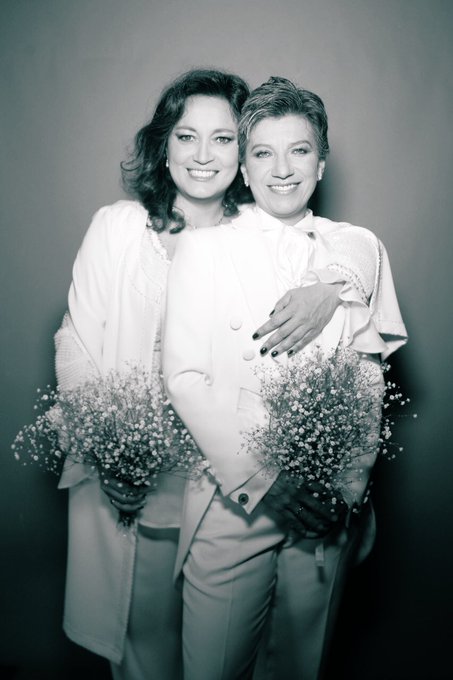
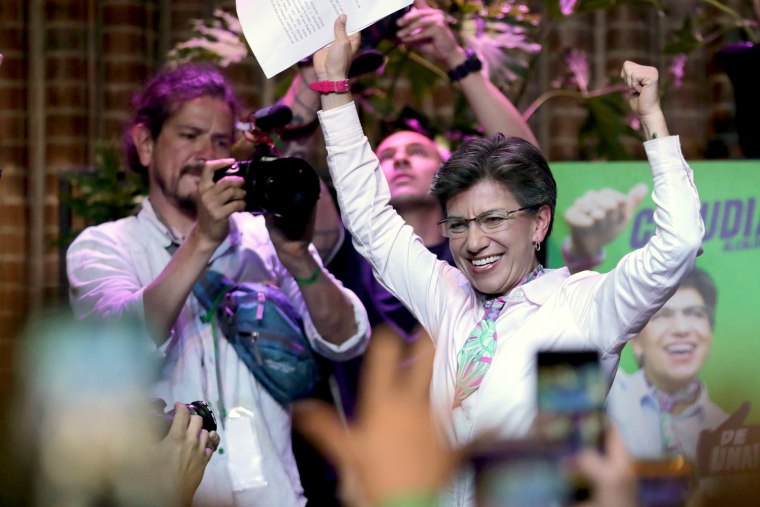
Colombia’s capital city elected its first female mayor Sunday in what is being hailed as an important advancement for both women and LGBTQ rights.
Claudia López won the race for mayor of Bogota on a platform promising to combat corruption and advance equal rights for minority communities.
The Alianza Verde candidate captured over 1.1 million votes, or about 35 percent of the vote, defeating runner-up Carlos Galán by 2.7 percentage points.
With her victory, López also becomes the first openly lesbian mayor of a capital city in Latin America, a region slowly advancing in improving LGBTQ rights but where long-standing cultural biases and inequality remain barriers.
“This is the day of the woman,” she said to a jubilant crowd. “We knew that only by uniting could we win. We did that. We united, we won and we made history!”
She vowed to continue uniting Colombians across the political spectrum and work to improve daily life issues like public transportation.
Many in the LGBTQ community praised López’s victory as an important step forward in a country where gay and lesbians still confront harassment. Earlier this year, a man was caught on camera pushing and screaming profanities at two gay men in their early 20s hugging and holding hands at an upscale mall in Colombia’s capital.
Blanca Duran, a former city politician, told the El Espectador newspaper that with López’s win, Bogota is “setting an example for the country.”
“It is showing that it is a city with respect, with diversity, in which we can advance rights,” she said.
Centrist and progressive party candidates won several important posts in Colombia’s local elections, the first since the signing of an historic peace accord with leftist rebels.
Conservative former President Álvaro Uribe acknowledged his party’s setback, stating on Twitter that “I recognize the defeat with humility.”