President Biden on Friday named Jessica Stern as the State Department’s U.S. special envoy to advance the human rights of LGBTQI+ persons, an announcement that coincides with the White House’s celebration of Pride month.
The position was left vacant under the administration of former President Trump. Biden will introduce Stern during remarks in the East Room Friday afternoon outlining his administration’s agenda to advance rights of LGBTQ+ people in the United States, the White House said.
Stern is currently the executive director at OutRight Action International, a group that advocates for human rights of lesbian, gay, bisexual, transgender, intersex and queer people around the world and works to stop discrimination and violence that they face.
The Supreme Court on Monday declined to take up the issue of whether the nation’s schools must allow students to use the bathroom that match their gender identities.
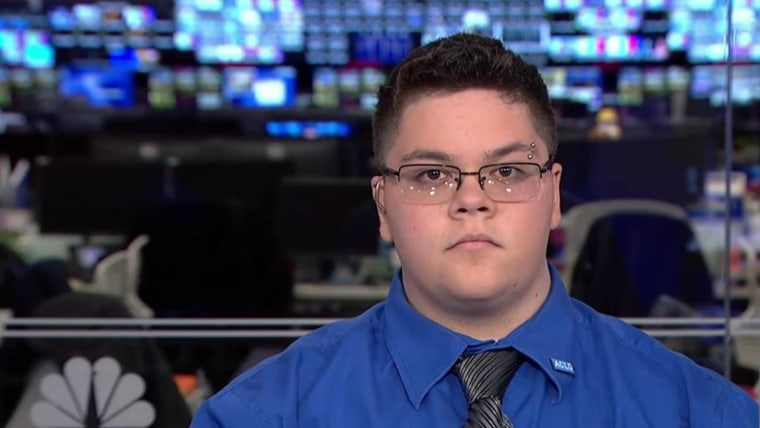
The court declined, without comment, to hear the case of Gavin Grimm, who has been at the center of a long legal battle with the school board in Gloucester County, Virginia. Grimm was born female but identified as male after his freshman year in high school, legally changing his name and beginning hormone therapy.
The principal at first gave him permission to use the boys’ bathroom, but the school board later adopted a policy saying restrooms were “limited to the corresponding biological genders.”
“For school officials, as for parents, the question how best to respond to a teenager who identifies with the opposite biological sex is often excruciatingly difficult,” lawyers for the school district told the Supreme Court. But the privacy rights of millions of students are at risk if their transgender classmates are allowed to use bathrooms matching their gender identities, they said.
Lawyers from the American Civil Liberties Union, representing Grimm, told the court that treating him differently by requiring him to use separate single-stall bathrooms singled him out “and stigmatized him as unfit to use the same restroom as his peers.”
They said there was no need for the Supreme Court to take up the appeal, because the lower courts that have considered the issue reached the same conclusion — that treating transgender students differently violates a federal law, known as Title IX, that bans sex discrimination in school programs.
Monday’s order denying review in the case means Grimm’s victory in the appeals court remains intact.
The American Civil Liberties Union celebrated the action.
“This is an incredible victory for Gavin and for transgender students around the country,” said Josh Block, a senior staff attorney.
Grimm said he is glad the legal fight is over.
“Being forced to use the nurse’s room, a private bathroom, and the girl’s room was humiliating for me, and having to go to out-of-the-way bathrooms severely interfered with my education,” he said. “Trans youth deserve to use the bathroom in peace without being humiliated and stigmatized by their own school boards and elected officials.”
Justices Clarence Thomas and Samuel Alito said the Supreme Court should have taken the case.
Related issues may soon be headed to the Supreme Court, including disputes over allowing transgender students to play on the school sports teams matching their gender identities.
Grimm originally went to court in 2015, arguing that the school board’s policy made him feel ashamed and isolated, and the 4th U.S. Circuit Court of Appeals, based in Richmond, ruled in his favor. It said refusing to let students use bathrooms corresponding to their gender identity would violate the federal law.
That ruling cited an Obama-era Education Department letter that said “a school generally must treat transgender students consistent with their gender identity.” The appeals court found that to be a reasonable interpretation of Title IX, and the school district appealed to the Supreme Court.
Two things have changed since the first time the case came before the justices. The Supreme Court ruled last year that a federal civil rights law bans employment discrimination on the basis of gender identity, and now the Biden administration has interpreted that ruling as applying to Title IX as well.
“A school’s policy or actions that treat gay, lesbian, or transgender students differently from other students may cause harm,” a legal memo from the Department of Education said.
Today, 70 percent of Americans support same-sex marriage. But on June 24, 2011, when the New York Legislature passed the state’s marriage equality measure, only 46 percent did, barely surpassing the 45 percent who opposed the right of gay couples to wed.
Five years earlier, in 2006, the New York Court of Appeals had determined the state constitution did not guarantee same-sex couples the right to marry. That left advocates with only a legislative remedy.
Failed attempts to pass marriage equality measures in 2007 and 2009, however, left supporters deflated.
Christine Quinn, an out lesbian who served as speaker of the New York City Council during both attempts, said the 2009 defeat in the state Senate felt “like the rug had been pulled out from under us.”
“It was so personally painful and so, really not to be dramatic, but devastating,” Quinn said. “And it gave strength to the other side. New York is seen as a progressive state … so us not having marriage equality, it made a great excuse for other states not to do it.”
Then came 2011: Democratic Gov. Andrew Cuomo was sworn into office in January after making same-sex marriage a key plank in his campaign.
“Previously, we had Gov. [Eliot] Spitzer, and he kind of crashed and burned. Then we had Gov. [David] Paterson, and he had no political juice,” Assembly Member Daniel O’Donnell, who introduced five marriage bills over four years, said. “Then we get Cuomo: Here was a guy who was willing to make marriage a priority.”
Cuomo had first publicly supported same-sex marriage when he successfully ran for attorney general in 2006.
“I don’t want to be the governor who just fights for marriage equality,” he told attendees at an Empire State Pride Agenda dinner in fall 2010, the Observer reported then. “I want to be the governor who signs the law that makes equality a reality in the state of New York. And we’re going to get that done together.”
Attempting a ‘herculean feat’
On Jan. 5, 2011, in his first State of the State address, Cuomo promised same-sex marriage legislation would pass that year. With that mandate, activists got to work: The Human Rights Campaign, the nation’s largest LGBTQ advocacy group, partnered with Freedom to Marry, a national organization, and Empire State Pride Agenda, a statewide LGBTQ group, to form New Yorkers United for Marriage, an umbrella group laser-focused on getting legislation passed. They targeted regions across the state, from the Hudson Valley to the Capital Region, to garner support from constituents.
“We built this huge campaign over time, over six months,” David Contreras Turley, then-associate regional field director at HRC, told City and State New York in 2019. “We ended up harnessing about 125,000 constituent contacts for what I know is one of the largest grassroots campaigns in terms of numbers, especially in the LGBT civil rights movement.”
The time was right, but advocates knew they had to strategize differently. Not only had they lost in New York in 2009, but that same year a same-sex marriage bill signed into law in Maine was overturned in a voter referendum.
“We had the opposite of momentum,” said Brian Ellner, who left then-Mayor Michael Bloomberg’s office in 2011 to help lead New Yorkers for Marriage Equality. “No one thought that we could get it done with a Senate that was controlled by Republicans. They didn’t even think the Senate majority leader would bring it to a vote. And we needed to find four Republican yeses, two years after we lost in a Senate that was controlled by Democrats? It was quite a herculean feat.”
For O’Donnell, one of six openly LGBTQ lawmakers serving in the state Legislature at the time, the way to win was to make it more personal: Previously, he said, state Sen. Tom Duane, Assembly Member Deborah Glick and other gay legislators had kept their partners out of politics.
“I knew that that wasn’t going to work,” O’Donnell said. “If I wanted my colleagues to see John and I as part of a couple that deserves equal rights, I had to show them my relationship.”
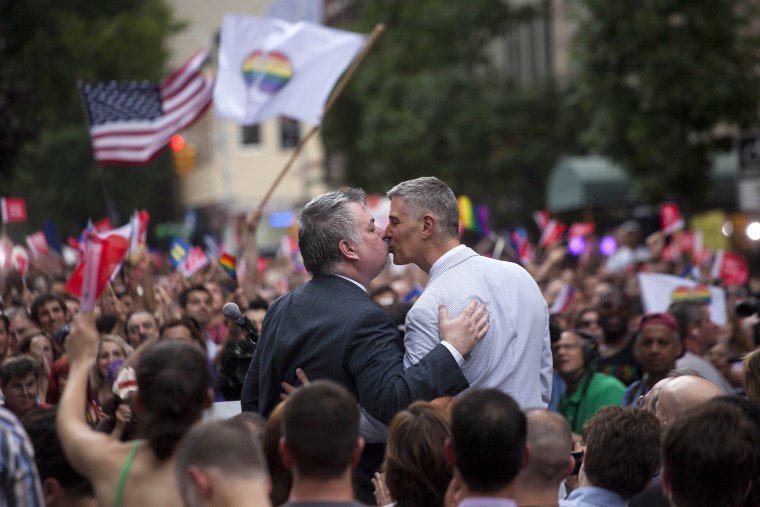
Daniel J. O’Donnell, democratic member of the New York State Assembly, left, kisses his husband John Banta, right, as supporters of same-sex marriage rally on Christopher Street after the U.S. Supreme Court overturned the Defense of Marriage Act (DOMA) and declined to rule on the California law Proposition 8 in New York, on June 26, 2013.Michael Nagle / Bloomberg via Getty Images file
O’Donnell and his now-husband, John Banta, met on the first day of classes at Catholic University in 1978 and began dating two years later.
“I brought John around to a much greater degree than my colleagues had,” he recalled. Banta, the director of special events for the Metropolitan Opera, was a name on his own, and the pair made something of a power couple in Albany.
“It didn’t hurt that he was tall, thin and good looking,” O’Donnell joked. “But, more importantly, he was there, and people saw it as voting against us, rather than just voting against an issue.”
Duane also decided to start bringing his then-partner to Albany more often.
Preaching to the unconverted
They worked diligently to garner Republican support because they didn’t want marriage equality to become a party-line issue, “even though in my heart I knew it clearly was going to be,” O’Donnell said. He also sent weekly letters to his colleagues, with appeals coming from many different angles.
“One might be a poll, one was a letter from a California state senator who went from a ‘no’ to a ‘yes’ and got re-elected anyway,” he recalled. “One was a letter from Mildred Loving — who was, of course, the plaintiff in Loving v. Virginia, which took down anti-miscegenation laws at the Supreme Court — saying this is the same thing. We went around and around pivoting from the moral issue, to the legal issue, to the political issue, to try to give people enough cover to feel that they could vote for it.”
At the end of each letter, O’Donnell wrote, “John and I thank you for taking the time to consider this.”
For Ellner, a new approach meant reaching a new audience and changing the message.
“We couldn’t just talk in an echo chamber if we wanted to convert people to the cause,” he said. “At the time, support for marriage equality was barely at 50 percent in New York, I think, and we really wanted to get it to a majority, if not supermajority, before the vote.”
On March 9, 2011, Cuomo held a meeting with legislators, lobbyists and other major players inside the Capitol’s Red Room. After the disastrous 2009 vote, he wanted to be certain they weren’t working at cross purposes.
“He called a bunch of us to Albany to have a meeting about all of us who were working to get this done, to make sure we were aligned and coordinated,” Ellner recalled. “He made it very clear that this was a very, very high priority for him, if not his top priority that session. I don’t think he could have leaned in any harder to use all of his popularity and his influence.”
What many people don’t understand, O’Donnell said, is that “part of New York is more like Ohio” than New York City.
“We have very rural areas, we have very poor areas, we have some beautiful places. It’s a wonderful place to visit, but it’s not all liberal New York City people,” he said.
As he lobbied for the bill, O’Donnell said, “many senators said to me privately, ‘I think it’s the right thing to do, but my voters won’t tolerate it.’”
Ellner said he had senators, both Democrats and Republicans, telling him they needed to hear from their constituents that there was support. Legislators claimed that, in 2009, voter contacts “were running something like 3 to 1, or even 4 to 1, against marriage,” Ellner said.
So New Yorkers for Marriage Equality launched an enormous field effort with volunteers working across districts — knocking on doors, standing outside supermarkets — to talk to constituents and get postcards signed.
“When you talk to these senators, it’s about voter contact from within the district,” Ellner said. “They don’t care about a national email petition. They don’t care that Brian Ellner from Chelsea wrote to a senator upstate. They want to hear from their constituents, either by phone or preferably by mail. The mail gets counted and weighed, and that has a huge impact, because many politicians are focused on survival.”
Ellner said his team would get intelligence about a senator they had a shot at winning over, and then they would flood that lawmaker’s district with workers to get signatures.
“And if we heard that someone was definitely a ‘no,’ we would move everyone out of that district and into another one,” Ellner said. “We had really dedicated young people throughout the state who were couch surfing.”
That was the less glamorous part of the campaign, he admitted, “but there was no way we were going to let these senators hear more ‘nays’ than ‘yeas.’”
New Yorkers for Marriage Equality also launched a massive video campaign, with famous New Yorkers making the case for same-sex marriage. Directed by documentarian Annie Sundberg (“Joan Rivers: A Piece of Work”), the videos featured celebrities (Julianne Moore, Whoopi Goldberg, Anna Wintour), athletes (New York Ranger Sean Avery and Michael Strahan of the Giants) and establishment types (Lloyd Blankfein of Goldman Sachs and police Commissioner William Bratton).https://iframe.nbcnews.com/ZZoTZob
“We really wanted to broaden the support and show that there was widespread support across all different communities,” said Ellner, who knew Sundberg from Dartmouth College. “We just wanted this drumbeat of constant positivity, especially toward the end of the session when the legislature really slows down and there’s all kinds of deal-making going on. And frankly, we didn’t want to give the media the opportunity to write negative stories — to say that this was being derailed.”
Advocates turned up the heat on state senators, pressing their friends, relatives, even their rabbis, to track their vote and bring them to a “yes.”
But the clock was ticking. Cuomo had made his declaration in January and called everyone together in March. By late May a bill still hadn’t come forward, and the session ended in June.
Finally, on June 13, 2011, three Democratic state senators who had opposed same-sex marriage in 2009 — Joseph Addabbo Jr., Shirley Huntley and Carl Kruger — announced they would vote “yes” this time.
The final countdown
The Marriage Equality Act was introduced in the Assembly on June 14, and the following day, it passed the chamber 80 to 63. Though a healthy margin, it was a smaller one than the 2009 measure enjoyed.
A vote in the Senate was delayed while Cuomo negotiated with Republican leadership. For more than a week, thousands rallied outside the Capitol on both sides of the issue.
Finally, on June 24, the last day of the legislative session, Republican state Senate Majority Leader Dean Skelos announced that “same sex marriage legislation will be brought to the full Senate for an up or down vote.”
O’Donnell and Banta went to the Senate floor to watch the proceedings.
“The Capitol was entirely filled with people, so it’s hot as hell, and there are thousands of people on the stairways, in the hallways, everywhere,” O’Donnell said. “As each vote was taken, John was there. All my colleagues knew who he was. He was sitting in the audience, and many of the senators knew who he was. So we’re standing on the back of the floor of the Senate, and people are walking up to him and I and giving us both hugs and kisses.”
The vote was a nail-biter till the end, O’Donnell said — a rarity in Albany, where most bills don’t come to the floor unless passage is practically guaranteed.
State Sen. Stephen Saland of Poughkeepsie, a Republican who voted against same-sex marriage in 2009, announced he would vote “yes” the same day the bill came to the Senate floor.
“I have defined doing the right thing as treating all persons with equality,” he said during the debate on the measure. “That equality includes the definition of marriage. I fear that to do otherwise would fly in the face of my upbringing.”
‘All New Yorkers are equal under the law’
Late in the evening of June 24, 2011, the Marriage Equality Act passed the GOP-controlled Senate 33 to 29, with all Democrats and four Republicans voting in its favor. Cuomo signed it into law the same night at five minutes to midnight.
“With the world watching, the Legislature, by a bipartisan vote, has said that all New Yorkers are equal under the law,” Cuomo said in a statement. “With this vote, marriage equality will become a reality in our state, delivering long overdue fairness and legal security to thousands of New Yorkers.”
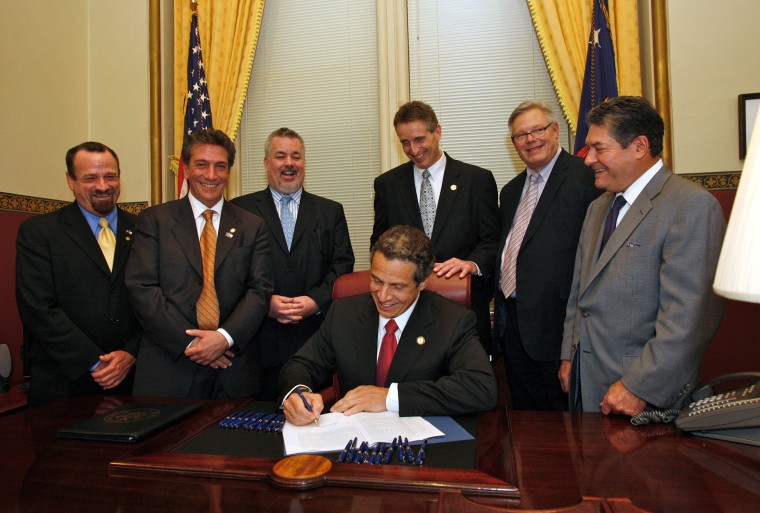
Gov. Andrew Cuomo signs the Marriage Equality Act, with Harry Bronson, Matthew Titone, Daniel O’Donnell, Bob Duffy, Tom Duane and James Alesi, on June 24, 2011.Judy Sanders / Office of Andrew M. Cuomo
The New York Marriage Equality Act amended New York’s Domestic Relations Law to affirm that “no government treatment or legal status, effect, right, benefit, privilege, protection or responsibility relating to marriage shall differ based on the parties to the marriage being the same sex or a different sex.”
Quinn, who was in City Hill at the time trying to pass the city’s budget, remembers getting word during a press conference with Bloomberg. A staffer gestured wildly from the sidelines with a giant thumbs up.
“Oh God, as a New Yorker, it just made me so proud,” Quinn said, “and gratified that, finally, a discriminatory fact had been erased from the record. It meant a lot. It’s hard to hold your head up higher as a New Yorker, because we’re a pretty arrogant group, but I felt I could hold my head up higher.”
Ellner, who was in Albany as the vote was taken, said his only regret was not celebrating at the Stonewall Inn with the thousands of LGBTQ people and allies who had gathered there.
“It was kind of bittersweet to see it on CNN,” he said. “But, no, honestly, it was amazing.”
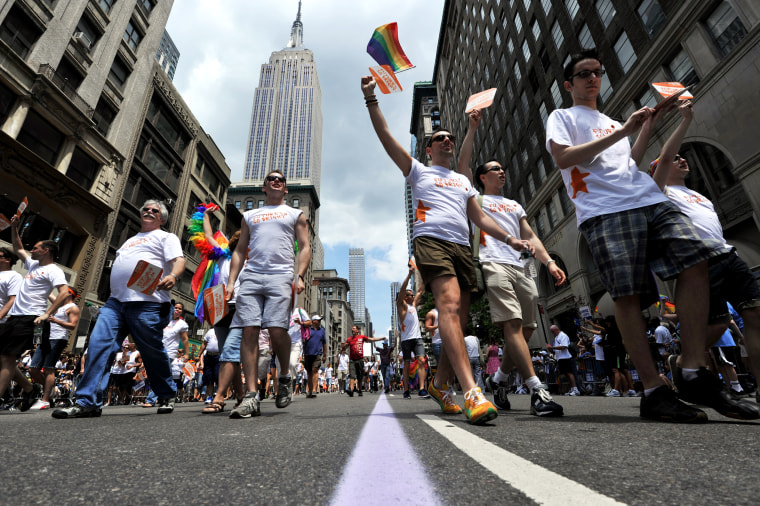
Banta stayed with O’Donnell in Albany that night, then the two returned to New York City the following morning. It was gay Pride weekend, and they marched in the parade with O’Donnell’s 5-year-old nephew.
“He told all his friends he was going to ‘Uncle Danny’s parade,’” O’Donnell said. “Literally, when the march would stop moving, people would chant my name on Fifth Avenue. But really, there was such a sense of euphoria — and relief.”
‘It felt miraculous’
The New York Marriage Equality Act took effect Sunday, July 24, 2011, and couples started getting married that same day.
One of them was Jonathan Thompson and Jonathan Polansky, who got married at the Queens courthouse in Forest Hills, after dating since 2002.
“We’d been together so long at that point that once the vote happened, we just sort of looked at each other and said, ‘So, we’re doing this, right?’” Thompson said.
It wasn’t a big romantic gesture, he said, but they were acutely aware of how monumental the moment was.
“It had been such a long push for marriage in New York, and we’d all been disappointed so many times before,” Thompson said. “When the bill actually passed — and during Pride Month, no less — it felt miraculous. There was just this communal feeling of emotion, and we just wanted to be a part of it.”
That wasn’t the only reason, though.
“If I’m being honest, I was also a little distrustful,” he said. “We wanted to do it right away, before anyone could take it away.”
The city had initially announced a lottery for the first day — Thompson and Polansky applied and won. Then officials decided to let everyone who had entered the lottery get a marriage license.
“So it ended up being a big, huge event,” Thompson said. “I remember it was extremely hot. We wanted to dress up, but it was stifling. So, we just went with business casual.”
It was a Sunday, when normally the courthouse would have been closed. But clerks and judges volunteered to work that day.
“Just to know that everyone there was rooting for us was a monumental thing,” Thompson said. “We took a number and sat in the waiting area, where we ran into some friends who were volunteers. Everyone there was talking to each other and taking pictures. It was definitely a sense of community and excitement.”
As a council member, Quinn didn’t have the power to perform ceremonies, but she was determined everything would go smoothly.
“My office, the speaker’s office, asserted itself into the full planning process,” she said. “I went to four of the five boroughs to congratulate and meet people who were getting married and also to thank the council staff that were there. I’ll never forget this one intern we had that summer. … He was holding up this huge sign that said, ‘This way to photos.’ Just the joy on his face and the joy of the people who were following him. I told him it looked like he was leading a parade.”
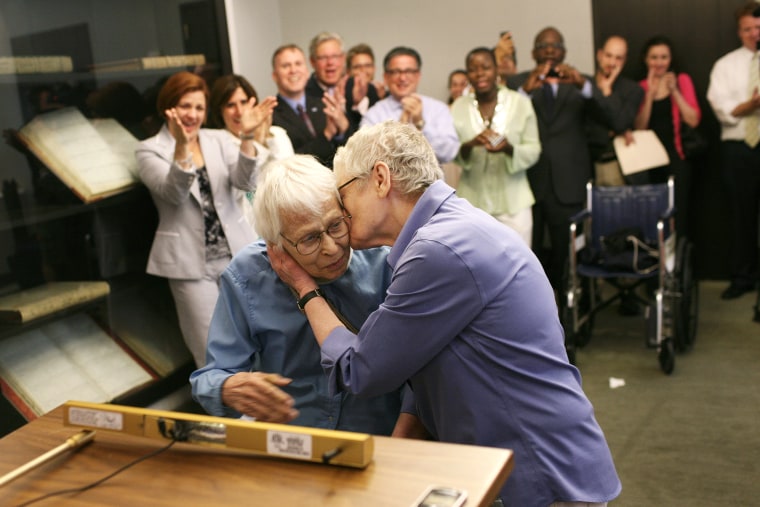
She recalled seeing City Clerk Mike McSweeney conducting the first ceremony in Manhattan, for Connie Kopelov, 85, and Phyllis Siegel, 76. The women had met in the mid-1980s volunteering with SAGE, an advocacy group for LGBTQ older adults.
Phyllis Siegel, right, kisses her wife, Connie Kopelov, after exchanging vows at the Manhattan City Clerk’s Office with New York City Council Speaker Christine C. Quinn in attendance, back left, on July 24, 2011.Michael Appleton / Pool via Getty Images file
“It was magical,” Quinn said. “It was really, like, you couldn’t believe that a law, which on some level is just a piece of paper, could have such an impact. But it did — and it has.”
Everything had happened so fast that the offices of the city clerk hadn’t even had time to change its paperwork.
“The forms still had ‘man’ and ‘woman’ on it,” Thompson said. “It wasn’t embarrassing, though. It was amusing. It was nice. It was this feeling of, ‘We’re not gonna wait to fix it; let’s just get going, and we’ll all figure it out as we go.’ That was exciting.”
More than 800 couples registered to get married in New York City that first day alone, according to The Associated Press.
“People were booking flights to New York to get married,” O’Donnell said. “We didn’t have a residency requirement, so anybody could come here from anywhere in the world and get a marriage license and bring it back to where they’re from.”
‘Tremendous momentum’
For O’Donnell, the writing was now on the wall for federal marriage equality. Vermont, New Hampshire and the District of Columbia had already passed marriage laws legislatively, but New York was by far the largest state.
“Even in places like Mississippi or Alabama, at some point they were going to have a problem with the full faith and credit clause of the Constitution if they say, ‘We’ll accept straight marriages from New York but not gay ones.’” he said. “So it was coming.”
Ellner recalled “tremendous momentum” among activists coming out of the victory in New York.
“It felt like it was a matter of time,” he said. “It all shifted radically and so quickly. It was really the velocity that was surprising, but we felt, ‘As New York goes, so goes the nation.’”
A group walks down Fifth Avenue during the New York City gay pride march on June 26, 2011.Stan Honda / AFP via Getty Images file
It wasn’t a bloodless victory, though: The four Republican state senators who crossed the aisle to support the bill all were out of office within the next few years.
In September 2012, Sen. Roy McDonald, who represented conservative Saratoga County, was defeated in a Republican primary by Kathy Marchione. During the race, Marchione questioned McDonald’s conservative bona fides, claiming he backed same-sex marriage to secure campaign donations.
“I could have found an easier way to get re-elected,” McDonald countered during a primary debate, insisting he supported the bill as “a human being that cared.”
“You get to the point where you evolve in your life where everything isn’t black and white, good and bad, and you try to do the right thing,” he told reporters. “You might not like that. You might be very cynical about that. Well, f— it, I don’t care what you think. I’m trying to do the right thing.”
But an undeniable tipping point had been reached: In 2012, Maine, Maryland and Washington all enacted same-sex marriage measures at the ballot, and, for the first time ever, the Democratic National Convention adopted a political platform endorsing same-sex marriage. That May, then-Vice President Joe Biden came out in favor of same-sex marriage, quickly followed by President Barack Obama.
The following year, a key part of the Defense of Marriage Act was struck down by the Supreme Court, and nine more states recognized same-sex marriage — five through legislation (Rhode Island, Delaware, Minnesota, Hawaii and Illinois).
“We showed that you could do it,” O’Donnell said of New York’s LGBTQ advocates. “I offered to help anybody out there who wanted to know how to do it, because it takes work. In the House, I flirted with some colleagues, I threatened others. I promised every single one of them if they voted ‘yes’ that I would invite them to my wedding, which I did — our wedding had 450 people at it. They all came.”
O’Donnell said he had toyed with getting married on that first day, but July 24 was Banta’s birthday, “and I didn’t need to be the first,” he said.
The pair married on Jan. 29, 2012, at Guastavino’s in Manhattan, with both Democratic and Republican legislators, the state comptroller, Lt. Gov. Robert Duffy and Cuomo all in attendance.
“If you’ve never thought you could get married, you never spend any time thinking about what your wedding would be,” O’Donnell said. “The two things that I wanted were a wedding cake and an actual honeymoon. So we had our wedding, we had our cake and then we went to Paris.”
The Stonewall Inn’s owners say they won’t serve certain beers at the famous LGBTQ bar during Pride weekend to protest manufacturer Anheuser-Busch’s political contributions to some politicians who have supported anti-LGBTQ legislation.
Co-owners Stacy Lentz and Kurt Kelly said they would be instituting the ban on Friday in support of the “Keep Your Pride” campaign, a recently launched effort highlighting five companies that it says advertise support during Pride but have also made contributions to anti-LGBTQ lawmakers.
The campaign, a project of Corporate Accountability Action, used data compiled from the National Institute on Money in Politics to show that Anheuser-Busch contributed more than $35,000 to 29 legislators it described as anti-LGBTQ between 2015 and 2020.
“We just felt Stonewall having the platform, the power to do this, it was important to stand up,” Lentz said. “We really just want Anheuser-Busch to stop donating to lawmakers who are trying to legalize discrimination.”
In a statement, Anheuser-Busch said, “We support candidates for public office whose policy positions and objectives support investments in our communities, job creation, and industry growth.”
The statement continued, “Together, with our brands, we have a clear role to play in bringing real change and creating an inclusive and equitable world where we cherish and celebrate one another.”
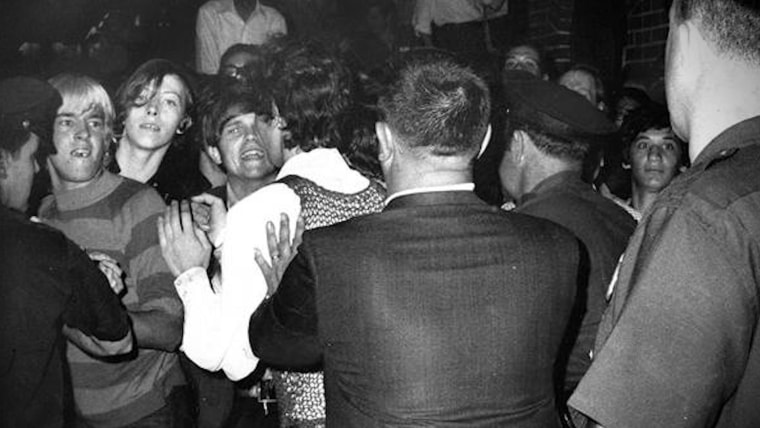
It was at an earlier incarnation of the Stonewall Inn in June 1969 when bar patrons fought with police who had come to carry out a raid, which galvanized gay rights activism around the country and the world.
A conservative Republican lawmaker in the House of Delegates took to Twitter and other social media platforms this past weekend announcing that he is gay. Twenty-four year old Joshua Higginbotham said that he felt he owed it to the voters of West Virginia, after recently deciding to share it with his family and friends.
Higginbotham, who was first elected to the House when he was only 19, represents rural Putnam County located alongside Interstate 64 between the state’s capital city of Charleston to the East and Huntington to the West. His campaign adverts have all trumpeted his avid support of the Second Amendment as well as taking a pro-life position.
However, a check of some of his recent legislation shows a more progressive mindset. He is lead sponsor on House Bill 2998, a measure amending the State’s current codes relating to unlawful discriminatory practices in four categories covered by the West Virginia Human Rights Act and the Fair Housing Act, adding language that prohibits discrimination based upon age and sexual orientation, or gender identity; and defining “sexual orientation” and “gender identity.”
That measure, earlier in the legislative session, led to a series of conflicts which involved the state’s only other openly gay lawmaker, Democratic Delegate Cody Thompson (D43-Marion). Republican House Delegate John Mandt, who resigned after posting an anti-gay slur but then was re-elected drew harsh criticism for an extended online diatribe opposing protections against discrimination based on sexual orientation and gender identity the Associated Press reported earlier this year on February 7, 2021.
In his social media video as well as in an interview with reporter Anthony Conn from the local ABC News affiliate WCHS 8 in Charleston, Higginbotham said, “I am still a Christian. People think that gay people can’t be Christians. I believe God loves me no matter what. I’m still a conservative Republican. That’s rare, I know, but you can be gay and Republican. You can be gay and conservative.”
He added referring to his conservative politics that “nothing changes except now [you] know about my personal life.”
The statewide LGBTQ advocacy group Fairness West Virginia applauded the delegate’s decision to come out. “We think that it’s great that Delegate Higginbotham can lead his authentic life now. This must be a big burden that’s lifted off his shoulders,” Executive Director Andrew Schneider told WCHS ABC 8.
There are some in the state who are critical of Higginbotham. One source who asked to not be identified, told the Blade in a phone call Tuesday that Higginbotham’s support of former President Trump raised some doubts as to his veracity especially in issues surrounding Transgender West Virginians.
A Florida homeowners association has ordered a gay couple to remove a small rainbow flag from their front yard, but the couple has no intention of taking it down.
Bob Plominski and Mike Ferrari of Oakland Park, Florida, were issued a citation on June 5 that told them to take the flag down by June 15 or pay a $50 daily fine. The couple put it up to celebrate Pride Month.
Plominski and Ferrari told NBC Miami they were confused by the notice because they have flown the pride flag before and posted political signs in the neighborhood without any problems.
“I got upset,” Plominski said. “We’ve done this before and it’s a simple showing of our pride to the community and it’s up for 30 days. We were in shock they were going to do that.
Bob Brusseau, president of the Eastland Cove Homeowners Association, said the five-person board sent the couple a violation notice after one of the association’s members complained based on a rule that restricts residents to displaying only U.S. or military flags in the neighborhood.
“It’s in the document, and you can be sued,” he told NBC News.
Fines actually won’t be enforced until around 30 to 40 days from the issuing date of the citation, according to Brusseau.
“Personally, I’ll vote against any fine,” he said, adding that two board members didn’t even wish to pursue the case, but the other three did.
Plominski and Ferrari have a right to appeal the association’s decision before a grievance committee.
“I really think the citation is because it’s a gay pride flag and someone in the neighborhood is offended, simple as that,” Ferrari told NBC Miami.
The couple said they will continue to fly their pride flag until the end of the month.
“It’s going to stay up until June 30,” Plominski told NBC Miami. “We as a community worked really hard to earn and get to where we are today. We’re not going to back down on this one.”
The driver of a pickup truck that struck two men, killing one, at a Pride parade in Florida was connected to the Fort Lauderdale Gay Men’s Chorus, and so were the victims, the group’s president said Saturday.
The truck was to be part of the chorus’ entry in the Stonewall Pride Parade in Wilton Manors, the organization said.
“Our fellow Chorus members were those injured and the driver is also a part of the Chorus family,” Justin Knight said in a statement. “To my knowledge, this was not an attack on the LGBTQ community.”
One man was killed and another injured after they were struck by the truck Saturday evening just as the parade was about to get underway near Fort Lauderdale, officials said.
“We know two individuals marching to celebrate inclusion and equality were struck by a vehicle,” Broward County Sheriff Gregory Tony said in a statement. “One person has died and the other remains hospitalized.
The victims’ names have not been released. The survivor was expected to recover, said Det. Ali Adamson at a news conference.
She said the cause of the crash was under investigation.
“We are evaluating all possibilities,” Adamson said. “Nothing is out of the question right now.”
She said the driver was being questioned, and the FBI was assisting with the inquiry.
Fort Lauderdale Mayor Dean Trantalis, who was at the event, said that he and others were “terrorized” by the crash. In a statement, he said he was concerned it may have been intentional.
“Law enforcement took what appeared obvious to me and others nearby and investigated further — as is their job,” he added. “As the facts continue to be pieced together, a picture is emerging of an accident in which a truck careened out of control.”
U.S. Rep. Debbie Wasserman Schultz, D-Fla., who was also at the event, said she is “so heartbroken by what took place at this celebration.”
U.S. Rep. Ted Deutch, D-Fla., tweeted, “Devastated by the horror we saw at Wilton Manors Pride.”
“I’m so sorry, Wilton Manors,” he said. “I’m so sorry, my friends.”
Tony said deputies witnessed the collision.
“This tragedy took place within feet of me and my BSO team, and we are devastated having witnessed this horrific incident,” he said, referring to the sheriff’s office. “Our prayers are with the victims and their families.”
LGBTQ civil servants and service members were systematically fired or forced to resign due to their sexual orientation or gender identity over the past seven decades, and a proposed bill is seeking to have the federal government issue an official apology acknowledging its past discriminatory policies.
The bill, introduced Thursday by Sen. Tim Kaine, D-Va., says the federal government “discriminated against and terminated hundreds of thousands” of LGBTQ people who served in the armed forces, the foreign Ssrvice and the federal civil service for decades, “causing untold harm to those individuals professionally, financially, socially, and medically, among other harms.”
Kaine and Sen. Tammy Baldwin, D-Wis., the country’s first openly gay U.S. senator, led the introduction of the resolution.
“Throughout our history, far too many people serving our nation have lived in fear of retribution or persecution because of their sexual orientation,” Kaine said in a statement. “It’s time to acknowledge the harm caused to these Americans, their families, and our country by depriving them of the right to serve as federal civil servants, diplomats, or in the Armed Services. I’m proud to introduce this Senate resolution during Pride Month to reaffirm our nation’s commitment to treat everyone, including LGBT Americans, with equal respect and fairness. I will continue working toward advancing equality for all LGBT people in Virginia and across our nation.”
Thousands of federal employees were fired or forced to resign from the late 1940s to the 1960s during what has been called the Lavender Scare — when the federal government sought to investigate and purge employees thought to be gay.https://iframe.nbcnews.com/OfO2m5N?app=1
The American Psychiatric Association declared homosexuality a mental illness in 1952, and in 1953, President Dwight D. Eisenhower issued an executive order that said “sexual perversion” was a fireable offense. It wasn’t until 1973 that the association changed its position and declared that “homosexuality does not meet the criteria for being a psychiatric disorder.”
Historians have estimated that at least 100,000 service members were forced out of the armed forces between World War II and 2011 for being LGBTQ, according to Kaine’s resolution. More than 1,000 State Department employees were also dismissed due to their alleged sexual orientation, and others were prevented from joining due to discriminatory hiring practices, the resolution states.
Many others had to hide their identities or risk losing their jobs.
In addition to the Department of State, the National Security Agency and the CIA “continued to harass and seek to exclude lesbian, gay, and bisexual individuals from their ranks until 1995,” the resolution continues. At that time, then-President Bill Clinton issued an executive order that prohibited the government from denying security clearance based solely on sexual orientation. https://iframe.nbcnews.com/esC6QyB?app=1
According to the bill, transgender service members and civilian employees were also “harassed and excluded” from federal civil service until 2014, when then-President Barack Obama issued an executive order prohibiting the federal government and contractors from discriminating on the basis of sexual orientation and gender identity.
LGBTQ people continued to serve “honorably,” the bill says, “upholding the values, and advancing the interests, of the United States even as the country discriminated against them.”
Baldwin said the resolution shows respect for LGBTQ Americans who have served the country.
“As we celebrate Pride Month, I take great pride in being a part of this effort to move our county forward as we join together with a shared commitment to the idea that with each passing day, and each passing year, America should become more equal, not less,” she said in a statement.
Democratic lawmakers have attempted to pass similar measures in the past. Sen. Ben Cardin of Maryland in 2017 and Sen. Bob Menendez of New Jersey in 2019 introduced the LOVE Act, which would have expunged the records of State Department employees who were fired during the so-called Lavender Scare.
The LOVE Act also sought to set up a permanent museum about the Lavender Scare in the U.S. Diplomacy Center and a board to review difficulties facing LGBTQ diplomats and their families, among other actions, though the bill never passed.
Legal experts and advocates are split on what a decision Thursday by the Supreme Court on the rights of religious groups means for LGBTQ rights in the near term.
The court ruled unanimously in favor of Catholic Social Services, a religious adoption agency that wanted an exemption from Philadelphia’s nondiscrimination law, which would have required the agency to allow LGBTQ couples to adopt.
Experts say the ruling was much narrower in scope than it could have been. The court could have ruled that religious social services providers contracted by governments are broadly exempt from nondiscrimination laws, which would have allowed them to refuse to serve LGBTQ people, among other groups.
Rather, the court ruled that Philadelphia violated the Free Exercise Clause and discriminated against the agency in applying its licensing process, which allows contractors to request exemptions to parts of the contract.
Though advocates are split on the decision’s impact, they agree on one thing: Thursday’s ruling demonstrates a pattern of the high court taking the side of faith-based organizations and businesses without answering the larger question of whether they have a right to discriminate against lesbian, gay, bisexual, transgender and queer people.
Some advocates worry about how the decision could affect future cases, and the message it sends to LGBTQ adoptive parents and LGBTQ kids in the foster care system.
Not a broad ‘license to discriminate’
The court’s ruling in Fulton v. City of Philadelphia is similar to Masterpiece Cakeshop v. Colorado Civil Rights Commission in 2018, when the justices ruled in favor of a baker who refused to make a wedding cake for a same-sex couple. Like in Fulton, the court didn’t answer the broader question of whether the baker had a religious right to refuse to serve the couple, but instead ruled that the Colorado Civil Rights Commission was “hostile” toward the baker’s religious beliefs in its application of the state’s public accommodations law protecting LGBTQ people from discrimination.
Fulton, like Masterpiece, was “a very process-based decision,” Anthony Michael Kreis, assistant professor of law at Georgia State University, said.
“You have this kind of very specific decision that hones in on the city of Philadelphia’s policy and how it was implemented, rather than a recrafting of rules across the board,” Kreis said. “As a consequence, this really doesn’t imperil all LGBTQ rights or civil rights, generally across the board, whether it be public accommodations or housing or employment.”
The ruling isn’t a victory for LGBTQ advocates, but it’s important that the court “is consistently refusing to grant that type of broad license to discriminate,” said Jennifer Pizer, law and policy director for Lambda Legal, an LGBTQ legal advocacy organization.
“And that means nondiscrimination laws can and should continue to be enforced, regardless of people’s reasons for wanting to discriminate against other people,” she said.
Though the court has consistently declined to issue a more broad victory for faith-based organizations and businesses, Pizer said it’s also “going out of its way” to find reasons to rule in favor of the religious claimant on very narrow grounds.
“In this case, the city of Philadelphia, in our view, should have easily won if you look at the details of how its system really works,” Pizer said. “It has good reasons for how it enforces its nondiscrimination law, because it’s prioritizing the interests of children, not the interests of the agencies who want city contracts.”
Each year, approximately 20,000 youth age out of the foster care system. Queer couples are seven times more likely to adopt or foster children than different-sex couples, according to the Williams Institute at UCLA. They are also more likely to adopt older children, children with disabilities and minority children, research shows.
The court noted in its opinion that Catholic Social Services didn’t actually turn away any LGBTQ couples. It also said excluding Catholic Social Services as a contractor would narrow the pool of adoptive parents, though Pizer argues that allowing social services providers to turn some prospective parents away would actually narrow the pool.
Kreis said the ruling could affect LGBTQ parents in Philadelphia “for a while.” He suspects the agency will have their contract renewed, and then the city might rework its policy to eliminate the exemption process for contractors — which the Supreme Court said was applied unequally in the case of the Catholic agency.
Pizer said the city — and any government agencies that contract with private organizations to provide social services — should establish clear standards for exemptions from nondiscrimination laws, and should ensure that enforcement procedures are always applied equally.
Elizabeth Sepper, a law professor at the University of Texas, Austin, said the decision in Fulton could prompt other social services providers to come forward and demand a similar exemption — not just when it comes to working with LGBTQ families. She notes that religious agencies have also rejected families with different religions, and she suspects they could also reject divorced families or single parents for religious reasons.
“They’re going to look closely at their contractual requirements and see if there is language that suggests the possibility of individualized exemptions, and they’re going to really lean on Fulton in advancing requests for an exemption,” she said.
An invitation for future challenges
The Fulton decision is not only part of a larger pattern of the court siding with religious claimants, but it also indicates that the justices may be willing to take a broader look at case law related to religious objectors, Kreis said.
“Six of the justices suggested they were open to re-evaluating some older case law and maybe giving religious objectors more constitutional rights than they have currently under constitutional doctrine,” he said. “That could spell trouble for LGBTQ rights, that could spell trouble for women’s rights and for health care access and abortion and all sorts of regulations that religious groups might object to.”
The court is also sending a discouraging message to LGBTQ young people in the foster system and to LGBTQ adoptive parents, said Ron Richter, a gay adoptive parent and CEO and executive director of JCCA, a foster care program in New York.
“The Supreme Court is saying it’s OK for a government to contract with agencies that as a policy will not license [or] certify couples that have affirmed same-sex relationships,” Richter said. “For teenagers that are struggling with their own sexual identity and their gender identity, they’re being told by the Supreme Court, you may need to go into a home that the government is contracted with that, based upon religion, doesn’t believe that your future relationship is appropriate. That is it. And that could happen based upon where we’re headed and what this decision says.”
Though the decision is limited in scope, Richter said it’s an “invitation” for broader challenges from faith-based foster agencies, which, down the road, could have a significant negative impact.
“This ruling is narrow,” said Stacey Stevenson, CEO of Family Equality, an advocacy organization for LGBTQ families, but the need for foster and adoptive parents, “is large, absolutely.”
“It shrinks the available pool of parents when agencies are allowed to discriminate,” she said.
Stevenson said the Fulton decision highlights the need to pass legislation like the John Lewis Every Child Deserves a Family Act, which would prohibit federally funded adoption agencies from discriminating based on religion, sex, sexual orientation, gender identity and marital status. She said the Senate also needs to pass the Equality Act, legislation that would provide federal nondiscrimination protections to LGBTQ people in many areas of life. It passed the House in February but has stalled in the Senate since a hearing in March.
She also stressed that the ruling does not affect foster care programs generally. “It does not create a general right for taxpayer-funded foster care agencies to discriminate, which is good news for the 400,000 children who are in foster care across our country.”
The Supreme Court unanimously ruled in favor of faith-based foster agency Catholic Social Services in a case that has significant implications for LGBTQ foster parents as well as taxpayer-funded groups’ ability to discriminate against queer people or other faiths based on “religious freedom.”
The case centers around two local foster agencies that the city of Philadelphia found would not work with same-sex couples as foster parents in 2018. The city deemed this a violation of their anti-discrimination policies, and stopped referring foster kids to those agencies. One agency, Catholic Social Services, sued the city, saying it was violating its First Amendment rights and demanding the city continue working with it even as it turned away gay couples as foster parents.
In a decision released Thursday, the court held that Philadelphia’s refusal to contract with CSS violates the free exercise clause of the First Amendment, which protects a person’s right to freely exercise their religion. The ruling requires the city of Philadelphia to renew its contract with CSS.
Chief Justice John Roberts delivered the opinion of the court, writing that Philadelphia’s actions “burdened CSS’s religious exercise by forcing it either to curtail its mission or to certify same-sex couples as foster parents in violation of its religious beliefs.”
The court ruled that the nondiscrimination requirement in Philadelphia’s foster care contract doesn’t apply to the CSS case because that requirement permits discretionary exceptions.
“No matter the level of deference we extend to the City, the inclusion of a formal system of entirely discretionary exceptions … renders the contractual nondiscrimination requirement not generally applicable,” Roberts wrote.
The Supreme Court’s ruling has implications not only for queer foster parents in Philadelphia and beyond, but also for any taxpayer-funded group — including homeless shelters and food banks — to be able to also turn away queer people or people of other religions, claiming a right to “religious freedom.”
The 3rd Circuit Court of Appeals previously upheld a lower court’s ruling in favor of the city, saying that the city’s nondiscrimination policy is a “neutral, generally applicable law, and the religious views of CSS do not entitle it to an exception from that policy.”
There are about 440,000 children in foster care across the U.S. In a brief supporting the city, the National Association of Social Workers, the Child Welfare League of America and other foster- and adoption-related nonprofits wrote that “a diversity of foster and adoptive families is needed to help ensure that all children find permanent, loving families” and that “gay and lesbian parents are essential partners in this effort.”
Two dozen U.S. senators and 148 U.S. House members — largely Democrats — warned in another brief that ruling in favor of the Catholic foster agency could “establish a broad right to religious exemptions from anti-discrimination laws” and would “undermine Congress’s ability to protect Americans from discriminatory practices.”
“This case is not only about the LGBTQ-parent families who could be turned away from foster care,” Leslie Cooper, deputy director for the ACLU’s LGBT & HIV Project, wrote in an opinion piece. (The ACLU represented the city in this case.) “If the court opens the door to discrimination based on a religious test, it would be devastating for millions of people who rely upon critical government services… people in need of taxpayer-funded services like homeless shelters or food banks could also be turned away because they are LGBTQ, Jewish, Mormon or otherwise don’t meet the provider’s religious criteria.”