LGBTQ+ students don’t feel safe in their schools because of bullying and discrimination, some of which is coming from the staff meant to protect them.
Among queer Gen Z youth ages 16 to 27, 52 percent have experienced bullying because of their sexual orientation, with 13 percent reporting that they were bullied by teachers or administrative staff, according to a new survey from global children’s charity Theirworld. Of those who were bullied, 36 percent said that they did not report it, and of those who did report it, half said that staff and teachers responded poorly.
Because of this, 49 percent said that they do not feel accepted by teachers and administrators, and 38 percent don’t believe schools are safe environments for LGBTQ+ students.
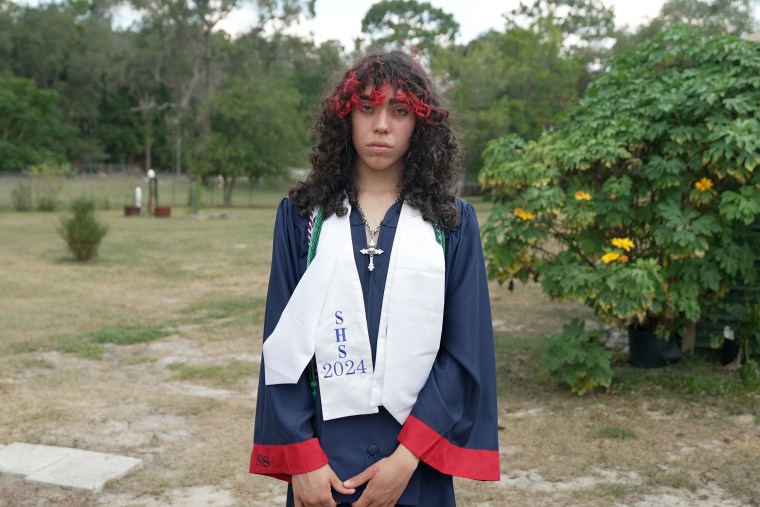
One student, a Black woman from Ohio, described her school as “a place of dread rather than a place of learning,” saying that she was “often called derogatory names and the target of hurtful jokes, which made me feel isolated and unwelcome.”
Students also reported alarming rates of violent experiences, with 64 percent reporting verbal abuse, 33 percent citing online abuse, 26 percent facing threats of violence, 12 percent reporting physical abuse, and 12 percent reporting being sexually assaulted. In addition, 25 percent said they had been purposely misgendered.
Because of this, 25 percent saying they feel personally unsafe in school, and 35 percent have missed class at some point because of bullying. One Hispanic pansexual woman from California described her experienced being “assaulted by males in the female locker room after gym in 7th grade.”
“They were predominantly males who were dating females in my gym class. They thought I was trying to see their girlfriends naked,” she said. “I just wanted to change and go to class.”
Justin van Fleet, President of Theirworld, said that “it is unacceptable that LGBTQ+ youth continue to face bullying and discrimination in schools — the very place where they should feel secure and safe.”
To help combat these issues, Theirworld has launched a global task force on safe schools for LGBTQ+ youth. The task force will allow LGBTQ+ youth leaders and their allies to have a platform and network to advocate for more inclusive education policies in communities around the world.
“Schools must be inclusive environments where every child feels valued and respected,” Fleet said.
Attacks on rainbow flags, crosswalks, and other LGBTQ+ symbols occurred in over 40 cities nationwide during Pride Month, according to NBC News. Overall, the attacks occurred in 21 states; a majority occurred in blue states like California, Massachusetts, New Jersey, and Washington, but some also occurred in red states like Idaho, Montana, Texas, and West Virginia.
While most of the theft and vandalism of these symbols seem to have been carried out by “lone wolf” individuals rather than coordinated by extremist groups, many local police, news reports, officials, and victims stated that this year’s number of attacks increased from previous years. The attacks have coincided with an increase in anti-LGBTQ+ rhetoric and legislation from Republicans and other conservatives.
“We have seen an increase in hate-motivated violence against the LGBTQI community,” said acting Associate Attorney General Benjamin C. Mizer. “There are many communities that are afraid to report to state or local law enforcement officials, and sometimes those fears are rooted in a history of troubling relationships between those communities and their local law enforcement.”
In Boise, Idaho, an annual display of 60 rainbow flags was vandalized four times through June. Michael Dale, president of the board of directors of Boise Pride, the local LGBTQ+ advocacy group that sets up the display, said, “It happens all the time now. We have to go there and put them back up. But if there’s anything to say about Boise is that we’re resilient. No matter what the cost is, we’re not going to back down.”
One victim of vandalism, Amanda Gentry, said that when she first hoisted a rainbow Pride flag outside of her law firm’s office in rural Warren County, Tennessee, her gay associates warned her, “Do you want rocks thrown through your window?”
She wasn’t intimidated and wanted to show support for LGBTQ+ people in her small town. However, the night after she displayed the flag, a surveillance video camera outside the office caught a man cutting it down. Local news reports of the vandalism compelled some local conservatives to contact Gentry and express their disapproval of anti-LGBTQ+ violence.
“I had people who had never thought about it before — it resonated,” Gentry said. “And to me, that was worth every single bit of it. Period.”
These crimes have coincided with the introduction of at least 510 anti-LGBTQ+ bills nationwide by Republican legislators over the last year. More than 30 anti-LGBTQ+ bills have gone into effect in 2024, fewer than the 84 enacted in 2023, according to Human Rights Watch. The bills have predominantly targeted transgender youth, gender-affirming care, and LGBTQ+-inclusive policies in local schools. Concurrently, right-wingers have falsely vilified queer people and allies as “groomers” looking to “indoctrinate” and “sexualize” children.
In April 2023, the Leadership Conference Education Fund (LCEF), a national civil rights group, warned that hate crimes would likely spike during the 2024 presidential election, just as they have during each of the last four presidential elections.
To help counteract such violence during the upcoming election season, the LCEF asked public officials to refrain from and speak out against hate speech. The LCEF also suggested that social media platforms invest in content moderation teams to de-platform sources of hate — even if those sources are political candidates or advertisements.
Additionally, the LCEF said that the federal government should confront and address white supremacist violence through existing civil rights infrastructure and not through federal anti-terrorism agencies, which have historically criminalized already marginalized communities.
LGBTQ+ Victory Fund, the only national organization dedicated to electing LGBTQ+ leaders to public office, endorsed 36 more out candidates for state and local office around the country. LGBTQ+ Victory Fund has endorsed 290 candidates for the 2024 election cycle.
LGBTQ+ Victory Fund endorses the following candidates:
ALASKA Andrew Gray (he/him) State House of Representatives, District 20
ARIZONA Paul Bixler (she/her) Liberty Elementary School Governing Board, District 25
Kathy Kinsella (she/her) Sedona City Council, At-Large
CALIFORNIA Austin Bruckner Carrillo (he/him) Hayward Unified School Board, At-Large
Bubba Fish (he/him) Culver City Council, At-Large
Nasreen Johnson (she/her) State Center Community College District Trustee, Area 2
Mario Trujillo (he/him) Downey City Council, District 5/At-Large
COLORADO Wyatt Schwendeman-Curtis (he/him) Larimer County Clerk & Recorder
Brianna Titone (she/her) State House of Representatives, District 27
FLORIDA Ashley Brundage (she/her) State House of Representatives, District 65
Steven Glassman (he/him) Ft. Lauderdale City Commission, District 2
Wes Hodge (he/him) Orange County Supervisor of Elections
Claudia Thomas (she/her) Sanford City Commission, District 4
KENTUCKY Kate Farrow (she/her State House of Representatives, District 48
MAINE Ellie Sato (she/her) State House of Representatives, District 109
In the face of hate and opposition to equality in Florida, LGBTQ activists and members of the community across the Sunshine State came together for an annual four-part event at the Center for Health Equity called, “Pride Amplified: Navigating LGBTQIAA+ Spaces” in St. Petersburg Florida.
Rocky Butler, founder and executive director of 9 Colors Initiative, and Joshua Bean, innovation officer of Foundation for a Healthy St. Petersburg, collaborated to convened activists for an “enlightened” and “impactful” event. This year, The GLAAD Media Institute – GLAAD’s research, training, and education leg – was invited to help participants “hone [their] media skills to amplify [their] voice for LGBTQIAA+ representation and advocacy.” GMI’s presentation came alongside others on DEI inclusivity, nonprofit development resources, and a BIPOC LGBTQ–led panel titled “Let’s Talk About It Part Two.”
The 9 Colors Initiative works towards equity within the lesbian, gay, trans, queer, intersex, androgynous and asexual (LGBTQIAA+) and allied communities, by eradicating biases through education, fighting against LGBTQ oppression, and fighting for equity. Together with the GLAAD Media Institute (GMI) and GMI alumni, The9 Colors Initiative, and the Foundation for a Healthy St. Petersburg, gave participants of the Pride Amplified community event the tools and resources needed to activate effectively during Pride month.
“This year we [introduced] a new facet to Pride, and we are bringing Caribbean culture, which is a part of my life,” Butler told the audience. Butler believes it’s necessary and needed to celebrate the cultural diversity of LGBTQ people at St. Petersburg Pride. Otherwise known as the largest Pride in the state of Florida, according to St. Pete’s Pride. For Butler his work with 9 Colors Initiative is about building that inclusivity through action.
“I create spaces or work with organizations to create spaces [for] 14-year-old me, 18-year-old me, 22-year-old me, 23-year-old me, 24-year-old me to go past what 50-year-old me would,” said Butler.
As pride events continue to roll on through the end of June, good news is unfurling in Florida. A federal judge on Tuesday called the 2023 Florida law that banned transgender, nonbinary, two-spirit, and gender nonconforming healthcare for minors, and severely restricted such treatment for adults unconstitutional. The law is no longer in the state of Florida, and as of March, Floridian students and teachers can discuss LGBTQ topics in schools.
“Transgender opponents are of course free to hold their beliefs. But they’re not free to discriminate against transgender individuals just for being transgender,” Senior Judge Robert Hinkle said in his 105-page decision. The judge also said that “[s]ome transgender opponents invoke religion to support their position, just as some once invoked religion to support their racism or misogyny.”
Outside of the state legislature, discrimination persists. Joshua Bean told the crowd that it’s imperative to fight that discrimination through education and action.
“As we approach Pride Month, it is time to celebrate all LGBTQIA+ folks in St. Petersburg,” said Bean whose organization works to achieve racially equitable health outcomes and improve the determinants that shape them. The organizer continued saying that “while instituted discrimination exists for the entire LGBTQIA+ community, we must take a deeper look for the intersection of race and more accurately examine those who continue to feel the greatest burden of nationwide discriminatory efforts.”
The event held space for numerous LGBTQ trailblazers in Florida, including Sam(ira) Obeid the founder and CEO of Poetry is Activism. Obeid is an internationally renowned spoken word poet. Additionally, she is a reputed educator on intersectionality, systemic discrimination and resistance, and a local activist.
The poet describes herself as a masculine, Indian lesbian raised Hindu on her mother’s side and Muslim on her father’s side. When Sam moved to the U.S. in 2007 she earned her second and third masters degree in Multimedia Journalism and Women’s & Gender Studies.
“Like my bio said, I am Indian born and raised. I’m currently an immigrant. If you have ever been through or know anyone that has been through the immigration process, you know it is very broken, very flawed, or maybe it is perfectly created to make you feel that way,” Obeid said as Pres. Biden’s recent unlawful executive order denies most asylum claims. Obeid then went into her next poem.
“There is compulsory misogyny
“that comes with this identity that feels so blinding
“you completely missed the point
“so quick to label me in your own image
“all of the sudden I am not woman enough to understand.”
Obeid passionately enunciated.
The poet continued to read poems while talking to the crowd. She told the crowd that she moves through this world by combining her greatest passions: spoken word and anti-discrimination education.
Before joining Obeid, and others in the “Let’s Talk About It Part Two” Panel, Butler honored J. Carl DeVine with the Lifetime Achievement Award.
DeVine is an 80-year-old AIDS/HIV LGBTQ activist living in St. Petersburg. As a student, he partook in non-violent civil rights sit-in demonstrations. DeVine also organized Kwanza and Juneteeth celebrations, and is said to have gotten arrested with Martin Luther King, Jr.
“1993 Juneteenth Original Committee.”
“Carl’s journey is one of inspiration and achievement,” said Butler. “Through his work, he has touched countless lives, always striving to make a difference and improve the world around him.”
When DeVine joined Butler on stage he said “this is quite an honor.”
People throughout the city of Tampa honored DeVine’s more than 50-year-long dedication.
Before this award, Mayor Ken Welch ordered a proclamation of Oct. 19 as J. Carl DeVine Day in the City of St. Petersburg. A younger generation of LGBTQ people awarded DeVine. That younger generation, looks up to DeVine for his legacy in building equity, LGBTQ equality, and racial justice.
“I do it because it needs to be done,” DeVine told the audience of GLAAD Media Institute alumni. “You stated that I have done something special, but I am just being a good neighbor.”
As theDemocratic National Convention approaches, set to take place inChicagofrom August 19-22, an undercurrent of inclusivity runs through its planning stages.
According to a convention spokesperson, over 20 percent of the Democratic National Convention Committee staff identify asLGBTQ+, with five department directors among them. This is not just a statistical footnote; it’s a deliberate manifestation of the Democratic Party’s values of diversity and inclusion, the organizers say.
Senior director for communications Matt Hill is one of the key architects of this inclusive vision. Hill has a storied history with the President Joe Biden’s team, having served as a spokesperson on Biden’s 2020 campaigns and as a senior spokesperson for the Biden Presidential Inaugural Committee. His role now involves overseeing thepress, surrogates, and studio teams, ensuring that the convention’s narrative is crafted and disseminated effectively.
“We are changing a lot of the ways we do things here at the convention to make sure we have the opportunities for the Democratic family to create content and meet people where they are,” Hill explained in an interview with The Advocate. His team’s efforts include welcoming 15,000 media members to Chicago and providing equal access to content creators. Hill’s strategy is forward-thinking, aiming to integrate traditional media with digital influencers to reach a broader audience.
Then there’s Liz Stovall, the venue technology project manager. Managing everything from construction to printing, Stovall is also the heartbeat behind ChiPride, the DNCC’s LGBTQ+ employee resource group. “I’ve been a leader in the queer community for years, and stepping into this role felt like a natural progression,” she shared with The Advocate.
ChiPride is more than just a resource group; it’s a sanctuary for support, advocacy, and shared experiences. Under Stovall’s leadership, it’s become a beacon of inclusivity within the DNCC, Stovall said.
“There’s a lot of desire to make people feel like they belong here,” Stovall said.
The convention’s commitment to LGBTQ+ representation extends to its business partnerships. Revel Global Events, a local women and LGBTQ+-owned business, has been tapped to manage the convention’s events, showcasing the best of Chicago’s vibrant enterprise scene. Additionally, the Chicago 2024 Host Committee is championing local LGBTQ+ businesses through a meticulously curated vendor directory and venue map.
KAMIL KRZACZYNSKI/AFP via Getty Images
Stovall is a proud Chicagoan and an advocate for the city’s rich queer history. “Chicago hosted the first Pride parade, and our Gerber/Hart Library and Archives is a treasure trove of our history,” she said.
Other notable LGBTQ+ staff members include Gino Generelli, the lead systems administrator with over 20 years of experience in the Apple technology ecosystem and Chicago’s small business community. Mario Parker-Milligan, the associate director for constituency & allied groups, hails from Portland, where he managed the state party’s caucuses and constituency groups. He has extensive experience in student voter registration and progressive candidate recruitment. Damon Ngô, associate director for allied group outreach, previously managed coalitions at the Democratic National Committee, focusing on Asian American, Native Hawaiian, and Pacific Islanders and youth and climate outreach and engagement.
Hill and his team are not just resting on their laurels but innovating. “We are creating state-of-the-art studios inside the United Center, where surrogates can talk to battleground state press, content creators, or tape their digital content,” Hill explained. This forward-thinking approach is designed to meet audiences where they are, making the convention’s message more accessible than ever.
The stakes are high, and the DNCC is poised to deliver a narrative that underscores the achievements of the Biden administration, particularly its pro-LGBTQ+ policies. “This administration is the most pro-LGBTQ in history, and we’re proud to showcase that,” Hill asserted. The convention will highlight past accomplishments and draw a stark contrast with the opposing party’s stance on important issues, including LGBTQ+ issues.
The Biden-Harris administration has a notable track record on LGBTQ+ rights, including signing comprehensive executive orders to prevent discrimination, reversing the ban on transgender service members, and signing the Respect for Marriage Act. The administration also established the White House Gender Policy Council and appointed the first LGBTQ+ Cabinet member, Transportation Secretary Pete Buttigieg. Biden’s team put forth ADM Rachel Levine as the first transgender person confirmed by the Senate to an administration position and appointedKarine Jean-Pierre as White House Press Secretary.
Volunteers are being called upon to join this historic effort. “It’s a once-in-a-lifetime opportunity,” Stovall said. “Being part of the DNC, especially with such high stakes, is truly remarkable.”
Hill said the DNCC’s inclusive approach and innovative strategies promise to make the Democratic National Convention in Chicago a landmark event.
“It’s your chance to be a part of history, especially since the stakes are so high with this election,” said Stovall.
Roberta Kaplan, a legendary lawyer in the realm of LGBTQ+ rights and feminism, has resigned from the firm she founded “after clashing with her partners over her treatment of colleagues,” The New York Timesreports.
She opened New York-based Kaplan Hecker & Fink in 2017 after 25 years with Paul, Weiss, Rifkind, Wharton & Garrison, a major corporate law firm. She once said Kaplan Hecker & Fink operated “on the principle that there always must be someone to stand up to a bully,” according to the Times.
Kaplan told the Bloomberg news service she was leaving the firm because “it grew in size and complexity beyond what I had in mind, and I wanted to get back to something nimbler.” She is starting a firm called Kaplan Martin with Tim Martin, a partner in Kaplan Hecker & Fink, and two other friends, Steven M. Cohen and Mitra Hormozi, both former federal prosecutors.
But the Times story details tensions at Kaplan Hecker & Fink. “Her departure was announced after The Times informed her personal lawyers that it was preparing to publish an article about Ms. Kaplan that would shine a light on complaints about what some employees said was an unprofessional office culture that she presided over,” the paper reports. Kaplan had been removed from the firm’s management committee, according to the Times.
“Several people whom she worked with told The Times that she had insulted employees, inappropriately commented on their looks and threatened to derail people’s careers,” the article continues. Kaplan’s lawyers said this was not the case. They also told the Times, “There is nothing more unremarkable than trial lawyers using colorful language, criticizing their peers and representing diverse clients with no expectation of ideological purity.”
Kaplan herself gave a statement to the paper, saying, “The work I do is high-stakes and challenging, requiring both toughness and precision.” Because she had fought “some of the world’s biggest bullies, there are people who don’t like me, which comes with the territory, particularly when you are a woman,” she added. “I am proud of my record as a lawyer, colleague and mentor.”
She has been involved in controversies before. In 2021, she resigned as cochair of the board of Time’s Up, an organization founded to assist survivors of sexual harassment and assault, after it was revealed that she had advised then-New York Gov. Andrew Cuomo on his response to allegations that he had sexually harassed employees. Kaplan helped found Time’s Up and its legal defense fund in 2017. Cuomo resigned as governor in 2021 after a report from New York State Attorney General Letitia James found the accusations against Cuomo credible and concluded that he and his associates had committed unlawful retaliation against one of his accusers. Both Cohen and Hormozi have “close ties” to Cuomo, Bloomberg reports.
Kaplan Hecker & Fink will be renamed Hecker Fink as of Monday. “It was Robbie’s decision to leave the firm,” partners Julie Fink and Sean Hecker said in a statement to the Times. “We wish her the very best and look forward to working with her and her new firm in the future.”
Aiden Cordero, 18, was suspended from her Florida high school in February for using the girls’ bathroom.
Cordero is a transgender girl and a senior at Frank W. Springstead High School, in a suburb of Tampa, where, she said, she’s been using the girls’ restroom for the last three years without issues. However, one of a few laws targeting LGBTQ students or topics Republican Gov. Ron DeSantis signed in May 2023 requires that she use either the boys’ restroom or the single-occupancy restroom in the school’s clinic, which she said is far from her classes.
In February, she had an emergency, so she went to the nearest bathroom, which was the women’s restroom, she said. When she returned to class, she said, two classmates told an administrator she had used the girls’ restroom, and she wassuspended for the day.
As a result of her suspension, Cordero said, she wasn’t allowed to join the rest of her classmates on a senior trip, which she had paid $180 for. Before the incident, Cordero was considering staying in Florida for college, because she was awarded a Bright Futures Scholarship, which would have paid partial tuition at an in-state university. Due to her experiences in high school, as well as the passage of state legislation targeting LGBTQ rights, she decided to leave Florida and attend college in New York, even though doing so would mean additional expenses.
“I feel like if I went to college [in Florida], I would have to face that for four more years. If I stayed in a dorm out here, I have to be in a male dorm, using male bathrooms,” she said, referring to a Florida Board of Education rule implemented last year that broadened the May 2023 law.
A spokesperson for the Hernando County School District declined to comment on Cordero’s suspension, citing student privacy.
Aiden Cordero, 18, was suspended from her Florida high school in February for using the girls’ bathroom.Bill Angelucci / NBC News
NBC News spoke with Cordero and other students, teachers and parents in Hernando County throughout the most recent school year about effects of laws targeting the LGBTQ community, including what critics have dubbed the “Don’t Say Gay” law, which was expanded in May 2023.DeSantis signed the first version of the law, the Parental Rights in Education act, in May 2022. The original law prohibited “classroom instruction by school personnel or third parties on sexual orientation or gender identity” in kindergarten through third grade “or in a manner that is not age-appropriate or developmentally appropriate for students in accordance with state standards.”
The expanded measure prohibits sexual orientation or gender identity instruction in prekindergarten through eighth grade, restricts reproductive health education in sixth through 12th grade and requires that reproductive health instruction “be age-appropriate or developmentally appropriate for students in accordance with state standards.” The law applies to both public and charter schools.
The LGBTQ students and teachers who spoke with NBC News said the resulting climate has been one of confusion about what exactly violates the law and increased hostility toward anything LGBTQ-related.
Hernando County School District Superintendent John Stratton sent out an email in May 2023 that said teachers should familiarize themselves with the Parental Rights in Education law, according to a copy of the email shared with NBC News. He sent another email shortly thereafter, which was also shared with NBC News, that directed school staff members not to “display any items that can be considered classroom instruction on sexual orientation or gender identity (flags, posters, stickers, etc.).”
Florida teacher Ian Wald removed a rainbow sticker that was behind his desk at the end of the 2022-23 school year.Bill Angelucci / NBC News
Ian Wald, a digital cinema production teacher at Nature Coast Technical High School in Brooksville, about 50 miles north of Tampa, said he removed a rainbow sticker that was behind his desk at the end of the 2022-23 school year, shortly after Stratton’s email was sent out.“I wasn’t trying to convert anybody; I was just trying to let students know that they were safe in my classroom,” said Wald, who doesn’t identify as LGBTQ.
However, teachers who are a part of the LGBTQ community, like Alyssa Marano, said the expanded law made them feel they had to hide who they are. Marano, who was also a teacher at Nature Coast, left her job at the end of the 2022-23 school year because of the political climate surrounding LGBTQ issues in Hernando County and at the state level and got a job as a marketing manager at a local gym.
After having missed the first half of the school year, she returned to the classroom in January.
“When I decided to leave at the end of last year, there were so many emotions, and it was really just a heavy time,” she said. “So I had to put it down.” Now, she added, she’s picking her teaching career back up, hopeful that it will be “a little lighter.”
Alyssa Marano missed the first half of this past school year because of the political climate surrounding LGBTQ issues.Michael Gemelli / NBC News
In March, Florida education officials and civil rights attorneys reached a settlement in a lawsuit challenging the parental rights law that allows students and teachers to speak freely about sexual orientation and gender identity in Florida classrooms as long as it’s not a part of class instruction. The settlement will also allow schools to create anti-bullying policies related to sexual orientation and gender identity and create LGBTQ clubs, such as gender-sexuality alliances. In April, a judge in a separate lawsuit temporarily blocked the restriction on teachers’ use of pronouns that don’t align with their birth sexes. However, that injunction blocks enforcement of the law only against two of the teachers who sued.The settlement doesn’t affect the part of the parental rights law that bars teachers from using names and pronouns for students that don’t align with their sexes assigned at birth or the law restricting trans students’ bathroom use.
Florida has also passed a number of other bills targeting trans youth, including one that restricts trans students’ participation in school sports. Several of the state’s LGBTQ-related bills, however, have been temporarily or permanently blocked in court, including a measure that restricted gender-affirming care for minors and adults, which a judge largely struck down this month. In an emailed statement, DeSantis’ deputy press secretary said the governor’s office plans to appeal the ruling.
Some Floridians have moved out of the state or considered moving as a result of the so-called Don’t Say Gay law. In a report published in January, before the law was expanded, the Williams Institute at UCLA School of Law found that 56% of 133 LGBTQ parents surveyed in Florida said they had considered moving out of the state because of the measure. Another Williams Institute report, which was conducted in March 2023, when the bill’s expansion was being debated, surveyed 106 Florida parents, both LGBTQ and non-LGBTQ, and found 40% said they had considered moving out of the state as a result of the law.
Jon Harris Maurer, the public policy director at Equality Florida, an LGBTQ advocacy group founded in 1997, said that this year the organization heard concerns from more parents and families than ever before.
“Families were afraid to send their children to school because protections had been eliminated, bullying was on the rise, and teachers were being forced back into the closet,” he said. “On top of that, school districts were telling teachers to remove ‘safe space’ stickers and to strip books off the classroom and library shelves.”
School board members from one-third of school districts in the state, representing the majority of Florida’s student population, also reached out to Equality Florida during the 2023-24 school year to say their districts had struggled to interpret the laws and that the state is “refusing to clarify them, amplifying confusion and fear,” Harris Maurer said.
Cordero, who graduated in May and decided to pursue college in New York City, said that though New York isn’t perfectly safe, she hopes to be able to live her “best life” there.
“I’m able to use the women’s bathrooms, I’m going to be able to stay in women’s dorms — just be myself basically,” she said. “When I’m in New York, I’m going to be free.”
Police declared a “mass arrest situation” in Chicago, Illinois on Sunday night following the city’s annual Pride parade.
The arrests began at 1:23 a.m. in the Lakeview neighborhood of Chicago, with police ordering a mass arrest, but no other information was given. The Chicago police department has not announced how many people were arrested during or after the parade.
CWB Chicago reported widespread fights and disruption throughout Boystown, home to one of the largest LGBTQ+ communities in the Midwest. The chaos continued into Monday morning, with videos of people clashing with the police being posted on the social media platform X (formerly Twitter).
Videos show police throwing members of the crowd to the ground, shoving people, and people running away from the scene.
Police also said “of the known arrests, at least two people were taken into custody for gun possession.”
The police blocked off an area of West Belmont which usually hosts all-night Pride after parties. Rather than people dancing and socializing, the street was “bumper to bumper” with Chicago police vehicles. Residential side streets, however, were filled with people celebrating the last night of Pride.
Chicago’s Pride Parade and its afterparty have led to between 46 and 52 arrests each year between 2013 and 2015, according to CWB Chicago records. There were 25 arrests last year, including 21 adults and four juveniles.
“The Pride Parade yesterday was a safe and wonderful celebration of our diverse LGBTQ+ community, and it was such a joy to see so many people come out to show their support in the fight for equality,” Bennett said. “Following the Parade’s conclusion, I was extremely disappointed to see disruptive actions in our neighborhood into the early morning hours. I am grateful to the Chicago Police Department for their quick and decisive action to limit any damage and keep people safe, and to the Streets and Sanitation Department for their great work to clean our neighborhood.”
“I look forward to meeting with city departments and stakeholders in the coming days to discuss how we can continue to improve the Parade for participants, attendees and neighbors, and prevent these disturbing actions from occurring in the future,” Lawson said.
In 2019, Elizabeth Erion wished that her trans daughter had an opportunity to create community with other trans kids in the area.
“I knew there were a few sleep-away camps for gender-expansive youth, but they were too far away, and financially out of reach for our family,” Erion said.
So she worked with another parent of a trans teen and formed Camp Free2Be. It started as a weeklong camp with eight campers and six junior counselors. This year, the camp will serve more than 60 campers.
Erion said that queer students may have limited opportunities to meet students who are like them, which makes the work Camp Free2Be does so important. With the recent spike in anti-LGBTQ legislation around the country, a recent survey revealed that nearly half of trans youth feel unsafe in school.
“Camps like ours offer trans and nonbinary youth a space where it’s completely safe to be their authentic selves; to wear clothes they might not normally feel able to wear; to try out a new name or pronouns; to meet other kids who know exactly what it’s like to be gender diverse.”
To continue to build queer youth community, the camp is led by junior counselors from 15-18, who are also trans or non-binary. Applications are still being accepted with a June 23 deadline. Counselors who participate in both weeks of the camp will receive a $150 stipend for their participation.
“[Junior counselors] serve as role models for our younger campers, while also making friends and developing leadership skills.”
This day camp is located in Arlington, in walking distance from the Metro. Campers will engage in STEM, arts and crafts, outdoor games, theater, and more at the camp. Once a day, the entire camp gathers for a lesson on LGBTQ history.
“These are lessons our youth probably won’t be given in school, and they are important in showing them that they are part of a larger community with a rich history.”
For Erion, the most rewarding parts of the camp are the unscheduled and spontaneous conversations she overhears from campers.
“While doing arts and crafts or playing board games, they will casually talk about issues unique to growing up trans or nonbinary. They are learning from each other and finding out that they have shared experiences.” she said.
One of the best parts of the camp is that it will cost parents nothing. Camp Free2Be is in partnership with SMYAL to make the camp free for campers and junior counselors.
This year, camp will run through two back-to-back weeks, July 15-19 and July 22-26. Registration closes June 23 and can be found at campfree2be.org. If you have already planned your summer, be on the lookout in January 2025 for summer 2025 registration.
This year marks the 20th anniversary of legal marriage for same-sex couples in the United States, starting with Massachusetts on May 17, 2004. In recognition of this 20th anniversary, this report provides a portrait of married same-sex couples based on survey responses from 484 LGBTQ+ Americans. These couples come from all 50 states and Washington, D.C. They are diverse racially, ethnically, and socioeconomically. On average, they have been together for over 16 years and married for over nine years. Over 60% were married after the Supreme Court’s 2015 decision in Obergefell v. Hodges that brought marriage equality to all 50 states. Over 30% of these couples have children, and 25% want children in the future.
This report focuses on these couples’ reasons for getting married, how marriage has impacted their lives, and the ways they have come to rely upon their spouse and their spouse’s family for support. It also addresses the experiences that some of them have had with discrimination, the impact of the Supreme Court’s decision in Obergefell v. Hodges on them, and their concerns that Obergefell might be overturned.
Overall, these couples appreciate the ways that marriage has strengthened their relationships with their partners, provided security for their children, and provided legal protections, financial security, and greater acceptance by family, friends, and the broader community. They are also worried about the future of marriage equality and the increasingly hostile climate for LGBTQ+ people in many parts of the country—so much so that some are considering moving to another state.
In sum, two decades after the first state in the United States permitted same-sex couples to marry, they report that marriage equality has had a profound positive impact on their lives but are concerned about the future security of their families.
Key Findings
Why same-sex couples got married
When asked why they got married, the vast majority of same-sex couples said love (93.0%), companionship (74.0%), and legal protections (75.0%).
Almost two-thirds said they married for the symbolic value and meaning of marriage (63.8%), and almost half said they married for increased financial security (49.4%).
Couples in longer relationships before marrying were more likely to cite legal and financial reasons for marrying.
Some also married to protect their current (3.5%) or future children (12.4%).
When asked about the positive impacts of marriage in general, members of same-sex couples also strongly endorsed: marriage as a symbol of love and commitment (89.3%), the ability to access rights and benefits (76.0%), including health insurance (66.7%), financial benefits more generally (74.4%), and societal (62.2%) and family (66.7%) recognition and acceptance.
How marriage has changed same-sex couples’ lives
Relationship and life satisfaction. When asked how marriage changed their lives, 83.1% of participants reported positive changes in their sense of safety and security, almost three-fourths (74.6%) reported positive changes in life satisfaction, and almost two-thirds (61.0%) reported becoming closer to their partner.
Stability and security in their relationship. About two-thirds (66.9%) of participants said that marriage provided more stability to their relationships, including legal protections, financial stability, mutual support, long-term planning, and a stronger sense of security and commitment in the relationship.
Shared life planning. Many couples reported that marriage had profoundly changed how they made life plans. Where to live. Over 60% of participants (61.4%) affirmed that marriage affected their life planning in terms of making decisions about moving and where to live, including moving for their partner’s job or to be near their partner’s family.
Work and income. Over 60% of participants (61.0%) felt that marriage affected their life planning in terms of working and earning income. Many said that marriage enabled partners to designate one to work at a steady job so the other could take career risks, pursue satisfying but less lucrative work, go back to school, or stay home with children.
Financial planning. Almost 60% (59.3%) said marriage affected their financial planning in terms of saving, investing, and planning for retirement, the ability to care for each other in case of illness, buy a house, and afford to have children.
Workplace benefits. Over half (51.9%) of married same-sex couples said that marriage equality provided them access to workplace health insurance benefits previously unavailable to them.
Parenting. Almost one in five (19.8%) reported that marriage affected their plans about whether or when to have or adopt children and how many children to have. For many, marriage was a “prerequisite” to becoming parents.
Stability and security for children. Of those who had children, almost 60% (58.1%) reported that marriage provided more stability or security for their children, including by providing legal protections, offering a greater sense of legitimacy for their children, and conveying a sense of stability in their family to their children.
Caretaking. Over one-fourth of participants reported they were living with a disability, and over one-fourth reported that their partner had a disability. Just one partner had a disability in 112 couples (23.1%), and both partners had a disability in 73 couples (15.1%). Regarding caregiving, 14.5% of respondents reported that they were a caregiver for their partner, and 12.4% reported that their partner was a caregiver for them. More specifically, in approximately one out of six couples, one or both partners were caregivers: one partner was a caregiver in 50 couples (10.3%), and both partners cared for each other in 28 couples (5.8%).
Reliance and Mutual Support
Many of the ways that marriage has impacted couples are related to how partners within a marriage support and depend on one another. For many same-sex couples, this mutual reliance did not start with their wedding but long before and extended not only to their partners but their in-laws.
Reliance prior to marriage
Most (93.4%) participants lived with their spouses before getting married, with 69.7% seeing living together as a step towards marriage. Participants lived with their partners for an average of 3.83 years before getting married.
Almost three-quarters (70.9%) were engaged to their partners before they got married. They were engaged to their spouses for an average of 2.3 years. Among those who were engaged, almost all (96.2%) saw being engaged as a step towards marriage.
Some forms of mutual support were high at each stage in these couples’ relationships. For example, while they were living together, engaged, and married, approximately one in five of these couples helped pay for each other’s education costs; provided caregiving to the other when they needed help due to a health condition or aging; or moved when the other got a job in a different location. In all three stages of these relationships, over 60% shared savings goals, like buying a car and a house.
Some forms of mutual support dramatically increased when couples got married. For example, married same-sex couples were more likely to buy a house together (47.1%) and have a shared bank account (68.2%) than when they were living together or engaged.
Compared to when they were living together or engaged, married same-sex couples were more likely to have or adopt children (11.6%), share child-raising responsibilities (18.0%), and decide to have one partner not work to devote more time to childcare (11.6%).
Reliance on family and in-laws
In addition to members of the couple relying upon one other, marriage also meant that the couple had two families—or sets of in-laws—that they could rely upon.
Over 40% (40.9%) of participants and their partners relied on each other’s families of origin in times of crisis, such as to help meet financial or health care needs
For example, of couples with the following needs, over three-fourths (76.1%) reported that their families had helped out during a health crisis, 60.5% had relied upon their families for financial support, 31.3% had relied on their families for occasional help with childcare, and 14.5% had relied on their families for regular help with childcare.
Of those who had a wedding (77.3%), 35.8% said their family helped pay for the wedding, and 29.4% said their partner’s family helped pay for the wedding.
Discrimination
Participants reported experiences of discrimination both when planning their weddings and as married couples.
10.7% of those who had a wedding said they experienced discrimination while planning their wedding, with another 7.2% indicating that they were unsure of whether they experienced discrimination. Types of discrimination included discrimination by participants’ churches or synagogues, city officials, and wedding vendors.
Some participants said they believed they avoided discrimination because they only sought out vendors and officiants known for being LGBTQ+ friendly, lived in an LGBTQ+ friendly area, or did not disclose that they were having a same-sex wedding to certain vendors.
In response to an open-ended question, several participants indicated concern about the increased visibility that marriage had brought to their relationship, which made them more vulnerable to discrimination.
Impact of Obergefell v. Hodges decision
In 2015, the Supreme Court extended marriage equality to all fifty states through its decision in Obergefell v. Hodges.
Almost all participants indicated that the Obergefell decision (94.2%) made a difference to them. In fact, most participants were married post-Obergefell (62.8%), even though their relationships started before 2015.
Approximately three-fourths of those in married same-sex couples reported that what made a difference to them was full legal recognition in terms of rights and responsibilities (79.5%), that marriage would be recognized in all 50 states (74.6%), and having marriage equality validated as a constitutional right (72.5%).
For over a third (34.7%), Obergefell made a very practical difference: they lived in one of the states that didn’t have marriage quality until the case was decided.
Concerns about the future of Obergefell
Almost 80% (79.3%) of married same-sex couples said they were very (40.9%) or somewhat (38.4%) concerned about the Obergefell decision being overturned.
Being trans or having a trans partner, being older, and having less education were associated with being concerned about the future of Obergefell.
About one-fourth said they had pursued various actions out of concern that marriage equality might be challenged. Some sped up their timeline for marriage to make sure it would still be available, and others sought second-parent adoptions to ensure that their legal relationship to their children is protected. Others sped up their timeline for having children to ensure both parents had a legal relationship with their child.
Concerns about the future of marriage equality, as well as the current anti-LGBTQ+ climate in many states, are prompting many couples to consider moving to another state or another country.
Asked about whether they currently wanted to move out of state, over one-quarter (29.0%) indicated that they did.
Considering just those participants who indicated that they very much or somewhat wanted to move, their top three reasons for wanting to move were related to the socio-political climate (52.9%), concerns about anti-LGBTQ+ laws (48.6%), and fears about losing rights as an LGBTQ+ person