An Oregon man has been charged with a federal hate crime after using the internet to target and brutally assault a gay man because of his sexual orientation. Daniel Andrew McGee, of Springfield, has been charged by criminal complaint with a hate crime. The complaint alleges that McGee attempted to kill the victim.
According to court documents, McGee and his victim met using Grindr, a social media and networking application designed for, and used primarily by, gay men.
On July 5, after agreeing to meet, McGee entered his victim’s apartment and proceeded to assault the man with a wooden club over a period of several minutes.
Despite the victim’s pleas for McGee to stop, McGee continued striking the man repeatedly in the head with the club. The victim sustained life-threatening injuries and was transported to a local hospital.
Further investigation revealed that, in the weeks leading up to the attack, McGee used the internet to search for and view graphically violent anti-gay material, including videos of anti-gay attacks.
McGee also used the internet to plan the assault, purchasing the weapon and other materials online. In addition, McGee searched online for suggestions about how to get away with murder and how murderers avoid getting caught.
On Nov. 15, McGee was arrested by the FBI and made his initial appearance in federal court before a U.S. Magistrate Judge. He was ordered detained pending further court proceedings.
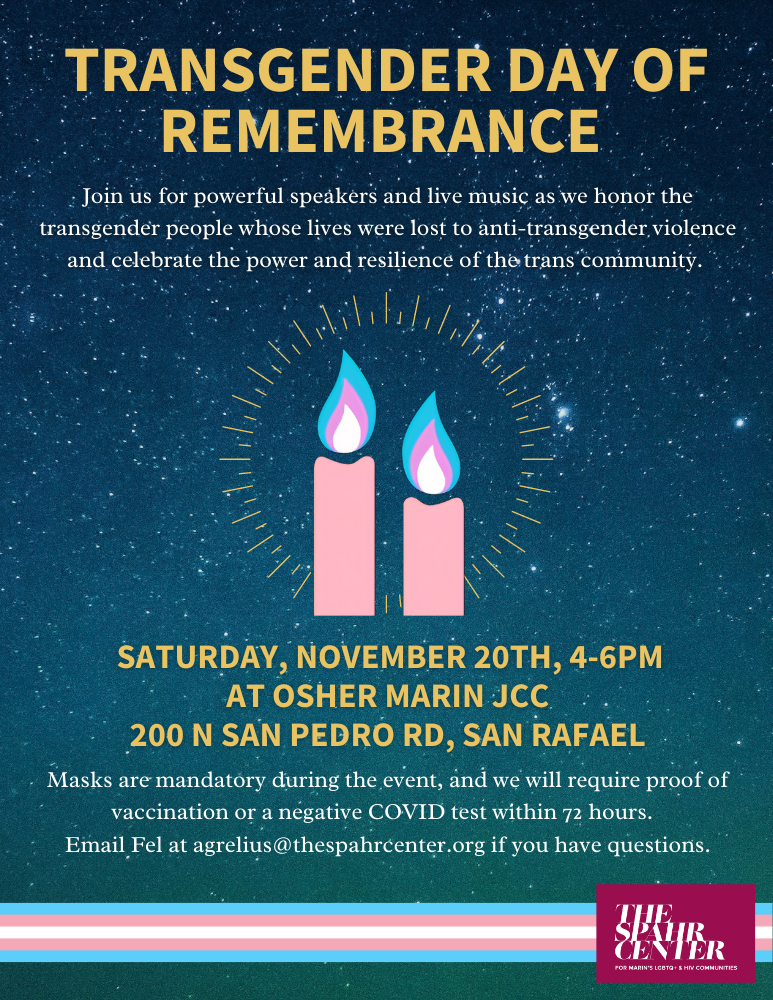
Transgender Day of Remembrance 2021Saturday, November 20th, 4pm-6pm At Osher Marin JCC200 N San Pedro Rd, San Rafael
Transgender Day of Remembrance (TDOR) was founded in 1999 by transgender advocate Gwendolyn Ann Smith as a vigil to honor the memory of Rita Hester, a transgender woman who was killed in 1998. The vigil commemorated all the transgender people lost to violence since Rita Hester’s death, and began an important tradition that has become the annual Transgender Day of Remembrance.
TDOR founder Gwendolyn Ann Smith, says “Transgender Day of Remembrance seeks to highlight the losses we face due to anti-transgender bigotry and violence. I am no stranger to the need to fight for our rights, and the right to simply exist is first and foremost. With so many seeking to erase transgender people — sometimes in the most brutal ways possible — it is vitally important that those we lose are remembered, and that we continue to fight for justice.”
Join The Spahr Center on November 20th to mark Transgender Day of Remembrance in Marin County. We will feature a panel of transgender people from Marin County, and a keynote speaker addressing the intersections of racism, transphobia, and misogyny that leads to Black transgender women specifically being murdered in such high numbers. In order to protect our community, we will require attendees to wear masks and show proof of vaccination or a negative COVID test within 72 hours of the event. Please share information about the event widely with your networks: we encourage all to show up in support of trans people in Marin County and beyond!
Nevada Democrat Kimi Cole wants to become the country’s first openly transgender politician elected to a statewide office.
Cole, who chairs the Nevada Democratic Rural Caucus, announced plans to run for lieutenant governor in Nevada on Wednesday at an event in the state capital.
“I don’t want to make a big issue about my background as such,” Cole said Thursday in an interview with The Associated Press, noting the barrier-breaking potential of her candidacy. “We have really pressing issues in this country. To be able to assess them, address them and take care of them is going to take a lot of conscientious effort.”
There are more than 40 transgender politicians serving in elected office as state lawmakers, judges and city council members, according to a tally from Victory Institute, a group that works to elect LGBTQ politicians. None as of yet have won a statewide race.
Cole, a former construction manager who lives in Carson City, entered politics a decade ago after coming out publicly as transgender and experiencing firsthand what it felt like to be seen differently by the public.
“All of a sudden I was being treated differently or being treated poorly. People steered away from me and everything. That’s when it really hit me like a brick: How does anybody that looks different or talks different deal with life?” Cole said.
Cole has since served as chair of the Douglas County Democrats and volunteered to assist people experiencing homelessness and addiction. Cole has also worked to encourage presidential candidates to pay attention to rural Nevada, despite the fact that Republicans dominates elections outside the state’s major cities.
Nevada has not had a lieutenant governor since Democrat Kate Marshall resigned to accept a White House appointment in August. Gov. Steve Sisolak, who has the power to appoint a successor, has not filled the position.
Three Republicans — former state treasurer Dan Schwartz, perennial candidate Mack Miller and Las Vegas city councilman Stavros Anthony — and one other Democrat, Henderson Mayor Debra March, have announced plans to run for Lieutenant Governor. March was endorsed by the state Democratic Party in August.
Cole said she understands the attention paid to a transgender candidate’s personal story but plans to focus the campaign on kitchen table equity issues like housing affordability and transportation. However, Cole still acknowledges the importance of visibility to many in the transgender community.
“So many people have come up to me and just told me that, by doing what I do and living vocally and openly, it has inspired them … to feel really good about their lives and how they’re living,” Cole said.
SoCo’s LGBT+ Community has lost a beloved community member, Lori Zee. Please come out for a celebration of life for Lori Zee.
Here are the details: November 20, 2021R3 in Guerneville.5-9pm. This would have been Lori’s birthday. Come out and dance to music that Lori played for many years at many events as a wonderful DJ.Come share stories.
Once last week’s victors are sworn in, the United States will have elected more than 1,000 concurrently serving LGBTQ officials for the first time in history, according to the political action committee LGBTQ Victory Fund.
At least 237 lesbian, gay, bisexual, transgender and queer candidates were on the ballot — an 18.5 percent increase since the last off-year election, in 2019, according to the Victory Fund.
Races were still being called Tuesday afternoon, but in many states, LGBTQ candidates celebrated historic firsts.
Six out LGBTQ candidates won their races for the New York City Council, which means the number of out representatives on the 51-person council increased from four to six. According to the Victory Fund, it’s the largest group of out LGBTQ council members ever elected in a city, with the previous record being five also in New York.
Crystal Hudson.Katrina Hajagos
Democrats Crystal Hudson and Kristin Richardson Jordan — who will represent District 35 in Brooklyn and District 9 in Upper Manhattan, respectively — will be the first two Black out LGBTQ women elected to the council. Tiffany Cabán and Lynn Schulman — both Democrats who won seats representing District 22 and District 29, respectively, in Queens — will be the first out LGBTQ women elected to a public office that represents Queens, according to the Victory Fund.
In the Midwest, Rebecca Maurer, a Democrat, defeated a 16-year incumbent and became the first out LGBTQ woman elected to the Cleveland City Council, and Gabriela Santiago-Romero, also a Democrat, became the first LGBTQ councilwoman in Detroit and the first Latinx out LGBTQ woman elected in the entire state of Michigan.
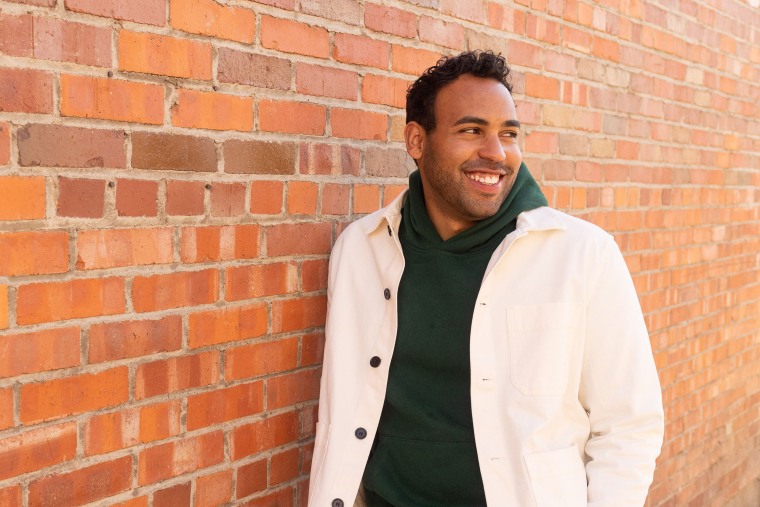
Christopher Coburn.Leanna Joy Photography
Across the country, in Montana, Democratic candidate Christopher Coburn became the first Black out LGBTQ person ever elected in the state when he won his race for the Bozeman City Commission, according to the Victory Fund.
Trans candidates also won a number of races Tuesday. Dion Manley became the first trans person elected in the state of Ohio after winning his race for the Gahanna-Jefferson school board in Gahanna, just outside of Columbus.
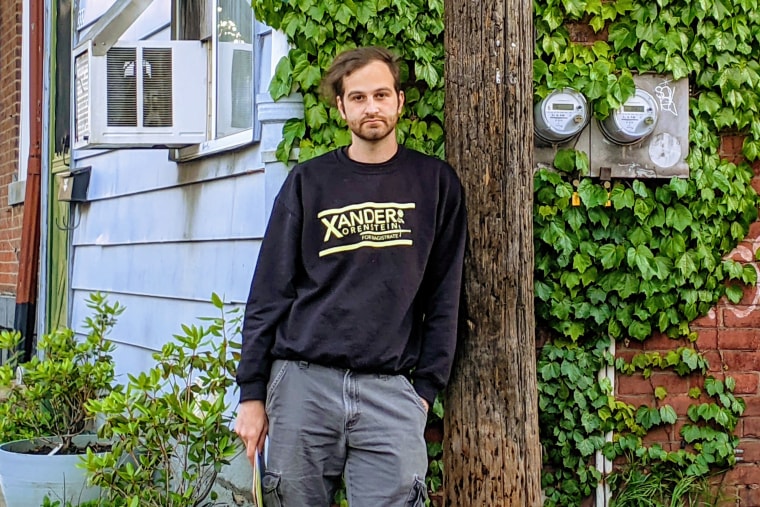
Xander Orenstein.Bex Tasker
Xander Orenstein, who uses gender-neutral pronouns, became the first nonbinary person elected to a judicial position in the United States after winning their race for the Allegheny County Magisterial District Court in Pennsylvania. They ran unopposed in the general election after defeating incumbent Anthony Ceoffe in the primary by 40 votes.
Thu Nguyen, a Democrat, became the first nonbinary person elected in the state of Massachusetts after winning their race for Worcester City Council, according to the Victory Fund. Orenstein and Nguyen will add to the small pool of nonbinary elected officials serving in the United States, which currently stands at 11.
Though most of Tuesday’s LGBTQ victors are registered Democrats, not all are. Don Guardian became the first out LGBTQ Republican state legislator in New Jersey when he won his election to the General Assembly. New Jersey — until Guardian is sworn in — is one of just six states in the entire country without any LGBTQ people currently serving in the Legislature, according to the Victory Fund.
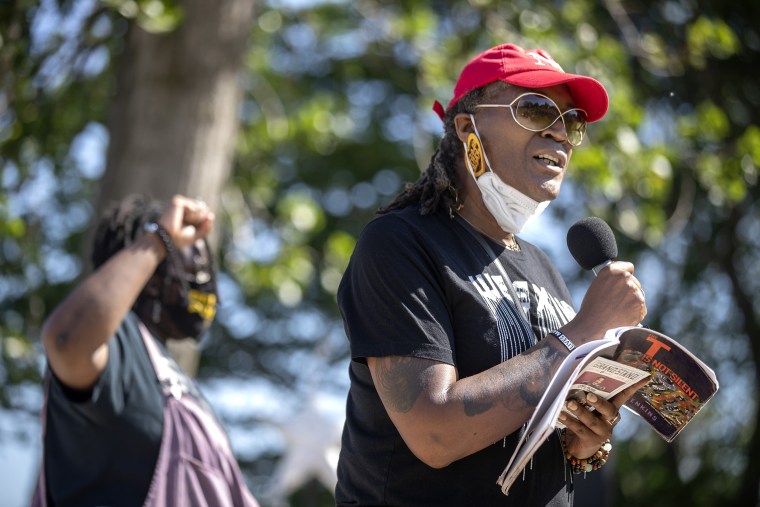
Andrea Jenkins, vice president of the Minneapolis City Council, speaks to community members on June 7, 2020, in Minneapolis.Jerry Holt / Star Tribune via AP
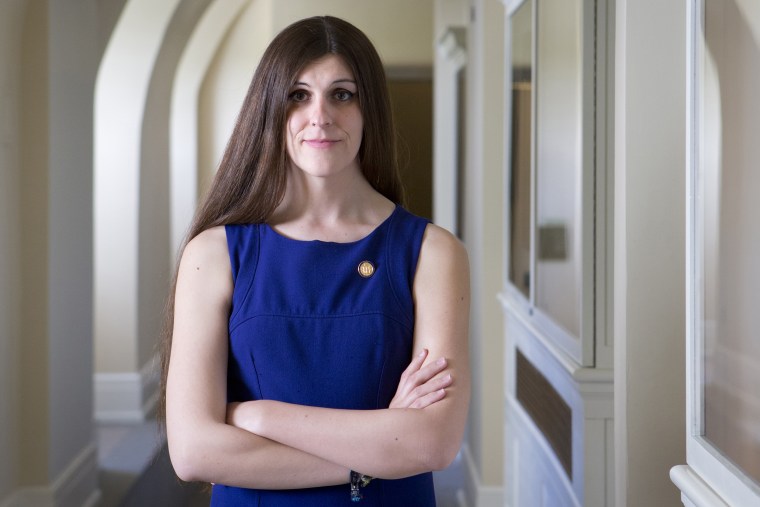
Some LGBTQ incumbents won re-election Tuesday night, including Danica Roem, a member of the Virginia House of Delegates, and Andrea Jenkins, who was re-elected to the Minneapolis City Council. Roem became the first out transgender person to serve in a state legislature after her win in 2017 and is now the longest-serving out trans state legislator in U.S. history, after winning re-election for a second time. Jenkins in 2017 became the first Black trans woman elected to public office.
Annise Parker, Houston’s first openly LGBTQ mayor and the current president and CEO of the LGBTQ Victory Fund, said she has mixed feelings about the outcome of election night. She noted the Victory Fund works with LGBTQ candidates at every level of office, but it focuses more than other national organizations on down-ballot candidates for school board and city council, for example.
“Those candidates had a really good night, just as they did last year, but the closer you get to the top of the ticket where national politics come into play, the more problematic it is,” she said.
Two Victory Fund-endorsed candidates lost their races in the Virginia House of Delegates: Del. Joshua Cole, a Democratic incumbent, lost his race to Republican challenger Tara Durant, and Douglas Ward, a Democratic challenger, lost his race to Republican incumbent Michael Webert.
She said “culture war” issues played a significant role in the races in Virginia, and in many other areas of the country, and that some candidates don’t know how to respond to them.
Danica Roem.Julia Rendleman for The Washington Post via Getty Images file
For example, she said Republican Glenn Youngkin, the projected winner of Virginia’s race for governor, emerged victorious by “hitting Trump themes without including Trump.” LGBTQ issues played a significant role in his campaign: Youngkin faced criticism last month for saying that, though he doesn’t personally supportmarriage equality, he would respect that it is legal in Virginia. He also expressed his opposition to trans girls playing on girls sports teams at school — an issue that has led to 10 states restricting transgender students’ sports participation — and supported Tanner Cross, a Virginia school teacher who was suspended (and later reinstated) after saying he would refuse to use pronouns consistent with transgender students’ gender identities.
“It is easier to convince someone to vote out of fear than out of positive conviction,” Parker said. She said the technique is not new and that LGBTQ candidates and pro-LGBTQ candidates have to know how to redirect the conversation — especially going into the 2022 midterm elections, as these issues are likely to gain traction.
She pointed to Roem, who has run against candidates who have used anti-trans rhetoric three times now, and she’s won every time.
“Danica is focused on the things that matter most to her constituents — bread and butter, basic legislative issues — and does not allow herself to get sidetracked into this culture war red meat stuff,” Parker said.
Breaking with its usual practices on LGBTQ rights and issues, China launched its first medical clinic to treat transgender children and adolescents.
The Chinese state-backed media outlet The Global Times recently reported that the clinic opened at the Children’s Hospital of Fudan University in Shanghai, saying that it will “serve as a bridge between transgender children, parents, doctors and the various circles of society.”
The clinic’s opening and its celebratory coverage in Chinese state media comes as the country simultaneously works to limit LGBTQ activism and voices.
Homosexuality has not been illegal in China since 1997, but restrictions for LGBTQ people still remain.
Last week, a Chinese LGBTQ advocacy group that has led many of the country’s legal cases to expand LGBTQ rights announced that it would be halting its work “indefinitely.”
Chinese tech giant Tencent’s WeChat social media platform deleteddozens of LGBTQ accounts run by university students in July, saying that the accounts had broken Chinese internet rules. But critics argued that the wipeout of the accounts amounted to censoring LGBTQ activism.
And after 11 years in operation, Shanghai Pride canceled its annual LGBTQ celebration last year and said — without explanation — that it would no longer hold the event.
The Global Times reported that research by Chinese scholars linking transgender youths to higher rates of depression, anxiety and suicide attempts led doctors to believe that specialized care for trans minors was necessary.
In the United States, advocates and scholars have also been warning about the disproportionate rates of bullying, harassment and mental health issues plaguing trans youths.
A survey of over 35,000 LGBTQ youths and young adults this year by The Trevor Project, an LGBTQ youth suicide prevention and crisis intervention organization, found that more than half of transgender and nonbinary respondents seriously considered suicide.
It’s unclear how many children in China identify as transgender, as there is little research from the country on its trans community. However, a 2021 analysis by the Williams Institute at the UCLA School of Law found that 14 percent of over 1,000 Chinese respondents say that they have transgender acquaintances.
What started as an ordinary Wednesday night in Norfolk, Virginia, turned to tragedy when a gunman shot five women, killing three and injuring two. Among the victims was a lesbian couple attempting to save their teenage daughter.
Nicole Lovewine, 45, and her partner, Detra Brown, 42, were enjoying an evening with friends after coming home from work when the shooting took place, reports The Virginian-Pilot. As they spoke with other adults, approximately a dozen children played nearby, some using a trampoline that Lovewine had bought after a nearby recreation center shut down.
Then, at around 6 p.m., a car pulled up. The newspaper reports that the rear door swung open and Lovewine’s 19-year-old daughter, who was pregnant, jumped out. Shortly after, a man — Ziontay Palmer, 19 — reportedly exited from the passenger side. That’s when shots were fired.
When the shooting stopped, Lovewine and Brown — as well as 44-year-old Sara Costine — were dead. Lovewine’s daughter and a 39-year-old woman were injured and taken to the hospital. Both are expected to recover, according to the newspaper.
Police report that Lovewine and Brown ran outside to render aid when they were shot and killed by Palmer.
“As the community was trying to render aid, this coward shoots them,” said Norfolk Police Chief Larry Boone, per 13 News Now.
“We need to start speaking up because this, I’ve never seen this in my 30 years career — five women shot at one time,” he said.
Palmer, who was in a relationship with Lovewine’s daughter, is now in police custody, charged with three counts of second-degree murder, two counts of malicious wounding and several firearm charges. He is being held without bond after his arraignment Thursday in Norfolk General District Court.
Boone adds that police believe this was a domestic issue.
Robin Gauthier, executive director of Samaritan House, a domestic violence support group, told the 13 News Now that she was surprised to see bystanders get hurt, as she’s rarely seen that happen in her 20 years helping domestic violence victims.
“Just a real disturbing trend that the bystanders are also getting hurt or killed,” she said. “It concerns me because people aren’t going to want to help the victims if they are in danger.”
“This is an epidemic and we have to pay attention to our African American women,” Gauthier said. “This is serious. They’re getting killed.”
Lovewine leaves behind four children, three boys and a girl, according to WTKR. The community is grieving the losses of the three who died.
“They loved to dance,” Burt McManus — bartender and manager at 37th & Zen, where the couple were regulars — told the news station. “That’s what I really loved about them. They would love to come and sing karaoke. They came out every Wednesday, like our shrimp night. They were just a big part of our community.”
“I can see them rushing to the scene, probably, even if it wasn’t her daughter because that’s who they were. If something’s happening, they’re going to go see what’s up,” McManus said.
Lesbian, gay, bisexual and transgender American Indian and Alaskan Native (AIAN) adults have higher levels of mental health issues, physical abuse and economic instability than their non-LGBTQ peers, according to a new report.
The study, released last month by the Williams Institute at the UCLA School of Law in advance of Native American Heritage Month in November, found 42 percent of AIAN LGBTQ adults have been diagnosed with depression, compared to less than a quarter of non-LGBTQ Native people and just 6.7 percent of the general U.S. population.
AIAN LGBTQ adults, particularly women, are also more likely to engage in high-risk health behaviors, including heavy drinking, according to the findings.
Three-quarters of respondents reported not having had enough money to make ends meet in the prior year, compared to less than half of non-LGBTQ AIAN people. And nearly half reported a major financial crisis in the prior year, compared to just 11 percent of heterosexual, cisgender Indigenous people.
“The complex picture of health and economic vulnerabilities of AIAN LGBT people is likely a product of factors shared with all Indigenous peoples, such as the impact of historical trauma, and those shared across LGBT people, such as anti-LGBT stigma,” said lead author Bianca D.M. Wilson, a senior scholar of public policy at the Williams Institute and the report’s lead author, told NBC News.
In the report, Wilson stated that, “It is critical that policies and service interventions consider the LGBT status and multiracial identities of AIAN adults.”
‘Pushed out to the fringes’
Somáh Haaland, who is queer and nonbinary and uses gender-neutral pronouns, is the media coordinator for the Pueblo Action Alliance. Haaland also lives with clinical depression.
“The unique intersection of being Native and queer can feel incredibly isolating, both in a displaced urban setting and in our own communities,” they told NBC News.
Haaland said queer Indigenous friends have spoken to them about feeling “like they have to chose one marginalized identity over the other because existing as both simultaneously feels like it is not physically safe or feasible for their mental health.”
“In white queer spaces they experience racism and disconnection, while at home or on their reservation they may feel like being out could exclude them from cultural activities or simply being in community with their people,” said Haaland, whose mother is Secretary of the Interior Deb Haaland.
“Being queer and being Indigenous are both beautiful identities to carry that are sacred when they intersect … But we often must fight twice as hard just to show that we are worthy of living and thriving.”
SOMÁH HAALAND, PUEBLO ACTION ALLIANCE
The Williams Institute study found that violence aimed at LGBTQ American Indians and Native Alaskans was prevalent: More than half of all respondents reported having been physically or sexually assaulted at some point, and 81 percent reported verbal abuse.
Pamela Jumper-Thurman is a retired research scientist in the ethnic studies department at Colorado State University and has researched HIV/AIDS education, substance abuse and mental health in American Indian communities for three decades. Jumper-Thurman said she’s not surprised by the findings.
“In the cities, they may have access to a sense of community, but on the reservations and the rural surrounding areas, they can be ostracized, made fun of and pushed out to the fringes,” she said of LGBTQ American Indians. “They have to be very careful about who they’re out to.”
Tribes are sovereign nations with their own laws and regulations, she added. “If LGBTQ people get assaulted or beaten up in a hate crime on tribal land, it’s often not prosecuted.”
Data on LGBTQ American Indians is extremely limited, but a 2010 survey conducted for the New York State Department of Healthfound nearly 1 in 3 (29.4 percent) reported experiencing hate violence — the highest rate of any LGBTQ demographic in the report.
State initiatives, like anti-discrimination and hate-crime laws and inclusive education programs, often don’t apply on reservations. Even same-sex marriage is not uniformly recognized.
A 2015 report from the National Congress of American Indians found 54 percent of gay and lesbian AIAN students reported being subject to physical violence because of their sexual orientation, and more than 1 in 3 said they missed class at least once in the last month for fear of being bullied or harassed.
“LGBTQ kids don’t have a place to go,” Jumper-Thurman said. “They don’t have family acceptance, and they may not even have a group of friends they feel comfortable with.”
Haaland shared a similar sentiment.
“Being queer and being Indigenous are both beautiful identities to carry that are sacred when they intersect,” they said. “But we often must fight twice as hard just to show that we are worthy of living and thriving.”
Working toward solutions
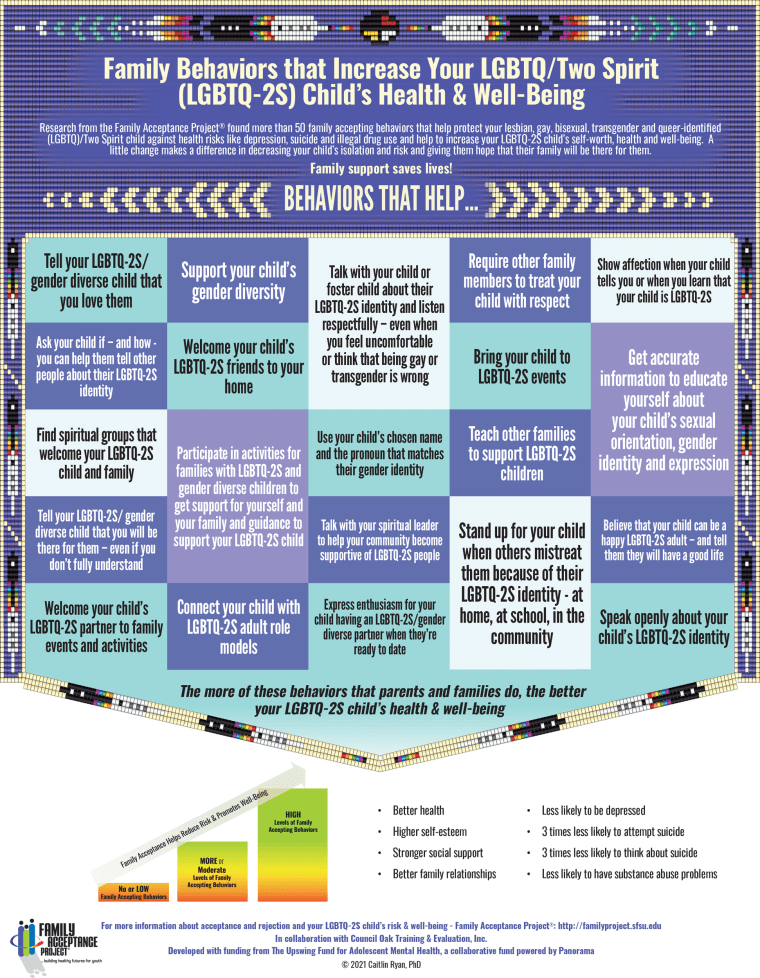
Jumper-Thurman recently worked with the Family Acceptance Project at San Francisco State University on a series of posterstargeting American Indian families and communities to help support LGBTQ and two-spirit youth. (The phrase “two-spirit” started as an umbrella term in the 1990s for the understanding of gender beyond male and female that many tribes historically embraced before colonization but has come to encompass a diversity of sexual orientations and gender identities.)
Courtesy Family Acceptance Project
The posters show how negative reactions to a child’s sexual orientation, gender identity or gender expression can have a detrimental impact on their well being.
“You’re part of a group already dealing with racism and historical trauma and, within that group — if you’re queer — you can be alienated from your community and even your family,” said Sharon Day, a member of the Ojibwe nation and executive director of the Indigenous Peoples Task Forcein Minneapolis. “For people living on reservations, these are small, rural communities that are slower to change.”
Day was one of two children to come out in her family. In 1987, she helped organize the Basket and the Bow, the first national gathering of gay and lesbian American Indians, held at the Minneapolis American Indian Center. (The annual event was later renamed the International Two-Spirit Gathering.)
Today, the Indigenous Peoples Task Force offers a variety of programs but works extensively in HIV education and testing, harm reduction and suicide prevention among Native youth.
Suicide is the second-leading cause of death for Native youths ages 10 to 24, according to the National Indian Council on Aging. A study last year by The Trevor Project found LGBTQ AIAN young people were two-and-a-half times more likely to report a suicide attempt in the past year than their non-Native peers (33 percent to 14 percent).
Sharon Day. Courtesy Sharon Day
Both Day and Jumper-Thurman say acceptance of LGBTQ members varies greatly from tribe to tribe and often depends on religion.
“The communities that have been heavily Christianized are the ones where there’s a lot of inequality and discrimination,” Day said. “In the Ojibwe creation story, men and women came into the world simultaneously. We didn’t come from Adam’s rib. That came with the settlers.”
In the South, especially, Christianity is a big part of Native American life, according to Jumper-Thurman.
“There’s just a lot of religious overtones that have infiltrated and changed the culture so much that being LGBT is seen as a bad thing in their eyes,” she said.
The Williams Institute survey found more than 60 percent of AIAN LGBTQ adults reside in the Western and Southern United States.
“In the South, the Church of Christ and Southern Baptist Church are pretty pervasive,” Jumper-Thurman said. “These are not gay-friendly churches, and they’re the ones that have a lot of sway in those areas. In the area where I lived, there were more churches in town than anything else. They may preach in the native language, but they still preach the dogma of white, homophobic Christianity.”
Day founded the Indigenous Peoples Task Force after her brother, Michael, tested positive for HIV in 1987 and they discovered a near total lack of HIV education and prevention programs aimed at the American Indian community.
“We aim to be a safe space, and LGBT people are integrated into everything we do,” Day said.
‘We’ve always been here’
Using data culled from the Gallup Daily Tracking Survey from 2012 to 2017, the Williams Institute estimates that 285,000 AIAN adults identify as LGBTQ. That’s roughly 6 percent of the total Native population — and slightly higher than the 5.6 percent of the general population that identifies as LGBTQ, according to a Gallup poll in February.
AIAN people who identify as part of the LGBTQ community tend to be younger, according the report, with 33 percent between the ages of 18 and 24, compared to just 15 percent of non-LGBTQ AIAN people in that age group.
“Social media has given the youth greater acceptance and more power to express who they are,” Day said. “Because they can belong to a community online, where they may not be able to in the real world. They can reach out to other people.”
For many years, identifying as gay meant leaving the reservation, Day said, for much the same reasons white people who came out left small towns — isolation, alienation and discrimination.
“In the last couple of decades, there are more queer [Native] people who are staying in their home communities,” she said. “Some of that has to do with changing attitudes. I think more and more we see people returning to the cultural values system of our past, and those values are to be kind and loving, to be courageous and honest, to be respectful, to seek wisdom and to be generous.”
“When we’re following that original system,” Day added, “it’s really difficult to not be accepting of other people.”
LGBTQ Natives, she said, “are starting to look at our history and say, ‘We’ve always been here. We’re part of the circle.’”
Haaland called the gender binary “a colonial construct based on European values.”
“Pre-contact, the Native people that we now label as queer and trans were often revered and had sacred roles in their communities,” they said. “It was not until colonialism that the European perspective of gender and sexuality was forced upon our people as a part of the bigger effort to control us and assimilate us into whiteness.”
Day said she tries to remind other American Indian and Alaskan Native people that “these are the values that have been with us since the beginning of time.”
“These are the original instructions,” she said, “and if we follow them it’s really hard to hate anybody.”
Navy veteran Rhett Chalk was rendered quadriplegic on Thanksgiving Day in 2003 after his knee — which he severely impaired while serving in Vietnam — gave out, causing him to suffer a life-changing spinal injury.
At the time, Chalk had been with his partner, Lawrence Vilord, for roughly 26 years. However, Vilord was barred from riding alongside Chalk in the ambulance or from consulting with his doctors because he was not his legal spouse or family member.
But that day, Vilord became the one who would care for Chalk until the veteran died in June 2020.
“Practically every night when I gave him a shower, religiously every night, he would say to me, without a doubt, ‘Thank God I have you in my life’ because he says ‘I would never have been able to survive; you’ve been my Rock of Gibraltar,'” Vilord, 77, told NBC News.
So when he was denied the full amount of enhanced Dependency and Indemnity Compensation (DIC) benefits — which are granted to surviving spouses of disabled veterans — by the Department of Veterans Affairs last November, he said it frustrated him “to the point of no return.”
“It was just another nail in the coffin. It was another nail in my heart,” Vilord said. “It was just another thing to delegitimize who I was and who he was.”
He qualified for the VA’s standard Dependency and Indemnity Compensation benefits for surviving spouses, which amounts to $1,300 a month. Vilord and Chalk married in 2017 after the Supreme Court’s landmark decision in Obergefell v. Hodges legalized same-sex marriage nationally in 2015.
However, because the pair were not married for at least eight years, Vilord was denied last October the VA’s enhanced benefits for survivors of certain veterans who are declared totally disabled at the time of death, for which Chalk qualified. The benefits would grant Vilord another $280 per month.
Vilord appealed his denial before the VA and in federal court last week, arguing that the rule effectively disqualifies all same-sex couples in nearly every state, including in his home state of Florida.
“Our argument though is that the mechanical application of that requirement does injustices in cases such as Mr. Vilord’s where he could not possibly have met the requirement,” said Tyler Patrick, one of the student members of the Veterans Legal Clinic at Harvard Law School, which is representing him. “It’s unconstitutional, not to mention nearly unjust, to deny him these benefits, these benefits that he is deserved after serving as his partner’s caretaker for 18 years, on the basis that Florida prevented him from marrying until 2015.”
“We argue that because the VA in making this determination looks to Florida state law, a state law which was unconstitutional and unconstitutionally as ruled in Obergefell prevented Mr. Vilord and Mr. Chalk from marrying, VA can’t then use that unconstitutional state law as the basis for its denial of his enhanced DIC benefits,” Patrick continued.
The VA did not immediately respond to a request for comment.
Patrick also points to previous cases where LGBTQ widowers have successfully petitioned for Social Security survivors benefits, after arguing that they were prevented from marrying, and therefore qualifying, because of bans on same-sex marriage.
Last year, federal district courts in Arizona and Washington ruled that excluding same-sex partners from Social Security benefits was unconstitutional. Shortly after, the benefits were put in legal limbo after the Department of Justice under the then-Trump administration appealed the two rulings. However, the department and the Social Security Administration under the Biden administration dismissed the appeals earlier this month.
Patrick said Harvard Law School determined that Vilord is the first person to challenge the requirement, making it a precedent-setting case for LGBTQ widowers of disabled veterans.
Vilord says he hopes his case will help others earn the benefits that they deserve.
“I just feel that there’s got to be somebody else out there that this will make a difference for,” he said. “I may not need it, OK? It’s not going to make a huge difference in my life. It’s not a great deal of money. It’s just the principle behind it.”
The Louise Lawrence Transgender Archive (LLTA or Louise), founded and managed by professor Ms. Bob Davis, is a fiscally sponsored project of the GLBT Historical Society. Located in Vallejo, California, it is one of the world’s largest repositories of archival materials pertaining to transgender and gender-nonconforming people in the world. In honor of Transgender Awareness Week this November, we interviewed Ms. Bob about Louise’s latest projects and on the significance of transgender history.
What are some of the initiatives that LLTA has been focusing on during the course of the COVID-19 pandemic?
Ms. Bob: Back in 2019, I gave a talk at the “Queering Memory” conference in Berlin called “Glamour, Drag and Death: HIV/AIDS in the Art of Three Drag Queen Painters.” It focused on the artists and performers Jerome Caja, Doris Fish and Miss Kitty, all three of whom died between 1991 and 1995, and includes analysis of artworks held by both LLTA and the GLBT Historical Society. I published an article based on the talk in Transgender Studies Quarterly this February, and now I’m working on turning the material into a short documentary film to reach a wider audience. I want people to learn about how these artists confronted AIDS. It was less intellectual; they responded in a visceral, emotional way, in a very valiant fight to retain their identities in the face of this horrible crisis. It’s now thirty years since the height of the AIDS pandemic, and there’s a whole generation of LGBTQ people who simply don’t have that lived experience. It’s important to pass on this history so they can learn about what the community went through.
What can you tell us about your ongoing online “scrapbook” project on the LLTA website?
Ms. Bob: It’s an online project called “I Think This is Our Denise: Discovering Forgotten Scrapbooks of Trans History,” and it’s based on a remarkable collection of six large scrapbooks donated by Taryn Gundling in 2014. They belonged to a trans woman named Denise, and contain over a dozen pages of candid photographs of transgender people and cross-dressers from the 1960s and 1970s. This was a time when the transgender community was just beginning to define itself and establish networks. It took four years of research to learn more about Denise and the people in the photographs. I recognized some of them in other LLTA archival collections; in issues of the first national transgender community magazine, Transvestia, which began publishing in 1960; and in photographs held by the Art Gallery of Ontario, many of which were published in the book Casa Susanna. These photos depict transgender people vacationing at several Catskill mountain resorts, one of them named Casa Susanna, run by Susanna Valenti and her wife Marie. These establishments served as safe spaces for transgender women to vacation in their gender of choice in the 1960s and 1970s.
Now we’re using the scrapbooks to do a deep dive into transgender history. LLTA is partnering with the Art Gallery of Ontario; the Transgender Archive at University of Victoria; the website “A Gender Variance Who’s Who”; and the Digital Transgender Archive to create an online hub that connects the resources of all five organizations to present photographs, biographies, and autobiographical articles about the individuals in the scrapbook. For example, many of the people in the snapshots wrote autobiographical articles in early issues of Transvestia, so the site connects you to essays they wrote about their lives. This project will allow them to really live again, and the site is being beautifully put together by our webmaster Robyn Adams.
You’ve been curating LLTA for many years now. What’s something you want people to learn about transgender history?
Ms. Bob: One of the things I’m personally interested in conveying relates to the growing awareness of trans, nonbinary, gender-nonconforming, genderqueer identities that we see today. When you examine historical materials, you realize that these shades of gender and gender identity have always been with us; they aren’t just emerging or being “invented” now. Trans people in the early 1960s, when the community first began to organize, were working with different terms, often borrowed from the medical establishment and out of date now. They certainly didn’t have the vocabulary that is available today. But if you dig down, the documentation reveals that people were defining, exploring, and working out their identities in complex ways. Understanding this supports us in continuing the work of building our community in the present so that we can display more of our rainbow.
Ms. Bob Davis (she/her/hers) is the founder and director of the Louise Lawrence Transgender Archive. In the 1990s she served two terms on the GLBT Historical Society Board of Directors.