‘I’m extremely scared,’ says Khairul, a young gay man from Brunei.
‘Khairul’ (not his real name) would only speak to GSN under the condition of anonymity out of fear of persecution in his home country.
‘Being gay in Brunei is something which means keeping it to ourselves and trying not to be open about it. There’s an invisible pressure which keeps us hidden,’ he says.
‘It really scares me to think that if they find evidence that proves I’m gay or conspiring against Sharia Law [by virtue of being] LGBT, then I’m scared that they might actually take action, and have the reasons to, I don’t know… Put me through conversion therapy, a trial, jail, a fine, or maybe execution.’
Tucked away on the island of Borneo and surrounded by the East Malaysian state of Sarawak, the tiny country’s majority-Muslim population of around 420,000 live under the absolute monarchy of Sultan Hassanal Bolkiah.
In May 2014, Hassanal announced that Brunei would begin the full implementation of Sharia law, to be introduced in stages over a number of years. The strict Islamic laws carried harsh sentences for a number of actions deemed offensive.
There was, perhaps, no group more affected than the LGBTI community: those found guilty of homosexual sex, the law decreed, would face punishment of death by stoning.
Almost overnight, Brunei was thrust under the global spotlight. The backlash against the anti-LGBTI laws was swift; with the international press leading the charge of shared outrage, celebrities and public figures began voicing their shock and revulsion, promising to boycott businesses with ties to Brunei.
Brunei in proximity to its neighbors in Southeast Asia
But real political action against the oil-rich nation was virtually non-existent. The initial shock soon faded, and the media cycle moved on.
In the four years since, the country’s move towards implementing Sharia law continues. For Brunei’s already marginalized LGBTI community, the possibility of prosecution, and perhaps a gruesome death sentence, is a lingering fear which never goes away.
Forced underground
In the space of a generation, various nations around the globe have seen rapid gains for LGBTI rights. This has largely been achieved through persistent political campaigning, relying on public visibility, and mobilization of the LGBTI community and its allies.
In Brunei, such forms of activism are an abstract concept. The mounting pressure has essentially forced the LGBTI community underground, to the point where it becomes a logical stretch to use ‘community’ as an accurate descriptor. Any attempt at open advocacy in Brunei is met with severe legal and social repercussions.
The pressure to conform can force many people to forcefully reject or suppress homosexual feelings. In some cases this can manifest in extreme forms, with gay men undergoing conversion therapy in attempts to ‘cure’ themselves.
‘I know one person who went through conversion therapy, and [he’s] acting as a straight man now, and married to a wife and has children,’ says Khairul. ‘I’m not sure what kind of therapy — I don’t even want to know, because I’m too scared to know what he went through.’
In Khairul’s experience, attempts at community building or reaching out to other gay men is restricted to the online space.
‘Social media is a good medium. But public social media, like Facebook, Twitter, or Instagram, if we were to say that we’re from Brunei and we’re gay, and we don’t tell our real identity, the Brunei community will actually go immediately on a “riot” and give extreme negative comments to everything,’ Khairul says.
‘I wrote an (anonymous) article about being gay, and reading some of the comments then I felt attacked, like “The ministry of religious affairs should deal with this,” or “You should be converted – it’s not too late,” or “We can save you if you come back to your religious roots”.’
Real connections are also difficult to build. The fearful climate leads closeted men to look to the online space to seek out secretive, non-committal sex over genuine relationships.
‘We were raised in this controlled community, and if we know that we’re gay then we have no rights, to be married, to have children, so we might just opt to have just sex with other men; we don’t care who they are,’ Khairul says.
The challenge of advocacy
‘Brunei [is] certainly the most conservative country in Southeast Asia,’ says Matthew Woolfe, founder and director of The Brunei Project, the only group whose main focus is advocating for LGBTI rights in Brunei.
‘I think that conservatism extends to the LGBT community. In general, the LGBT community in Brunei is much more low-profile than most other countries, and, whereas many of Brunei’s neighbors do have strong LGBT advocacy networks that have been quite vocal and have been campaigning for LGBT rights for some time, then, unfortunately, that just isn’t there in Brunei.’
The Sultan of Brunei, Hassanal Bolkiah, is thought to be one of the richest people in the world | Photo: YouTube/Alux.com
A native of Australia, Woolfe founded The Brunei Project in 2015 after hearing about the country’s adoption of Sharia law.
‘Something just clicked with me when I heard about these laws that were being implemented, and how unfair they are, and certainly how unjust and terrifying some of the laws are,’ says Woolfe.
The current reforms to implement Sharia law are still ongoing. Implementation of the second stage of the three-stage process — which includes the laws which can see the execution by stoning for homosexuality — is expected to begin within the next year.
Although the burden of proof for death by stoning is high – at least four people must testify to having seen the individual commit a homosexual sex act – and the law has not yet been implemented, just the thought of it has pushed the LGBTI community further into hiding.
‘I think people in Brunei, in general, are very afraid to take a risk,’ says Khairul. ‘Everyone wants to see change, they want things in the country to improve, they want their basic rights like to speak out, and so forth, but while they want those rights and they want to change, there are very few people who are actually willing to take the risks necessary to push for that change, and to advocate for that.‘
‘In general, I do feel extremely frustrated about the people who are don’t even want to fight for their rights for being gay, as they feel like it’s impossible,’ Khairul adds.
‘That’s one of the big challenges with LGBT advocacy in Brunei,’ says Woolfe. ‘People are relying on their private networks, and keeping it within those networks for support, but they’re not reaching out to these other organizations where they could potentially draw from their experience to start forming some sort of advocacy movement within Brunei.’
Reaching out to Southeast Asia’s LGBTI community
The Brunei Project has firsthand experience of the challenges in trying to organize for such a cause in the country.
In 2016, the group hosted a low-key get-together for members of the LGBTI community in a hotel in Brunei. Though it went off without incident, when Woolfe later attempted to reenter Brunei he was stopped by immigration officials and told he had been effectively blacklisted and barred from re-entering the country.
‘Initially, I thought: “OK, where do I go from here?”’ says Woolfe. ‘Hopefully one day I’ll have it overturned. It does make it harder doing this work.’
Since then, Woolfe has begun developing ways to conduct his work for The Brunei Project in absentia.
‘A lot of the work that we had done, and continued to do, we based on social media,’ he says. ‘I continue to make new contacts through social media [and] continue to work with these contacts who are based in Brunei, it just means that I can’t visit the country myself.’
The Sultan Omar Ali Saifuddin Mosque in Brunei
The situation has also added urgency to the group’s efforts to forge connections with LGBTI groups in neighboring countries. Recently, The Brunei Project has begun building ties with LGBTI community support group Oogachaaga based in Singapore, offering gay Bruneians a nearby community to reach out to for help and support.
‘We have received a small number of clients connecting with us from Brunei, talking about feeling isolated with no local LGBTQ community resources, finding it difficult to live closeted lives, which in turn impacted their relationships with loved ones,’ Leow Yangfa, Oogachaaga’s executive director, said via email.
‘Not surprisingly, there were also concerns about their mental health and psychological well-being. The Brunei Project recently reported that there has been an increase in the number of suicides. Hence, in addition to offering our online counseling services, we also connected The Brunei Project with suicide prevention hotline and email services in Malaysia (Befrienders) and Singapore (Samaritans of Singapore).’
‘I feel like it’s going backwards’
While spreading the word and building connections with neighboring human rights groups is a necessary step, it is still very much a start. Brunei remains a conservative and closed-off country, where the fear of legal and social persecution has become nigh-on instinctual in the mindsets of many LGBTI Bruneians.
This is also at a time of heightened fear for the country’s LGBTI community. Though the transition into Sharia law has encountered delays, the Bruneian government is expected to see through its full implementation within the next few years.
In this respect, optimism is in short supply when considering the future of LGBTI rights in Brunei.
‘Unfortunately, I don’t see any sort of mobilization coming in the near future,’ says Woolfe. ‘I think that there’s a fear that if they do become more vocal and more active that may actually be to their detriment. From what I’ve gathered, there tends to be a feeling that if they keep a low profile and not get noticed, then they may be able to get through it.’
‘I feel like it’s going backwards and getting to a worse situation,’ says Khairul.
‘In all honesty, I feel like I can’t do much. I feel like I can’t even help my community by protecting them. If someone was out openly and they get attacked I’d feel like I’d need to protect them, but I’m scared that I can’t.’
The latest in our monthly “Fighting Back” series exploring contemporary queer issues in a historical context, this community forum will outline how social, physical and mental health resources for LGBTQ people first emerged in San Francisco and will address how to further strengthen and care for LGBTQ communities. A panel of historians, health providers, community organizers and advocates will discuss the evolution of LGBTQ health initiatives while underlining how this history can help inform today’s resistance movements. Reserve your free ticket here.
For many religious members of the LGBTQ+ community, accepting oneself can mean rejecting the Church. However, for Reverend Troy D. Perry, it simply meant there was an space to fill within the LGBTQ+ community with the word of God.And thus, the Metropolitan Community Church was born.
After being kicked out of his church in 1968 for coming out to his wife and clergy, Perry was at a loss.
“I felt like I had failed the Lord,” Perry said.
Yet, later that year he created a revolution within a revolution a year before Stonewall when he advertised in the Advocate magazine for a gathering in his home as a church service for gays, lesbians, bisexuals and transgender people. This small gathering of 12 people quickly grew into multiple churches around the country and eventually the world.
“God spoke to me,” Perry said. “I was called to preach, and that is what I did.”
It was no easy path though. Despite fire bombings of its sanctuaries and murders of its clergy, Perry led a movement and expansion of the denomination to become one of the world’s largest LGBT organizations with hundreds of churches in countries around the world. Only two months after founding the church, he began conducting what is considered to be the first same-sex wedding ceremony in the United States.
50 years later, the Los Angeles LGBTQ community will honor Perry on the 50th anniversary of his founding the first welcoming spiritual home for LGBTQ people, with a Gala event to be held on October 6 at St. John’s Episcopal Cathedral in downtown Los Angeles.
Perry is a renowned international LGBTQ human rights activist and a pioneer in social equality, legal protection and spiritual justice for LGBTQ people. From those early days in the struggle for LGBTQ acceptance, he led the first historic protests and marches throughout Los Angeles and around the U.S. He has continued to lead the way in building a worldwide movement and played a critical role in paving the way for marriage equality. He conceived the world’s first Gay Pride Parade and co-founded the Christopher Street West organization to launch the first LA PRIDE event in 1970. He most recently led a rousing call to action at the LA PRIDE 2017 Resist March.
“We refuse to go back to 1970,” Perry said. “We will resist all hate. As we chanted in 1970, ‘an army of lovers can never be defeated.’”
For more information regarding the celebration and gala event, contact John Boswell at 310.766.5868 or john@ourpride.org.
Photo: Courtesy Rev. Troy Perry. Rev. Troy Perry founded Metropolitan Community Church in his Huntington Park home 50 year ago.
Janelle Monáe, Kevin McHale and Amandla Stenberg (Vivien Killilea/Getty, Leon Bennett/Getty and Paras Griffin/Getty)
Since the last National Coming Out Day, dozens of celebrities have stopped, taken a deep breath and revealed to the world that they’re gay, bisexual, lesbian, transgender, queer, non-binary, pansexual — and even in one controversial case, two spirit.
From singers and political figures to sports stars and Hollywood’s brightest, the past 12 months have shown, in case anyone needed reminding, that anyone can be LGBT+.
As we look ahead to National Coming Out Day on Thursday (October 11), let’s celebrate the icons who put their heads above the parapet to be representative of the community — starting with some amazing musicians.
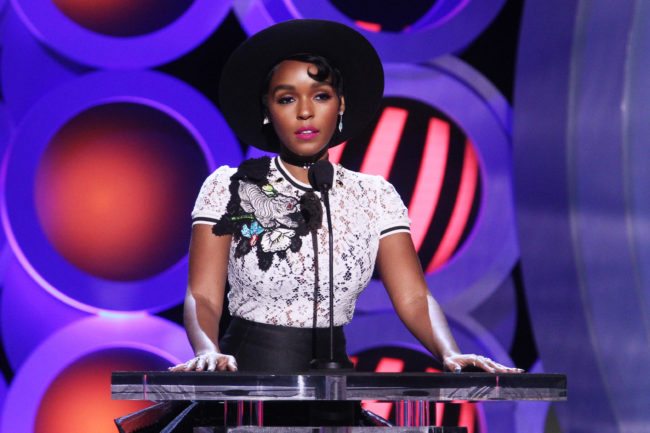
The Dirty Computer singer came out as “a queer black woman” in April after years of speculation, revealing that she had “been in relationships with both men and women.”
Monáe explained that she had identified as bisexual at first, “but then later I read about pansexuality and was like: ‘Oh, these are things that I identify with too.’
He continued: “I guess you could qualify me as pansexual because I really don’t care. If a person is great, then a person is great. I just like good people, if your heart’s in the right place.”
Coming out can be difficult — and so can labels. When the “I’m Yours” singer revealed in July that he had enjoyed sexual experiences with men in the past, he defined himself as two spirit.
This term, which is used by Indigenous North American and First Nations people to represent those who possess both masculine and feminine spirits and can encompass sexual, gender and/or spiritual identities, attracted backlash.
Nevertheless, it’s good that the 41-year-old musician felt comfortable enough to publicly announce his sexual orientation.
Rock band Say Anything’s lead singer also came out as queer, making the announcement in an emotional letter which also revealed that the group was breaking up.
Under the heading “GAY STUFF,” Bemis, 34, wrote: “I have always been bi-ish or queer or a straight guy who can also like boys.
“I always talked or joked about it with my friends and found it to be blatantly clear I was.”
The Finnish singer and Eurovision 2018 star came out to PinkNews in March, saying: “I am very proud to be lesbian and I feel very much like I am lesbian, totally.”
She said she was lucky enough to have never struggled with her sexual identity, saying: “My sexuality was never an issue.”
The British musician, who went to number one in more than 20 countries as a featured artist on Clean Bandit’s hit song “Rockabye,” opened up about her sexuality after releasing her debut album, Speak Your Mind.
She said: “I’ve never ever just been attracted to men. I’ve never just been attracted to women. I’ve never felt the need to tell anyone that I’m bisexual.
“I don’t feel like I am. I just feel like I’m attracted to who I like. I honestly feel like everyone is like that.”
Lorde’s sister Indy Yelich-O’Connor revealed she was bisexual in May.
The 19-year-old author took to Twitter to share the news, keeping things short and sweet by simply writing: “plot twist (I like boys and girls).”
The global singing sensation’s teen sibling then screengrabbed the tweet and shared it via an Instagram story, making sure all of her followers were up to speed on her sexuality.
Hodgson came out in April (zander hodgson/YouTube)
The British model, actor and Instagram star was one of many celebrities this year who chose to come out in a heartfelt YouTube video.
The actor, who lives in Los Angeles and has had small roles in Hollyoaks, Coronation Street and Shameless, decided to share his sexuality to inspire others who might be struggling to come to terms with their LGBT+ status.
In the video, Hodgson said: “I wanted to tell everyone that I am gay, and although that doesn’t change anything for me, and hopefully not for you, I just thought it was a really important thing to share with everyone.”
He added: “I wanted to do this video as well, because when I think about all the kids out there that are being bullied, or are really struggling with their sexuality, even teenage or adults, I just want you to know that you are not alone.”
Another model, actor and Instagram celebrity to come out this year was Derek Chadwick, who made the announcement in July, explaining that his parents were “not very accepting” when he first told them he was gay — and that he hoped his coming out would help others.
“Coming out in this way allows me to use the privilege that I have to help other people who don’t have that,” the Scream Queens actor added.
Andrea Russett came out to her 7.5 million Twitter followers and four million Instagram fans last month, the day before Bi Visibility Day, because — she said — her best friend Sandra Poenar told her she believed that queer people go to hell.
“I came out to Sandra as bisexual four years ago. (Surprise! Yeah. Not exactly how I planned to come out publicly, but s**t happens I guess),” she wrote in a lengthy social media post.
She added that she wanted to tell “anyone who is struggling with anything similar in their life, you are not alone.
“You are not any less of a person because of who you may choose to love.”
The YouTuber, who has more than 1.5 million subscribers, came out in November 2017 with a spectacular video which has so far attracted around four million views.
She told fans that her sexuality was something she had struggled to talk about to people close to her, leaving her depressed.
But after going through a personal journey, she posed in front of her rainbow-covered home and told her audience: “I’m Elle Mills and I’m bisexual.”
The racing legend and three-time Le Mans 24 Hours winner, is a legendary endurance racing champ who won the 24 Hours of Le Mans across three decades – in 1977, 1983 and 1994.
The racing driver, whose sexuality had been an open secret within sporting circles for some time, publicly acknowledged he was gay at the age of 69, ahead of his autobiography being released.
He talked about helping a suicidal student in 2012 and explained: “I thought, if my voice is strong enough to help one kid, it might help two kids, or five or a hundred.”
The footballer, who plays for Major League Soccer side Minnesota United, broke a huge barrier in June when he came out as gay.
Martin wrote a statement on his Twitter account which said: “June is Pride month, and I am proud to be playing for Pride, and to be playing as an out gay man.”
The 23-year-old added: “As we celebrate Pride night I want to thank my teammates for their unconditional support for who I am.
“In light of who I am I want to encourage others who play sports professionally or otherwise to have confidence that sport will welcome them wholeheartedly.”
Harrity, who has twice picked up the US Nationals title, became the first openly gay man at the top of squash in April.
In a post to social media, the 27-year-old athlete wrote: “To everyone I know, and to all who know me, I have something that I am finally ready to get off my chest.
“I am gay, and I’m ready to live my life as an openly gay man. I have decided to come out because I am convinced that having everyone know this about me is the only way I can truly be content.”
DeVine, a swimmer on the US national team, came out as gay last month, admitting that coming out was “really tough” for him and that he was afraid of how his team would react.
He broke the ice by first telling a former teammate, who he said “did a lot” for him “and was really there for me as a friend.”
And DeVine soon discovered that his apprehension about coming out to his teammates was unfounded, as everybody around him reacted well to the news.
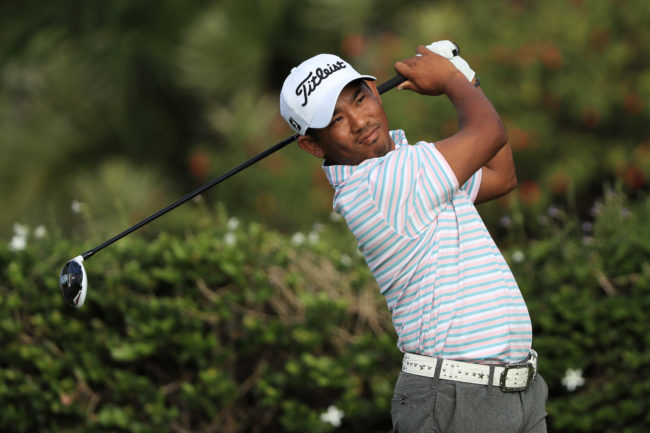
In September, Fujikawa became the first male professional golfer to come out as gay and said he hoped his story would help others in the LGBT+ community.
The American sportsman from Hawaii posted a photo of himself on Instagram on World Suicide Prevention Day, alongside a caption explaining why decided to go public about his sexuality.
“So… I’m gay. Many of you may have already known that,” he wrote.
“I don’t expect everyone to understand or accept me. But please be gracious enough to not push your beliefs on me or anyone in the LGBTQ community.
“My hope is this post will inspire each and every one of you to be more empathetic and loving towards one another.”
At the age of 47, the former world champion and Olympic swimmer confirmed he was gay.
The British sportsman said: “I got really good at the dance of telling half-truths. I’ve supported the Terence Higgins Trust, Stonewall, Ben Cohen’s Stand Up to Bullying campaign.
“But I’ve always done it under the radar.”
He added: “I’ve lived an openly gay life to my friends and family. But I always hid it as a swimmer.”
The Thor: Ragnarok actress spoke publically about her sexuality for the first time in June.
Thompson, who’s best known for her appearances on dystopian drama Westworld, as well as her role as the explicitly bisexual hero Valkyrie in Thor: Ragnarok, said: “I can take things for granted because of my family – it’s so free and you can be anything that you want to be.
“I’m attracted to men and also to women. If I bring a woman home, [or] a man, we don’t even have to have the discussion.”
The 19-year-old, who made their name in The Hunger Games series and uses gender-neutral they/them pronouns, previously came out as queer and—in 2016—as bisexual.
But in an interview with lesbian pop singer King Princess—real name Mikaela Straus—in June, they said: “*Insert Ellen DeGeneres’ TIME Magazine cover squat and wide smile* Yep I’m gay.”
The actor, who has since starred in hit film The Hate U Give, added: “I’m grateful for how being gay has afforded me this ability to experience and understand love and sex, and therefore life, in an expansive and infinite way.”
In July, at the age of 23, the Arrow and Scream actor revealed that they’re non-binary.
Taylor-Klaus came out as gay in 2016 by tweeting: “hello my name is bex and yes the rumours are true I am v gay.”
And their latest announcement was made with a similar air of nonchalance, with Taylor-Klaus — who’s a series regular on Netflix’s Voltron: Legendary Defender — tweeting it out in much the same way.
They wrote: “I came out as trans non-binary in a room full of people today. Guess it’s time for me to do that on here, too…
“Hi. I’m Bex, and the rumours are true. I’m v enby.”
The actor, who rose to fame in Disney Channel movie series Teen Beach, came out as gay in August, revealing at the same time that he was in a long-term relationship with screenwriter Blake Knight.
Ahead of his film Reach being released, he wrote on Instagram that he had “personally dealt with suicide within my own family [and] intense bullying in high school.”
He added that “myself and the man I’ve been in a relationship with for a long time (@hrhblakeknight) have both experienced shootings within our hometown school systems, and have witnessed the heartache that takes place in affected communities after such tragic events.”
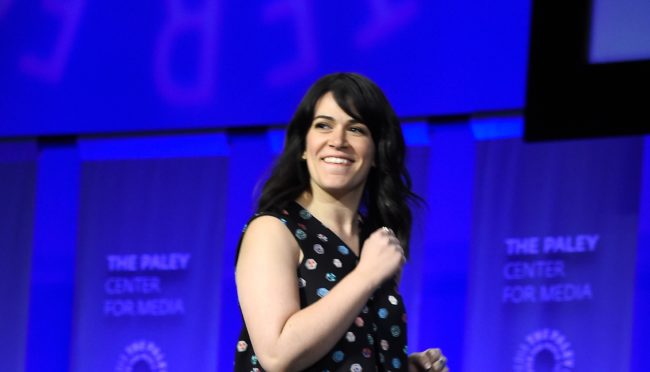
The star and co-creator of comedy series Broad City came out in April.
While promoting 6 Balloons, her Netflix film with Dave Franco, she said: “I kind of go both ways; I date men and women. They have to be funny, doing something they love.
“I don’t know — I’ve never really been interviewed about this before.”
24-year-old musician and Disney actress Alyson Stoner came out as bisexual in March.
The star, who is best known for her roles in Cheaper by the Dozen and The Suite Life of Zack & Cody, opened up about her sexuality and struggles with religion in an emotional essay for Teen Vogue.
She wrote: “I, Alyson, am attracted to men, women, and people who identify in other ways.
“I can love people of every gender identity and expression. It is the soul that captivates me.”
“It is the love we can build and the goodness we can contribute to the world by supporting each other’s best journeys,” she added.
The Glee actor appeared to come out on Instagram in March, when he posted a picture of a photo of one man’s hand on top of a different male hand, with an emoji performing the hand gesture for “I love you” in ASL.
The pair both featured in When We Rise, a 2017 TV miniseries created by Dustin Lance Black that told the story of the struggle for LGBT equality in the US.
The Gotham star spoke about his sexuality publicly for the first time in March, while starring in a drama set during the AIDS crisis.
Smith, who is best known for playing Edward Nygma, aka supervillain The Riddler, on Fox’s popular Batman prequel TV series, revealed he identifies as queer.
The actor added that his own family responded with “a lot of love” when he came out.
Totah has starred in Champions and Glee (Mike Coppola/Getty)
The actress, known for her TV roles in Glee, Champions and Jessie, came out as transgender in a powerful essay for Time magazine.
Totah, 17, said she was “grateful” for roles she has played over the years, but regretted allowing herself to become known as a gay male rather than as a transgender female.
She also spoke about her faith, saying she has “come to believe that God made me transgender” and added that when it came to auditions for female parts, she was planning to “gun for those roles.”
After all, she added: “It’s a clean slate – and a new world.”
True Blood actress Rutina Wesley quietly came out in November 2017 as she revealed her engagement.
The star, who played Tara Thornton on the cult vampire show and has also appeared on Queen Sugar, uploaded a series of Instagram photos revealing her engagement to Shonda, a chef from New Orleans.
She referred to her new fiancée as the “light of my life” and “fire of my loins” in the posts, adding hashtags which read: “Always more, never less. I said yes” and “I love you more than words.”
The Steven Universe creator came out as non-binary in July.
The 31-year-old is the mind behind the popular American cartoon series, which has repeatedly earned praise for its portrayal of queer characters like lesbians Ruby and Sapphire, who got engaged earlier this year.
Sugar, who has previously worked on Adventure Time and has been nominated for a Primetime Emmy Award five times, revealed: “One of the things that’s really important to me about the show is that the Gems are all non-binary women.
“They’re very specific and they’re coming from a world where they don’t really have the frame of reference. They’re coded female which is very important.”
Sugar added: “I am also a non-binary woman, which has been really great to express myself through these characters because it’s very much how I have felt throughout my life.”
We move on from one kind of brilliant writer to another, and Ronan Farrow’s decision in April to publicly come out.
The influential journalist, who was key in exposing Harvey Weinstein, quietly came out as he accepted an honour from the Point Foundation, which supports LGBTQ students.
The former NBC News personality, who is the son of Mia Farrow and director Woody Allen, told the audience: “Each and every LGBT person who has to go through a process of accepting themselves and turning rejection and isolation into strength is richer and more creative and more determined for that journey.”
The author and co-founder of The Toast came out in February, after realising his identity while researching for his latest book, The Merry Spinster.
“It turns out I’m trans!” said Ortberg, who has also written Texts From Jane Eyre.
“I’ve spent a lot of time thinking through this and going to support groups, and I started medical transition after an initial ‘trial period’ to see how I felt about it.”
He added: “I’ve been dealing with realising that the feelings I had before were not the whole story.
“How do I create a vision for the future that doesn’t negate the past? It was wild to have all of this come up consciously for me in the middle of writing the book.”
As well as culturally important people, the past year has also been notable for the political figures who have taken the brave step of revealing their true identities.
One of these was Huanwu, the grandson of Singapore’s first prime minister, who sparked celebrations in the country — where homosexuality is illegal — when he came out as gay in July.
Huanwu, who is also the nephew of current Prime Minister Lee Hsien Loong, broke the news through Out in Singapore, an exhibition for “LGBTQ persons who wish to come out to family, friends and peers in the community.”
Huanwu, 31, changed his Facebook profile picture to a photo of him and Yirui Heng, a 27-year-old veterinarian, after they were pictured together in the exhibition.
Ahlers was on Denmark’s version of Dragons’ Den (Tommy Ahlers/facebook)
The Danish cabinet minister revealed he was bisexual after years of speculation.
Ahlers, who has been the Minister of Science, Technology, Information and Higher Education since May,
said that he was coming out publicly at the age of 42 because his position as a minister meant he could not hide any part of himself.
“When people mention that they have heard a rumour, I explain to them that it is not a rumour, because there is no touch of fiction in it,” he said.
“But the truth is also that I have come to the conclusion that I like both men and women.”
The French cabinet minister, who serves as Secretary of State for the Digital Sector, came out at 33 on the International Day Against Homophobia, Transphobia and Biphobia.
The En Marche politician wrote: “Homophobia is an ill that eats away at society, invades high schools, and poisons families and lost friends.
“Worse, it haunts the minds of gay people, and sometimes forces us to hide and lie to avoid hatred, to live.”
Jones, who sits in the Florida House of Representatives, came out as gay almost six years after he was first elected.
In doing so, the politician became the first openly gay African-American legislator in Florida.
He revealed that he had known he was gay since kindergarten, but only opened up about his sexuality around five years ago when he decided to tell his family.
Jones came out by allowing Equality Florida’s political director to include him in a list of endorsements of openly gay candidates, saying he was initially unsure if it would be the best “coming-out party” before deciding to go ahead.
And here’s one more for this retrospective, which was too ambiguous to include as a definitive coming out moment, but too amazing to leave out entirely.
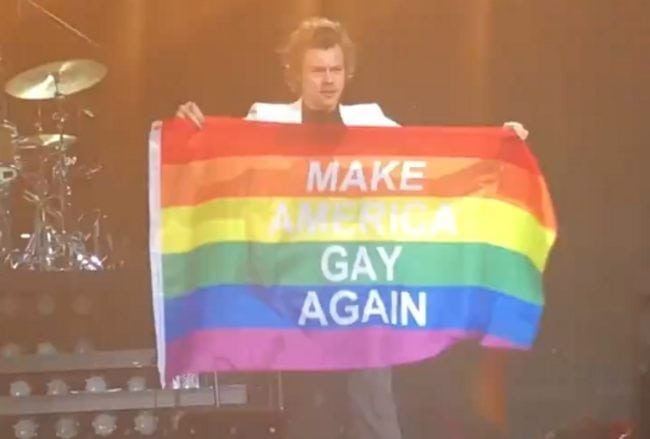
Harry Styles with the Pride flag at one of his concerts (pukinghoran/twitter)
That’s right, the one and only Harry Styles provoked an outpouring of enthusiasm from fans earlier this year, after lyrics in his new song seemed to reveal he was queer.
But Styles’ lyrics for his song “Medicine” led his fans to explode with excitement and hail him as a bi icon, as the 24-year-old star sang: “The boys and the girls are here, I mess around with them, and I’m okay with it.”
He followed up those sensational lines by singing: “I’m coming down, I figured out I kinda like it, and when I sleep I’m gonna dream of how you tasted.”
EQCA endorses viable candidates running for local, state and federal offices who have a proven track record of supporting equal rights and legal protections for LGBTQ Californians and who are committed to advancing these goals in their capacity as elected officials.
Click here to find your Congressional district. Click here to find your Senate and Assembly districts.
Bold indicates an openly LGBTQ candidate.
Current Endorsements
Statewide Offices:
U.S. Senate: Dianne Feinstein
Governor: Gavin Newsom
Lieutenant Governor: Eleni Kounalakis
Secretary of State: Alex Padilla
Attorney General: Xavier Becerra
State Controller: Betty Yee
State Treasurer: Fiona Ma
Superintendent of Public Instruction: Tony Thurmond
Insurance Commissioner: Ricardo Lara
Board of Equalization District 1: No endorsement
Board of Equalization District 2: Malia Cohen
Board of Equalization District 3: No endorsement
Board of Equalization District 4: No endorsement
Statewide Ballot Measures:
Proposition 1: YES (Housing for Veterans & Farmworkers)
Proposition 2: YES (Healthcare & Housing for Homeless)
Proposition 5: NO (School Funding Cuts)
Proposition 6: NO (Attack on Bridge & Road Safety)
United States House of Representatives:
Congressional District 1: No endorsement
Congressional District 2: Jared Huffman
Congressional District 3: John Garamendi
Congressional District 4: Jessica Morse
Congressional District 5: Mike Thompson
Congressional District 6: Doris Matsui
Congressional District 7: Ami Bera
Congressional District 8: No endorsement
Congressional District 9: Jerry McNerney
Congressional District 10: Josh Harder
Congressional District 11: Mark DeSaulnier
Congressional District 12: Nancy Pelosi
Congressional District 13: Barbara Lee
Congressional District 14: Jackie Speier
Congressional District 15: Eric Swalwell
Congressional District 16: Jim Costa
Congressional District 17: Ro Khanna
Congressional District 18: Anna Eshoo
Congressional District 19: Zoe Lofgren
Congressional District 20: Jimmy Panetta
Congressional District 21: TJ Cox
Congressional District 22: Andrew Janz
Congressional District 23: No endorsement
Congressional District 24: Salud Carbajal
Congressional District 25: Katie Hill
Congressional District 26: Julia Brownley
Congressional District 27: Judy Chu
Congressional District 28: Adam Schiff
Congressional District 29: Tony Cárdenas
Congressional District 30: Brad Sherman
Congressional District 31: Pete Aguilar
Congressional District 32: Grace Napolitano
Congressional District 33: Ted Lieu
Congressional District 34: Jimmy Gomez
Congressional District 35: Norma Torres
Congressional District 36: Raul Ruiz
Congressional District 37: Karen Bass
Congressional District 38: Linda Sánchez
Congressional District 39: Gil Cisneros
Congressional District 40: Lucille Roybal-Allard
Congressional District 41: Mark Takano
Congressional District 42: No endorsement
Congressional District 43: Maxine Waters
Congressional District 44: Nanette Barragán
Congressional District 45: Katie Porter
Congressional District 46: Lou Correa
Congressional District 47: Alan Lowenthal
Congressional District 48: Harley Rouda
Congressional District 49: Mike Levin
Congressional District 50: Ammar Campa-Najjar
Congressional District 51: Juan Vargas
Congressional District 52: Scott Peters
Congressional District 53: Susan Davis
California Senate:
Senate District 2: Mike McGuire
Senate District 4: No endorsement
Senate District 6: Richard Pan
Senate District 8: Bob Wieckowski
Senate District 10: No endorsement
Senate District 12: Anna Caballero
Senate District 14: Melissa Hurtado
Senate District 16: No endorsement
Senate District 18: Bob Hertzberg
Senate District 20: Connie Leyva
Senate District 22: Mike Eng and Susan Rubio
Senate District 24:Maria Elena Durazo
Senate District 26: Ben Allen
Senate District 28: Joy Silver
Senate District 30: Holly Mitchell
Senate District 32: Bob Archuleta
Senate District 34: Tom Umberg
Senate District 36: Marggie Castellano
Senate District 38: No endorsement
Senate District 40: Ben Hueso
California Assembly:
Assembly District 1: No endorsement
Assembly District 2: Jim Wood
Assembly District 3: Sonia Aery
Assembly District 4: Cecilia Aguiar-Curry
Assembly District 5: No endorsement
Assembly District 6: Jackie Smith
Assembly District 7: Kevin McCarty
Assembly District 8: No endorsement
Assembly District 9: Jim Cooper
Assembly District 10: Marc Levine
Assembly District 11: James Frazier
Assembly District 12: No endorsement
Assembly District 13: Susan Eggman
Assembly District 14: No endorsement
Assembly District 15: Jovanka Beckles
Assembly District 16: Catharine Baker
Assembly District 17: David Chiu
Assembly District 18: Rob Bonta
Assembly District 19: Phil Ting
Assembly District 20: Bill Quirk
Assembly District 21: No endorsement
Assembly District 22: Kevin Mullin
Assembly District 23: No endorsement
Assembly District 24: Marc Berman
Assembly District 25: Kansen Chu
Assembly District 26: No endorsement
Assembly District 27: Ash Kalra
Assembly District 28: Evan Low
Assembly District 29: Mark Stone
Assembly District 30: Robert Rivas
Assembly District 31: Joaquin Arambula
Assembly District 32: No endorsement
Assembly District 33: No endorsement
Assembly District 34: No endorsement
Assembly District 35: No endorsement
Assembly District 36: No endorsement
Assembly District 37: Monique Limón
Assembly District 38: Christy Smith
Assembly District 39: Luz Rivas
Assembly District 40: No endorsement
Assembly District 41: Chris Holden
Assembly District 42: No endorsement
Assembly District 43: Laura Friedman
Assembly District 44: Jacqui Irwin
Assembly District 45: Jesse Gabriel
Assembly District 46: No endorsement
Assembly District 47: Eloise Reyes
Assembly District 48: Blanca Rubio
Assembly District 49: Ed Chau
Assembly District 50: Richard Bloom
Assembly District 51: Wendy Carillo
Assembly District 52: Freddie Rodriguez
Assembly District 53: Miguel Santiago
Assembly District 54: Sydney Kamlager
Assembly District 56: Eduardo Garcia
Assembly District 57: Ian Calderon
Assembly District 58: No endorsement
Assembly District 59: Reginald Jones-Sawyer
Assembly District 60: Sabrina Cervantes
Assembly District 61: Jose Medina
Assembly District 62: Autumn Burke
Assembly District 63: Anthony Rendon
Assembly District 64: Mike Gipson
Assembly District 65: Sharon Quirk-Silva
Assembly District 66: Al Muratsuchi
Assembly District 67: No endorsement
Assembly District 68: No endorsement
Assembly District 69: Tom Daly
Assembly District 70: Patrick O’Donnell
Assembly District 71: No endorsement
Assembly District 72: Josh Lowenthal
Assembly District 73: Scott Rhinehart
Assembly District 74: No endorsement
Assembly District 75: No endorsement
Assembly District 76: Tasha Boerner Horvath
Assembly District 77: Sunday Gover
Assembly District 78: Todd Gloria
Assembly District 79: Shirley Weber
Assembly District 80: Lorena Gonzalez-Fletcher
Local:
Alameda Board of Education: Joaquin Rivera
Anaheim City Council – District 2: Jordan Brandman
BART Board – District 8: Janice Li
Berkeley City Council – District 8: Lori Droste
Cabrillo College Board of Trustees: Adam Spickler
Carlsbad Mayor: Cori Schumacher
Chico City Council: Alexandria Brown
Duarte City Council: Bryan Urias
Dublin City Council: Shawn Kumagai
El Cerrito Mayor: Gabriel Quinto
Encinitas City Council: Joe Mosca
Fullerton City Council – District 5: Ahmad Zahra
Hacienda La Puente Unified School District Board of Education: Anthony Duarte
Kern County Board of Supervisors – District 2: Whitney Weddell
Los Angeles County Assessor: Jeffrey Prang
Montebello City Council: Vivian Romero
Oakland City Council – District 6: Marlo Rodriguez
Orange City Council: Betty Valencia
Rancho Cucamonga City Council: John Gallegos-Cordero
Redlands City Council: Denise Davis
Redwood City Council: Jason Galisatus
Richmond City Council: Cesar Zepeda
San Carlos City Council: Laura Parmer-Lohan
San Diego City Council – District 2: Dr. Jen Campbell
San Francisco Board of Education: Phil Kim
San Francisco Board of Education: Mia Satya
San Francisco Board of Supervisors, District 8: Rafael Mandelman
Santa Ana City Council – Ward 2: Paul Gonzalez
Santa Cruz County Board of Supervisors – District 4: Jimmy Dutra
Valley County Water District Board: Ralph Galvan
Ventura County Community College Board of Trustees – Area 1: Dina Pielaet and AJ Valenzuela
A new exhibition at the GLBT Historical Society Museum surveys the graphic work of internationally renowned San Francisco queer artist and designer Rex Ray (1956 – 2015). “A Picture is a Word: The Posters of Rex Ray” features posters and book covers reflecting the Bay Area music scene and LGBTQ publishing from the 1990’s to the 2010’s.
Curators Cydney Payton and Amy Scholder draw attention to Ray’s signature graphics, first developed using a Mac Plus in the 1990’s long before design applications changed the course of artwork created using digital tools. The exhibition examines Ray’s use of repeating symbols and iconography appropriated from sources as varied as Andy Warhol, midcentury typography and design, gay culture and everyday objects.
“Vibrant and subversively accessible, Ray’s art effortlessly mixes high and low culture, beauty and post-modern conceptualism,” the curators note. “The distinctive digital style Ray developed went on to influence the next generation of artists, their clients in music and publishing, and their audiences.”
“A Picture Is a Word: The Posters of Rex Ray” is sponsored by
Another Planet Entertainment
Arlene Owseichik
Bill Graham Memorial Foundation
Gallery 16
Richard Peterson
Tim Gleason and the Estate of Rex Ray
Rex Ray. Poster for David Bowie at the Warfield Theatre (1997). Rex Ray Graphic Art Collection, archives of the GLBT Historical Society; gift of the estate of Rex Ray.
Rex Ray. Poster for Paul McCartney concert at Candlestick Park, San Francisco (2014). Rex Ray Graphic Art Collection, archives of the GLBT Historical Society; gift of the estate of Rex Ray.
Rex Ray. Poster for a concert by R.E.M., Modest Mouse and The National at the Greek Theatre, Berkeley (2008). Rex Ray Graphic Art Collection, archives of the GLBT Historical Society; gift of the estate of Rex Ray.
OUTwatch – Wine Country’s LGBTQI Film Festival is thrilled to announce our move to Rialto Cinemas in Sebastopol. We join an impressive list of film festivals that call Rialto Cinemas home, including the Sebastopol Documentary Film Festival. The weekend of October 12 – 14, we will present seven critically-acclaimed films and the first of two exciting additions to the festival. Sunday Cinematic Salons, a discussion of queer film, and LGBTQI Classic Film Revival, a presentation of groundbreaking films that changed the landscape of cinema.
OUTwatch is determined to bring the best of International LGBTQI Cinema to the North Bay. This year, the schedule is: Friday, October 12 7:30 p.m. Mapplethorpe An unflinching look at the life of acclaimed photographer Robert Mapplethorpe from his rise to fame along with best friend rocker Patti Smith in the 1970s to his untimely death from AIDS in the 1990s. Saturday, October 13 NoonMan Made Follow four men, their partners and families through the challenges and joys of transitioning as they prepare for Trans FitCon, the world’s only transgender bodybuilding competition. 2:30 p.m. Ideal Home A glamorous foodie couple’s (Steve Coogan; Paul Rudd) lives are turned upside-down when a 10-year-old grandson shows up and threatens to change their lifestyle forever in this hilarious and endearing comedy. 5 p.m.The Rest I Make Up María Irene Fornés, was a lover of Susan Sontag and an integral member of New York’s experimental theater scene. Grappling with memory loss, she still radiates inquisitive curiosity and unquenchable creativity in this emotional documentary. Sunday, October 14 1 p.m. Dykes, Camera, Action! This important documentary explores what happened when lesbians picked up cameras and changed how queer women are seen in film. Includes insightful interviews with pioneering filmmakers like Su Friedrich, Cheryl Dunye, Yoruba Richen, Rose Troche, and Barbara Hammer. Afterwards, Film scholar Jane Winslow will lead a discussion about the topics and issues raised in the film. 3 p.m.The Watermelon Woman OUTwatch is thrilled to bring this newly restored lesbian classic to the big screen. Cheryl and Tamara are making a video about their search for the mysterious film actress from the 1930s known only as the ‘Watermelon Woman.’
Tickets available at the theater or at www.outwatchfilomfest.org.
Home security detained members of the Mexican Gay Men’s Chorus in Texas.
The Coro Gay Ciudad de México traveled through customs at William P Hobby Airport in Houston.
The group were traveling to Los Angeles for a joined concert with the Gay Men’s Chorus of Los Angeles.
Members were forcibly detained on Sunday morning (7 October).
Officers claim the reason why is because Homeland Security discovered sheet music in their luggage.
University professor Jorge Gutierrez was also pulled aside. Gutierrez was asked to verify he was not the same Jorge Gutierrez suspected of stealing a truck, according to the LA Times.
Several chorus members discussed the concert as they waited. The officers suspected the 52-member group were entering the US as paid performers, not tourists.
An officer said he thought ‘these guys weren’t being truthful or forthcoming’.
The group faced being deported to Mexico.
However, the group assured the officer they were not being paid and explained the nature of the concert. They adviced him it would be an ‘international incident’ is they deported the chorus.
The concert host committee includes LA Mayor Eric Garcetti and US Senators Dianne Feinstein and Kamala Harris.
Eventually, the chorus were allowed to go to LA.
The Department of Homeland Security did not immediately respond to a call to comment.
A GMCLA spokesperson said they were ‘very glad’ their brothers and sisters from Mexico City arrived safely.
”We have had this trip planned for over a year, all had been granted US Visas and this came as a great shock,’ they told the Los Angeles Blade.
‘But given the serious deterioration of United States and Mexico relations under the Trump administration and the President’s endless offensive comments about the Mexican people—coupled with the appalling and inhuman treatment of people seeking asylum at the US-Mexican border—I can’t help but think they were singled out.’
‘We are here to give a message of unity between two countries,’ Professor Gutierrez added to the Los Angeles Blade.
‘For us, it’s a dream to perform with the GMCLA and that dream almost vanished at the Homeland Security Department in Houston.
‘Our only fault was to carry in our luggage, sheet music. I had to convince the officer we were not getting paid and we were only trying to fight for human rights because we think no matter what, everyone should be treated equally no matter where they come from.’
The concert will take place on 13 October at the Alex Theatre in Glendale.
Romania’s ruling party aims to introduce legislation to legalise civil unions for same-sex couples, the state news agency quoted a cabinet minister as saying, after a referendum to curb such rights failed to draw enough voters to be valid.
Sunday’s referendum to change Romania’s constitution to prevent same sex couples from securing the right to marry was seen as a key popularity test for the ruling Social Democrats (PSD), whose attempts to weaken anti-corruption legislation have been condemned by the European Commission. But the referendum backfired as turnout was only 21 percent, below the minimum 30 percent required for validity.
Analysts said voters had viewed the referendum as a ruse by the PSD, which supported the change, to divert attention from more pressing concerns. “This draft bill is finalised and…my fellow lawmakers will submit it in parliament next week,” European Affairs Minister Victor Negrescu told the state news agency Agerpres.
The anti-gay referendum was scheduled after a concerted push by US-based Christian hate groups including the Alliance Defending Freedom and the Liberty Counsel. The referendum cost a reported $46 million.
RELATED: Last month the Romanian Constitutional Court ruled that gay couples should have the same rights as all families. In June 2018, the European Union’s top court ruled that member nations must grant residency rights to LGBT couples legally married in other EU countries. In that case, an American man had married a Romanian national in Brussels. Same-sex marriage is legal in 14 of the 28 EU member nations. Six member nations, including Romania, currently provide no recognition of same-sex relationships.
A vocal LGBTI rights opponent won the first round of Brazil’s presidential election on Sunday.Jair Bolsonaro, a congressman from Rio de Janeiro, won with 46 percent of the vote. Former São Paulo Mayor Fernando Haddad finished second with 29 percent of the vote. The two men will face each other in the second round of voting on Oct. 28.
Brazilians cast their ballots in what will probably be remembered as the most polarized election in the country to date with leftist voters facing a choice between a handful of candidates who they felt would support much needed social advances. Observers have noted Bolsonaro, on the other hand, was the perfect candidate for this year’s political climate in the country.
The far-right militaristic, homophobic and misogynistic candidate represents the voice of every voter who was looking to shake-up the political class after 16 years of leftist governments under Presidents Luiz Inácio Lula da Silva and Dilma Rousseff, who was impeached in 2016.
The feeling right now in Brazil is one of fear.
People of color, women and LGBTI people organized themselves and marched against Bolsonaro in several cities and state capitals throughout the country right before Sunday’s vote.
Organizers sought to give these underrepresented groups who Bolsonaro has openly targeted a sense of belonging and unity, but this hope didn’t go very far as cases of intimidation and violence started to take place in São Paulo, where LGBTI people had already reported being assaulted by Bolsonaro supporters, and in other cities. People in São Paulo’s subway, for example, were chanting, “homos be careful. Bolsonaro will kill all faggots” before a soccer game.
As the presidential election heads into the second round with Bolsonaro going against Haddad, who is backed by Lula, many Brazilians have resigned themselves to having a far-right government run the country over the next four years.
Ciro Gomes was the last hope for many Brazilian leftists and especially for LGBTI people in the country since polls indicated he was the only candidate who could beat Bolsonaro in the second round.
The platforms of Gomes and Haddad both had proposals to protect LGBTI Brazilians, which included making homophobia a crime. Gomes only received 12 percent of the vote and has already endorsed Haddad in the second round.
But will it be enough?
Mathematically speaking, the candidates who lost the first round received enough votes to allow Haddad to become president. Observers note many voters are afraid of what Lula and leftists represent right now in the country and Bolsonaro has effectively tapped into it: Blaming women who shouldn`t earn the same salary as men because they get pregnant, gay people who will teach boys to be gay and people of color who don`t like to work for a living.
Observers note Bolsonaro’s supporters came out in force and forgot the inflammatory things he had previously said about minority groups going along with the will of the majority. Bolsonaro has also repeatedly said he is the change for which Brazilians have been waiting in this current political climate.
Most LGBTI Brazilians feel the election will have a direct impact on their lives remain hopeful that Haddad can move more to the center and focus his campaign in a way that shows he supports leftist social and more centrist economic policies. This compromise may be the price he has to pay to defeat a candidate even the right-wing has called a fascist.




 Photo: Courtesy Rev. Troy Perry. Rev. Troy Perry founded Metropolitan Community Church in his Huntington Park home 50 year ago.