Target is removing certain items from its stores and making other changes to its LGBTQ merchandise nationwide ahead of Pride month, after an intense backlash from some customers including violent confrontations with its workers.
“Since introducing this year’s collection, we’ve experienced threats impacting our team members’ sense of safety and well-being while at work,” Target said in a statement Tuesday. ”Given these volatile circumstances, we are making adjustments to our plans, including removing items that have been at the center of the most significant confrontational behavior.”
Target declined to say which items it was removing but among the ones that garnered the most attention were “tuck friendly” women’s swimsuits that allow trans women who have not had gender-affirming operations to conceal their private parts. Designs by Abprallen, a London-based company that designs and sells occult- and satanic-themed LGBTQ clothing and accessories, have also created backlash.
The Pride merchandise has been on sale since early May. Pride month is held in June.
Target confirmed that it has moved its Pride merchandise from the front of the stores to the back in some Southern stores after confrontations and backlash from shoppers in those areas.
Target’s Pride month collection has also been the subject of several misleading videos in recent weeks, with social media users falsely claiming the retailer is selling “tuck-friendly” bathing suits designed for kids or in kids’ sizes.
The moves come as beer brand Bud Light is still grappling with a backlash from customers angered by its attempt to broaden its customer base by partnering with transgender influencer Dylan Mulvaney. Bud Light’s parent company said it will triple its marketingspending in the U.S. this summer as it tries to restore sales it lost after the brand partnered with the transgender influencer.
Target and other retailers including Walmart and H&M have been expanding their LGBTQ displays to celebrate Pride month for roughly a decade. This year transgender issues — including gender-affirming health care and participation in sports — have been a divisive topic in state legislatures and the backlash has turned hostile.
Tennessee Gov. Bill Lee signed three more anti-LGBTQ+ bills into law Wednesday, maintaining the state’s status as the leader in that regard.
Lee, a Republican, signed House Bill 239/Senate Bill 1440, which “defines ‘sex’ as a person’s immutable biological sex as determined by anatomy and genetics existing at the time of birth,” according to a summary of the legislation on the state website. The Human Rights Campaign calls this “LGBTQ+ Erasure” and says it will have the effect of excluding LGBTQ+ people from state antidiscrimination laws and enabling discrimination against transgender people in rape crisis centers, domestic violence shelters, restrooms, locker rooms, and more.
Lee also signed HB 1269/SB 466, which protects public school teachers and staff from being disciplined, fired, or sued for not using a student’s chosen pronouns. It also protects school districts from lawsuits. “The use of pronouns by teachers and employees of public schools and [local educational agencies] in an educational setting is a matter of free speech or expression; and a teacher or employee of a public school or LEA should never be compelled to affirm a belief with which the teacher or employee disagrees,” the legislation states.
The third measure, HB 158/SB 102, prohibits public schools, charter schools, public colleges and universities, or state educational authorities from requiring implicit bias training on race or other aspects of identity.
Lee had already signed four anti-LGBTQ+ bills into law this year, and Tennessee has enacted a total of 19 anti-LGBTQ+ laws since 2015, the most of any state, an HRC press release notes. The four signed earlier include a ban on gender-affirming health care for trans youth; a ban on drag shows on public property or in a any venue where they’re accessible to minors; a bill allowing private schools to discriminate against trans student athletes (the state already had a trans-exclusionary law for public school sports); and legislation mandating written parental consent for students to participate in surveys or “family life” programs, or receive health services at school — a law aimed at inclusive sexuality education.
“This entire legislative session, extremist politicians in Tennessee have spent their time attacking the LGBTQ+ community,” HRC State Legislative Director and Senior Counsel Cathryn Oakley said in a press release. “We’re now nearing almost 20 anti-LGBTQ+ laws passed in Tennessee since 2015, making it increasingly hostile and unlivable for LGBTQ+ Tennesseans, and particularly for transgender and nonbinary people. Governor Lee has crafted his own legacy — a legacy stained with discrimination, propaganda, and harm. LGBTQ+ people will not be erased, no matter what Lee and the legislature do. Tennesseans will continue fighting back.”
Recently coming off of Bi+ Health Awareness Month, annually in March, we’ve been pointed to our Bi+ population who not only contend with the challenges commonly experienced by their LGTQ+ peers, but also must overcome a host of obstacles specific to their community. There has been immense progress in LGBTQ+ equality over the previous decades, yet too many Bi+ community members continue to suffer under the yoke of age-old prejudices.
While these 31 days are designated to focus on complications confronting and negatively impacting Bi+ people, as well as creating awareness around better meeting the population’s needs, our efforts to stand in solidarity with the Bi+ community cannot simply begin and end each March. More must be done for a community that our society has ignored and overlooked for decades.
According to Gallup, Bi+ people actually make up more than half of LGBTQ+ Americans, who now represent 7.1 percent of our country’s population. However, this community experiencessignificantly worse physical, mental, and social health outcomes compared to their gay, lesbian, and heterosexual peers.
Our Bi+ neighbors often experience a wider array of negative medical conditions compared to heterosexual adults that are frequently aggravated by the unique discriminations they face related to their sexual orientation. These conditions range from higher rates of elevated cholesterol and asthma, as well as increased prevalence of smoking and alcohol use that can also heighten the risk for other health problems.
Our health care system and the oft unchecked anti-LGBTQ+ biases ingrained within it make it even more difficult to address these issues. Many Bi+ people refrain from disclosing their sexual identity to healthcare practitioners based on past negative interactions with their physicians, which results in delaying or avoiding necessary appointments and procedures. Adding to the matter, 80 percent of physicians assume patients would decline to disclose their sexual identity to their doctors, making the health care process for the Bi+ more difficult.
Working at SAGE, my colleagues and I see these exact instances constantly with the Bi+ elders we engage with, along with the other elders who utilize our services and resources across the LGBTQ+ community. Bi+ elders are significantly more likely to live at or below 200 percent of the federal poverty line and more likely to have lower income levels as compared to their gay and lesbian peers. We also see higher rates of depression and worse health outcomes as well among Bi+ people, creating further complications they must navigate.
You may be asking why this is the current state of the Bi+ community in the U.S., especially for our elders. It is likely, at least in part, attributable to multifaceted discrimination. Bi+ people are at risk of marginalization by anti-LGBTQ+ sentiment while simultaneously seeing their voices and narratives erased or disbelieved within LGBTQ+-centric circles.
So while those who would oppose equal protection under the law for LGBTQ+ people — those who have found ever more vociferous champions of their prejudices among our elected officials over the past several years — do not hesitate to denigrate the BI+ community, other members of the LGBTQ+ community are necessarily creating spaces that are inclusive of Bi+ people.
We must do better — those in the community; those outside of the community; those leading our health and nonprofit organizations; those elected into office and beyond. We all must do better at standing in solidarity with communities other than our own.
Improvement in this area can begin with two crucial steps — inclusivity and increasing resources. You might assume that inclusivity wouldn’t be an issue for the LGBTQ+ community, but those same assumptions are what often lead to the sidelining of Bi+ people and their narratives. Listening to, understanding, and respecting other people’s identities and experiences is the foundation of inclusivity, and this must be remembered as more pro-LGBTQ+ programs are developed.
We must also make mental health programming more accessible for Bi+ people given that they are at greater risk of experiencing protracted isolation and loneliness. The community’s elders are more likely to experience social isolation compared to other LGTQ+ adults, and LGBTQ+ elders as a whole are twice as likely to be single and live alone when compared to their non-LGBTQ+ peers. Mental health concerns and their treatment has become more known and accepted worldwide, but this focus and investment must be nuanced to be as inclusive as possible of all demographics.
The positives here are that we have clear steps for creating more welcoming spaces for the Bi+ community, avenues to guide future research and paths for creating more accessible and comprehensive resources. However, time must not be wasted. Addressing the specific needs of Bi+ people can no longer be a second thought, as it has been for far too long.
It is long past time to critically reevaluate and rethink how we as individuals and professionals stand with Bi+ people in America and elsewhere.
Kylie Madhav is the Senior Director of Diversity, Equity, and Inclusion at SAGE where she defines the strategic vision for SAGE’s external-facing DEI work and leads in designing the organization’s DEI action plans, goals, and benchmarks.
New HIV infections continue to ebb only modestly in the United States, while many other wealthy Western nations have posted steep reductions, thanks to more successful efforts overseas to promptly diagnose and treat the virus and promote the HIV prevention pill, PrEP.
In a new HIV surveillance report published Tuesday, the Centers for Disease Control and Prevention estimated that new HIV transmissions declined by 12% nationally between 2017 and 2021, from 36,500 to 32,100 cases.
By comparison, according to estimates by the Joint United Nations Programme on HIV/AIDS, between 2015 and 2021, the annual infection rate plunged by more than 70% in the Netherlands, 68% in Italy and 44% in Australia. United Kingdom health authoritiesrecorded about 2,700 diagnoses in England in 2021 — a drop of approximately one-third since 2017 and one-half since 2015.
Experts told NBC News that the U.S. remains so far behind in combating HIV because of the nation’s lack of a national health care system and sexual-health clinic network; fragmented and underfunded public health systems; and poorer synchronization between government, academia, health care and community-based organizations.
These experts also pointed to factors such as racism, inadequate adoption of evidence-based treatment for opioid use disorder, state laws criminalizing HIV exposure and medical mistrust in people of color.
“HIV in the United States is very much a disease of those who are most disenfranchised in society,” Dr. Boghuma Titanji, an infectious disease specialist at Emory University, said.
The power of the pills
The 2010s heralded the era of so-called biomedical HIV prevention. A series of landmark studies established two critical facts: one, that fully suppressing the virus with antiretroviral treatment eliminates sexual transmission risk in addition to extending life expectancy nearly to normal, and two, that when HIV-negative people take the antiretrovirals Truvada or Descovy daily as pre-exposure prophylaxis, or PrEP, they reduce their risk of contracting the virus by 99% or more.
Accordingly, the nations that have succeeded in far besting the U.S. in reducing new infections have gotten more people with HIV diagnosed and on treatment, and have done so sooner in the course of infection. These countries have also often seen a greater proportion of those at the highest risk of HIV, namely gay men, get on PrEP.
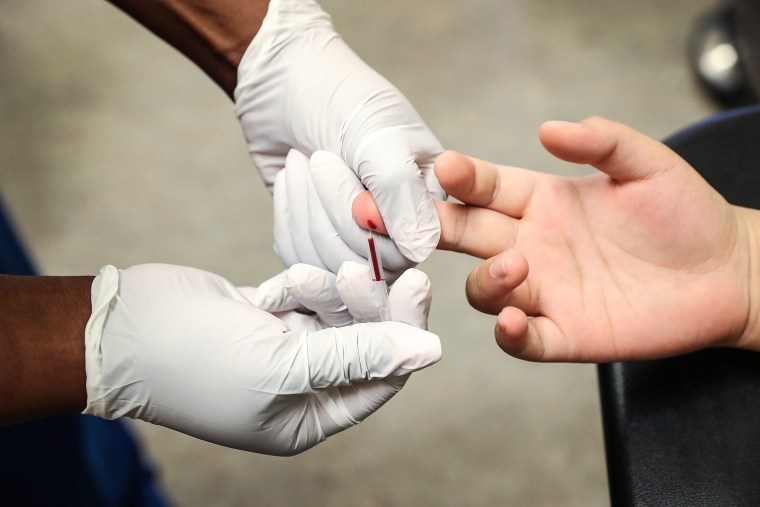
A medical assistant draws blood from a patient on National HIV Testing Day at a Planned Parenthood health center on June 27, 2017, in Miami.Joe Raedle / Getty Images file
An estimated 1.2 million Americans have HIV. According to the CDC, only 87% of them are diagnosed and just 58% are in treatment and have a fully suppressed viral load. This latter figure compares with robust national viral suppression rates, estimated by health authorities, of 82% in Australia, 83% in the Netherlands, 89% in the U.K and 74% in Italy. The rate is higher than 70% in at least 16 other European nations.
In the U.S., the virus has maintained its vastly disproportionate impact on gay and bisexual men, who, according to the new CDC report, comprise about 70% of new cases despite making up only about 2% of the adult population.
The CDC has estimated that about 814,000 gay and bisexual men are good PrEP candidates. Recent data suggested that the number of people, overwhelmingly from this population, who have ever used PrEP each year more than doubled between 2017 and 2022, to at least 318,400. However, a recent CDC study suggested that only about half that group took PrEP during any one month last year, suggesting that many people take it only temporarily.
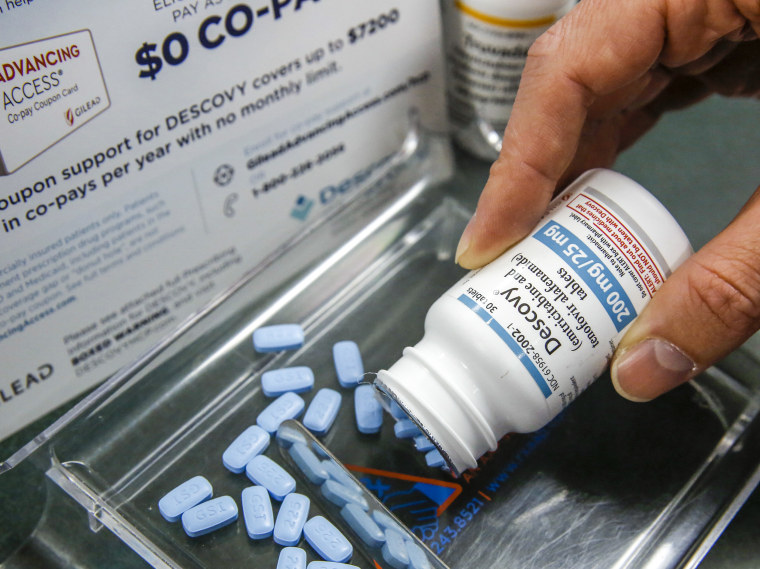
HIV prevention drug Descovy, at Pucci’s Pharmacy in Sacramento, Calif., on Oct. 7, 2019.Rich Pedroncelli / AP file
The most recent four-year national decline was driven by an estimated one-third drop in cases among 13- to 24-year-olds, which Dr. Robyn Neblett Fanfair, acting director of the CDC’s Division of HIV Prevention, characterized as “very encouraging” on a Tuesday media call. The CDC attributes this success to progress in expanding testing, treatment and PrEP among gay and bisexual males, who comprised 80% of the cases in that age group.
But infection rates among these men’s older counterparts have remained statistically stable.
In England, vastly improved biomedical prevention among gay and bisexual men slashed their HIV diagnosis rate so drastically — by about three-quarters in a decade — that in 2022, fewer of them tested positive for the virus than heterosexuals. In the U.S., gay and bisexual men’s transmissions outnumber heterosexuals’ by more than three to one.
Dr. Chris Beyrer, director of the Duke University Global Health Institute, remarked that many of the nations that have seen such precipitous declines “don’t have to deal with the really sharp health disparities and lack of access” that have colored the U.S. HIV fight.
Persistent divides
HIV has for decades exposed racial and socioeconomic fault lines in the U.S., with the virus disproportionately affecting people of color and the poor.
Blacks and Latinos comprised a respective 40% and 29% of the most recent transmissions, despite these racial groups making up only 12% and 19% of the U.S. population. Approximately one in five new infections are among women, more than half of them among Black women.
The new CDC report reveals that such racial disparities have abated only slightly in recent years. Breaking down the transmission trajectory by race and sex showed that Black men were the only group to see a statistically significant reduction.
Estimated new infections among gay and bisexual men declined between 2017 and 2021 from 9,300 to 8,100 among Blacks and 7,800 to 7,200 among Latinos. However, these changes were not statistically significant, in contrast to the significant decline among whites, from 5,800 to 4,800 cases.
Politics and public health
Conservative politicians’ recent fervent use of anti-LGBTQ legislation and rhetoric to appeal to the Republican base threatens to further undermine efforts to combat HIV, public health experts warned.
“All of this plain hatred at the LGBTQ community is not good for ending the epidemic,” Kathie Hiers, CEO of AIDS Alabama, said.
Hiers also decried what she characterized as insufficient and poorly coordinated national support for housing among those living with and at risk for HIV. She pointed to the robust support New York provides HIV-positive homeless people as a pillar of that state’s success in fighting the virus.
About half of HIV transmissions occur in the South, which has an infection rate approximately 50% higher than in the West and Northeast, and double that of the Midwest. Southern states, dominated by Republicans, have tended to devote fewer resources to combatting the virus compared with liberal states, and cities elsewhere, such as San Francisco and New York, that have a history of beating back substantial HIV epidemics.
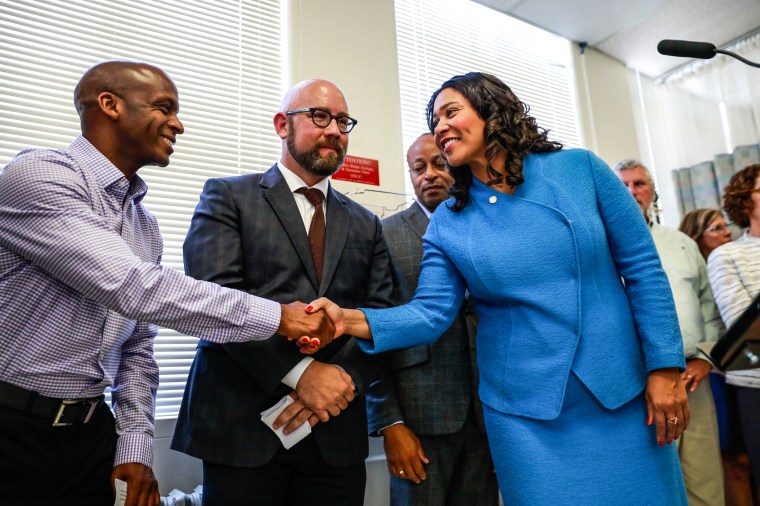
Mayor London Breed, right, shakes hands with HIV prevention expert Dr. Hyman Scott at Zuckerberg San Francisco Hospital on Sept. 10, 2019.Gabrielle Lurie / The San Francisco Chronicle via Getty Images file
Experts have long cited the refusal of most Southern legislatures to expand Medicaid under the Affordable Care Act as a major driver of regional disparities in HIV treatment and prevention.
“Medicaid expansion is a massive structural intervention to support the most vulnerable in our communities,” said Dr. Hyman Scott, an HIV prevention expert at the San Francisco Department of Public Health.
Silver linings
There is hope that the South may be turning a corner, given the CDC’s finding that it was the only region to see a statistically significant decline — of 12% — in estimated new HIV infections between 2017 and 2021.
Additionally, HIV’s decline appears to be accelerating, however marginally. The CDC previously reported the new infection rate was essentially stable during the mid-2010s and then inched 8% lowerbetween 2015 and 2019.
And while the most recent data are somewhat hazy due to a drop in HIV testing following Covid-19’s onset, an apparent sustained decline in transmissions in 2020 and 2021 represents a victory for the HIV treatment and prevention workforce. Infectious disease clinics, for example, often proved nimble in the face of the new pandemic’s disruptions by pivoting to telehealth and supplying patients with months of medications at a time.
The CDC isn’t satisfied.
“In prevention, patience is not a virtue,” Dr. Jonathan Mermin, director of the CDC’s National Center for HIV, Viral Hepatitis, STD, and TB Prevention, said during the Tuesday media call. “We can end HIV in America. We know the way, but does our nation have the will?”
Fighting for the future of HIV
The federal government is hoping that a surge in spending will be the linchpin that finally sends the HIV epidemic into a swift retreat.
In 2019, Donald Trump endorsed a plan to ratchet up federal outlays on HIV. Between the 2020 and 2023 fiscal years, this infusion of new annual funds, largely funneled to the 48 counties where about half of transmissions occur, has soared from $267 million to $573 million. Mermin called for Congress to approve President Biden’s budget request of $850 million for the 2024 fiscal year.
The expressed aim of the spending is to cause the 2017 HIV transmission rate to collapse 75% by 2025 and 90% by 2030. But as CDC surveillance quite evidently shows, the epidemic’s current trajectory is nowhere near on track to achieve such lofty goals.
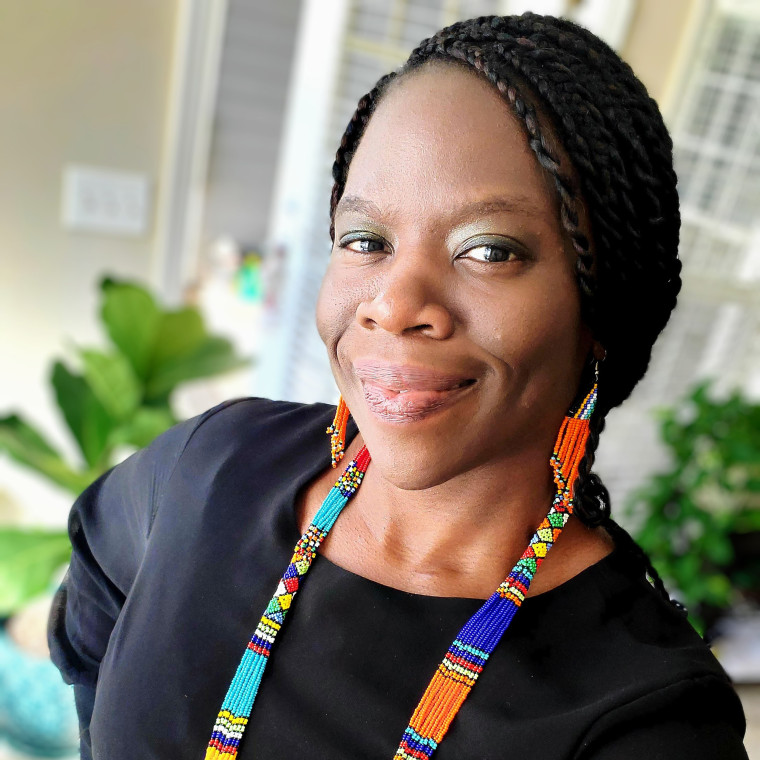
Dr. Boghuma Titanji.Courtesy Dr. Boghuma Titanji
Emory’s Boghuma Titanji said that to succeed in beating HIV, the nation must address the myriad intractable social inequities that drive transmission, including poverty, racism, stigma, homophobia, homelessness and poor health care access.
Absent such progress, Titanji said, she anticipates that by the decade’s end, HIV in the U.S. will be “pretty much the same: a disease that will continue to disproportionately impact the most vulnerable communities.”
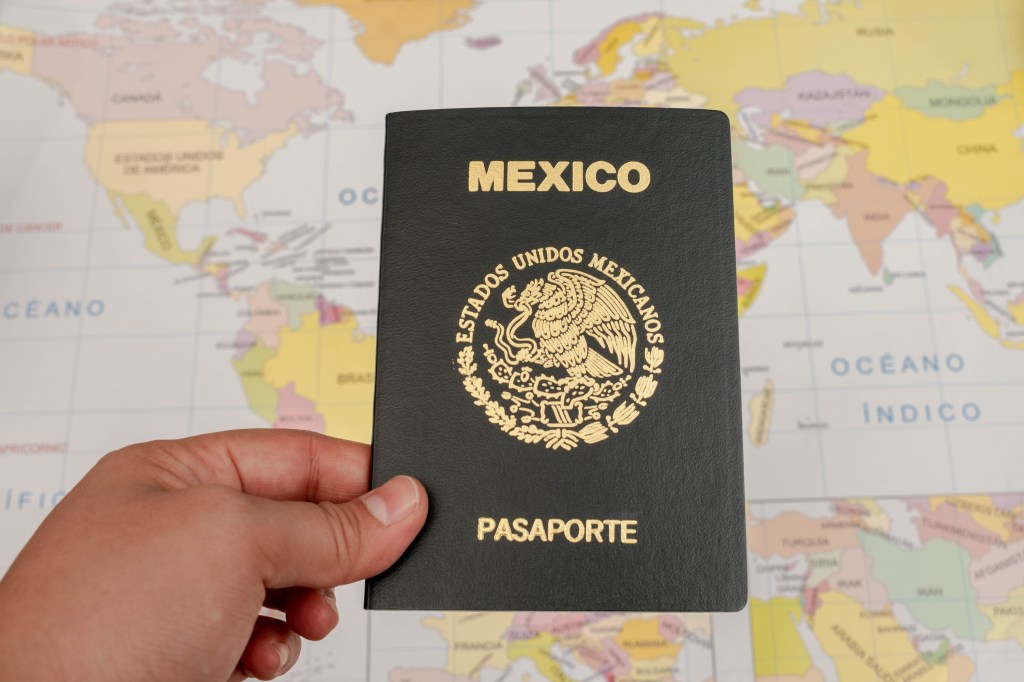
In a win for diversity, Mexico has finally begun allowing its citizens to legally identify as their true selves after issuing the country’s first non-binary passport.
Foreign minister Marcelo Ebrared confirmed on Wednesday (17 May) that the Mexican government had issued the first passport with a non-binary gender marker, calling it a “great leap” for freedom of expression.
On International Day Against Homophobia, Biphobia, and Transphobia (IDAHOBIT) no less, Mexican activist Ociel Baena received their passport during a ceremony held by government officials, including transgender federal lawmaker Salma Luévano.
“We endorse our support for sexual diversity,” the foreign minister wrote in a statement. “All rights must be guaranteed for all identities. No more hate speech – diversity enriches and flourishes.”
Under the new policy, non-binary and gender non-conforming Mexican citizens can choose to replace a gender category with an ‘X’ rather than simply choosing male or female.
The foreign minister also clarified that applicants can now “omit the need to specify gender” when applying for new passports.
According to the community-driven LGBTQ+ rights site Equaldex, 16 countries, including Mexico, currently recognise the ‘X’ marker on official documentation, such as passports, licenses and birth certificates.
The Mexican government now allows non-binary and gender non-conforming people to apply for gender-neutral passports. (Getty Images)
Meanwhile, four countries allow only certain types of recognition either for intersex people or given certain requirements. The last country to change its policy on non-binary passports was Spain in December 2022. It allows ‘X’ markers for intersex people only.
Several countries still don’t allow ‘X’ markers to be used on passports, including France, Italy and the UK.
Activists across the UK have heavily criticised the government for its stance on non-binary passports, with the government saying on multiple occasions that it has no intention of updating the policy any time soon.
In 2021, the UK confirmed it had no plans to add the ‘X’ marker to legally recognised passports despite a petition urging the government to do so, which was signed by more than 136,00 people.
“As set out in the response to the Gender Recognition Act consultation, there are no plans to make changes to the 2004 Act,” the government response to the petition said.
“The 2018 GRA consultation did not bring forward any proposals to extend the GRA to provide legal recognition to a third, or non-binary, gender.
“The government noted that there were complex practical consequences for other areas of the law, service provision and public life if provisions were to be made for non-binary gender recognition in the GRA.”
On May 4th, 2022, Sultan Popal*, a 32-year-old gay Afghan man became a victim of a string of violent attacks against the country’s LGBTQ+ community. He was taken to a guest house by the Taliban where he was beaten and raped until the early hours of the morning. When he managed to escape, he called his friend, another gay man, who urged him to come to his house in the city of Mazar-i-Sharif.
For the next two months, Popal stayed hidden at his friend’s home, where he had to take strict measures so that he couldn’t be traced by the Taliban.
“I changed my [phone] number, my WhatsApp number, I changed my Facebook profile,” Popal told LGBTQ Nation. “And several times, I changed my location, often to my aunt’s home, my uncle’s home, my cousin’s home, my sister’s home…every week I changed my locations.”
Popal’s situation isn’t an isolated case in today’s Afghanistan.
According to a 2022 report by Human Rights Watch and OutRight Action International.LGBTQ+ Afghans have faced an “increasingly desperate situation” and grave threats to their safety and lives since the Taliban takeover on August 15, 2021. After almost two years, life for LGBTQ+ people in the country continues to deteriorate.
Nemat Sadat, a gay Afghan-American activist and executive director of an organization that helps relocate LGBTQ+ Afghans, spoke with LGBTQ Nation about the monetary help his organization, Roshaniya, extended to Bilal, a gay man who was beaten with power cables and electrocuted by the Taliban at a safe house in October 2021.
“They hit him with these paddles, so his entire buttocks, the skin just all came off, and all you could see was flesh. After being stuck in the house for 20 days, he somehow snuck out of the house through a window and then contacted different organizations, pleaded for help but nobody did anything, nobody responded to him. We immediately sent money for him, $300. $100 for food, $100 to get him a passport, $100 for him to get a visa for Pakistan.”
The community suffers today under Taliban rule, but that is not the only battle they have to fight. In their homes, they face further danger from their own families.
“When the Taliban come to people’s homes, they ask them to hand over [their] LGBT people,” Sadat explained, “and so a lot of families, out of fear, especially in very conservative, rural areas, will go ahead and murder their sons or their daughters or transgender child out of worry that if the Taliban catches them then they would all be complicit in protecting this LGBT child.”
Saeed Behesht*, a 26-year-old gay man, spoke to LGBTQ Nation and reminisced about his friend, Lama, who was pressured by her family to marry once they discovered homosexual content on her phone. Upon her refusal, her brothers murdered her.
A powerful protest to wake up the world
On February 1st 2023, around a dozen people from Behesht Collective, an LGBTQ+ rights group in Afghanistan, assembled at a private residence to bring the world’s attention to the risk the community faces under the Taliban and to hold an online protest of the silence from the United States regarding the community’s plight.
Sadat is disappointed by the lack of effort made by the US to protect the LGBTQ+ community in Afghanistan. According to him, “the United States is most at fault for the predicament of LGBT in Afghanistan.” He emphasized that the community was left to suffer at the hands of the Taliban after the US withdrawal with no value given to their safety or amnesty.
“[The United States] had so much influence over the Afghan Government that they could have pressured the Afghan government to recognize the rights [of LGBTQ+ people]. And then, once they did a peace deal with the Taliban, they didn’t even consider amnesty for the LGBT people…they basically handed over the whole country to the Taliban. So, LGBT people had to go into hiding and have been [tortured] and suffering since then.”
Currently, Sadat spends his days figuring out which countries would welcome Afghanistan’s LGBTQ+ community. His GoFundMe has raised more than $38,000 to evacuate more than 800 people and rebuild their lives in a neighboring country.
“Most of the money has been spent to provide evacuation support, to get the documents that they need for leaving the country or humanitarian relief,” he explained.
After the protest in February, Saeed and Popal knew that staying behind in Afghanistan was no longer an option. Along with a few other members of the Behesht Collective, they managed to move to Iran on a three-month visa. But Saeed still does not feel safe.
“Iran is an Islamic country and dangerous for the LGBT community,” he says. “We are always staying at home; sometimes, our friends shop for food. Many of us have depression. We are crying because we don’t have any future [here].”
LGBTQ Nation spoke with Popal and Saeed over video call on April 17th. Popal switched on his video camera to show the two-bedroom apartment in Tehran that they share with seven other people, all members of the Behesht Collective. The space is crammed, with the main lounge and corridors used as sleeping spaces. Mattresses are strewn across the congested areas.
“We have too many problems [here] because it’s not normal,” Saeed says.
This group of seven people has survived the past few months in Tehran due to the funds provided by Behesht Collective. Although many have searched for employment in the new country, they are met with an unwelcoming attitude from employers who do not prefer to hire Afghans.
“I sent my CV to a restaurant in Tehran, and they called me for an interview. When I went to the restaurant, the director of the restaurant told me that you are Afghan and we cannot hire you in this position,” Popal said.
Even if they manage to get work, most of them are underpaid, subjected to poor working conditions and even sexually exploited.
Noor, a transgender person and member of the Behesht Collective, left Afghanistan in late 2022 to settle in Tehran and eventually began working at a carpentry workshop. Now, he works for 14 hours a day and earns four million tomans a month, amounting to roughly $75. At night, he sleeps at the workshop due to a lack of finances. “I have nowhere to go and I have to stay here. I don’t have a proper place to sleep. I don’t even have a proper blanket or mattress,” he told LGBTQ Nation.
The owner of the workshop used to beat him, but now, sexual exploitation has become a normal occurrence. “Since he found out that I am trans and I have nowhere to go and I have to sleep in the carpentry workshop at night, he has raped me more than 15 times,” Noor said. “I tried to commit suicide several times, but I haven’t succeeded.”
Sadat agrees that working in Iran for the community is equitable to being “an indentured servant there for the foreseeable future.”
“They will hire you to work in a cement factory or as a construction worker and really the most menial, the most difficult jobs. They will give you food and a place to stay but ask you to stay here like a hostage and pay you $100/month.”
A bleak future
“We don’t want to go back to Afghanistan,” Saeed says, determined to stay away. But the challenge is far from over yet. Visas for Iran expire after three months. Saeed and Popal remain clueless about their future.
Relocation for the LGBTQ+ community, especially to Afghanistan’s neighboring countries is a temporary relief, but it can never be a permanent solution.
“[In Iran], you have to keep renewing your visa,” Sadat explained. “If your visa time runs out, you are illegal and you can be deported back. There is also a refugee loophole as Pakistan, Iran, and even Turkey do not register Afghan Refugees. Sadat is currently considering Rwanda for the community’s relocation and long-term settlement.
“In Rwanda, they have a real UNHCR system where we can register people and they get a refugee card. There’s a pathway to expedite that into a refugee asylum case or they can even register at other organizations like the Red Cross.”
Sadat does not feel hopeful for the rights of LGBTQ+ Afghans while the Taliban are still in charge. “I think when the Taliban are in power, it is not going to get better, only going to deteriorate…in the last one and half years, the situation has dramatically worsened. There has been an escalation of violence.”
The community’s demand in Afghanistan is simple: to live a life of dignity, free from the oppression they are subjected to on a daily basis.
“We staged a powerful protest claiming the right to live; that’s it,” Sadat said. “We just want to live, have the chance to even breathe without being suffocated by the Taliban.”
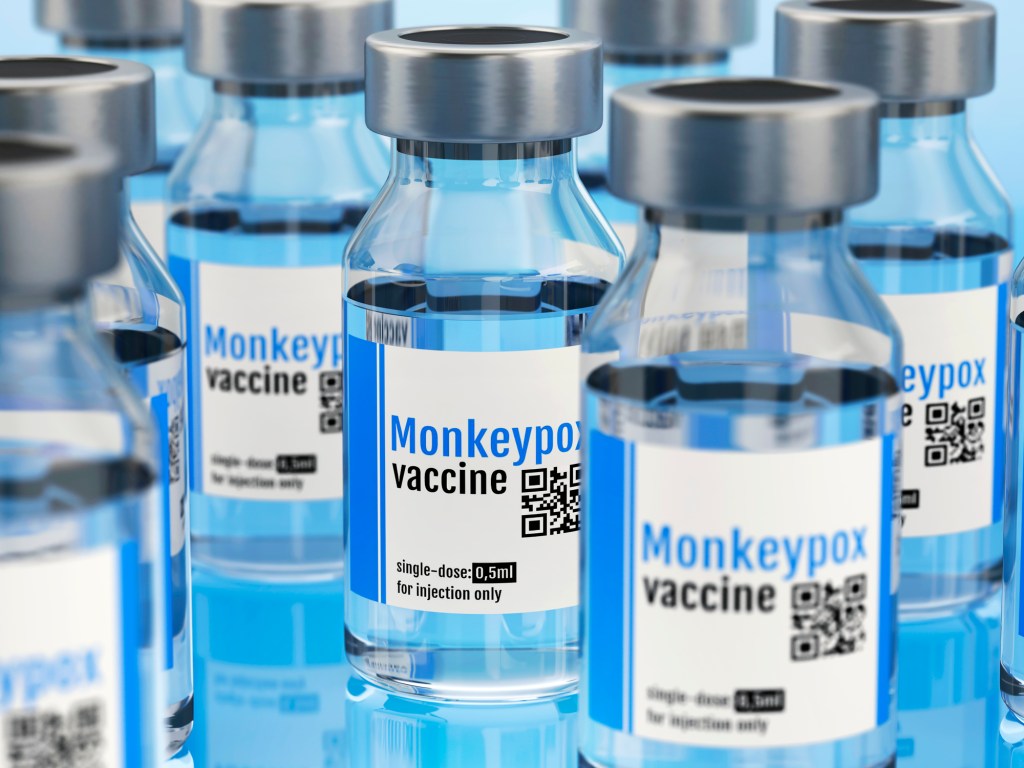
As mpox cases start to rise again in some key areas, experts are urging queer people to remain vigilant and get vaccinated.
Mpox cases are down significantly since the epidemic reached its peak in the summer of 2022. The shift prompted the World Health Organisation (WHO) to declare that the outbreak was no longer a public health emergency on 11 May – but that doesn’t mean the virus has disappeared.
The WHO is now warning that mpox cases could rise again during the summer months as queer people congregate for Pride festivals and other gatherings.
“[Mpox] still is circulating, it still is with us, and still does represent an ongoing risk,” Dr Richard Pebody, mpox lead with the WHO, tells PinkNews.
“It’s much lower levels of cases now than what we were seeing before, but we also know – and this is the key message I really want to get out to folk – is that there is still the potential for flare-ups, for further outbreaks, this spring and summer.”
He continues: “We’ve seen recently a flare-up in France for example. We’ve also seen a flare-up just recently in the States, in Chicago. These have again really been occurring primarily in the GBMSM (gay, bisexual and men who have sex with men) community and many of the cases had a vaccine last year as well, so it is highlighting the ability of the virus to still circulate and to cause illness.”
Mpox (previously monkeypox) is no longer considered a public health emergency, but it’s still circulating. (Getty)
That’s why the WHO is now launching a new campaign to remind the public that mpox is still circulating as the summer season begins.
“We know festivals where people get together there is an increase in sexual contact. There is the potential for further clusters and outbreaks in those types of settings,” Dr Pebody says.
“It’s really about putting this out there and raising people’s awareness that, on the one hand, we [should] celebrate where we are now, but also to highlight what we can do to keep ourselves and those around us safe.”
WHO urges people to get tested if they develop mpox symptoms
Dr Pebody says there are a range of things people can do to protect themselves and others from mpox this summer.
“On the one hand, if you suspect that you’ve got mpox yourself – so if you’ve started to develop a rash which is consistent with mpox – then get yourself checked out.
“Give the festival or the event a miss. Avoid close contact with others and that will certainly reduce your risk of then spreading that on to others – that’s a really important thing.”
People can also reduce their risk of contracting mpox by taking a smallpox vaccine if one is available in their country. Vaccines reduce both the risk of infection and the risk of severe illness.
The WHO wants people to stay safe this summer, but they also want to reassure queer people that they can still have fun while socialising or having sex with new partners.
“I would really try to reassure people not to be frightened,” Dr Pebody says.
“Certainly now in Europe, the incidence of mpox is much, much lower than it was last year. We’re in a much better position so we certainly don’t want to frighten people. What we want to do really is to remind people that mpox is still potentially out there, but there are things we can all do to reduce that risk of potentially being exposed.
“If you’re planning to go to a festival, to an event, do go – have fun, have a good time, but just remember what you can also do to protect yourself and others.”
The largest LGBTQ+ rights organization in the U.S. joined other civil rights organizations Tuesday in issuing a travel advisory for Florida, warning that newly passed laws and policies may pose risks to minorities, immigrants and gay travelers.
The Human Rights Campaign joined the NAACP, the League of United Latin American Citizens, the Florida Immigrant Coalition and Equality Florida in issuing travel or relocation warnings for the Sunshine State, one of the most popular states for tourists to visit in the U.S.
“Those who visit must join us in their vocal opposition to these dangerous policies,” Kelley Robinson, president of the Human Rights Campaign, said in a statement. “Those who pick another place to work, to go to school or to spend their vacation should make clear why they’re not heading to Florida.”
Last weekend, the NAACP, the nation’s oldest civil rights organization, issued its advisory warning that recent laws and policies championed by Gov. Ron DeSantis and Florida lawmakers are “openly hostile toward African Americans, people of color and LGBTQ+ individuals.”
After the NAACP made its announcement, DeSantis’ spokesman, Jeremy Redfern, called the travel advisory “nothing more than a stunt.”
“As Governor DeSantis announced last week, Florida is seeing record-breaking tourism,” Redfern said in a statement.
More than 137.5 million tourists visited Florida last year, surpassing pre-pandemic levels, according to Visit Florida, the state’s tourism promotion agency. Tourism supports 1.6 million full-time and part-time jobs, and visitors spent $98.8 billion in Florida in 2019, according to last year’s figures.
Another Florida town has canceled an upcoming Pride event after Gov. Ron DeSantis (R) signed several anti-LGBTQ+ bills into law this week.
On Wednesday, Tampa Pride announced that it had canceled its annual Pride on the River festival citing H.B. 1438, an anti-drag law signed by the governor earlier the same day, the Tampa Bay Times reports.
H.B. 1438 is one of five anti-LGBTQ+ bills signed into law by DeSantis this week in what Equality Florida senior political director Joe Saunders called the largest slate of anti-LGBTQ+ bills to be signed in a single legislative session in Florida’s history. The new law allows state boards to revoke the business licenses of any venues that allow minors to see “an adult live performance.” While the text of the bill does not mention drag, a handout from the governor’s Wednesday news conference stated that drag shows are considered adult live performances “without serious literary, artistic, political, or scientific value,” NBC affiliate WFLA reports.
In past years, Tampa’s outdoor, family-friendly Pride on the River event featured fireworks, drag brunches, and drag performances along the downtown Tampa Riverwalk. For the September 2023 event, organizers aimed to create an adults-only area where drag performances could take place, as they had for their Pride parade in March but were unable to find a location that could be fenced off, according to the Tampa Bay Times.
“We just said, you know what, we are afraid if we did go through with this [DeSantis] would come in with his Gestapo… not Tampa Police, because we’re working with them, but maybe another group, and they’d all just pull the plug on it,” said Tampa Pride president Carrie West.
West noted that people travel to Tampa for the event, which has in the past featured appearances by RuPaul’s Drag Race alums like Alyssa Edwards, Ra’Jah O’Hara, and Jiggly Caliente. According to West, past festivals have attracted 15,000 to 20,000 visitors to the area. Tampa Pride will lose nearly $100,000 by canceling, and the city will no longer economically benefit from the festival or its sponsors, WFLA reports.
“It’s disappointing to hear Tampa Pride on the River is canceled,” said Tampa Mayor Jane Castor. “But it doesn’t change the fact that Tampa is and always will be an inclusive, diverse, and welcoming community.”
Organizers said that the Tampa Pride Parade is still scheduled to take place next spring, and they plan to bring back Pride on the River in 2024.
The festival isn’t the only Florida Pride event to be canceled this year. Last month, a Pride organization in St. Lucie, Florida, was forced to cancel its parade and restrict its festival to ages 21 and up in anticipation of DeSantis signing the anti-drag bill.
Meanwhile, Pride organizations across the country have had to re-think their events or cancel them altogether as Republican lawmakers in more than a dozen states have introduced bills aimed at banning drag shows.
In Hanover Township in New Jersey, the Board of Education passed a policy Tuesday requiring school staff to notify parents of their children’s sexual orientation, classifying it along with substance and alcohol use, firearms, and “unlawful activity” as a threat to students’ well-being.
New Jersey’s attorney general is suing.
The kindergarten through eighth-grade district serves about 1,300 students in Whippany and Cedar Knolls in Morris County.
“Enacting a policy that has teachers policing their schools to out LGBTQ+ students is a disconcerting return to tactics used to criminalize sexual orientation and gender identity,” Jeanne LoCicero, legal director for the American Civil Liberties Union of New Jersey, told NJ.com. “It targets students based on their LGBTQ+ status and cannot stand.”
“We will always stand up for the LGBTQ+ community here in New Jersey and look forward to presenting our arguments in court in this matter,” AG Matthew J. Platkin said in a statement. He joined Sundeep Iyer, Director of the Division on Civil Rights, to file an emergency motion in Superior Court to enjoin the new policy.
“We are extremely proud of the contributions LGBTQ+ students make to our classrooms and our communities,” Platkin added, “and we remain committed to protecting them from discrimination in our schools.”
Platkin’s complaint argues the board’s policy violates the state’s Law Against Discrimination because it requires parental notification for lesbian, gay, bisexual, transgender, or queer students but not for their peers.
The attorney general’s office quotes from the new policy requiring all school staff to “immediately, fully and accurately inform a student’s parent(s) whenever such staff member is made aware of, directly or indirectly, any facts or circumstances that may have a material impact on the student’s physical and/or mental health, safety and/or social/emotional well-being,” including a student’s “sexuality,” “sexual orientation,” “transitioning,” and “gender identity or expression.”
In a statement, the Hanover Township board claimed the requirement doesn’t target students based on a protected status. Under the Law Against Discrimination, sexual orientation and gender identity or expression are protected statuses.
The attorney general’s complaint also argues that the policy would put students’ safety and mental health put at risk, and that it goes against guidance from the New Jersey Department of Education, which protects students’ confidentiality and privacy.
“The purpose of this policy is to involve the parents in the lives of their children,” the board’s attorney, Matthew Giacobbe, told the Daily Record. “They’re participating and not having people other than themselves make judgment calls on their child.”
The board’s statement added: “The Hanover Township Board of Education believes that parents need to be fully informed of all material issues that could impact their children so that they – as parents – can provide the proper care and support for their children.”