On Tuesday, February 21, 2023, the LGBT National Help Center will officially launched its newest program, the LGBT National Coming Out Support Hotline. The brand-new hotline focuses specifically on the concerns of those who are struggling with coming out issues (regardless of age, or how each person defines that process). All services are free and confidential. Staffed by all LGBTQIA+ volunteers, the dedicated toll-free phone number is 1-888-OUT-LGBT (1-888-688-5428), with a dedicated website at www.LGBTcomingOUT.org.
The new hotline is a program of the LGBT National Help Center, a non-profit organization with a 26-year history of providing coming out services. The LGBT National Coming Out Hotline provides a concentrated, focused and clear way of communicating that coming out, either to one’s self or to others, can be a deeply personal decision, but that it doesn’t mean having to go it alone. While the hotline would never tell a person they MUST come out (as that is a highly personalized decision), the highly-trained, all LGBTQIA+ peer-support volunteers can provide a safe space on the telephone to discuss and consider a person’s physical and mental safety, as well as their options and how they might choose to move forward. Certainly, not every conversation will end with a decision on coming out or not, and that’s to be expected. What matters is that this will provide a safe space for the LGBTQ community to go to when they are considering this decision, and know that they will be heard, affirmed and respected.
“When people in our community are considering one of the most important decisions of their lives, together we can provide critical support and care to those in the LGBTQIA+ community, who are terrified to simply be themselves,” said Executive Director Aaron Almanza.
For more information about the LGBT National Help Center, please visit www.LGBThotline.org.
On Black HIV/AIDS Awareness Day, we must remember the myriad ways the work to end the HIV epidemic overlaps with the work for LGBTQ justice and overlaps with the work to dismantle white supremacy. One of these overlaps is laws that criminalize HIV.
HIV criminalization is when a state criminalizes otherwise legal conduct or increases the penalties for illegal conduct based on a person’s HIV status. As of 2022, there are at least 35 states with HIV criminalization laws.
Each state’s laws vary. Some require the prosecution to prove the person intended to expose others to HIV, but in most states, simply not disclosing your HIV status is enough to convict. Apart from several state reforms over the last few years, no states require evidence of actual transmission or an intent to do harm.
Following a bad breakup, Suttle’s former partner reported him to the police, stating he was unaware of Suttle’s HIV status. Under Louisiana law, it is illegal to engage in sexual activity if you know your HIV status and do not disclose it. Suttle says he disclosed his status, but it was a case of he said, he said. At court, he took a plea deal to avoid trial and the possibility of the maximum sentence. As a result, he was charged with a felony and spent six months in prison.
After his release, Suttle was placed on the state’s sex offender registry, which places a mark on his driver’s license, and he was forced to publish a photo of himself in the newspaper.
Suttle’s story is a typical example of how HIV criminalization laws are used, and how they further criminalize marginalized and BIPOC communities.
States like Louisiana have laws that are outdated, based on obsolete science and misconceptions of HIV. Many of the HIV criminalization laws were drafted in the late 1980’s at the onset of the HIV epidemic and were driven by public fear when very little was known. In some states, spitting or biting — which has little possibility of transmission — are criminalized. In other states, safe sex practices (such as condom use) are irrelevant and cannot be used as defenses.
Most laws also do not take into account the fact that undetectable equals untransmittable. Once someone reaches a point in their treatment where the amount of the virus in their body is so low that it doesn’t show up on blood tests, they are said to have reached an undetectable viral load. A person with an undetectable viral load cannot pass the virus along to anyone.
Science has progressed by leaps and bounds, making treatment of STIs more manageable and HIV no longer a death sentence. The science has moved forward, it’s time for the law to follow suit.
What’s more, these laws are a barrier to preventing the spread of HIV. HIV criminal laws stigmatize HIV, discourage individuals from knowing their status and accessing medical treatment. That’s why almost all major public health organizations — including the American Medical Association, the Centers for Disease Control and Prevention, and the Presidential Advisory Council on HIV/AIDS — all urge a public health approach over criminalization.
New York is one state poised to update its archaic HIV laws, a law that was first written in 1909 to prevent the spread of “venereal diseases” among members of the military.
With the onslaught of World War II, combatting sexually transmitted infections (STIs) became a national priority as their treatment took soldiers out of commission for months. In 1943, the New York legislature increased the penalty to a felony. In 1946 the law was rewritten again making it applicable to the general public and a misdemeanor. It remains unchanged 76 years later.
The New York state law does not make sense in the age of modern medicine.
Pending before the New York state legislature is the REPEAL STI Discrimination Act. The act will repeal the state law that criminalizes STIs and provides for the expungement of past convictions. It also creates a defense so that having an STI does not mean potential criminal charges when engaging in consensual sex.
The New York legislature should pass the REPEAL STI Discrimination Act, and other states should quickly follow suit, because we are all only as safe as the members of our community most at risk and for HIV.
Public health advocates have long known that the best way to promote everyone’s health is an approach that treats people as individuals who need care rather than vectors for disease or criminals to be punished. Decreasing stigma and increasing access to testing, treatment and support are the best ways to combat disease.
On this Black HIV/AIDS Awareness Day, let us stand in solidarity and work to repeal all HIV criminalization laws.
Jose Abrigo is Lambda Legal’s HIV Project Director and Carl Baloney Jr. is AIDS United’s vice president and chief advocacy officer.
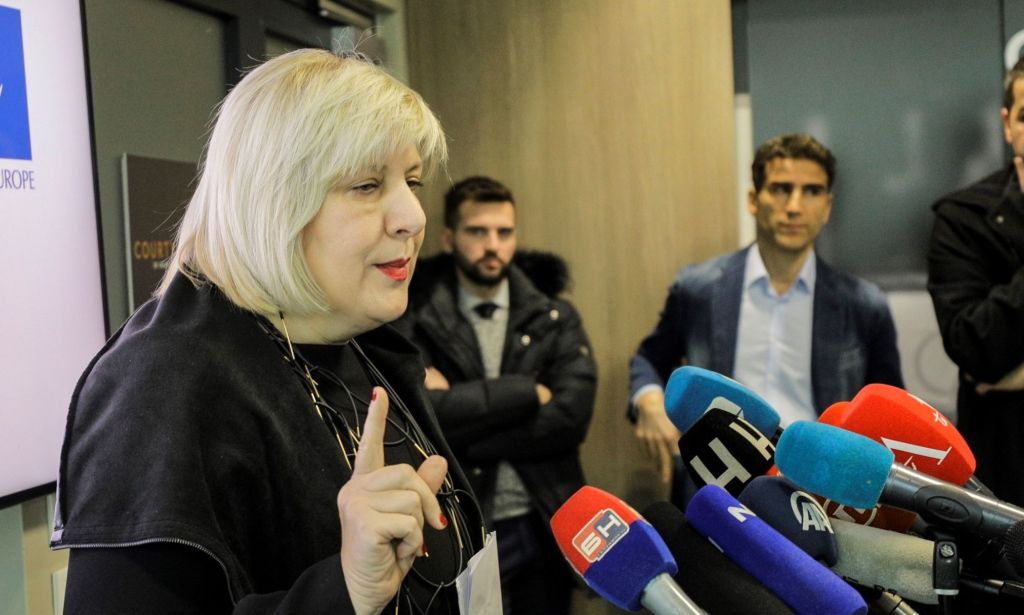
So-called “conversion therapy” has “no place in a human rights-based society”, according to the EU commissioner for human rights.
Bosnian EU official Dunja Mijatović wrote in a Thursday (16 February) report that the controversial practice is “dangerous” and should end.
Conversion therapy is an abusive attempt to change an LGBTQ+ person’s sexuality or gender identity through psychological manipulation, often carried out by religious or medical institutions and often following pressure from family members.
Not only does the practice not work, but it can also leave behind immense trauma and mental health issues for those subjected to it.
“These interventions continue to take place across Europe, often lawfully and commonly under the guise of medical or religious tenets,” Mijatović explained.
“Despite the profound and long-lasting harmful effects that these practices can have, many victims are left with neither recognition of the harms that they have endured, nor redress.
“This must end.”
Dunja Mijatović said conversion therapy bans must ‘comprehensive’ and hold businesses accountable. (Getty)
According to the human rights commissioner, conversion therapy typically takes one of three forms – psychotherapy, medical intervention, and faith-based intervention.
Businesses that actively profit from the harmful exercise can often continue to function due to “legislative discrepancies” that allow them to relocate to countries where it is still legal.
“These practices conflict with an overwhelming consensus of international human rights and scientific bodies,” Mijatović added.
“Current efforts by member states to adopt legal bans on conversion practices are a welcome development.
“These bans must be drafted with care and be as precise as possible so that they respect the principle of legal certainty and are in line with human rights framework.”
Due to the unregulated nature of conversion therapy, it’s difficult to pinpoint how frequently it is practised in EU member countries.
While a study from the European Parliament estimated at least 2 per cent of LGBTQ+ Europeans have been subjected to conversion therapy, Mijatović clarified that the number could be higher “since they often take place under secretive conditions.”
“I am also particularly troubled by findings that, globally, children and young adults are at far greater risk of being subjected to them,” she wrote.
Tackling these manipulative exercises requires increased awareness and a plan to eliminate conversion therapy institutions, according to the EU official.
“I have observed an increased awareness of conversion practices in our region, and a recent impetus toward confronting them.
“It is essential for states to address political or social anti-LGBTI discourse presenting LGBTI people as deviant or abnormal,” she continued. “Such rhetoric is likely to foster a culture in which LGBTI people are forced or feel pressured to undergo conversion practices.”
Being a transgender woman in South America is not easy when her average life expectancy in the continent is 35 years. It is even more difficult for those who are of indigenous descent.
Claudia Ancapán Quilape, an indigenous trans woman with a Huilliche father and a Mapuche mother, has turned her fate around.
Ancapán is 46-years-old and lives in Recoleta in the Chilean capital of Santiago. She is a midwife who works in a private clinic and recently earned a master’s degree in health. Ancapán is working on another master’s degree in gender and will soon begin a doctorate in public policy.
She is also a spokesperson for Salud Trans para Chile, a trans rights group, and participates in Santiago’s “LGBTQA+ Roundtable.”
Ancapán for six years fought to have her identity legally recognized, long before Chile passed its Gender Identity Law. She won that battle on May 20, 2014, and Ancapán later lobbied lawmakers to approve the statute.
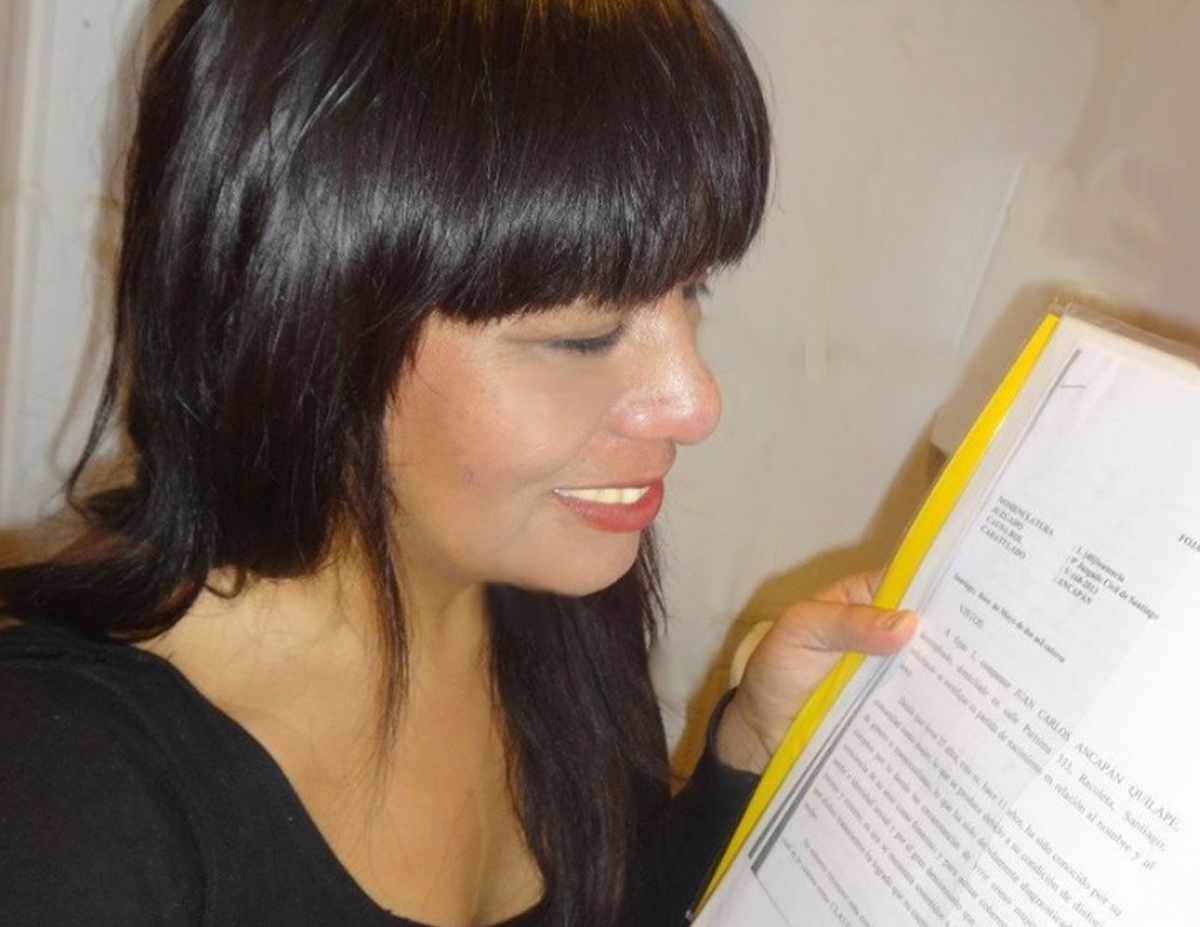
Claudia Ancapán Quilape in 2014 won her 6-year legal fight for Chile to legally recognize her gender identity. (Photo courtesy of Claudia Ancapán Quilape)
The road on which Ancapán traveled in order to become a woman has been difficult.
“I am a person who has had to struggle with being a woman, trans and indigenous,” she told the Washington Blade.
In addition to the discrimination she suffered, a group of neo-Nazis in 2005 attacked her in Valdivia, a city in southern Chile where she was studying. The attack, which could have cost her her life, motivated her to become a queer rights activist.
Ancapán told the Blade her family’s indigenous culture allowed her to be herself in private since she was a child. Outside of her home, however, she had to pretend to be a man.
“My family allowed me to develop myself and that changed my life,” she told the Blade. “I was always a woman to my father, mother and siblings because my parents were not prejudiced against it. However, they protected me from society and I acted like a man once I walked out the door of my house because people outside our culture would not understand.”
Most indigenous groups in South America did not view LGBTQ people negatively before European colonization. They included them in their respective communities and respected them.
European colonizers exterminated many of them and buried their culture.
“Christopher Columbus arrived on his ship with religious cultural impositions that were imposed and everything was turned into sin,” Ancapán told the Blade. “If you review the history of our native peoples in Chile, they stand out because they had no conflict with homosexuality or gender identity.”
Since ancestral times there were “machis” called “weyes,” who had an important social and spiritual role within a Mapuche community. They were known for their ambiguous gender roles that could vary from feminine to masculine. “Weyes” could also incorporate feminine elements that had a sacred connotation and were allowed to have same-sex relations with younger men.
The “machi weyes” until the 18th century had a lot of authority and influence because they were recognized as a person with “two souls.”
“Pre-Columbian cultures saw the integrality of the human being linked to nature, so sexuality was an integral part of a whole (person),” explained Ancapán. “So it was not so sinful to fall in love or love a person of the same sex or for a person to present themselves with an identity different from the one they should have biologically.”
“That makes me respect my indigenous background,” she emphasized. “That’s why I am so proud of who I am and of my native belonging.”
According to Elisa Loncón, the former president of Chile’s Constitutional Constitution and a leading expert in Mapudungun, the Mapuche people’s native language, the Mapuche always recognized LGBTQ and intersex people through their language. Gay men were categorized as “weyes” and lesbian women were known as “alka zomos.” “Zomo wenxu” meant “woman man,” while “wenxu zomo” translated to “man woman.”
There is currently no indigenous LGBTQ or intersex organization in Chile, but Ancapán noted there are queer people who are indigenous.
“I know Diaguita people. I am also aware that there are trans Easter Islanders. I have Mapuche friends who are trans. And lately I made a friendship with an indigenous person who lives with two spirits,” she said.
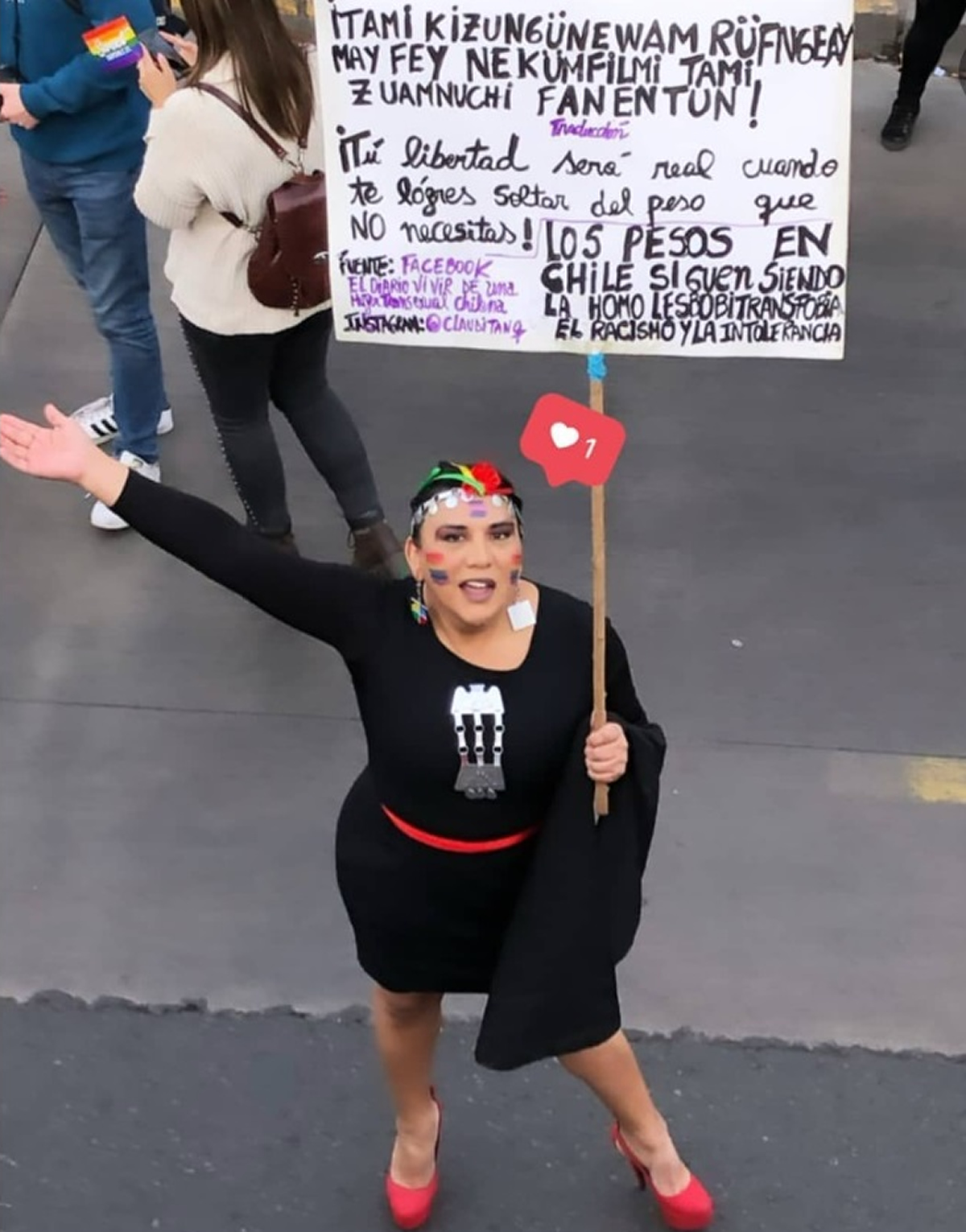
Claudia Ancapán Quilape participates in a protest for the rights of queer indigenous people. (Photo courtesy of Claudia Ancapán Quilape)
Ancapán said two-spirit is “a category of gender identity that is not well known in Chile, but it is linked to native people.”
“In fact, they have always been there, but very little is known about it. This is related to the native peoples of pre-Columbian America, where they saw identity and gender as a way of life where they saw identity and the expression of sexuality as distinct,” she explained to the Blade.
Many people who claim to be two-spirit say they feel neither male nor female, escaping from the traditional gender binary.
“These manifestations are also in the indigenous peoples of Canada and Mexico,” said Ancapán. “They are known more in the north of North America. Two-spirit is basically spiritually associated, where two identities, two spirits, coexist in you. And that speaks of breaking down the binary system.”
“So these manifestations come from the integral vision of different sexuality and from the acceptance that existed in some cultures about sexual and gender dissidence,” she further stressed.
“I believe in nature and the power of the elements,” added Ancapán. “I am very close to my culture that talks about the connection with the spiritual of nature and the respect for nature. And from that point of view it linked me to my original people, to my native peoples.”
This brief details levels of poverty among LGBT people before and since the onset of the COVID-19 pandemic in 2020. When our last LGBT poverty report was released in 2019, data indicated an economic disparity between LGBT and non-LGBT people. Since that report, the COVID-19 pandemic hit, and a cascade of negative economic effects were felt by large proportions of the U.S. population. Our new analyses, across multiple datasets, indicate that these disparities persist—a higher percentage of LGBT than non-LGBT people have incomes below the federal poverty level (FPL). We see consistency in the relevance of LGBT status over time, pre-pandemic, during the most severe period, and since. We also demonstrate that while specific estimates differ across data sources (the U.S. Census Household Pulse Survey reports generally higher rates of poverty), the patterns among LGBT subgroups are similar.
In 2021, we saw a dramatic decrease in the number of people experiencing poverty across LGBT and non-LGBT groups overall. The proportion of straight cisgender people experiencing poverty went from 16% in 2020 to 12% in 2021, and for LGBT people it dropped from 23% to 17%. Most notably, the change for bisexual cisgender women changed from approximately 30% in 2020 to 20% in 2021.
Source: BRFSS, 2018-2021
Among households with children, the decreases they experienced were more dramatic. For example, bisexual cisgender women (from 42% to 27%) and transgender people (from 52% to 26%) who were living with children in their homes (most of whom are parents) had significantly lower levels of poverty in 2021 compared to 2020.
Source: BRFSS, 2018-2021 Note: Cis = Cisgender
Among racialized groups, a higher proportion of Black, Latinx/Hispanic, Native Hawaiian/ Pacific Islander (NH/PI), American Indian/Alaskan Native (AI/AN), and Multiracial people were experiencing poverty than White or Asian American (AA) people.
For POC as a whole, LGBT POC had higher rates of poverty than straight cisgender POC, however, both groups showed a similar decline in poverty from 2020 to 2021 (LGBT POC: 33% in 2020 to 25% in 2021; straight cisgender POC: 27% in 2020 to 20% in 2021).
White LGBT people showed a bigger decline in poverty compared to straight cisgender White people (LGBT White people: 16% in 2020 to 13% in 2021; straight cisgender White people: 8% in 2020 to 7% in 2021).
Source: BRFSS, 2020-2021 Note: Cis = Cisgender
This study serves as an update to the 2019 LGBT Poverty in the United States report (which used data from 2014-2017), as well as an assessment of changes in LGBT poverty in relation to the onset of the COVID-19 pandemic—a globally historic period of time that impacted the health and economics of the world’s population. We find that LGBT economic disparities measured through household income have been evident before and since the COVID-19 pandemic. However, the actual percentage of LGBT people living in poverty decreased significantly by 2021, a year after the onset of the pandemic. The general population also saw a decrease in poverty. Research has suggested that the changes in proportions of people experiencing poverty, especially among people raising children, are likely a result of COVID-19 economic relief funding and payments provided by the U.S. government, such as the American Rescue Plan Act, which included unemployment benefits, family and childcare tax credits, and direct cash payments. These findings, and the limitation of examining economic status through a health survey, underscore the importance of adding measures of sexual orientation and gender identity to federal surveys, including the Current Population Survey (CPS), the American Community Survey (ACS), and the Decennial Census.
The percentage of adults in the U.S. who identify as LGBTQ increased slightly year over year, to 7.2% last year, according to a Gallup Poll released Wednesday.
While that’s just a slight increase from 7.1% in 2021, it’s more than double what it was a decade ago, when Gallup found just 3.5% of the U.S. population identified as something other than heterosexual in 2012.
Gallup asked more than 10,000 adults nationwide how they identify in telephone interviews last year.
For the first time, the organization recorded the identities of LGBTQ people who said they are something other than lesbian, gay, bisexual or transgender. It found that about 5% of LGBTQ adults identified outside those terms. Most of them — about 0.1% of all U.S. adults — said they are queer, pansexual or asexual.
“Queer” is an umbrella term that generally refers to people who aren’t heterosexual or cisgender, meaning they don’t identify with their assigned sexes at birth. “Pansexual” means someone experiences sexual or romantic attraction regardless of sex or gender identity. “Asexual” describes someone who doesn’t experience sexual attraction to others.
Bisexuals continue to make up the majority of LGBTQ adults, at 58.2% (or 4.2% of all U.S. adults), Gallup found, while 20.2% identify as gay, 13.4% identify as lesbian, and 8.8% identify as transgender.
Those who said they are straight or heterosexual made up 86% of respondents, while 7% chose not to answer the question.
R
Continuing previous trends, Generation Z, or those ages 19 to 26, are the most likely to identify as LGBTQ, at 19.7%, compared to 11.2% of millennials, who are 27 to 42; 3.3% of Generation X, who are 43 to 58; 2.7% of Baby boomers, who are 59 to 77; and 1.7% of the Silent Generation, who are 78 or older.
Gallup found that younger generations are much more likely to identify as bisexual than older generations. For example, 66% of LGBTQ people in Generation Z and 62% of LGBTQ millennials identify as bisexual, compared to 48% of Generation X, 26% of baby boomers and 35% of the Silent Generation.
LGBTQ respondents in the two oldest generations are most likely to identify as gay (37% of baby boomers and 47% of the Silent Generation) and lesbian (26% of baby boomers and 12% of the Silent Generation).
Gallup noted that the share of LGBTQ adults in the U.S. is expected to continue to grow but that the growth “depends on younger people who enter adulthood in future years continuing to be much more likely to identify as LGBT than their parents, grandparents and great-grandparents.”
In the latest blow to trans people in Hungary, the country’s Constitutional Court issued a ruling that will continue to block new applications from transgender people for legal gender recognition. The judgment effectively creates two categories of trans people in Hungary: those who applied early enough to pursue gender recognition and those who did not.
In 2020, Hungary’s parliament passed a law banning transgender or intersex people from legally changing their gender, putting them at risk of harassment, discrimination, and even violence when they need to use identity documents. In 2021, the Constitutional Court ruled the ban on legal gender recognition does not apply retroactively, so trans people who started their legal process before May 29, 2020, were able to continue doing so. But yesterday the Constitutional Court rejected a petitioner’s plea that they be recognized based on an application submitted in 2021.
Hungarian jurisprudence already contains strong support for transgender and intersex people’s rights to legal recognition. A 2018 Constitutional Court ruling found that Hungary’s Fundamental Law requires the state to allow trans people to self-identify. “The right to bear a name” consistent with one’s gender, the court found, “is a fundamental right deductible from the right to human dignity.”
“The Hungarian government’s practice sanctioned by the Constitutional Court is one of total disenfranchisement,” said Eszter Polgári, legal program director of Háttér Society, a Hungarian (Lesbian, gay, bisexual and transgender) LGBT rights group.
Háttér Society plans to take the case to the European Court of Human Rights. There is an emerging norm across Europe to eliminate barriers to legal gender recognition, not create them as Hungary has. In a 2002 case, the court held that refusal to change identification documents in the UK could amount to discrimination and violate the right to privacy. In another case in 2003, that court found Germany had failed to respect “the applicant’s freedom to define herself as a female person, one of the most basic essentials of self-determination.”
The Constitutional Court invoked concerns about criminality and health care in rejecting the petition, claiming someone’s sex assigned at birth is critical to know in health care and legal settings. Such claims, as a reason to reject legal gender recognition, do not stand up to scrutiny. The Hungarian government’s insistence on undermining the dignity of trans people is contrary to the right to private life and does not hold up against Hungary’s international and European human rights obligations.
The American Bar Association (ABA), a membership organization for attorneys in the United States that develops professional ethics codes, has issued a resolution supporting the rights of children with intersex traits to consent to surgeries.
The ABA’s resolution follows years of legal and policy progress recognizing that “normalizing” surgeries on people with variations in their sex characteristics should be chosen by the individual, not their parents or doctors.
Around the world, since the 1950s, people born with variations in their sex characteristics, sometimes called “intersex,” have been subjected to harmful medically unnecessary “normalizing” surgeries. Surgeons popularized these cosmetic surgeries on infants to remove gonads, reduce the size of the clitoris, or increase the size of the vagina.
But these procedures are not designed to treat a medical problem, and there is no evidence they help children “fit in,” which some surgeons say is their aim. The operations carry high risks of scarring, loss of sexual sensation, incontinence, and psychological trauma. Despite growing consensus that these surgeries should end, along with progress globally banning medically unnecessary intersex surgeries, some parents continue to face pressure from surgeons to choose these operations – even though their children are too young to participate in the decision.
Pushback on the default-to-surgery paradigm, which was popularized in the US, has gained pace in recent years, with the American Academy of Family Physicians and two pediatrics bodies endorsing a delay of surgery until kids themselves can consent. Three former US surgeon -general reviewed the evidence and called for an end to the nonconsensual procedures. Children’s hospitals in Chicago and Boston have banned the operations.
Now the ABA has made it clear that it opposes “medical or surgical intervention on minors with intersex traits (also known as variations in sex characteristics) without the minor’s informed consent or assent.” The ABA, “urges licensed professionals not to conduct or propose medical or surgical intervention on minors with intersex traits until the minor requests the proposed care, understands the impact of the proposed care as well as alternatives, is provided with affirming psychosocial supports, and gives informed consent or assent, except when immediate life-threatening circumstances require emergency intervention.”
Medical professional bodies and legislatures should follow the ABA and develop their own policies to protect intersex children from harm.
During the recent Speaker voting chaos, the world had an unprecedented view of the House Chamber through uncensored camera footage. Self-described citizen journalist V Speharsays being in the room where it happens reveals the true colors of elected officials and how their personal and political agendas may impact our country’s future.
Spehar, 40, spent the early part of their career in the hospitality industry in New York City, Tampa, and eventually as an event planner with one of Washington D.C.’s most prominent caterers.
“People speak so honestly in front of you when they don’t think you’re ‘that’ kind of smart — when they think you’re just a waiter, a bartender, or whatever,” Spehar told LGBTQ Nation. “And so I got to see these people, not just for the policies that they wrote, but for the people that they are, and understanding that who they ate dinner with changed how the world was going to be.”
Motivated by a rapidly shifting global landscape, it would take an insurrection and worldwide pandemic for Spehar to consider sharing their observations in a public forum. Rather than looking for a seat at the table, they went under it.
Spehar launched Under the Desk News on TikTok in April 2020 and rapidly amassed 2.8 million followers. The one-minute segments (literally delivered from under a desk) have attracted a bipartisan audience. In 2022, Spehar launched V Interesting, a GLAAD-nominated long-form podcast with original reporting that tackles various topics from Gen Z voter engagement to gender-affirming surgery.
“I got to see these people, not just for the policies that they wrote, but for the people that they are, and understanding that who they ate dinner with changed how the world was going to be.”V Spehar
Originally from Shelton, Connecticut, Spehar now lives in Rochester, New York, with their wife Natalie, a cellist and creative educator. With an increasing amount of time in the public eye, they consider themselves a homebody and appreciate Rochester’s vibrant artistic community from the world-renowned Eastman School of Music, where the couple attends the annual voice competition and local film screenings. Spehar’s on-air persona is an intentional extension of how they move through the world. “I show up in the world the same way: for my friends, my show, my wife,” they said. “Maybe that’s why it works.”
“I didn’t want to be another talking authority figure,” Spehar said. “Being under your desk creates a universe where you can feel safe in this very calm, gentle place, where a queer-identifying 25-year-old TikToker will find something I said as interesting as a 50-year-old white straight man who voted for Trump in 2016. The news is geared towards curious people sick of the partisanship.”
V Spehar of Under the Desk News and the podcast V Interesting. Photo provided by V Spehar.
But America’s future hardly feels calm.
Despite greater representation with newly elected LGBTQ+ House members, governors, and other officials at the state and local level and the passage of the Respect for Marriage Act, questions loom about the future implications of Roe v Wade’s reversal, escalating “Don’t Say Gay” legislation, and the anti-queer propaganda allowed to flourish on social media platforms like Twitter.
Such polarization coincides with increased violence. According to ACLED, a data collection and crisis mapping project, more than 200 anti-LGBTQ+ incidents (such as anti-queer demonstrations and offline propaganda) were reported last year — an increase of 12 times compared to 2020. Politically motivated violence is also on the rise, fueled partly by Florida’s “Don’t Say Gay” bill signed into law in March 2022 and dozens of proposed anti-trans bills.
Still, the mid-term elections saw a historic number of LGBTQ+ candidates on the ballot and more than 340 wins. While that figure still doesn’t reach equitable representation, the dial seems to be moving in the right direction despite an increasingly vocal far Right contingency. And much of that noise continues to come from social media, particularly Twitter.
Since Elon Musk’s $44 billion purchase of the social media platform last October, anti-LGBTQ+ hate speech has escalated. According to the New York Times, slurs against gay men alone have risen from 2,506 to 3,964 times per day, in addition to a spike in accounts associated with QAnon.
But what about the queer community, particularly those in small towns and rural areas, who often turn to social media for support and access to information and resources? Twitter’s credibility isn’t the only platform on the chopping block. President Biden recentlypassed expanded legislation to ban TikTok from all government devices while a national security review is underway.
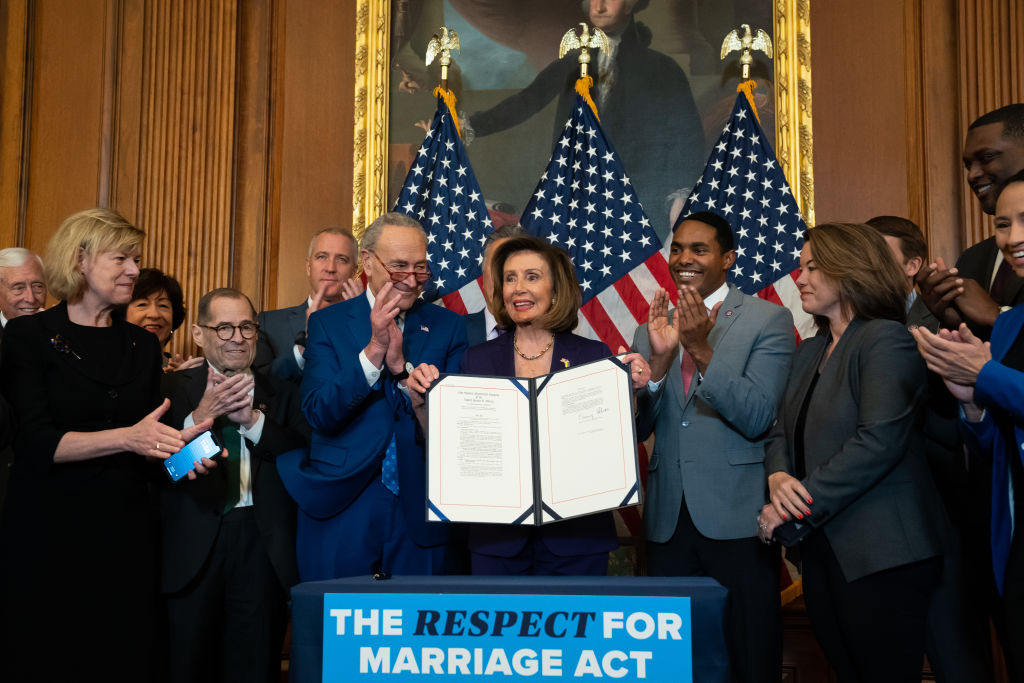
Despite the online rhetoric, some progress is being made, including the codification of same-sex marriage. On December 12, 2022, in front of nearly 5,500 attendees on the White House lawn, President Biden signed the Respect for Marriage Act, requiring the federal and state governments to recognize same-sex and interracial marriages performed by other states. While the occasion was a high point in Biden’s administration, it wasn’t the constitutional home run that the queer community eventually hopes to hit out of the park.
“Our work isn’t done and won’t rest until the Equality Act is passed into law,” said then-House Majority Leader Nancy Pelosi (D-CA), referencing a House-passed bill that would enshrine sexual orientation and gender identity into federal civil rights legislation.
The Washington Post via Getty Im House Speaker Nancy Pelosi, D-CA, holds a bill enrollment ceremony for the Respect for Marriage Act at the US Capitol in Washington, DC, on December 8, 2022. Photo by Elizabeth Frantz for The Washington Post via Getty Images.
As the nation’s relationship with healthcare access continues to spiral, the need for the Equality Act couldn’t come at a more critical time. According to a recent report by theKaiser Family Foundation, 40 percent of adults in the U.S. have medical- or dental-related debt. For the LGBTQ+ community — particularly transgender folks — the numbers are even more alarming.
LGBTQ Nation spoke with Spehar about queer politics, the remainder of Biden’s first presidential term, and our collective capacity to truly become the United States of America.
LGBTQ NATION: How do we make sense of the polarization of queer America?
V SPEHAR:People like gay people. Even the far right likes gay people. We like people for their personality, if we learn something from them, or if they make us laugh. So it’s no surprise to me that more queer people are running for office and winning. And that’s all on purpose, right? It’s almost like we’ve curated a personality that’s acceptable to mainstream America for our own safety and speaks to the diversity of queer experiences.
When I first heard Black women talk about code-switching, I thought, “Oh, that’s a version of what I do to protect myself” — changing yourself to survive. When you’re socialized in a certain way, and you value being accepted or protecting yourself from criticism, sometimes these are the things that we do.
But politics used to be about passing budgets and laws, and now it is about owning one side or the other. It is more defense than offense. And the offense isn’t putting forward good legislation that helps people; it’s just making someone else lose.
LGBTQ NATION: As the President prepares to address the nation, what are some of the most vexing problems facing the queer equality movement?
VS:Fear has been very effective in getting people to vote. Some people agree with the anti-drag queen story-hour bills or have been told that it’s unfair for trans athletes to compete. And no matter the science, we can never change their minds. And that is because their protective instinct has been triggered. It’s not because they’re dealing in truth. They’re dealing in fear. If you tell somebody who’s deeply religious (as some of the far right has), “This is going to hurt people. These people are dangerous. If we can pass this legislation, we can stop children from being hurt,” nothing is going to stop somebody from believing that because their protective instinct has been triggered.
But having a protective instinct does not mean thinking rationally. Politicians are using people’s protective instincts to push very hateful things because it makes it look like they’re winning, but they’re helping someone else lose. We need to watch out for not trying to prove that drag queens aren’t a danger to children because they’re obviously not. We need to prove that your protective instinct is being triggered by somebody trying to manipulate you.
You’re not going to get somebody to stop believing their sole mission is to be a protector, but you can get them to understand who actually needs protection.
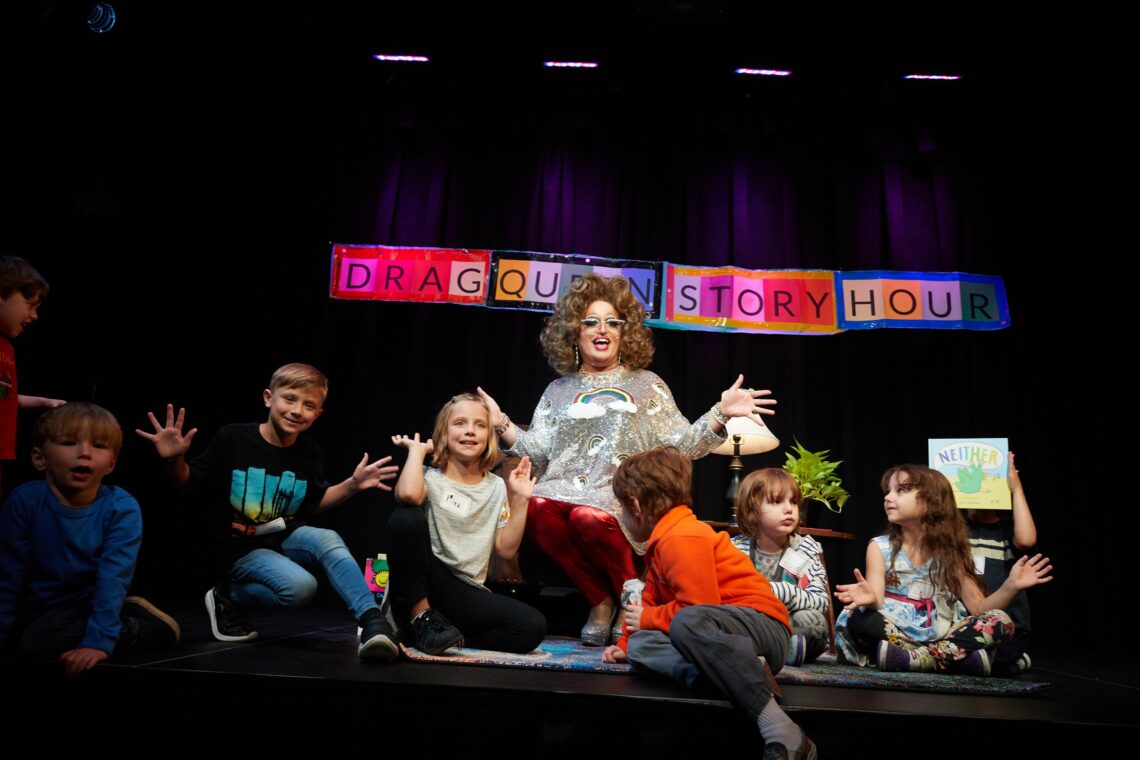
Little Miss Hot Mess reads to children at a Drag Queen Story Hour event. Photo: Joseph Tekippe.
LGBTQ NATION: A few notable queer celebrities, including Elton John and Jameela Jamil, have bailed on Twitter, citing Musk’s takeover. How is the future of social media tied to the future of our country? And is it time to say ta-ta to Twitter?
VS:I think we have to get out of it. Musk is unhinged. But that’s his platform. It’s his toy. Don’t play with it. Who gave him the funding to buy Twitter? The circumstances and lack of antitrust and mergers — all that kind of stuff that was removed so that the shareholders of Twitter could profit. And now look where we are.
Musk is one of the richest men in the world but is very cash poor and had to borrow a lot of money to get this thing. There was a lot of money from many places, which buys a lot of silence. But it’s not just a billionaire buying Twitter. There’s a billionaire owner of The Los Angeles Times,Patrick Soon-Shiong. Many of the local news channels are owned by Sinclair Broadcast Group. [Whose executive chairman, David D. Smith, is a longtime Trump cohort.]
We also have the legacy media and mainstream journalists who have built their platform on Twitter. And they don’t want to give it up. So we’ve got a double-edged sword here where an unhinged megalomaniac has purchased this thing and it’s no longer useful. We should absolutely be critical of what led to him even being able to buy it. But I think we have to accept that it is over and work towards building what the next thing is.
LGBTQ NATION: The Equality Act is still in the distance. Do you see a path forward for constitutional LGBTQ+ protections?
VS:I am grateful that the Respect for Marriage Act passed. It falls short of where I would feel fully comfortable and safe. I am ready for LGBTQ+ existence to no longer be a ballot measure. I’m ready for us not to be a talking point when it comes to political rhetoric and campaigning.
It would be as if we were still trying to discuss women being allowed to vote. No, they won the right to vote. We all agree that women have the right to vote; that’s settled law. Why isn’t it the same for LGBTQ+ equality?
I want to see the Equality Act signed and actually create a constitutional amendment, which people think we have now, but we don’t have that hard a language for it. Where there’s softness, people try to punch a hole right through it. And that would solve a lot of things for both women’s rights and LGBTQ+ rights.
With queer representation growing in Congress, that certainly makes a big difference. We’re not just talking about some random hypothetical person that may or may not live in your district. You’re saying it to the face of queer legislators. When the states ofMassachusetts, Colorado, and Oregon want to talk about gay rights, they have to say it to their governors’ faces. The more we can put a face to it, the less you can write us off.
(clockwise from top) Massachusetts Governor Maura Healey, Oregon Governor Tina Kotek, and Colorado Governor Jared Polis. Gov. Healey photo by Joseph Prezioso/AFP via Getty Images.
LGBTQ NATION: A recent report from the Williams Institute found that of the approximately 276,000 transgender folks enrolled in Medicaid, more than 40 percent live in states with vague coverage parameters or, even worse, actively ban coverage of gender-affirming care for beneficiaries. Trans youth and their parents also face an uphill battle.
The Williams Institute, in a separate brief, indicated that more than 58,000 trans youth are at risk of losing access to care because of state bans and policies. Lack of healthcare, political attacks packed with abusive language, and social pressures collectively impact the trans community’s well-being. How can we better educate the opposition about gender-affirming care and dispel the fear factor distorting thescientific evidence that proves the value of such treatment?
VS: I have a friend who got boobs at 18 when we graduated high school, and she just had them removed because she didn’t want them anymore. Cis women also get gender-affirming care — whether breast augmentation, a nose job, or a facelift — people get all kinds of things done to feel their best and like their most authentic selves. And sometimes you get something you don’t want it. But that’s rare. The fact that more women cis women who get breast implants will have them removed and regret them later doesn’t mean that nobody should get breast implants if they want them, right?
It’s the same thing with trans care. There are going to be people who are unhappy with themselves, and they aren’t going to achieve happiness through top surgery, testosterone, or whatever things other people do to achieve gender, acceptance, and joy. Listening to this year’s discourse, I’ve learned that people don’t understand puberty blockers are sometimes the difference for a young person living to decide if they want to go further. Because the alternative is they die by suicide. That is the actual alternative. And if we want to protect children, we have to protect all children.
“You’re not going to get somebody to stop believing their sole mission is to be a protector, but you can get them to understand who actually needs protection.”V Spehar
I am a person who struggled with my gender identity until I had top surgery. The amount of time I spent looking at myself, wishing things would be different, and not attending events because I didn’t like how my body looked — that is exhausting. And then I got top surgery just last year. And I woke up, and I felt finished, I felt done. I felt like myself. It changed everything for me. And I wish that people knew others who had gone through the experience so that they could tell them that. I feel happy. And it really didn’t affect anybody else’s life.
Having been a kid who struggled with just trying to feel comfortable in my body, if I could have delayed puberty and not had double-D boobs in eighth grade, that would have been great. That would have saved me a lot of problems for a lot of reasons. So I think it’s letting people know that it’s not a big deal. It’s something that a lot of people do. And most gender-affirming surgery is done on cis bodies. And that’s for men and women who were born male or female. And it’s okay. It’s not hurting anyone. So the perspective I hope people take is to stop making it such a big deal.
LGBTQ NATION: What’s your message to those who might feel overwhelmed by our country’s divide or want to tune out the news cycle?
VS: Like many gay people, I didn’t think I would be as old as I am. When I was young, I didn’t know any gay people who were adults. And now I’m 40 and didn’t plan for much after 23. So once I lived, I just thought — you never know. And I’ve had so many cool things happen: I got married and have this career. And I wake up every day and say, “Oh my God, how cool is it that I just breathe without thinking?” So having that perspective helps me when something is really sad and feels extremely hopeless.If you remember that things have been bad before, they do get better. You can get through it. And when I need to take breaks, I do. We’ve been in worse economic situations.
And we can continue to move towards less hate and more happiness, but there will always be hard stuff.
Ben LaBolt will become the first openly gay White House communications director, succeeding Kate Bedingfield, who is expected to leave at the end of February, advisors to President Joe Biden announced on Friday.
Bedingfield is expected to work on Biden’s reelection campaign. LaBolt has worked for the president since the Obama administration, most recently leading communications around matters like the nomination and confirmation of U.S. Supreme Court Justice Ketanji Brown Jackson, the American Rescue Plan, and the Inflation Reduction Act.
The move comes shortly after Biden’s Chief of Staff Ron Klain and top economic advisor Brian Deese announced their departures from the White House.
LaBolt was previously senior national spokesperson for Barack Obama’s 2008 presidential campaign and White House national press secretary in 2012.
Karine Jean-Pierre made history in May 2022 with her appointment as the first Black and the first openly LGBTQ White House press secretary.