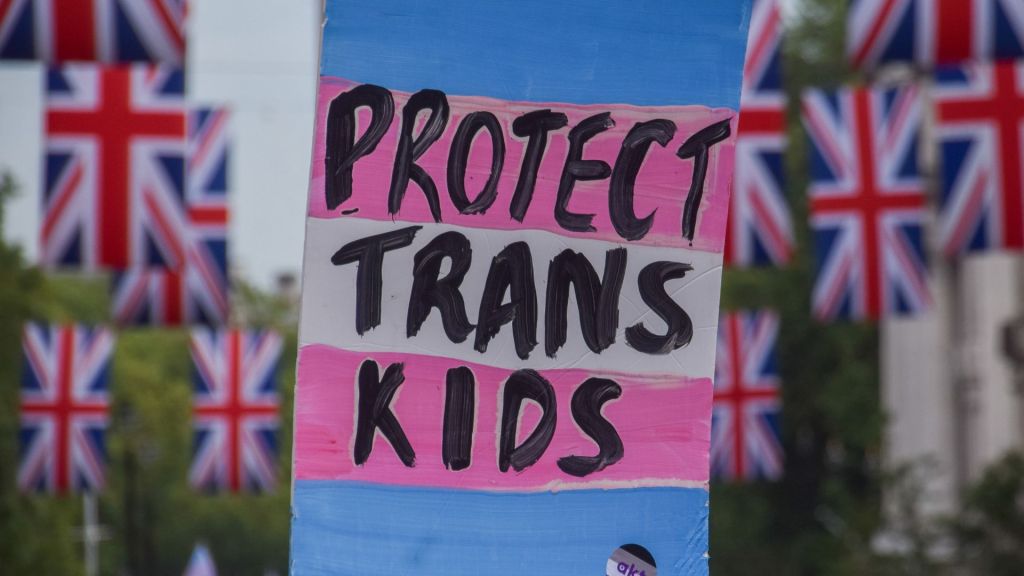
New York City schools sued federal education officials Thursday over a decision to discontinue $47 million in promised grants because of the schools’ guidelines supporting transgender students.
City officials said the federal agency led by Education Secretary Linda McMahon cut funding without the required notice or hearing after deciding that policies letting transgender students play sports and use bathrooms matching their gender identity violate Title IX, which forbids discrimination based on sex in education.
The Education Department, in a September letter, set a deadline for New York City Public Schools to change the policies or lose current and future funding for 19 specialty magnet schools.
NBC News has laid off about 150 employees, roughly 7 percent of its newsroom, and dissolved its dedicated editorial teams covering Black, Latino, Asian American, and LGBTQ+ communities, according to The Wrap. The Advocateconfirmed the firings through a source who was affected by the cuts.
The move is part of a reorganization that separates MSNBC from NBC News under a new entity called Versant. Executives described the decision as an efficiency measure to eliminate overlap and streamline operations across NBCUniversal’s news division. But it also dismantles the network’s identity-based teams: NBC BLK, NBC Latino, NBC Asian America, and NBC Out.
NBC News confirmed that while some roles were eliminated, its specialized reporting units, or “verticals,” will continue operating and draw on contributions from the wider newsroom. Several affected staffers are being reassigned to other editorial positions, where their expertise would be applied, according to a person familiar with the restructuring.
Stories about those communities will now be integrated into the more general daily reporting. Critics, however, warn that such integration often results in fewer stories and diminished focus on marginalized voices.
Rich Ferraro, GLAAD’s chief communications officer and an executive producer of the GLAAD Media Awards, called the move “part of a dangerous pattern of mainstream media outlets choosing to lose trusted and talented journalists who focus on important LGBTQ news that otherwise is under-reported or not reported at all.” He added that “the talented journalists at NBC Out consistently lead with impact and accuracy,” noting that the vertical’s reporting had “earned the trust of LGBTQ Americans and our allies to report on news with care, precision, and impact.”
“This is a terrible and poorly-timed loss for journalism and for our democracy,” Ferraro said, urging support for LGBTQ journalists whose work “our community and companies and foundations should urgently help fund.”
NBC Out most recently received a GLAAD Media Award for “Friends Remember Nex Benedict, Oklahoma Student Who Died After School Fight, as ‘Fiery Kid,’”reported by Jo Yurcaba.
The change arrives after a period of turbulence within NBC and its affiliates, as MSNBC began being spun off into its own entity. In February, Rachel Maddowpublicly rebukedMSNBC’s leadership for canceling programs hosted by Joy Reid and Alex Wagner, both of whom are nonwhite. Maddow condemned the network for eliminating its nonwhite prime-time hosts, calling the move “indefensible” and voicing deep concern for staff and morale.
In May, MSNBC, which will be rebranded MS NOW, launchedThe Weekend show featuring Jonathan Capehart, Eugene Daniels, and Jackie Alemany—Capehart and Daniels being out gay Black men—raising expectations for new paths in diversity and inclusion in mainstream cable news. Now, the dismantling of the identity desks at NBC Universal, MSNBC’s former parent company, stands in stark contrast to that recent momentum.
NBC Out, launched in 2016, was the first major broadcast vertical devoted to LGBTQ+ issues and helped bring national attention to queer and trans lives beyond Pride Month. Similarly, NBC BLK, NBC Latino, and NBC Asian America provided nuanced reporting on race, culture, and representation that rarely appeared elsewhere in network news.
The layoffs reflect a broader contraction in U.S. media, where outlets are cutting diversity and identity desks amid economic strain and political backlash against diversity, equity, and inclusion programs. Gannett, Disney, and Condé Nast have made similar reductions in recent months.
NBC has not publicly commented beyond confirming the reorganization.
An estimated 1.2 billion people could be forced to migrate by 2050 due to extreme weather and natural disasters related to climate change. The hardships of relocating and sharing limited survival resources will fall hardest on LGBTQ+ climate refugees, numerous experts say.
In 2023, London’s Pride parade was briefly halted by a small group of LGBTQ+ activists with U.K.-based climate justice coalition Just Stop Oil protesting the event’s inclusion of floats and sponsorships from high polluting industries.
Ahead of their demonstration, the LGBTQ+ supporters of Just Stop Oil released a statement explaining that they would take action to oppose the government’s continued development of new fossil fuel projects in the face of scientific consensus that such projects threaten “the collapse of our food systems and the breakdown of ordered society.”
The climate crisis, they wrote, “has already killed, and made homeless, millions of people including many LGBTQ+ people.”
“Due to their position at the margins of society, LGBTQI+ people are especially vulnerable.”Climate campaigner, Lily O’Mara
“In the coming decades, hundreds of millions of people are likely to be forced from their homes as conditions become unsuitable for human survival,” the statement continued. “It is queer people, and particularly queer people of colour in the global south, who are suffering first in this accelerating social breakdown.”
The activists at the 2023 London Pride parade were just a handful of voices in a growing chorus raising the alarm about climate displacement and the unique impact it will have on LGBTQ+ people.
In 2020, the Institute for Economics & Peace’s inaugural Ecological Threat Register estimated that by 2050, 1.2 billion people could be displaced around the world due to the effects of rising global temperatures and resultant environmental disasters and political upheaval.
Already, according to the United Nations High Commissioner for Refugees(UNHCR), an annual average of 21.5 million people around the world were displaced from their homes by floods, storms, wildfires, extreme temperature, and other weather-related catastrophes between 2008 and 2016.
As the Center for Climate and Security notes, climate change has been widely described, including by the UNHCR, as a “threat multiplier,” exacerbating risk both for people in already unstable regions and for the socio-economically disadvantaged.
LGBTQ+ people who are forced to migrate from climate-vulnerable areas are similarly likely to face discrimination and harassment on their journey to and in refugee camps.
As writer and researcher Lily O’Mara noted in a 2023 piece for Earth.org, “Due to their position at the margins of society, LGBTQI+ people are especially vulnerable” to the widening inequalities that will inevitably result from increased climate catastrophe, with queer women and LGBTQ+ people of color bearing the brunt.
The risks for LGBTQ+ people are manifold and intersectional
A 2024 report from the Williams Institute found that gay and bi couples in the United States are more likely to live in coastal areas and cities, as well as in counties with an increased risk of adverse climate change effects, including extreme cold, heat waves, excessive precipitation, and dry conditions.
These couples are also more likely to live in areas with poorer infrastructure and access to resources, which means they’re “less prepared to respond and adapt to natural hazards and other climate disruptions,” the report said.
As Eoin Jackson explained in a 2023 piece for the Harvard International Law Journal, many countries in regions that will likely see the most immediate impact of climate change — Northern Africa, Southeast Asia, the Middle East — already have poor track records on LGBTQ+ rights.
Both Jackson and O’Mara warn that in these regions, religious leaders could likely blame LGBTQ+ people for climate-related crises. Jackson cites LGBTQ+ people being blamed for outbreaks of COVID-19 in Nigeria, Liberia, and Zimbabwe, while O’Mara cites religious leaders in New Zealand, Malaysia, Israel, Haiti, and even the U.S. blaming sexual minorities for earthquakes and hurricanes. As climate catastrophes increase, LGBTQ+ people will likely be forced to flee their homes due to increased persecution as well as natural disasters.
Flooded homes along a coastline. | Shutterstock
As countries grapple with the economic effects of climate change, Jackson notes, LGBTQ+ people, and particularly transgender people, will also likely be some of the first to be denied resources, like access to jobs and affordable housing.
When disaster does strike, queer and trans people are likely to face discrimination when trying to access aid. Even in the U.S., O’Mara notes, research has shown that LGBTQ+ people “experience barriers to proper healthcare, difficulty accessing food and water rations, and securing emergency shelters after being displaced by environmental disasters.”
We must reject the view that climate change affects people indiscriminately and recognize the specific ways it affects LGBTQ+ and other marginalized people.
Those who are forced to migrate from climate-vulnerable areas are similarly likely to face discrimination and harassment on their journey to and in refugee camps, according to O’Mara. They will also face barriers to claiming refugee status under existing international law.
Jackson cites Teitiota v. New Zealand, a case in which the UN Human Rights Committee upheld New Zealand’s Immigration and Protection Tribunal’s decision to deny Ioene Teitiota’s application for refugee status due to the effects of climate change on his home country, Kiribati in the Pacific Ocean region of Micronesia.
“In doing so, the Court did not acknowledge the particular vulnerabilities that marginalized people experience because of climate change,” Jackson notes. “If courts view climate change as affecting everyone equally it is more difficult to justify why LGBTQI+ people are uniquely vulnerable to its effects.”
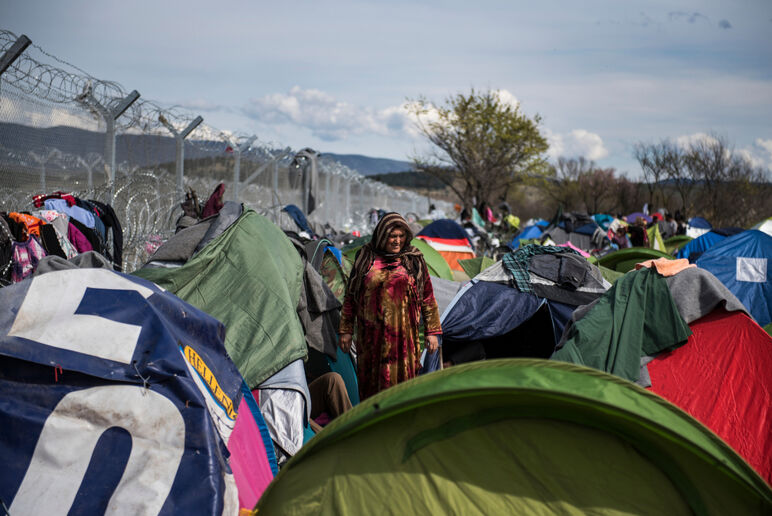
A refugee camp | Shutterstock
O’Mara, meanwhile, notes that other routes to climate asylum, like family reunification, pose unique difficulties for LGBTQ+ people, many of whom may be estranged or disowned by their families of origin.
Given current anti-immigrant sentiment in Europe and the U.S., these hurdles are unlikely to become easier, even as the worsening effects of the climate crisis force more people to flee their homes.
The future is not yet written — the time to act is now
Beyond immediate action to mitigate the effects of climate change, both Jackson and O’Mara call for a broader understanding of the intersectional nature of the climate crisis’ impact on LGBTQ+ people around the world.
Jackson writes that the international community must recognize “how and why the effects of climate change are human-oriented, and therefore in line with our perception of persecution,” thus broadening the interpretation of persecution under the UN Refugee Convention. We must also reject the view that climate change affects people indiscriminately and recognize the specific ways it affects LGBTQ+ and other marginalized people.
O’Mara also stresses the necessity of LGBTQ+ specific research on the impacts of the climate crisis and the importance of LGBTQ+ voices leading the way in developing policy.
There’s hard work ahead, but both O’Mara and Jackson stress that there is a way forward. From reforming the UN Refugee Convention to better reflect the specific circumstances of LGBTQ+ people to working to reduce the effects of climate change, the time to act is now.
Recently, the Administration for Children and Families sent letters to health departments in states and territories across the United States, requiring them to remove “all references to gender ideology” from the Personal Responsibility Education Program that provides federal funding for sex education. It’s a disturbing move that mirrors how, from the 1980s through the early 2000s, the Bush administrations threatened to and did cut federal funding to states and schools that refused to teach abstinence-only sex education as part of the Purity Culture Movement.
Similar to contemporary “Don’t Say Gay” movements that empower parents seeking to remove references to LGBTQ+ individuals from classrooms and libraries, abstinence-only sex education has been proven to be deeply ineffective and harmful to children. These parallels are more impactful than ever, as the administration regulates what sex education can be taught in schools by withholding funding. It’s a sex education version of “Don’t Say Gay” that shows how modern anti-LGBTQ+ legislation is a new form of purity culture, and one bent on eliminating not only representation but also education about LGBTQ+ bodies.
Understanding this history is vital to unpack and argue against how sexual education restricts any discussion of trans, nonbinary, and queer people.
In the 1980s, Congress passed the Adolescent Family Life Act, or the “chastity law.” Title XX of the Public Health Service Act funded a program, which has received over $125 million to date, encouraging young people to practice “chastity.” It wasn’t until 1993, following the lawsuit Bowen v. Kendrick by the ACLU, that programs functioning out of the AFLA were prohibited from using religious references or churches as host spaces. For the first time, AFLA programs also had to be medically accurate, despite a 2004 report by the office of Rep. Henry A. Waxman, which found that two-thirds of abstinence-only education materials included false information.
By 1996, Title V of the Welfare Reform Act set up a new system of grants providing funding to states that offered abstinence-only sex education. Title V required that federal funding received would be matched by state funds–for every five dollars of federal monies, four dollars of state monies would be contributed to a program that “teaches that sexual activity outside of the context of marriage is likely to have harmful psychological and physical effects.” Title V was followed by Title XI, §1110 of the Social Security Act, which provided grants to community-centered (including faith) organizations.
This funding often required educators not to teach young people, 12- to 18-year-old children, who were targeted by the program, about contraception or other safe-sex practices. This program later moved to the Administration for Children and Families, known as the Community-Based Abstinence Education program. In 2006 alone, $176 million was spent on state grants. The new program released an initiative that urged educators to emphasize traditional family values, including explicit instructions that “material must not encourage the use of any type of contraception outside of marriage or refer to abstinence as a form of contraception.”
While these programs largely went defunct by 2009, when President Barack Obama removed almost all funding for abstinence-only sex education, the Community-Based Abstinence Education and Title V programs continue to allocate funding. A new AlabamaSenate Bill 3 sponsored by State Senator Shay Shelnutt for the 2026 session. It seeks to require any sex education program or curriculum taught in a public K-12 school to “encourage abstinence from all sexual activity.” The bill would also require a parent or guardian’s permission before a child could be part of sex education, establishing an opt-in option rather than an opt-out. This is similar to discussions this past March in North Carolina’s New Hanover County.
As students returned to school in New Hanover, they faced a new sex education program, one that removes lessons on gender and sexuality. This includes eliminating discussions of gender roles and the LGBTQ+ community. This past March, the county’s Board of Education voted to change its sex education programs to comply with federal mandates related to gender identity, namely executive orders like the one signed on Trump’s first day in office that denied the existence of trans, intersex, and nonbinary individuals.
This was also profoundly influenced by Trump’s January 29, 2025 executive order titled “Ending Radical Indoctrination in K-12 Schooling,” stating that within 90 days of the order, the Secretary of Education, Secretary of Defense, and Secretary of Health and Human Services would provide an Ending Indoctrination Strategy “eliminating Federal funding or support for illegal and discriminatory treatment and indoctrination in K-12 schools, including based on gender ideology and discriminatory equity ideology.”
Although the Board of Education squashed the option of establishing an opt-in program instead of an opt-out one, which was contrary to staff recommendations, these options were brought up during the conversation. This sets a dangerous precedent. And as the Administration for Children and Families’ letters this past week reveal, historical (and present) funding restrictions surrounding sex education directly mirror current efforts to remove mentions of LGBTQ+ identity and same-sex relationships.
And it has a historical precedent: purity culture has roots in the Social Purity Movements of the late 19th and early 20th centuries that sought to eliminate social impurities, like sex work and contraception use, along with LGBTQ+ identity and representation. Perhaps the best example is the 19th-century Comstock laws. Anthony Comstock, an infantryman during the Civil War, tipped police about sex trade merchants and got his anti-contraceptive bill passed on March 3, 1873. Comstock was instrumental in the passing of a federal law with his namesake in 1873, criminalizing the distribution of pornography, contraceptives, and information about them, and any materials that could be used to produce an abortion.
The Comstock Act of 1873 also classified LGBTQ+ publications as “obscene”and prohibited their transport through the US Mail. It wasn’t until 1958 that classifying LGBTQ+ materials as “obscene” was overturned by the Supreme Court. In 1954, the Los Angeles Postmaster argued based on the Comstock Act that One: The Homosexual Magazine was obscene and thus could not be transported via the mail, but four years later, the Supreme Court ruled in One, Inc. v. Olesen that the Comstock Act had limited application over written materials.
Today, anti-abortion activists are debating the resurrection of the Comstock Act of 1873, which is still in effect but has essentially become dormant in the last 150 years. The law is still technically enforceable and could be used to stop the distribution of contraceptives, abortion medications, and supplies through the mail and local carriers.
Modern anti-trans legislation uses some of the same language that Comstock did over 150 years ago. Abstinence-only educators did over 20 years ago that access to information about sexual intercourse, contraceptives, and abortion will cause people to seek them out. It’s the same argument used within late 20th and early 21st-century purity culture to mandate the erasure of queer and trans people from libraries, classrooms, and public spaces, which conservative Christian leaders argue that they can stop children from “becoming” gay by “protecting” them from all discussions of LGBTQ+ identity and expression.
So the news of these letters from the Administration for Children and Families is not surprising but instead shows how far-right Christian politicians are mobilizing the abstinence-only sex education playbook to target discussions of LGBTQ+ identity in schools. After the Mahmoud v. Taylor Supreme Court case that ruled in June 2025 that parents could opt their children out of lessons that included books with LGBTQ+ representation based on religious rights, this aim to restrict federal funding based on including LGBTQ+ representation and discussions of LGBTQ+ identity in sex education is the next logical step to “Don’t Say Gay” in classrooms.
Emma Cieslik (she/her) is a queer, disabled, and neurodivergent museum professional, public historian, and writer based in Washington, DC.
The number of anti-LGBTQ+ hate crimes recorded by police in England and Wales have marginally decreased, but they are still not figures to celebrate.
Home Office figures published on Thursday (9 October) show in the year ending March 2025 there were a total of 115,990 hate crime offences, up from 113,166 the year previous year, which marks a two per cent increase.
Notably, these figures exclude the Met Police due to a change in the way in which the force’s data is recorded, hence its numbers are excluded from year-on-year comparisons. Because the Met Police covers the UK’s largest LGBTQ+ population (London), its exclusion likely under-represents national totals for LGBTQ+ hate crime.
It’s also important to note that recorded hate crimes reflect police‐recorded / reported incidents only and not necessarily the true prevalence of hate crime. Many hate crimes go unreported and changes in reporting practices, public awareness and police recording practices etc. all influence the numbers.
So, with these caveats out of the way, what do the 2024/2025 figures actually say?
LGBTQ+ hate crime figures in England and Wales ‘deeply worrying’ despite slight drop (Vuk Valcic/SOPA Images/LightRocket via Getty Images)
Well, in terms of LGBTQ+ hate crime, there was a 2 per cent decrease in offences related to sexual orientation and an 11 per cent decrease in offences related to transgender identity.
In 2023/24 there were 19,127 hate crimes recorded related to sexual orientation which dropped two per cent to 18,702 in 2024/25, while there was an 11 per cent drop in anti-trans hate crime from 4,258 to 3,809.
Despite the decrease, both sets of 2024/25 data are still higher than they were five years ago. In the year ending March 2020, there were 105,090 hate crimes recorded by the police in England and Wales,
As has been seen in previous years, race hate crimes accounted for the majority of police recorded hate crimes, with 82,490 offences recorded. This was up six per cent on the previous year but still remains below the peak of 87,905 offences seen in March 2022.
You may like to watch
This year’s religious hate crime data shows a three per cent rise from 6,973 to 7,164 offences.
Religious hate crime targeted specifically at Muslims rose by 19 per cent, from 2,690 to 3,199 offences.
Hate crime targeted at members of the Jewish community went down from 2,093 to 1,715 offences, or 18 per cent, during the same period. However, the Home Office urged caution as such figures exclude Metropolitan Police data which recorded 40 per cent of all religious hate crimes targeted at Jewish people the previous year.
Stonewall’s statement:
Issuing a statement following the release of the statistics, CEO of Stonewall Simon Blake said: “Unsurprisingly, the Home Office statistics released today show that overall hate crime continues to rise, which is damaging for our neighbourhoods, communities and society.”
“Yet, these numbers don’t tell the full story for the LGBTQ+ community,” Blake continued. “Today’s headline data focuses on hate crimes reported outside of London and excludes the Met Police numbers due to reporting changes, which will inevitably affect LGBTQ+ data because of where many LGBTQ+ people live.
“Trust in the Police has also fallen more widely, compounding what we already know – that LGBTQ+ people often don’t report hate crimes.
“No one should have to live somewhere where they don’t feel safe.
“The stories we hear every day tell us that LGBTQ+ people are experiencing more hate and are living in fear, especially following the April Supreme Court judgment, a period that doesn’t fall within these statistics.
Attorneys and protest organizers advised demonstrators take these safety precautions. Study the protest route, and organize transportation to and from the event. Stick with a group and set a meet-up location if you get separated. Pack essential supplies for the day in a suitable bag. Water, snacks, ID, medications and cash should be readily available. Wear non-distinctive clothing to avoid being easily identified.
Don’t bring anything you wouldn’t want on you if you were arrested. Consider surveillance precautions and how you want to safeguard your identity. Leaving your phone at home is the best way to protect privacy and prevent surveillance tracking. If you need to bring your device, keep it powered off throughout the protest. Disable biometric features like FaceID to prevent law enforcement from accessing your device.
Protesters retain the right to protest in public areas but need to avoid invading private property. Extra precautions should be taken around government facilities and protesters should pay attention to warnings from law enforcement officers or government officials.
Last night I scrolled through TikTok and came across several videos offering the advice seen above. But I also noticed that a lot of comments were defiant, with many saying that they don’t care if they are recognized or tracked or doxxed by the cult.
The Axios piece goes on to provide medical advice if you are exposed to tear gas or pepper spray and how to behave if accosted by or detained by police. The ACLU and other civil rights groups will have legal observers at protests in large cities. Hit the link.
A New York county’s law banning transgender women from playing on female sports teams at county-run parks and recreational facilities has been halted for now.
A state appeals court on Wednesday barred Nassau County from enforcing the ban while a legal challenge brought on behalf of a local women’s roller derby league plays out.
The decision comes after a lower court judge upheld the local law Monday, and the New York Civil Liberties Union, which had sued on the roller derby league’s behalf, vowed to challenge the ruling.
Judge R. Bruce Cozzens had ruled the county ban was “narrowly tailored” and “does not categorically exclude transgender individuals from athletic participation” as they can still play in coed sports leagues.
But the state appellate division, in its decision, said that making the women’s roller derby league become coed would “change the identity of the league,” jeopardizing not just its status with the sport’s governing body but also its ability to grow its membership and find teams to compete against.
Amanda “Curly Fry” Urena, president of the Long Island Roller Rebels, said players were “thrilled” the higher court saw through Nassau County’s “transphobic and cruel ban.”
Gabriella Larios, an attorney with the NYCLU, said the ruling “made it crystal clear that any attempt to ban trans women and girls from sports is prohibited by our state’s anti-discrimination laws.”
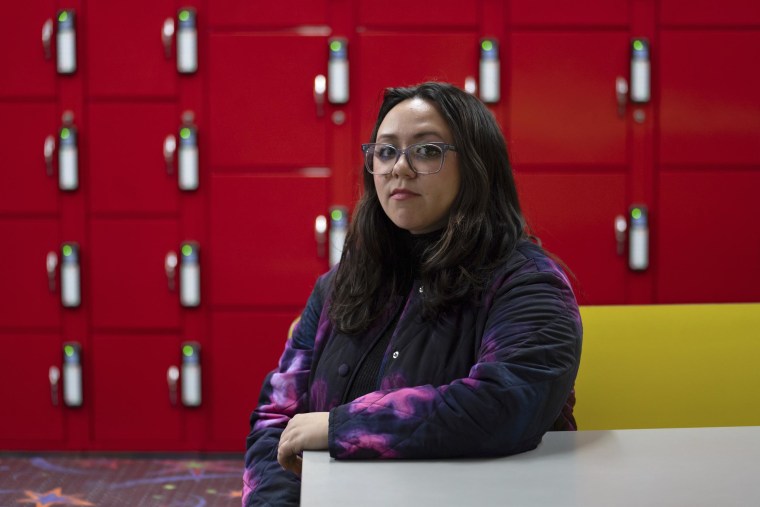
Gabriella Larios, staff attorney for the New York Civil Liberties Union, at United Skates of America.Jeenah Moon / AP file
Nassau County Executive Bruce Blakeman had proposed the ban as a way to protect girls and women from getting injured while competing against transgender women. It would have affected more than 100 sports facilities in the county on Long Island next to New York City.
The Republican, in an emailed statement, said the county will “continue to protect the integrity and safety of women’s sports.” A spokesperson didn’t immediately respond to follow-up questions about whether it would comply with the judge’s order.
Blakeman first imposed the ban through an executive order, but it was struck down after a lawsuit from the roller derby league and the NYCLU. The county’s Republican-controlled Legislature then passed a law containing the ban, setting off another round of litigation.
Texas Gov Greg Abbott has joined the effort to blot out rainbow crosswalks on public streets.
That means the Lone Star State will follow the lead of Transportation Secretary Sean Duffy and states including Florida, which has continued to erase all street art in the name of erasing “political ideologies” from the roadways.
The Texas Department of Transportation sent a memo to local governments announcing it would adhere to Duffy’s direction to keep crosswalks “free from distractions.” That means Texas won’t allow any public art, political messaging, or any other nonstandard markings.
“Pavement markings such as decorative crosswalks, murals, or markings conveying artwork or other messages are prohibited on travel lanes, shoulders, intersections, and crosswalks unless they serve a direct traffic control or safety function. This prohibition includes the use of symbols, flags, or other markings conveying any message or communications,” reads a memo published by San Antonio’s NBC affiliate.
Now government officials in cities such as Dallas, Houston ,and San Antonio have 30 days to paint over the rainbow decorations in crosswalks or risk losing state funding, according to Texas Public Radio.
“None of this is in the name of public safety,” James Poindexter of Pride San Antonio told his local NBC station. “It’s all in the name of political stunt.”
Meanwhile, Florida continues to impose its anti-color agenda. Department of Transportation officials in the Sunshine State this week removed an iconic rainbow crosswalk from Ocean Drive in Miami Beach, as reported by an NBC affiliate in South Florida.
“All of a sudden all these [Florida Department of Transportation] trucks showed up, an army of workers, heavy machinery. No notice to our city,” Miami Beach City Commissioner Alex Fernandez told the station.
Gov. Ron DeSantis has pushed for the removal of all public street art in the state to satisfy Duffy’s fight against rainbow crosswalks. He started with an unannounced paint-over of a rainbow crosswalk in front of the Pulse nightclub in Orlando that was created to honor victims of the 2016 mass shooting at the gay club.
“We’re not doing the commandeering of the roads to put up messaging,” DeSantis said in August to defend the attack on art, Pride, and any honoring of murder victims.
Notably, there is no evidence that street art in crosswalks causes more accidents. In fact, a 2022 Bloomberg study found decorated crosswalks see a 50 percenr drop in collisions.
A prominent anti-DEI campaigner appointed by Meta in August as an adviser on AI bias has spent the weeks since his appointment spreading disinformation about shootings, transgender people, vaccines, crime, and protests. Robby Starbuck, 36, of Nashville, was appointed in August as an adviser by Meta – owner of Facebook, Instagram, WhatsApp, and other tech platforms – in an August lawsuit settlement.
Since his appointment, Starbuck has baselessly claimed that individual shooters in the US were motivated by leftist ideology, described faith-based protest groups as communists, and without evidence tied Democratic lawmakers to murders.
Starbuck has long pushed vaccine disinformation, and he has amplified false claims made by health secretary Robert F Kennedy Jr. As part of his anti-DEI push, Starbuck has also spread overheated claims and falsehoods about transgender and LGBTQ people. Starbuck also baselessly asserted that city officials in Portland were working with anti-fascists, and appeared to urge a violent response.
Read the full article. Starbuck has appeared here many times for leading boycotts and threat campaigns against major corporations for their pro-LGBTQ policies. In most cases, the targeted companies rolled back such policies or ended them entirely. Hit the link for much more. No paywall.
New York City Councilman Erik Bottcher filed Wednesday to run for the seat of retiring Congressman Jerry Nadler, and he raised nearly $700,000 in campaign funds in his first 24 hours.
This historic, grassroots-driven achievement marks the biggest first-day total in New York State history and one of the biggest nationwide, according to his campaign.
Bottcher, a 46-year-old gay man, is one of the city’s most visible LGBTQ+ officials and a rising star in Democratic politics.
In a letter to supporters on Wednesday and during an interview with The Advocate, Bottcher said Nadler’s decision not to seek reelection “creates an incredible opportunity for a new generation of leaders to step forward — and for our community to make history.”
“This congressional district has a proud tradition of representatives who’ve fought for LGBTQ+ rights, from Bella Abzug to Jerry Nadler,” Bottcher said. “But we’ve never actually had one of our own at the table. And there’s an old saying, ‘If you’re not at the table, you’re on the menu.’ Our community is under attack in terrifying ways, and it’s time to take the gloves off.”
The 12th Congressional District is among the nation’s most politically active and socially progressive areas. From the earliest AIDS marches to the fight for marriage equality, the district’s neighborhoods have long been at the center of LGBTQ+ advocacy and cultural change.
Bottcher, who represents Manhattan’s Third City Council District (encompassing Chelsea, Hell’s Kitchen, and the West Village), said his motivation to explore a congressional run comes from both urgency and hope.
“I love my country, and right now it’s being torn apart by Donald Trump and his neo-fascist forces,” he said. “This is the moment for all Americans, especially those of us in public service, to stand up and fight back. I’ve spent my life serving my community, and serving in Congress would be one of the highest honors imaginable.”
If Bottcher officially enters the race, he’ll be joining what’s shaping up to be a highly competitive Democratic primary. Manhattan Assemblymember Micah Lasher has already declared his candidacy, while many others are considering a run in the coming weeks as one of New York’s most coveted congressional seats opens up for the first time in decades.
Bottcher candidacy would be historic. If elected, he would become the first out gay member of Congress from Manhattan and only the third from New York City, following Ritchie Torres of the Bronx and former Republican congressman and convicted felon George Santos,. Two other out gay lawmakers from NYC suburbs served previously, Sean Patrick Maloney and Mondaire Jones.
Before joining the City Council, Bottcher served as chief of staff to then-Council Speaker Corey Johnson and as an aide to state Sen. Brad Hoylman-Sigal, both gay trailblazers in New York politics.
Over more than a decade, Bottcher has earned a reputation as a hands-on operator and coalition builder who pairs policy substance with visible, on-the-ground presence.
“I’m out in the community day and night, every day of the week,” he said. “People want real representation. They want to know and feel connected to the people who speak for them. That’s been at the heart of my work in City Council District 3, and it’s exactly what I’d bring to the 12th District if I run.”
In City Hall, Bottcher has built a profile as an advocate for tenants’ rights, small-business recovery, mental health services, and public safety. His office has become known for quick responses to neighborhood concerns, from sanitation issues to housing safety.
Nadler’s retirement marks the end of an era. Known as one of Congress’s leading liberal voices, he served as a key defender of democracy and civil rights during both Trump impeachments and was a major supporter of LGBTQ+ rights.
His departure leaves behind a legacy rooted in advocacy and coalition building that shaped the modern identity of Manhattan’s left.
Still, Bottcher’s allies believe his blend of local experience, grassroots sensibility, and generational appeal set him apart. “No one can deny that Erik has been a rock star on the City Council, delivering for his constituents time and time again on issues like affordable housing, mental health, LGBTQ safety, and more,” said Jeff Larivee, executive director of Equality PAC. “NY-12 is one of the most dynamic and proudly LGBTQ+ districts in the country, and Erik represents the next generation of leadership this community deserves. This will be a huge priority race for Equality PAC — and we will do everything we can to support Erik and make sure he wins.”
“This is about service,” Bottcher said in closing. “It’s about standing up when your country and your community need you most. And right now both are on the line.”