Queer couples in America spent the weekend racing to get married before before Amy Coney Barrett was confirmed to the US Supreme Court, fearing she could roll back marriage equality.
Anti-LGBT+ Catholic judge Amy Coney Barrett was confirmed to the Supreme Court on Monday (October 26), with the Republican controlled Senate rushing through the appointment of the Trump nominee just one week before the presidential election on November 3.
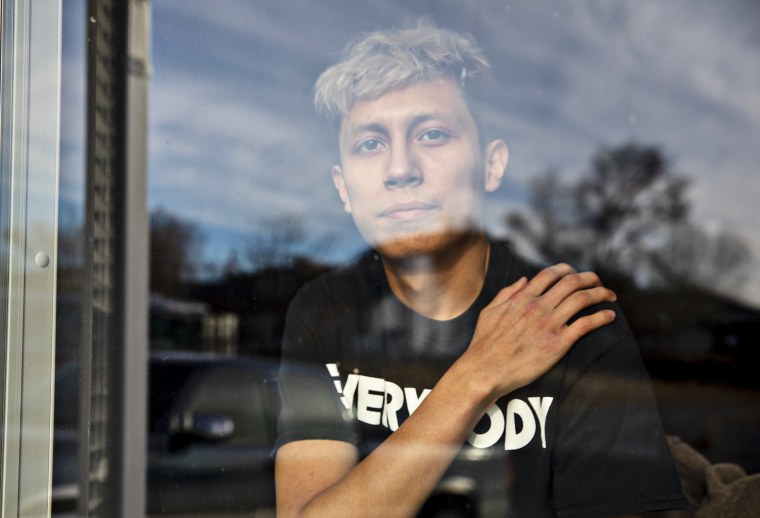
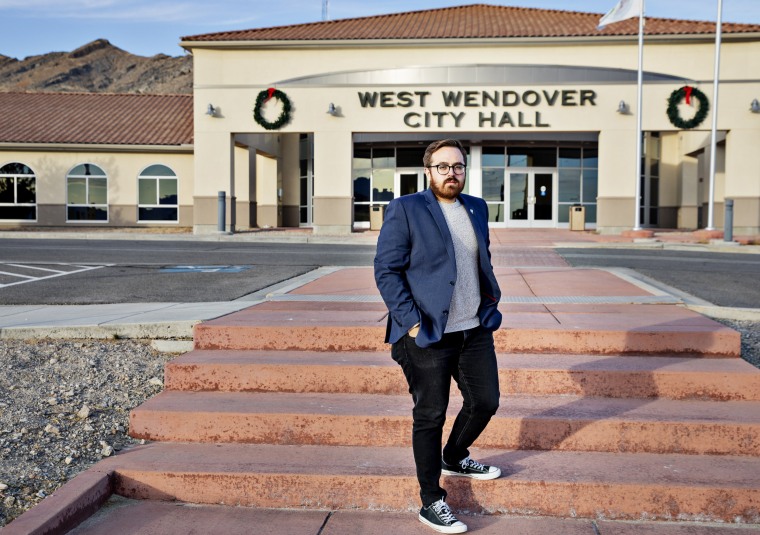
In response, Tori Jameson, a non-binary, queer, sex-positive pastor who serves the LGBT+ community in St Louis, Missouri, decided to do something while there was still time.
They said: “She has made statements against Roe, against immigration. I worry about our rights being rolled back if she gets in. But I don’t have a lot of political power. I’m just a community pastor.”
In response, Tori Jameson, a non-binary, queer, sex-positive pastor who serves the LGBT+ community in St Louis, Missouri, decided to do something while there was still time.
They said: “She has made statements against Roe, against immigration. I worry about our rights being rolled back if she gets in. But I don’t have a lot of political power. I’m just a community pastor.”
A judge in a Nigerian court on Tuesday threw out a case against 47 men charged with public displays of affection with members of same sex, ending what had widely been seen as a test of the country’s laws banning same-sex relationships.
The Nigerian law banning gay marriage, punishable by up to 14 years in prison, and same-sex “amorous relationships,” prompted an international outcry when it came into force under former President Goodluck Jonathan in 2014.
The men were arrested in a police raid on a Lagos hotel in the city’s Egbeda district in 2018. Police said the men were being initiated into a gay club, but the defendants said they were attending a birthday party.
Prosecution and defense lawyers in the case had told Reuters nobody had yet been convicted under the law, which led to the case of the men being widely seen as a test case that could help to establish the burden of proof.
Prosecutors failed to attend Tuesday’s hearing at the federal high court in Lagos, having previously failed to present some of their witnesses in a case that had been adjourned on several occasions.
Justice Rilwan Aikawa struck out the case and said he had done so due to the “lack of diligent prosecution”.
The specific charge the men faced, relating to public displays of affection, carries a 10-year prison sentence.
Outside the court, many of the men smiled and cheered, including dancer James Brown who, smiling, said: “I am free. It means a lot of good things.”
Under Nigerian law, defendants in a case that is struck out can be re-arrested and arraigned again on the same charge, whereas that is not possible in cases that have been dismissed.
Taxi driver Onyeka Oguaghamba, a father-of-four who said he merely drove people to the party, said he was happy the case had been struck out but disappointed that it was not dismissed entirely.
“I am not happy, because I’m looking for the matter to end in a way that people will see me and believe what I have been saying from the beginning,” he said, adding that the decision meant he could be charged again.
Oguaghamba and others previously told Reuters they had been stigmatized as a result of the raid and a televised news conference held by police in which they were identified the day after their arrest.
Chris Agiriga, another of the men, said the striking out of the case would not help him to be reconciled with his family who had rejected him over the matter.
“Since the past two years, this has caused a lot of damage in my life,” he said.
Emmanuel Sadi, a program officer with rights group the Initiative for Equal Rights (TIERS), said the outcome of the case raised questions about the law used to charge the men.
“You can’t even build a case around it,” he said. “I hope they (the government) realize how redundant it is as a law, and they are open to removing or repealing it,” he said.
Homosexuality is outlawed in many socially conservative African societies where some religious groups brand it a corrupting Western import. Gay sex is a crime in countries across the continent, with punishments ranging from imprisonment to death.
Amy Coney Barrett has been fueling the fears of LGBTQ advocacy groups since President Donald Trump first nominated her to the federal bench in 2017. Now, with Barrett officially confirmed as an associate justice of the Supreme Court, advocates worry that she and the court’s five other conservatives could start stripping away gay rights imminently.
The most immediate concern for national LGBTQ and civil rights groups is Barrett’s presence on the court for next week’s arguments in Fulton v. City of Philadelphia, a case that looks at whether faith-based child welfare agencies can refuse to work with same-sex couples and other people whom they consider to be in violation of their religious beliefs.
Currey Cook, a lawyer with Lambda Legal, said Barrett’s “history and prior statements” about religious exemptions are “alarming” and have led him to conclude that Barrett would “be inclined to grant certain groups special permission because of their faith.”
Rachel Laser, CEO of Americans United for Separation of Church and State, called Barrett’s record on church-state separation “deeply problematic.”
“She has shown that she would allow claims of religious freedom to be misused to harm women, LGBTQ people, religious minorities and the nonreligious, among many others,” Laser said in a statement.
A number of LGBTQ and civil rights groups have also expressed concern about Barrett’s ties to the Alliance Defending Freedom, a conservative legal group that has been at the forefront of litigation arguing for an expansive view of religious freedom.
Over several years, Barrett delivered a series of lectures funded by the group, which submitted legal briefs against same-sex marriage inObergefell v. Hodges and successfully argued a Supreme Court case on behalf of Masterpiece Cakeshop owner Jack Phillips, the Colorado baker who refused to bake a cake for a same-sex wedding because he said it would violate his religious beliefs.
The Human Rights Campaign, the country’s largest LGBTQ rights group, said Barrett’s confirmation “threatens LGBTQ equality,” and it said her previous claim that she was “not aware” of the discriminatory history of the Alliance Defending Freedom was “rather incredible.”
When questioned about her association with the group by Sen. Patrick Leahy, D-Vt., during her confirmation hearing, Barrett described her experience as “a wonderful one.”
The Human Rights Campaign warned in a report this month that the court’s ruling in Fulton v. City of Philadelphia “could have a sweeping impact on the lives of LGBTQ people.”
“If the Supreme Court undermines nondiscrimination laws in Fulton, it could erode the efficacy of nondiscrimination protections that LGBTQ people enjoy across a wide spectrum of issue areas, including veterans’ services, public accommodations, economic security programs, and housing,” the report said. “Such a result would set a devastating precedent and create a significant roadblock on the path to full equality.”
The Human Rights Campaign and Lambda Legal were among 185 primarily LGBTQ organizations that sent a formal letter to the Senate last week opposing Barrett’s confirmation due to her approach to “issues like privacy, equal protection, and religious liberty.”
‘A time bomb waiting to go off’
Arthur Leonard, a professor of labor and employment law at New York Law School, said Barrett’s presence on the Supreme Court could have a profound impact on LGBTQ rights.
Regarding Fulton v. City of Philadelphia, Leonard said, “That case is sitting there like a bomb waiting to go off, and I’m concerned how the court will deal with it with the addition of Amy Coney Barrett.”
Leonard said he expects Barrett to favor an “expansive view” of the free exercise of religion and to favor overturning lower court rulings that sided with the city of Philadelphia, which terminated its contract with Christian Social Services for foster care services after it refused to work with same-sex prospective parents.
Although they are seemingly unrelated, Leonard said, the ruling in Fulton could have implications for the right to marry.
Leonard said that while an outright overturning of Obergefell v. Hodges, the landmark case that made gay marriage legal across the U.S., is not on the horizon, the conservative court could “begin chipping way” at the right to marry by carving out a religious exemption that undermines the equal treatment of same- and opposite-sex couples mandated by the Obergefell decision.
“This case already gives the court the chance, within the current term, to say, ‘No, Obergefell does not require equal treatment for same-sex and different-sex couples.'”
Leonard said the Fulton case could also affect another landmark decision: Bostock v. Clayton County, Georgia, in which the court ruled in June that nondiscrimination law in Title VII of the Civil Rights Act of 1964 covers sexual orientation and gender identity and extends protections to millions of LGBTQ workers.
“Depending on how Fulton is decided, depending on how broadly they rule, it is possible to tear a big exception in Title VII,” Leonard said. Such a ruling, he said, could result in the “dangerous undermining of civil rights law,” which would affect not only LGBTQ people, also but people of color, women and religious minorities.
A decision in the Fulton case could come as early as the spring.
Seventy percent of Americans support same-sex marriage, according to the 11th annual American Values Survey, the highest percentage recorded by a major national poll. The results, released Monday, found just 28 percent of respondents oppose the right of gay couples to wed.
Approval crossed the political divide, with majorities of Democrats (80 percent) and independents (76 percent) supporting same-sex marriage, and 50 percent of Republicans, according to the poll conducted by the Public Religion Research Institute (PRRI) in partnership with the Brookings Institution.
Most major religious denominations back marriage equality, too, including white mainline Protestants (79 percent), Hispanic Roman Catholics (78 percent), religious non-Christians (72 percent) Hispanic Protestants (68 percent), white Catholics (67 percent), Black Protestants (57 percent) and other Christian denominations (56 percent).
Religiously unaffiliated Americans were the most supportive, with 90 percent endorsing same-sex marriage.
White evangelicals stood out as the only denomination where a majority opposed same-sex marriage, 63 percent to 34 percent. Support decreased among this group, according to PRRI, which found 41 percent of white evangelicals supported gay marriage in a 2019 survey.
Frederick Haynes, senior pastor at Friendship West Baptist Church, a Black megachurch in Dallas, said he’s not surprised by that last number. “White evangelicals have not valued justice and equality,” Haynes told NBC News. “Their definition of Christian is limited to a few ‘red meat’ issues. I mean, for them, racism is not a dealbreaker when it comes to supporting politicians.”
While his church welcomes same-sex couples, Haynes admits some parishioners may be uncomfortable with them on a personal level. But they believe strongly in equality under the law.
“We don’t want to become the monster of intolerance and inequality that we’ve fought for 400 years,” he said. “I think justice and the humanity of all of God’s creations is a supreme value in the African American community, especially in the Christian community. When you marry that with the American value of equality, it becomes a no-brainer.”
PPRI’s poll continues a trend of acceptance that has been growing for more than 30 years: In a University of Chicago poll from 1988, only 11 percent of Americans supported same-sex marriage, with 68 percent opposing it. Proponents outnumbered opponents for the first time in 2009 — 49 percent to 46 percent — according to an ABC News/Washington Post poll.
Those numbers continued to climb, especially after the Supreme Court enshrined the freedom of gay couples to marry nationwide in 2015’s Obergefell v. Hodges ruling. One year later, a May 2016 Gallup poll found 61 percent of Americans supported same-sex marriage, and 37 percent opposed it. This past June, a Gallup poll put support at 67 percent, matching a previous high measured in 2018.
PRRI’s latest results represent a notable increase even from last year’s American Values Survey, when 62 percent of respondents said they supported same-sex marriage.
“My hunch is if there’s a second Trump administration, the issue of marriage equality won’t be on the table,” said William Galston, a senior fellow at the Brookings Institution.
“I would be surprised if the majority of the Supreme Court viewed it as ‘settled law,’” he told NBC News. However, if the justices made a ruling contradicting the sentiments of 70 percent of the population, he added, “you’re going to have people questioning the legitimacy of the court.”
PPRI polled 2,538 American adults from Sept. 9 to 22 on a wide variety of topics, including Covid-19, climate change, racial inequality and their views of the presidential candidates.
More than 8 in 10 (83 percent) said they supported laws protecting LGBTQ people against discrimination in employment, housing and public accommodations, compared to just 16 percent against such laws.
A majority of Democrats (94 percent), independents (85 percent) and Republicans (68 percent) all supported legal protections for LGBTQ Americans — as did majorities in all religious groups, from 59 percent among white evangelicals to 86 percent of Black Protestants.
Haynes said such broad approval “portends a bright future for the country, as we aim to be a more perfect union.”
The Equality Act, which would modify existing civil rights legislation to add protections against discrimination on the basis of sexual orientation and gender identity, passed the Democratic-controlled House in 2019 but has not been taken up by the Republican-led Senate.
The Trump administration has largely opposed the Equality Act, however, and took a stand against Bostock v. Clayton County, Georgia, the recent Supreme Court decision that determined that Title VII of the Civil Rights Act of 1964 protected workers from discrimination based on sexual orientation or gender identity.
Haynes said the administration is out of touch with “the vast majority of Americans,” adding that they are instead “plugged into their base — white evangelicals.”
Galston agreed that there’s a “total disconnect” between the public and the White House, which also banned transgender service members from the military and supports allowing child welfare agencies to reject same-sex prospective parents.
‘My guess is the administration figured the people in the Republican coalition who oppose [LGBTQ rights] attach a much higher importance to it than those who favor it,” he said.
In a campaign season, it’s not unusual to stake everything on mobilizing your base, he added. But after an election, it’s a different matter altogether.
“Support for anti-discrimination laws is now at 83 percent — and that includes a solid majority of white evangelicals,” he said. Looking at the survey, passage of sweeping anti-discrimination laws is inevitable. “Any Republican strategist would see support is a no-brainer. The fact that some loud voices say they oppose it to the bitter end is besides the point,” Galston added. “If there’s a second Trump term, he could go for it [the Equality Act] as a way to take some of the many sharp edges off him.”
LGBTQ rights was one of the few issues respondents seemed to find common ground on. Only 7 percent of Democrats approve of President Donald Trump’s handling of the pandemic, compared to 78 percent of Republicans. And almost 80 percent of Republicans said police killings of African Americans were isolated incidents not indicative of institutional racism, compared to just 17 percent of Democrats.
Eight in 10 Democrats say the GOP has been overrun by racists, while a comparable percentage of Republicans say the Democratic Party has been taken over by socialists.
“As we head into the 2020 election during an unprecedented year of multiple crises,” PRRI founder Robert P. Jones said in a statement, “Republicans and Democrats seem to be living in different countries.”
Georgette Gomez, president of the San Diego City Council, was born and raised in the city she now serves, just 15 miles from the Mexican border that her parents, Eusebia and Miguel Ángel Gomez, crossed without documents in 1973. Her parents worked multiple jobs to make ends meet and instilled in their daughter a dual sense of industriousness and hope.
“I don’t take that for granted that they left their own country, their own language, their culture, their family, just to create a better path for us, and when they came here it wasn’t easy,” said Gomez, 43, the youngest of three children. “This was not a welcoming country to them and still isn’t to immigrants.”
Immigrant rights is an issue that weighs heavily on Gomez, who is vying this November to become the next representative of California’s 53rd Congressional District.
Georgette Gomez, President of the San Diego City Council and candidate for the U.S. House of Representatives.David Poller
“It’s something that I’ve been fighting for and will continue to push forward, to defend immigrants, to defend immigrant rights, to move this country to start addressing comprehensive immigration reform,” Gomez told NBC News.
Gomez, a Democrat, was elected to the city council in 2016 and unanimously appointed president two years later. In 2017, she introduced a resolution against President Donald Trump’s proposal to build a border wall with Mexico. The resolution was adopted by the council. San Diego Mayor Kevin Faulconer, a Republican, didn’t sign the resolution but did not veto it either.
“The fact that I was able to get my Republican mayor to support it was pretty significant,” Gomez said, “and shows that I can push on critical issues that, at times, could be divisive.”
The candidate is passionate about affordable housing and protecting the most vulnerable citizens of San Diego, where soaring rents have made life increasingly difficult for the poor and working class. Gomez introduced an ordinance making it illegal for landlords to discriminate against renters who rely on federal housing assistance, and introduced an eviction moratorium to protect renters during the Covid-19 pandemic — both of which influenced similar laws at the state level, she said.
“I’m very proud of that,” Gomez added. “Our state, our city, our nation should be inclusive of all our community members, and they should be allowed to live wherever they are able to find a home that they can afford.”
Gomez, a former community organizer for an environmental justice group, is also a champion for environmental protections. As city council president, she helped pass a policy that aims to move San Diego to 100 percent renewables by 2035.
The candidate is waging a tough battle against a fellow Democrat, Sara Jacobs, who worked for the State Department in the Obama administration and is a former adviser to Hillary Clinton. (In California, the top two candidates in the primary compete in the general election.)
A recent 10News/San Diego Union-Tribune poll put Jacobs ahead of Gomez, but Gomez has fought tough challenges before. In her 2015 City Council campaign, she narrowly beat Ricardo Flores, then the chief of staff to outgoing council member Marti Emerald,by less than 1,000 votes, “against all odds,” she said.
“We were able to build a strong grassroots campaign, and all of that, really, is in honor of my parents,” Gomez said. “They taught me that if you work hard, you push hard, and you get involved, and continue pushing to create a government that is accountable to all of us, then things change, and definitely that value, those principles, I always carry them with me.”
Georgette Gomez with her brother and parents, Eusebia and Miguel Angel Gomez, in California in the late 1970s.Courtesy Georgette Gomez
Gomez, who said she is queer, will be the first openly LGBTQ Latina in Congress if elected. She is part of a rainbow wave of at least 574 LGBTQ candidates who will be on the ballot next month, according to a new report by the LGBTQ Victory Fund, a group that trains, supports and advocates for lesbian, gay, bisexual, transgender and queer candidates. As women, minorities, and LGBTQ candidates fill the Democratic Party’s ranks, Gomez said there is an “opportunity to have a greater evolution in the party.”
“We need to ensure that we’re electing more progressives that are rooted in community, that understand and have lived through the issues that a majority of our constituents are living through,” she said. “That’s the way that you shape policies. … Our party also needs to understand and reflect those needs.”
A supporter of the Affordable Care Act and “Medicare for All,” Gomez supports making the U.S. health care system more affordable and inclusive. It’s personal for the candidate, who recently discovered that her own health insurance could deny her fertility coverage because she is in a same-sex relationship.
“We still have a health care system that is excluding our LGBTQ community needs, and that has to change,” she said, noting that transgender people can also be denied coverage for transition-related care.
If elected, Gomez said she is “extremely committed” to ensuring “we move forward progressive solutions.”
“I have the leadership to prove that I can move on issues that are normally divisive,” Gomez said. “And that’s the leadership that I’ll be bringing to Congress, and it will be standing against whatever Donald Trump continues to move forward.”
An LGBT+ Republican group has endorsed 12 politicians who have long track records of opposing LGBT+ rights.
The Log Cabin Republicans, which describes itself as “the nation’s original and largest organisation representing LGBT conservatives and straight allies”, has endorsed 34 candidates from across the United States ahead of the upcoming election.×
Writing on Twitter on October 20, the Log Cabin Republicans shared its list of endorsements, and said the group was throwing its weight behind candidates who would “advocate for limiting the size of government, strengthening personal freedom, and ensuring equality under the law for all Americans”.
The Log Cabin Republicans’ begin by endorsing Donald Trump for the presidency and Mike Pence for the vice-presidency – despite the fact that both have doggedly rolled back LGBT+ rights during their time in office.
And Trump and Pence are not the only anti-LGBT+ politicians on the Log Cabin Republicans’ endorsement list, according to LGBTQ Nation.
The Log Cabin Republicans have endorsed a number of politicians who have significant track-records of supporting anti-LGBT+ measures, including Michelle Steel, Anna Paulina Luna, Fred Upton, Nicole Maliotakis, Nancy Mace, Dan Crenshaw, Clarence Burgess Owens, Madison Cawthorn, Matt Mowers, John Paul Moran and George Devolder-Santos.
State Rep. Brianna Titone, who made history in 2018 when she became the first transgender lawmaker in Colorado, is now running for her second term. But while her platform focuses on the bread-and-butter issues of transportation, education and jobs, her opponents have targeted her gender identity.
The group Take Back Colorado released a Facebook ad this month that misgenders Titone and refers to her by her “deadname,” the name she used before her transition. The ad also claims Titone has “always supported violence” and sexualizes children.
“It’s just a nasty, transphobic ad that’s blatantly full of lies,” Titone told NBC News.
Take Back Colorado is registered to Joe Neville, the brother of Patrick Neville, the Republican state House minority leader. When questioned by The Denver Post, Patrick Neville denied the ad was transphobic, saying it simply showed “the facts.”
Titone said the strategy backfired. She raised $11,000 in the 36 hours after the ad ran —about 20 percent of all online contributions to her campaign this cycle — and said she now had contributions from 43 out of 50 states.
“I’m getting support from places all over the country now,” she said. “People recognized that there was a group of people trying to beat up someone who is doing a really good job.”
Titone is not the only target of anti-LGBTQ political ads. Many LGBTQ candidates this cycle have been subjected to such attacks, prompting advocates to worry that it has become a trend.
“The homophobic and transphobic attacks on LGBTQ candidates are more frequent and more direct than we have seen in at least a decade,” said former Houston Mayor Annise Parker, who now runs the LGBTQ Victory Fund, a national organization that trains and promotes LGBTQ political candidates.
“The dog whistles of the last few cycles are still prominent, but they are secondary to more direct and blatant uses of anti-LGBTQ stereotypes that weaponize our sexualities in an effort to derail campaigns,” Parker added. “LGBTQ candidates are being falsely called ‘pedophiles,’ ‘sexual predators’ and ‘drug users.’ They are being told they are ‘deplorable’ and should ‘go to church.’ They are being misgendered. And their dating histories — including their use of dating apps — have become the targets of opponents.”
Competitive races
Many of the attacks are happening in close races in competitive districts, like Titone’s.
“My race was one of the hardest races to win in 2018, and I’m a top targeted seat in the House right now,” Titone said of the Colorado House of Representatives.
Gabriele Magni, an assistant professor of political science at Loyola Marymount University in Los Angeles, said homophobic and transphobic attack ads “can be especially powerful and especially hurtful in districts that are not very progressive to start with.”
“They can bring out fear in the electorate,” Magni said. “It’s from an old playbook … trying to create fear about what can happen if transgender people are in office, or if people who are allies with transgender people are in office.”
Magni added that anti-LGBTQ attack ads are actually “validation of the strength and competitiveness of LGBTQ candidates.”
Gina Ortiz Jones, the Democratic nominee for a House seat in West Texas in San Antonio, Texas, on Aug. 10, 2018.Eric Gay / AP file
Gina Ortiz Jones, who’s running in Texas’ 23rd Congressional District, has been the subject of attacks funded by the National Republican Campaign Committee. The committee ran an ad last week implying that Jones, a U.S. Air Force veteran, would put military “patriots out of work” so she could “divert military money for transgender reassignment surgeries.”
In August, HuffPost reported that the committee had been encouraging outside groups to remind Texas voters in Jones’ swing district about her sexual orientation.
“The national fundraising arm of the Republican Party has declared war on LGBTQ candidates this election cycle — and homophobia and transphobia are their weapon of choice,” Parker said. “It is despicable that Republicans would attack a military veteran simply because she believes the trans soldiers who risked their lives beside her deserve fair treatment when they return home.”
Jon Hoadley is a Democratic member of the Michigan House of Representatives and is currently running for Congress. Fran Dwight
Jon Hoadley, an openly gay congressional candidate in Michigan, has been the subject of an attack ad from the Congressional Leadership Fund, a PAC dedicated to electing Republicans to Congress, that has been criticized as homophobic. The ad makes reference to Hoadley’s sexual history and calls his judgment “disturbing.” Hoadley is running against an incumbent Republican, Fred Upton, who has not denounced the advertisement.
The ad drew from Hoadley’s personal blog that he kept in his early 20s. On the now-deleted blog, Hoadley wrote about going to a gay bar and mentioned “a four year old wearing a thong” in a post about a friend’s wedding. Hoadley has apologized in a Facebook video for any misunderstanding stemming from the posts.
Chris Pack, a spokesperson for the National Republican Campaign Committee, defended the ads.
Holding Hoadley accountable for “his disgusting comments about toddlers in thongs has nothing to do with his sexual orientation,” Pack told NBC News, “and the same is true regarding Gina Jones wanting to divert money from the military to foot the bill for transgender reassignment procedures.”
Progressive strongholds
Personal attacks on LGBTQ candidates can also occur in progressive strongholds.
Ritchie Torres, who is a shoo-in to win his seat in New York’s 15th Congressional District and become the first Afro-Latinx LGBTQ person in Congress, was called derogatory names on social media that many interpreted to be homophobic.
Torres was called a “first class whore” in a now deleted tweet by Ed Mullins, an officer with the New York Police Department and president of the Sergeants Benevolent Association.
The comments came after Torres criticized the NYPD amid an increase in gun violence. Mullins said his comments “had nothing to do” with Torres’ “race, ethnicity or sexual orientation.”
“My comments had everything to do with his dangerous policies and worldview,” Mullins stated. “The city is burning and Councilman Torres wants to blame the police.”
New York City Council Member Ritchie Torres, left, in New York on March 19, 2018.Richard Drew / AP file
Magni said attacks like this are not surprising. He said that many of the attacks this cycle are “based on homophobic tropes” that cast gay men as promiscuous or sexual predators.
“American voters are OK with LGBTQ candidates if LGBTQ candidates are sexless,” Magni said.
Despite Torres’ near guaranteed win in November, personal attacks could still have a negative impact.
“The way homophobic attacks work in progressive strongholds … is by hurting candidates in an indirect way,” Magni said. “Some of these attacks isolate LGBTQ candidates and force some allies to distance themselves.”
Like-minded organizations might put endorsements on hold or volunteers and donors may pause contributions, causing LGBTQ candidates to “lose access to resources and allies that are needed at critical moments,” Magni added.
For example, openly gay Illinois state House candidate Ken Mejia-Beal has been subjected to comments from his opponent, Republican Rep. Amy Grant, that target his race and sexuality.
On a recorded fundraising call over the summer, Grant said, “That’s all we need is another person in the Black Caucus.” She went on to say: “I just think that maybe he’s afraid of the reaction that people might give him. Not because he’s Black, but because of the way he talks. He’s all LGBTQ.”
Equality Illinois, a statewide LGBTQ advocacy group, condemnedthe remarks as “racist and homophobic.”
Grant subsequently apologized, saying she “deeply regret[s] the comments” and added that they “do not reflect my heart or my faith.”
Mejia-Beal, however, does not buy Grant’s apology and said she’s out of touch with the people in his district. “She is not a nice person,” he said, adding that Grant’s comments reflect racist and bigoted beliefs.
Grant’s campaign also circulated a mailer insinuating that Mejia-Beal was connected to a cover-up of a sexual assault over a decade ago.
“Right out of the gate, when she started attacking me, I didn’t understand where it was coming from,” Mejia-Beal said. “When I heard the audio, that’s when I had the a-ha moment.”
Mejia-Beal’s opponents may have perceived his candidacy as more vulnerable to attacks because of his multiple marginalized identities.
Magni recently conducted research exploring voters’ reactions to LGBTQ candidates and found that gay men — particularly Black gay men — were the most likely to be penalized by voters.
“In the U.S., Black candidates are penalized more than white candidates for being gay, in addition to the separate, individual penalties that they face for sexual orientation and race,” he said.
He added that this penalty “does not come from Black voters.” When compared to white voters, he added, “Black voters are now more supportive overall of LGBTQ candidates, since LGBTQ candidates tend to be Democrats.”
Personal safety
Personal attacks can also threaten LGBTQ candidates’ personal safety.
Jenna Wadsworth, an openly bisexual candidate for North Carolina’s commissioner of agriculture, received rape and death threats after posting a TikTok video criticizing President Donald Trump, according to the Advocate.
Todd Gloria, a member of the California State Assembly and candidate for mayor in San Diego, also received threats of physical violence that his campaign said were incited by his opponent, fellow Democrat Barbara Bry.
Gloria came under criticism after he voted for SB 145, a bill that addresses anti-LGBTQ discrimination in the application of the sex offender registry.
“We have reported the threats to the San Diego Police Department, and they are currently investigating,” Gloria said in a statement. “While I refuse to let this paralyze our campaign, voters deserve to know that this is what Barbara Bry’s campaign is inspiring. Her campaign is bringing out the worst of who we are. We are so much better than this, and San Diegans should hold her and her campaign accountable this November.”
Bry’s campaign disputed Gloria’s claims and stressed that Bry is a “long-time supporter of LGBTQ rights.”
“While she disagrees with Todd Gloria on the issue of requiring those convicted of sexual assault on children to be placed on the state’s sex offender registry, regardless of sexual orientation, her campaign has never raised this issue in campaign advertising,” Tom Shepard, Bry’s campaign consultant, told NBC News in an email. “This controversy is a result of verbal attacks on Gloria by a rival leader in San Diego’s LGBTQ community, who criticized Gloria’s vote on this issue.”
Non-LGBTQ targets
Targets of homophobic or transphobic ads may not even be LGBTQ. For example, the American Principles Project, a conservative think tank and PAC, released an ad targeting presidential candidate Joe Biden and Sen. Gary Peters, D-Mich., alleging that they support “policies which would allow biological males to compete in women’s sports and push children into dangerous, life-altering sex-change” procedures.
Magni said such ads are designed to “galvanize the most conservative base,” so these voters turn out on Election Day. The idea is to depict Biden and Peters “as out-of-touch liberals who threaten ‘traditions,’” Magni said.
‘Chilling effects’
While a record number of LGBTQ candidates are running for office this year, some advocates fear anti-LGBTQ attacks could derail this progress.
“The last few election cycles we have seen the number of LGBTQ candidates increase dramatically, but this trend is not inevitable,” Parker said. “Already we are hearing from LGBTQ elected officials that they may not seek higher office because they don’t want to expose their loved ones and families to these deeply personal attacks.”
Magni said these attacks could have a long-lasting impact.
“The damage that is done is not only to candidates right now but the potential chilling effects among younger LGBTQ people who are thinking about running,” he said. “It’s not only about scrutiny. Their personal lives are going to be distorted. Their dating lives are going to be weaponized … It makes them think twice.”
For her part, Titone is determined to keep campaigning and support the presence of other transgender women in office.
“When you are only 1 of 4 transgender legislators in the whole county, representation matters,” Titone said. “We cannot take a step back in trans representation at this point.”
When Pricila, a 32-year-old trans woman, fled El Salvador in February 2019, she had good reason to fear for her life. Police had beaten and sexually assaulted her, telling her they would make her a man. Gang members attempted to forcibly recruit her. They extorted her, burned her, beat her, abducted her gay friend, and threatened that she would be next.
Pricila fled to safety in the United States, where her asylum case is underway. But if the Trump administration has its way, people like Pricila, who asked us to use her first name only, may no longer be eligible for asylum in the United States.
A regulation proposed by the Justice and Homeland Security Departments in June would, as the organization Immigration Equality put it, “essentially eliminate asylum protection altogether” for people seeking asylum on grounds of persecution related to their gender identity or sexual orientation. And now, in what has to be categorized as the regulatory equivalent of beating a dead horse, the Justice Department on September 23 proposed yet another regulation to limit asylum seekers’ ability to provide evidence in support of their claims.
LGBT asylum seekers — including those, like Pricila, from Central America’s Northern Triangle — often have strong asylum claims, as documented in a new report by Human Rights Watch. Although the Northern Triangle countries of El Salvador, Guatemala and Honduras have passed some laws and policies to protect people from violence and discrimination based on sexual orientation or gender identity, LGBT people can tell you a yawning gap exists between what is on paper and the abusive reality they face.
In another 70 countries around the world, LGBT people can be imprisoned based on their sexual orientation or gender identity. Data spanning 2007 through 2017 shows that asylum seekers with persecution claims based on gender identity or sexual orientation overwhelmingly passed initial U.S. screenings regarding their fear of returning to their home countries.
The international refugee system exists to provide protection to people like Pricila, who are persecuted because of their identity or beliefs. But the U.S. administration seems bent on shutting them out. Homeland Security has compelled asylum seekers arriving at the southern border to wait for months in Mexico before they undergo a “credible fear” interview, the first step in the asylum process. Some are forced to remain in Mexico for many more months while U.S. courts adjudicate their claims. Northern Mexico, where several trans women have reported receiving death threats, is particularly inhospitable for them. Pricila was gang raped in Mexico.
Refugees International and Human Rights Watch have exposed how Guatemala’s asylum system is unprepared to handle an influx of asylum seekers. Not one of the 939 asylum seekers transferred to Guatemala between November 2019 and March 2020, when transfers were suspended due to the Covid-19 pandemic, has been granted asylum.
Since March, U.S. authorities have used the pretext of Covid-19 to close off land borders to asylum seekers altogether, and the Border Patrol has summarily expelled nearly 150,000 people. No one knows how many were fleeing persecution based on gender identity or sexual orientation because they were never given the chance to ask for protection.
The Homeland Security and Justice regulation proposed in June bars all gender-related asylum claims. It does not define gender, but in addition to dismissing claims from abused women and girls, immigration judges could misconstrue it to bar all gender identity asylum claims.
The rule requires claimants to identify themselves as victims of persecution based on sexual orientation or gender identity the first time they come before an immigration judge — or waive their right to do so. Persecution for most forms of political activism — including LGBT activism in countries where it is outlawed — would be insufficient to constitute “persecution on account of political opinion,” because the rule narrows “political opinion” cases to people seeking “regime change.”
The regulation would exclude evidence to support an asylum claim if the adjudicator thought it promoted a “cultural stereotype.” A judge could dismiss evidence of Pricila’s abuse by Salvadoran police if she thought it promoted a machismo stereotype. The Trump administration seems more concerned not to offend homophobes and misogynists than to protect their victims.
This week’s newest proposed rule digs the hole even deeper, setting a 15-day time limit on filing an asylum application and preferencing U.S. government human rights reports over those of reputable nongovernmental organizations. It would even allow immigration judges to introduce evidence on their own, fundamentally distorting the role of a U.S. immigration judge and opening the door to the introduction of evidence that might reflect judges’ own biases, such as anti-LGBT prejudice.
The recent and proposed asylum policies and regulations that shut out people fleeing persecution should be scrapped. LGBT asylum seekers, like Pricila, have compelling reasons for fleeing their home countries. The United States should provide them a fair asylum process.
An Algerian court on September 3, 2020 sentenced 2 men to prison terms and 42 others to suspended terms after mass arrests at what the police alleged was a “gay wedding,” Human Rights Watch said today. The authorities should void the charges and release them immediately.
On July 24, 2020, police raided a private residence and arrested the 44 – 9 women and 35 men, most of them university students – in el-Kharoub, a district in Constantine Province, northeastern Algeria, after neighbors complained. An Algerian lawyer involved in the case told Human Rights Watch that the court used police reports describing the decorations, flowers, and sweets indicative of a wedding celebration, and the men’s supposedly gay appearance, as evidence of guilt.
“Algerian authorities’ attack on personal freedoms is nothing new, but arresting dozens of students based on their perceived sexual orientation is a flagrant infringement on their basic rights,” said Rasha Younes, lesbian, gay, bisexual, and transgender (LGBT) rights researcher at Human Rights Watch. “They should immediately release from prison the two men who would be free today were it not for Algeria’s regressive anti-homosexuality laws.”
The court convicted the 44 of “same-sex relations,” “public indecency,” and “subjecting others to harm by breaking Covid-19-related quarantine measures.” Two men were sentenced to three years in prison and a fine, and the others to a one-year suspended sentence.
These convictions contradict the right to privacy under international human rights law. This right is also reflected in Algeria’s constitution, which provides for the protection of a person’s “honor” and private life, including the privacy of their home, communication, and correspondence. The convictions of the 44 for “same-sex relations” indicate that Algerian authorities are discriminating against them based on their perceived sexual orientation and gender expression, Human Rights Watch said. The appeal of their convictions has not yet been scheduled.
In Algeria, same-sex relations are punishable under article 338 of the penal code by up to two years in prison. Additionally, article 333 increases the penalty for public indecency to six months to three years in prison and a fine if it involves “acts against nature with a member of the same sex,” whether between men or women.
Arrests for “moral” offenses that involve consensual adult activities in private settings violate international human rights law, including the right to privacy, nondiscrimination, and bodily autonomy protected under the International Covenant on Civil and Political Rights (ICCPR), to which Algeria is a state party. Algeria has ratified the African Charter on Human and People’s Rights (ACHPR), which affirms the rights to nondiscrimination, and has joined the African Court on Human and Peoples’ Rights. However, Algerian law does not extend antidiscrimination protections to discrimination based on sexual orientation or gender identity.
In light of the Covid-19 pandemic and the risk of outbreaks in detention sites, Human Rights Watch recommended that governments refrain from custodial arrests for minor offenses that do not involve the infliction or threat of infliction of serious bodily injury or sexual assault or a known likelihood of physical harm. Officials should also release anyone held pretrial, unless they pose a specific and known risk of harm to others that cannot be managed through measures other than detention.
Since March, Algerian authorities have imposed a ban on all social gatherings to slow the spread of Covid-19. Breaking quarantine and social distancing measures to attend a social gathering does not justify arbitrary arrests and prolonged pretrial detention, Human Rights Watch said.
“While people in Algeria continue to demand their basic rights to protest, the authorities are dedicating their time and resources to crack down on students and stockpile discriminatory charges against them,” Younes said. “Instead of policing its citizens’ private lives, the Algerian government should carry out reforms, including decriminalizing same-sex conduct.”
The Trump administration’s efforts to erase LGBT+ issues from its annual assessments on global human rights have been laid bare in a damning new report.
The shocking research by the Asylum Research Centre (ARC) identifies multiple, serious omissions of human rights issues — including torture, reproductive rights and homophobic persecution — in the US state department’s country reports.
00:00/08:04×
These annual reports have been compiled by the US since 1976 and had long been viewed as a “gold standard” of objective information about the state of human rights around the world. In the UK they are used by the Home Officeto inform decisions about whether asylum seekers should be forcibly returned to their home countries.
Comparing reports from the last year of the Obama administration to the first three years of the Trump administration, the ARC found that references to anti-LGBT+ persecution had been virtually scrubbed from the record, along with multiple references to women’s healthcare and other civil and political rights.
Violence and discrimination against LGBT+ people, organisations and activists was omitted altogether from reports on Iraq, despite well-documented examples of homophobic violence in the country.
The latest Iran report scrapped all references to societal discrimination and abuse affecting LGBT+ people, and the earlier judgement that conversion therapy “may constitute torture or other cruel, inhuman, or degrading treatment under international law” was no longer included.
Similar attempts to obscure and de-emphasise LGBT+ rights abuses were seen on reports of Eritrea, Pakistan and Sudan. Claims of improvements in these regions were also “inadequately substantiated”, the ARC said.
Chillingly, all of the Trump reports removed the “Reproductive Rights” section and replaced it with “Coercion in Population Control”, omitting information related to accessing reproductive rights, contraception and pre- and post-natal healthcare.
State Department spokeswoman Heather Nauert claimed the administration was not “downgrading coverage of LGBT or women’s issues” — but the ARC research cites a 2018 Oxfam report which proved that reporting on LGBT+ issues abroad is down 21 percent under Trump, and reporting on women’s rights is down 32 percent.
The ARC’s findings were welcomed by the UK Lesbian and Gay Immigration Group, “given the importance of the US Department of State reports in deciding asylum claims in a number of countries including the UK”.
Executive director Leila Zadeh warned: “Omitting this information could result in LGBTQI+ people being returned to danger.
“Decision-makers should consider country background evidence with a more critical eye, as lack of reporting on the risks LGBTQI+ people face in their countries of origin doesn’t automatically mean such risks don’t exist.”