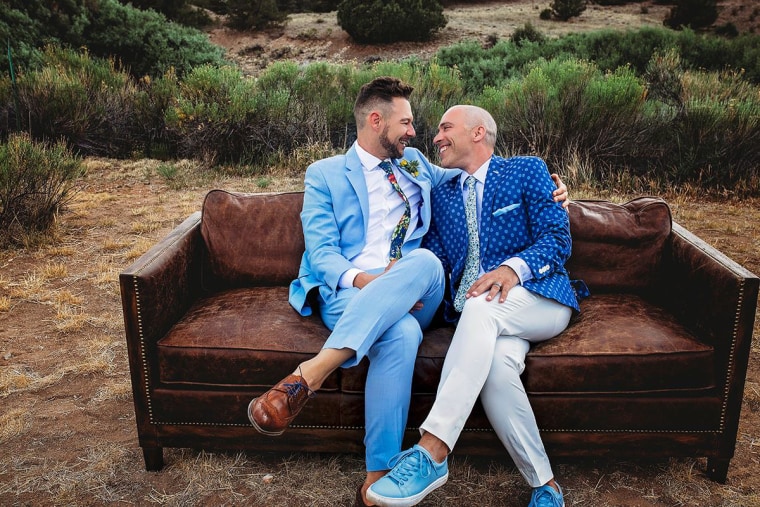
More lesbian, gay, bisexual, transgender and queer candidates will appear on ballots across the country this November than ever before, according to a new report from the LGBTQ Victory Fund, a group that trains, supports and advocates for queer candidates.
These candidates are also more racially diverse than in past election cycles, according to the findings.
“A historic number of openly LGBTQ people are running for office this year and we have the opportunity to elect an unprecedented number on Election Day,” former Houston Mayor Annise Parker, president and CEO of the LGBTQ Victory Fund, said in a statement. “While LGBTQ candidates are significantly more diverse than U.S. candidates overall, we must continue to break down the barriers LGBTQ people of color, women and trans people face when considering a run for office. Our government must reflect the diversity of America.”
Another record year
At least 1,006 openly LGBTQ people ran or are still running for office this election cycle, up from 716 in the 2018 midterms, according to Victory’s Out on the Trail report. Of these candidates, 574 will appear on the general election ballot in November, up from 432 in 2018, representing a 33 percent increase.
There are eight nonincumbent LGBTQ candidates running for the House of Representatives. If they all win, they would more than double LGBTQ representation in Congress’ lower chamber from seven to 15. There are currently two LGBTQ U.S. senators — Tammy Baldwin, D-Wis., and Kyrsten Sinema, D-Ariz. — though neither is up for re-election this year.
Some of these congressional hopefuls are looking to unseat incumbent conservatives. Tracy Mitrano, a lawyer and cybersecurity expert, is one of them. She’s gunning for incumbent Republican Tom Reed’s job in New York’s 23rd Congressional District.
“This district can do better than what it has had as representation in Congress for the past 10 years,” Mitrano told local NBC affiliate WTEM-TV on Saturday. “Affordable health care, good education, infrastructure, the internet. Let’s get jobs back, but the only way you’re going to do that is if you lay the foundation of health and education and infrastructure.”
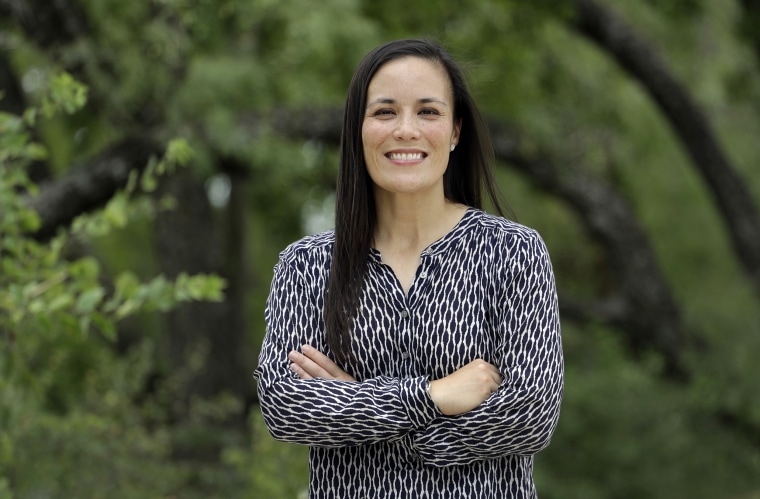
Former U.S. Air Force Capt. Gina Ortiz Jones is looking to beat Republican nominee Tony Gonzales, a Navy veteran, and flip Texas’ 23rd Congressional District for Democrats. If she wins, Jones would be both the first Filipino American woman to serve in Congress and the first openly gay representative from Texas.
“I really felt called to protect the opportunities that allowed me to grow up healthy, get an education and serve our country,” Jones told NBC News. “That made my story, my service, possible, and that’s why I’m so committed to fighting for working families in this district.”
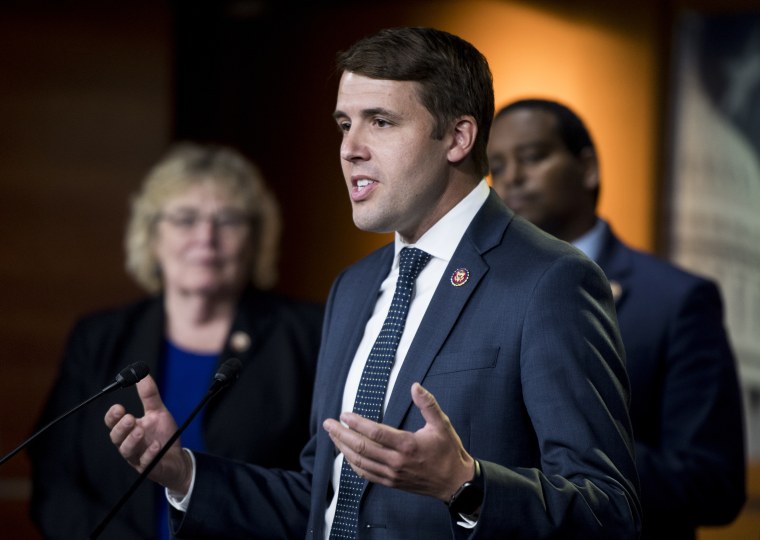
Jon Hoadley is currently in his third term as a Michigan state representative. He is taking on incumbent Rep. Fred Upton, who opposed nondiscrimination protections for LGBTQ people and voted to ban same-sex marriage. Upton has represented the historically conservative district since 1986.
“For his entire political career, Fred Upton has worked to deny basic rights and protections to LGBTQ people – so it will be poetic justice when he is defeated by an openly gay challenger next November,” Parker said of the race. “Few 2020 Congressional races are more important than this one – a swing seat in a swing state with a stark choice for voters. Jon aims to uplift all constituents and put real people at the center of his decision-making, while Fred Upton continues to play cynical politics with people’s lives and well-being.”
If elected, Hoadley would be the first openly LGBTQ member of Congress from Michigan.
Increasing racial and ethnic diversity
A notable trend this year is the substantial increase in the number of LGBTQ candidates of color. Nearly a third of the LGBTQ candidates who ran this year are people of color, compared to 10 percent of all candidates — LGBTQ and non-LGBTQ — who ran in 2018, the report states.
Two favorites to win their congressional races are Democrats Ritchie Torres and Mondaire Jones, who are running for New York’s 15th and 17th Congressional districts, respectively,
Both Torres and Jones would be the first Black gay men elected to Congress if they were to prevail Nov. 3.
Rep. Sharice Davids won her House bid in 2018 and became the first openly gay Native American woman elected to Congress, and the first LGBTQ person Kansas has ever elected to federal office. She is back on the ballot this November, favored to beat Republican challenger Amanda Adkins, a former health care executive.
Georgette Gomez, currently a San Diego City council member, is running against another Democrat, Sara Jacobs, for the open seat left by Rep. Susan Davis’ retirement. If elected, Gomez would be the first Latina LGBTQ member of Congress.
Beyond the L and the G
Gay men and lesbians continue to make up the majority of LGBTQ candidates. However, bisexual, queer and pansexual candidates saw the greatest proportional growth since 2018, according to the report.
Compared to 2018, the number of transgender candidates decreased, but the number of candidates identifying as genderqueer, nonbinary or gender-nonconforming jumped considerably, from 6 to 25, marking a 325 percent increase from 2018.
For example, Louise Snodgrass is hoping to become the first genderqueer state legislator in South Dakota.
While the overall number of transgender individuals running for office this cycle went down, those who are running are serious contenders and could have an important impact at the state level. For example, Sarah McBride is on track to become the first openly transgender person elected to Delaware’s General Assembly and the first transgender state senator anywhere in the U.S.
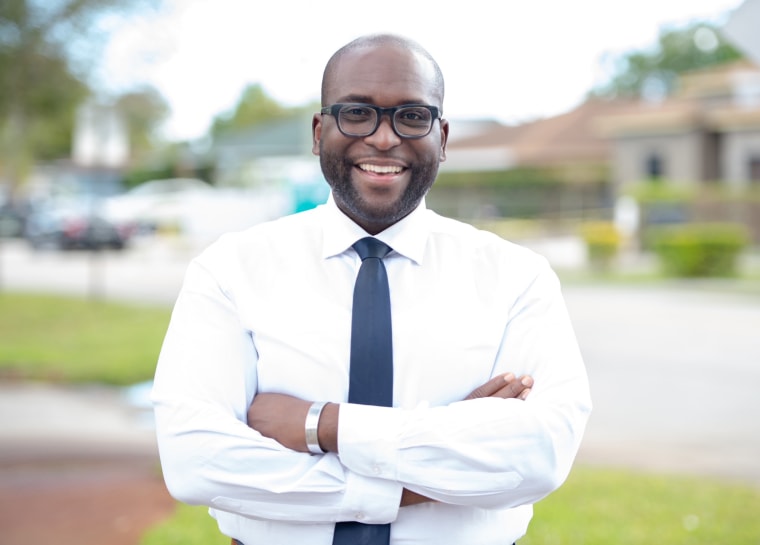
After winning the Democratic primary in August, Taylor Small is a shoo-in to become the first openly transgender state legislator in Vermont. And in Kansas, Stephanie Byers is also favored to win her race against Republican Cyndi Howerton to fill the open seat in the state legislature. If elected, Byers would become the first openly transgender legislator in the Kansas House of Representatives.
Jessica Katzenmeyer is running for Wisconsin State Assembly, and Madeline Eden is running for the Texas House of Representatives. If elected, both women would be the first openly transgender lawmakers in their states’ legislatures.
Shifting geography of LGBTQ candidates
California, Texas and Florida boast the highest number of LGBTQ candidates running in 2020, according to the Victory Fund. These candidates could make an especially big impact on the Texas House of Representatives, where Democrats need to pick up nine seats to flip that chamber. Several LGBTQ candidates are in key races, especially out lesbians Ann Johnson and Eliz Markowitz.
Alabama is the only state this cycle that has no openly LGBTQ person running for office at any level, according to the report. At present, State Rep. Neil Rafferty is the only openly LGBTQ person in office in Alabama.
Five states — Alaska, Tennessee, Louisiana, Delaware and Mississippi — have never elected an openly LGBTQ state legislator, though that could soon change for three of them. In addition to McBride in Delaware, lesbian Lyn Franks is running for the state Legislature in Alaska, and Torrey Harris, a bisexual man, and Brandon Thomas, a gay man, are running in Tennessee.
While the number of openly lesbian, gay, bisexual, transgender and queer elected officials across the U.S. has been steadily increasing, just 0.17 percent of the country’s roughly half million elected officials are LGBTQ, according to the Victory Institute. In order for LGBTQ people — who make up an estimated 5 percent of the U.S. population — to achieve “equitable representation,” there would need to be 22,544 more of them in elected office, according to the organization.
Feminuity released a groundbreaking new resource: A Guide to LGBTQ2+ Inclusion for HR, People, & DEI LeadersThe publication serves to center the needs and experiences of LGBTQ2+ employees, keeping companies at the cutting-edge of inclusion and better-equipping organizations to promote a sense of fairness and belonging in their future workforce.
Keith Plummer, a partner of Feminuity, certified Human Resources professional, and author of the guide, summarized its significance with the following remarks:
“In this resource, we set out to create a guide for HR, People, and DEI leaders to adapt to the sexual and gender fluidity that increasingly characterizes our contemporary world. From policies to benefits to workplace culture, this publication provides a first-of-its-kind exploration of leading practices that will revolutionize workplaces across the globe by putting LGBTQ2+ considerations front and center.”
Workplace conversations around sexual and gender diversity are complicated as some still believe that these dimensions of the human experience should be kept private and divorced from professional life. However, Keith challenges this thinking:
“We communicate our sexuality and gender in subtle ways everyday no matter the context. Too often sexual and gender diversity is relegated to the shadows of office initiatives due to unjust politicization and sensationalism. Our sexual and gender identities are fundamental parts of who we are—company policies and procedures should be designed not only to accommodate but to celebrate them.”
Dr. Sarah Saska, CEO and Co-Founder of Feminuity, expressed her enthusiasm and support for her consultancy’s latest open-source output:
“Feminuity is proud to support what we consider a paradigm-shifting examination on how to affirm the ever-growing LGBTQ2+ workforce. This collection was informed by extensive research and an unwavering passion to integrate queer perspectives into the ways companies do business.”
About Feminuity
Since 2014, Feminuity (pronounce) has supported leaders in embedding diversity, equity, and inclusion into the core of their business. Feminuity partners with innovative companies, from start-ups through to Fortune 500s, to build diverse teams, equitable systems, and inclusive products and workplace cultures.
Freelance journalist Alan has been subjected to a sinister and coordinated campaign of sexual assault and threats on his life for years, perpetrated by an underground chemsex ‘mafia’.
Based between France and Northern Ireland, Alan’s life slipped into mayhem and the macabre when a hook-up that turned into assault dragged him a years-long “vendetta” that has placed his own life, as well as the lives of his children, on the line.×
Members of a “Satanic” chemsex sexual assault ring, who frequently use the “social networking website” NastyKinkPigs, first conspired to deliberately infect Alan with HIV – or “poz him up” – back in 2011, he alleges.
Several years later, one of these same men rammed a knife inside of him. After both incidents were reported to the police, Alan sent out an alert to Grindr users in the Crumlin area to warn of these sexual predators.
Days later, he was informed he had been singled out to become the subject of a vendetta, simply because he had warned others, which would start two years down the line so he would not be able to link who was behind it.
An onslaught of perforation attempts, sexual assaults and even robberies tallying at least 21 in total has unfolded in the years since the vendetta began against the now 52-year-old.
In the last two years especially, members have dialled-up their apparent deluge of attacks: inserting drugs without his consent anally, live-streaming sessions without his consent and injuring him with various household tools, nail files, lemonade bottles pushed into his colon, toothbrushes, sharpened dowelling rods, often disguised as innocuous objects, such as pencils or mountaineering equipment.
“It’s a national scandal that the queer community lives in fear of sex predators and feel they cannot speak up,” Alan told PinkNews.
“It’s been difficult to live through, but I’ve had to see these injustices as tasks to report on. I’ve had to speak out to make this useful for everyone else.
“I’ve avoided injury by refusing drugs and sometimes due to the receipt of insider information from other members of NKP,” he said, adding that he would alert PinkNews of any further incidents.
Some of the UK’s top police inspectors and probation officers told PinkNewsthat the criminal underbody of chemsex is vast. A drive for “power” emboldens those with sinister intentions to manipulate those they deem “vulnerable” by “weaponising” drugs and dating websites.
Chemsex consumes the lives of many, police said, and victims are left “traumatised, their lives changed forever” by not only sexual violence but also “robbery, theft, actual bodily harm, grievous bodily harm”.
These attacks are rarely carried out in isolation and single offences often impact as many as 70 people at once.
A chemsex ‘mafia’ has targeted Alan – injuring him, stalking him, threatening his family – for years.
Throughout the alleged attacks, which have occurred in both Northern Ireland and England, where he lived from December 2018 to April 2019, Alan described uncovering a dense web of assaulters all connected to one another and whose members litter the UK.
attacks as they are live-streamed – while scores of users on kink websites wait to watch the impending violence.
Comparing the ring to a “mafia”, Alan described how he experienced a torrent of targeted plots of sexual abuse – many of which occurred while he was incapacitated on drugs he had not consented to during chemsex sessions – which have, on several occasions, curdled into plots to rip his insides or murder him, as well as threats against his family if he were to ever speak out.
The victim claimed that many of the alleged attacks were live-streamed. (Stock photograph via Elements Envato)
Alan showed PinkNews dozens of chat logs with various online members allegedly involved in the ring, as well as tip-offs, hundreds of texts and WhatsApp threads, video footage of him being drugged during sessions, photographs of the tools allegedly used to injure him as well as email reports filed with law enforcement over several years.
All forming a patchwork of a depraved network that wields the at-times crooked playbook of chemsex – typically male sex parties fuelled and facilitated by a cocktail of drugs – as a smokescreen of sorts for malicious people to stream the now vulnerable without their consent.
Viewers, he said, cheer the perpetrators on, jockeying with one another for their twisted way to harm the victim to be carried out.
In speaking out, Alan hopes to expose the fault lines of a certain criminalised subsection of chemsex in making their playbook public and encourage more victims of chemsex-related violence to speak out. “Queer men up and down the county are living under intimidation and I’ve uncovered the network.”
He has been told by members he was targeted, in part, for raising awareness of a sex predator as well as a drug dealer being raided, and because he has high-functioning autism, “and those with a disability are seen as easier prey,” he said.
To transmit HIV to someone is to ‘score a win’ in the ring, victim says.
“I had been married for more than 20 years,” he said, “and after my marriage ended, I thought I would explore [my sexuality]. I was never a regular drug user, but was supplied at these venues purely to incapacitate me”
In his explorations, he soon had his first encounter with the group – a man in Crumlin, a small town in Northern Ireland, he said, who was a member of NastyKinkPigs.
The sounds of nearby rivers babbling while joggers ran down the spindly trails that lace around the leafy town, Alan travelled to meet him in a red-brick apartment complex.
The man, alongside a friend, drugged and pinned Alan down. “He removed his protection that I had insisted on and ejaculated inside me,” Alan said, “and his friend, use a needle to abrade my insides in order to potentially infect me with HIV.”
Months later, Alan met Steve (not his real name), from a nearby village, who asked to be his boyfriend. While in a “drugged stupor”, Steve revealed he knew of the assault – the two men were his friends who “knew exactly what they were doing”.
He admitted that to intentionally transmit HIV to someone – a criminal offence in the UK – is to “score a win” in the group. “These men keep a logbook of the number of people they transmit HIV, hepatitis C and syphilis,” Steve told Alan, “he told me they were part of a web-based community hosted on NastyKinkPigs where the spreading of diseases is considered, by some, to be a kink.”
Following another attack by the man based in Crumlin several years later, in which he rammed a knife inside him causing him to be hospitalised, Alan, in consultation with the police after filing a report, took to Grindr to warn locals of the assailant’s actions. The message was vetted by police in Antrim, Northern Ireland, he said. Alan says reporting the attack would lead to two drug dealers in Glengormley to be raided by authorities.
A few days later, Steve would go on to tell him that he had been “singled out for what he called an ‘NKP vendetta’.”
One of the ringleaders of the attacks, Alan alleged, is someone whom he met around this time, Eric (not his real name).
“The greatest rush he gets is from tearing someone’s insides,” Alan explained of Eric, a healthcare worker who “loves to see the dark red blood gush”.
Eric met with Alan while he was on a business trip to Belfast. He tried to inject Alan with “legal highs” and then said he had eviscerated five men during sessions in London, his “kink”, he said.
After another man entered the room during the session. Alan managed to escape but Eric stole from him in the process. After two attempts to get his possessions back, Alan informed Eric’s employer of his actions.
Alan worked with the Police Service of Northern Ireland to warn local queer men of one of his attackers. (Charles McQuillan/Getty Images)
Since then, Alan says, these men appeared to have launched a vicious volley of violence against him, ranging from allegedly planting drugs in his vehicle to inserting “plastic bricks” into his colon to cause torsion and necrosis.
While he himself did not carry out the attacks directly, Eric has been connected in various ways to many of them, often with the assailants informing Alan of this, or his name appearing as a viewer during streams, or messaging the alleged assailants to thank them for their work.
Such as when Alan narrowly escaped a streamed maiming and murder attempt in Newry, a city in southeast Northern Ireland, in May 2020 – “Thanks for doing this to Alan,” Eric reportedly texted the attacker, which came alongside around 150 emails from viewers, including the man from Crumlin and one of the drug dealers raided in Glengormley, thanking him too.
In December 2018, Alan was contacted on NastyKinkPigs by David (not his real name), a dealer and key figure in Bedfordshire’s drug scene.
David has a “passion for tearing people’s insides”, Alan was informed, and would “rip open” men while hosting sessions. During an email discussion with a different NKP user seen by PinkNews, the user claimed David had done exactly that to “two of his friends”, leading to one being hospitalised.
Details of various sex predators were “shared to Met Police intelligence”, a Police Service of Northern Ireland staffer confirmed to Alan in an email.
The staffer stressed that the Metropolitan Police, a law enforcement agency in London, was “made aware” of Eric and others.
Ring member showed victim years-worth of personal data people had scraped together.
Moreover, an attack in Wisbech, a market town in Cambridgeshire, England, that same year left Alan hospitalised. It saw Chris (not his real name) “cut away a piece of my rectal lining with surgical scissors” while it was streamed to viewers as he was assaulted six times while he was incapacitated on a cocktail of drugs.
Alan was injected with ketamine, an anaesthetic, against his consent, and had a glass bottle inserted “deep inside” while being streamed to around eight viewers, he alleged.
In another attack, Paul (not his real name) in Sunbury, on the north bank of the River Thames, England, planned to disembowel Alan – he also placed plastic bricks inside his colon to cause torsion and necrosis in February 2019.
Several hours’ worth of the incident was streamed through concealed cameras placed on a bookshelf and various other places around the room, photographs showed.
Paul had a MacBook Pro delivered to the house stuffed with “blackmail albums” of Alan and four other targets. The laptop, Alan said, may act as a roving device for the ring.
His own album was crammed with swathes of personal information and even a photograph of a handwritten envelope addressed to his employer which allegedly contained explicit materials.
“He showed me my album and albums on others,” Alan described, “there was video footage of me on his living room floor and a spreadsheet of around fives years’ worth of my previous profiles that I had used on different social websites, such as Grindr, and the passwords to each.”
He added said that Paul “threatened” his children’s lives and told him never to say anything about violence perpetrated by the ring-members – he even mentioned he knew what had happened between Alan and Eric.
Photographs Alan later obtained show Paul shirtless with a perpetrator from another alleged incident who was there to learn how to push “a 12-inch dowelling rod through all the folds and curves of my colon”, he said.
Alan has been assaulted with screwdrivers, bottles dowelling rods and more.
The “vendetta”, Alan said, involves the collation of someone’s personal information, often stretched across years so that the victim never quite links the scattered attacks together. Photographs of the victim’s personal IT equipment may be taken, and their SIM card of the mobile phone replicated as well.
In “teaching” the target a lesson, the group aim to erode their links to their family, potentially having them jailed or maimed, and engulf them in financial and emotional hardship. “The victim’s suicide is the ‘big win’,” he said.
The flashpoint comes in an orchestrated wave of brutality in which the target, he said, is routinely assaulted, often sexually, by attackers who live-stream the attacks across various online channels, such as on Zoom or RingCentral. Some of these include comment sections where streamers have suggested ways to harm the victim.
One person, Alan claimed, suggested his intestines be “ripped”.
These recorded attacks, as well as accounts in the victim’s name made on snuff and deep web pornography websites, are used to hold the victim to ransom. These sequestered videos will be released all at the same time to cause “maximum distress” at a moment’s notice while the long-standing threat of sextortion and blackmail mutes the victim into silence, members of the ring have allegedly informed him.
After many of the fully-streamed ambushes, Alan said visits to his profile on the various websites – which he has continued to use to gather more information – rocket, often sparking splurges of users who demand to know his address and other personal details of his life.
Others give veiled, browbeating messages that warn he should stay “vigilant” or give him useful information and tip-offs. Some trade experiences of sexual assault with him. Users have even stalked him and tried to extract information from him.
Recently, Alan has been stalked and his house egged, and a man shouted through his window that he will be beaten up due to the raid on the Glengormley drug dealers, as the onslaught continues throughout 2020.
Chemsex criminals ‘weaponise’ drugs and dating websites to commit violence, says top police inspector.
Chemsex has surged in recent years, law enforcement, prosecutors and criminologists say, often played out by some users as a sort of balm for thegradual erosion of queer spaces and venues across the UK. A symptom of the deepening loss of such spaces that afford queer men a more collective kind of intimacy.
The debate over chemsex often runs in proxy to debates around the regulation of private lives, the use of illegal substances in sex, and other combustible issues, with the most common drugs used in sessions being crystal methamphetamine, GHB (Gamma hydroxybutyrate) and mephedrone, Metropolitan Police inspector Allen Davis told PinkNews.
GHB, in particular, is “how perpetrators use it to stupefy, overpower and even murder participants”.
Chemsex, investigators say, typically involves crystal methamphetamine, GHB (Gamma hydroxybutyrate) and mephedrone. (Stock photograph via Elements Envato)
He said the force is “fully aware” of the effects of such drugs in a chemsex context, especially with GHB, and the ways in which long-term use has “significant impact on people’s mental health” and the “chaotic state it’s going to leave for long-term drug users”.
“So, if you are in the scene, be aware of the very significant risk,” Davis stressed.
Chemsex, in one way, provides something of an oasis to many lonely men who have sex with men, Richard Unwin, a sexual offence investigation-trained police officer, said. Such men engage in chemsex for a myriad of reasons, and said not all experiences of chemsex are the same.
“There are common factors [with chemsex],” he said, speaking of a set of recurrent drugs and geosocial applications or websites that are generally used in the scene, but chemsex is a complex and varied practice and culture.
“We see what [chemsex] has in common with a lot of generic crime in other groups of the population is the crime often has an element of risk-taking by its very nature. And for some people, it creates quite a lot of excitement and thrill,” he said, adding that this “stimulation” and sense of “power” are prominent motivators.
Chemsex engulfs people, Unwin said: “What we see in many of the men is that involvement in chemsex has become their life.
“But you see a whole process whereby ordinary function in wider things in life and other connections have, over time, just fallen away. So that it’s almost like they exist in a chemsex bubble.”
Victims of chemsex crimes do not ‘sit in isolation’. Neither do abusers, says probation officer.
Indeed, Unwin said certain forms of violence in chemsex contexts have been reported to the police, which offers blueprints for the authorities to deal with them.
Such violence can be “difficult and traumatic” for the victim, and not only includes sexual violence but “robbery, theft, actual bodily harm and grievous bodily harm”, he said.
“If you try and simplify it, some perpetrators identify a section of society as vulnerable, for whatever reason, and may weaponise geosocial networking and the actual use of the drugs in order to commit an offence.”
Unwin explained that the authorities do not “judge” those who engage in chemsex, and urged: “The message we’re trying to give for anyone who wants to talk to us or disclose to us is that we are aware of what it is.
“Don’t think that should be a barrier to stop you disclosing information to the police.”
Stephen Morris, chemsex crime lead for the HM Prison and Probation Service, described how people involved in chemsex with more nefarious intents act as “predators” who use online sexual offences, and both the cache of the act as well as being able to “trade” illicit materials with other abusers, to “recruit” more people.
He stressed that those engaging in some websites to exercise caution. “You’re not going to notice someone that that may be gradually eroding your boundaries and drawing you into something that, really, you’ve no idea about,” he warned.
Many victims of such abuse “do not sit in isolation, and neither does the offender sit in isolation, that they are connected one way or another to many other lives, either personal family or professional.
“We will often work with a man who has committed an offence and look at the ripple effect of his offending,
“On average, we usually identify at least 70-odd other people that have been impacted, one way or another, by just a single offence. So when we’re talking about harm, it is much, much bigger than just the victim.
“And if you think that some people in this context will have many victims, and so the number of people have affected is immense, really, and some of those will be affected very seriously – people will be traumatised, their lives will be changed forever.”
A representative of the Metropolitan Police was unable to comment, and said they were aware of Alan’s allegations and that it is an “ongoing investigation”.
An unofficial Atlanta Pride party ended in tragedy as a man lost consciousness and died.
The man died while attending a party at BJ Roosters, a gay bar on Cheshire Bridge Road, that stretched into the early hours of Sunday morning (October 11).
He was pronounced dead 8am at Piedmont Hospital, Atlanta Police told theWXIA-TV network.
After consuming ecstasy, the man was found in the club’s basement unconscious. The force found no signs of foul play, but an investigation is ongoing.
While a party-goer told the Advocate that the event was “packed” and “overcapacity at times”, Atlanta Pride organisers sought to stress that the club night was not an official Pride event, and that it had only approved virtual events.
Witness laments ‘tragic’ death of man at unofficial Atlanta Pride party.
The industrial bar heaved with party-goers, footage of the event shared on social media showed, for Xion, a gay circuit party thrown by Ga Boy Events.
The group had organised a roster of unofficial events during the Atlanta Pride weekend, including one at a shopping mall and another at District Atlanta – a club which held a made headlines after an August event which saw similarly packed scenes.
A Xion attendee told the Advocate that pandemic guidelines were not enforced by business owners or staffers at the event. He claimed the victim – a Black man in his mid to late 30s – fell to the ground at around 6:30am.
There were no emergency medical technicians at Xion, the witness claimed, with it taking more than 30 minutes for first-responders to arrive to the scene. “And I’m being generous,” he said.
Bar staff seemed “unprepared” to handle the medical emergency and it took some time for the music to be switched off. “It was tragic,” the witness added.
“I’ve been to parties all over the world, I have never been to one without EMTs. In my opinion, this could have been avoided.”
The death of the victim, who has not yet been named, came as footage of the gathering prompted sharp criticism from social media users.
National Coming Out Day has been observed annually on Oct. 11 for more than three decades. The first such celebration was held in 1988 on the one-year anniversary of the 1987 March on Washington for Gay and Lesbian Rights, which reportedly drew 200,000 protesters to the nation’s capital.
In honor of National Coming Out Day 2020, here are just some of the many notable LGBTQ coming-out stories so far this year.
Niecy Nash
Niecy NashTODAY Illustration/Getty Images
Comedian and actor Niecy Nash broke the internet this past summer when she not only came out, but she also introduced her new wife to the world.
The “Claws” and “Reno 911” star announced her marriage to musician Jessica Betts in August, sharing a joyful photo of herself and Betts walking down the aisle after just saying, ”I do.”
But Nash, who had previously been married to men before, revealed that while she may have shocked fans with her announcement, she did not perceive it as coming out per se.
“I don’t feel like my marriage is my coming out of anywhere, but rather a going into myself and being honest about who I love,” Nash told People shortly after tying the knot. “And I’m not limiting myself on what that love is supposed to look like.”
Aaron Schock
U.S. Rep. Aaron Schock speaks to reporters on Feb. 6, 2015, in Peoria Ill. Seth Perlman / AP
Aaron Schock, a former Republican congressman known for supporting anti-LGBTQ legislation, came out as gay in an Instagram post in March.
“The fact that I am gay is just one of those things in life in need of explicit affirmation, to remove any doubt and to finally validate who I am as a person,” Schock, who had dodged rumors about his sexuality while in Congress, wrote. “In many ways, I regret the time wasted in not having done so sooner.”
Lili Reinhart
Lili Reinhart attends the 26th Annual Screen Actors Guild Awards in Los Angeles on Jan. 19, 2020.Emma McIntyre / Getty Images for Turner file
“Riverdale” star Lili Reinhart came out as bisexual in June, opening up about a part of her life she had never shared before with her fans.
“Although I’ve never announced it publicly before, I am a proud bisexual woman,” the actor wrote in an Instagram Story paired with a flyer for an LGBTQ+ for Black Lives Matter protest taking place in West Hollywood, California.
Andrew Gillum
Andrew Gillum during a campaign event in 2018.MediaPunch via AP file
Andrew Gillum, the former mayor of Tallahassee, Florida, came out as bisexual in September during an interview with talk show host Tamron Hall.
“You put it out there whether or not I identify as gay, and the answer is I don’t identify as gay, but I do identify as bisexual,” Gillum said.
It was the first time the 2018 Democratic nominee for governor in Florida had spoken publicly about his sexuality.
Sara Ramirez
Actress Sara Ramirez in West Hollywood, Calif., on March 14, 2018.Valerie Macon / AFP via Getty Images
Best known for playing Dr. Callie Torres on “Grey’s Anatomy,” Sara Ramirez came out in August as gender nonbinary. In a post shared on Instagram, the Tony Award-winner said, “In me is the capacity to be” everything from a “girlish boy” to a “boyish girl.”
Ramirez added the hashtag #nonbinary to the caption of their post and updated their bio on social media accounts to read “non-binary human.” Their bio also states that they use both she/her and they/them pronouns.
François Arnaud
Francois Arnaud in Los Angeles in 2017.Maarten de Boer / NBC via Getty Images
French-Canadian actor François Arnaud, best known for his role on Showtime’s period drama “The Borgias” and his appearance in the award-winning series “Schitt’s Creek,” came out as bisexual in an Instagram story shared just before Bi Visibility Day, which is celebrated on Sept. 23.
Arnaud said he wanted to share his story to help fight “assumptions of straightness” and bisexual erasure.
“Last week, I was chatting with work friends, and as I brought up a trip I’d taken with an ex-girlfriend, I asked myself — for the ten-thousandth time — how to tell such a story without making it seem like that was the whole story of me,” he wrote. “I’m sure many bisexual guys feel the same and end up doing as I did: letting other people’s assumptions of straightness stand uncorrected.”
Jameela Jamil
Jameela Jamil at the 62nd Annual Grammy Awards on Jan. 26, 2020, in Los Angeles.David Crotty / Patrick McMullan via Getty Image
Actor and activist Jameela Jamil came out in February following criticism about her being cast in a new HBO Max voguing competition series, which some social media users said “belongs to queer people.” Following the backlash, “The Good Place” star came out as queer in a lengthy statement posted on her Twitter account.
“This is why I never officially came out as queer,” she wrote. “I kept it low because I was scared of the pain of being accused of performative bandwagon jumping, over something that caused me a lot of confusion, fear and turmoil when I was a kid.”
Born to a Pakistani mother and Indian father, Jamil said she struggled for many years to “officially” come out because of fear that she wouldn’t be accepted in the South Asian community.
“It’s also scary as an actor to openly admit your sexuality, especially when you’re already a brown female in your thirties,” she wrote. “This is absolutely not how I wanted it to come out.”
Nikkie de Jager
Nikkie de Jager attends SEPHORiA: House of Beauty on Sept. 7, 2019 in Los Angeles.Presley Ann / Getty Images for Sephora file
Popular YouTube creator and makeup artist Nikkie de Jager, who is also known as Nikkie Tutorials, revealed in January that she is a transgender woman to her more than 12 million YouTube followers, saying the move was prompted by attempted blackmail.
While she lamented the opportunity to reveal her journey on her own terms, de Jager said she was coming out publicly to “tak[e] back my own power.”
“I can’t believe I am saying this today to all of you, for the entire world to see, but damn it feels good to finally do it. It’s time to let go and be truly free,” de Jager said in the video. “When I was younger I was born in the wrong body, which means that I am transgender.”
Rosario Dawson
Rosario Dawson poses at the premiere for “Krystal” in Los Angeles, Calif., on April 5, 2018.Mario Anzuoni / Reuters file
Rosario Dawson officially came out during a wide-ranging interview in February, where she clarified that a 2018 Instagram post about Pride, in which she stated that she was “sending love” to her “fellow LGBTQ+ homies,” was misinterpreted.
“People kept saying that I (came out) … I didn’t do that,” she said. “I mean, it’s not inaccurate, but I never did come out come out. I mean, I guess I am now.”
Dawson did not specify how she identifies, but she added that she “never had a relationship in that space, so it’s never felt like an authentic calling to me.”
In 2019, it was confirmed that Dawson was dating Sen. Cory Booker, D-N.J., and in August it was reported that the two were moving in together.
Taylor Schilling
Taylor Schilling as Piper Chapman in “Orange Is the New Black”JOJO WHILDEN
During LGBTQ Pride Month in June, “Orange Is the New Black” star Taylor Schilling confirmed to fans that she was in a relationship with a woman.
The actor re-shared a photo to her Instagram story that musician and artist Emily Ritz had previously posted of them together with the heart-emoji-filled message, “I couldn’t be more proud to be by your side @tayjschilling “Happy Pride!”
In a 2017 interview with Evening Standard Magazine, Schilling said, “I’ve had very serious relationships with lots of people, and I’m a very expansive human. There’s no part of me that can be put under a label. I really don’t fit into a box — that’s too reductive.”
Nikki Blonsky
Nikki Blonsky in the 2007 film “Hairspray.” New Line Cinema/Courtesy of Everett Collection
“Hi, it’s Nikki Blonsky from the movie I’m Gay! #pride #imcomingout #hairspray,” the Golden Globe nominee captioned the clip.
Justice Smith
In an Instagram post shared in June amid nationwide protests against racial injustice, “Jurassic World: Fallen Kingdom” actor Justice Smith came out as queer and revealed he was dating a man.
“Nicholas Ashe and I protested today in New Orleans,” Smith wrote. “We chanted ‘Black Trans Lives Matter’ ‘Black Queer Lives Matter,’ ‘All Black Lives Matter.’ As a Black queer man myself, I was disappointed to see certain people eager to say Black Lives Matter, but hold their tongue when Trans/Queer was added.”
After his initial post, Smith addressed the reaction from his fans and followers, tweeting, “yo tf i didn’t come out, y’all came in.
“justice— you have been the author of all my recent smiles. you make me feel safe. seen. heard. inspired. admired. returning the favor has been my favorite adventure,” Ashe wrote in August. “it’s difficult to fully encapsulate my gratitude, but here’s an Instagram post to help me try. happy birthday, beautiful man. i love you most of all. thank you for all this good.
Quinn
Soccer star Quinn, who represented Canada at the 2019 FIFA Women’s World Cup, publicly came out as transgender with a post on Instagram in September. In it, Quinn — who uses they/them pronouns and now goes by just their last name — discussed the difficulty of coming out publicly, adding important tips for the cisgender community on how to be a better ally to the transgender community.
“Coming out is HARD (and kinda bs),” Quinn, who plays for Washington state’s OL Reign team in the National Women’s Soccer League, wrote. “I know for me it’s something I’ll be doing over again for the rest of my life. As I’ve lived as an openly trans person with the people I love most for many years, I did always wonder when I’d come out publicly.
Da Brat
Rapper Da Brat came out publicly in March, confirming her relationship with Kaleidoscope Hair Products CEO Jesseca Dupart in a tearful Instagram post celebrating an early birthday gift.
“I’ve always been a kind of private person until I met my heart’s match who handles some things differently than I do,” she wrote. “I have never experienced this feeling. It’s so overwhelming that often I find myself in a daze hoping to never get pinched to see if it’s real so I can live in this dream forever.”https://www.instagram.com/p/B-MpOdjnD59/embed/captioned/?cr=1&v=8&wp=1116&rd=https%3A%2F%2Fwww.nbcnews.com&rp=%2Ffeature%2Fnbc-out%2Fnational-coming-out-day-20-people-who-came-out-2020-n1242833#%7B%22ci%22%3A3%2C%22os%22%3A1450%2C%22ls%22%3A1002%2C%22le%22%3A1029%7D
J. August Richards
Actor J. August Richards, best known for his role on “Agents of S.H.I.E.L.D.,” publicly came out as gay in April when discussing his role on the NBC series “Council of Dads,” where he portrayed Dr. Oliver Post, a married gay black man and father.
“If I think about why I even got involved in this industry, it was really to combat oppression,” he told his castmate Sarah Wayne Callies during an Instagram Live interview. “I knew how I was affected by the people of color I saw on television, or that I didn’t see on television.”
“Honestly, it required me to show up fully in a way that I don’t always when I’m working,” he said of his role on “Council of Dads.” “I knew that I could not portray this gay man honestly without letting you all know that I was a gay man myself … I’ve never done that with the people that I’ve worked with.
“To me, the word ‘queer’ feels really nice,” the “Friday’ singer said. “I have dated a lot of different types of people, and I just don’t really know what the future holds. Some days, I feel a little more on the ‘gay’ side than others.”https://www.youtube.com/embed/YbNrPY-il0E
Avery Wilson
Avery Wilson, an alum of NBC’s “The Voice,” took to social media in July to share a personal message with his fans and followers: “I’m bisexual. Ok bye,” he wrote on Twitter, adding in a subsequent tweet, “From the mouth of the horse is the ultimate understanding.N
On Instagram, the singer — who competed on season 3 of the singing competition show — elaborated on his sexuality in a since-deleted post.
“In my eyes, life isn’t about being perfect. It’s about growth, evolving, setting & smashing goals and most importantly happiness and LOVE,” he wrote. “I’m all about perfecting my love of self while not being afraid to love whoever I want, however I want.”
Auli’i Cravalho
Auli’i Cravalho, star of Disney’s “Moana” and “The Little Mermaid Live,” came out as bisexual in a since-deleted video posted to her TikTok account in April.
When lip-syncing along to Eminem’s song “Those Kinda Nights,” Cravalho recited the lyrics, “’No, I’m bi.” And when one Twitter user asked the actor, “Do u like girls?” she reportedly responded, “If I may escort you to my TikTok…”
Madison Bailey
“Outer Banks” star Madison Bailey came out as pansexual in a TikTok video shared in May, later revealing she is dating Mariah Linney, a women’s basketball star at University of North Carolina at Charlotte.
In an interview with Entertainment Tonight during LGBTQ Pride Month, Bailey said being pansexual is “basically just loving people for people, regardless of gender or any type of sexuality or any type of anything.”
Joe Biden believes that every human being should be treated with respect and dignity and be able to live without fear no matter who they are or who they love. During the Obama-Biden Administration, the United States made historic strides toward LGBTQ+ equality—from the repeal of “Don’t Ask, Don’t Tell” to Biden’s historic declaration in support of marriage equality in 2012 to the unprecedented advancement of protections for LGBTQ+ Americans at the federal level.
But this fight’s not over. Donald Trump and Mike Pence have given hate against LGBTQ+ individuals safe harbor and rolled back critical protections for the LGBTQ+ community. Hate and discrimination against LGBTQ+ people started long before Trump and Pence took office. Defeating them will not solve the problem, but it is an essential first step in order to resume our march toward equality.
Anthropologist Mary Gray, who said her research focusing on queer and other underrepresented communities often was seen as a “marginal topic” in some academic circles, never thought she would have access to a grant that would give her over half a million dollars with no strings attached.
All that changed when Gray was chosen as one of this year’s MacArthur Fellows, which will provide her with a $625,000 grant from the MacArthur Foundation that she can use in any way she chooses. The fellowship, commonly referred to as the MacArthur “genius grant,” counts essayist Susan Sontag, journalist Ta-Nehisi Coates, filmmaker Errol Morris and playwright Lin-Manuel Miranda among its past recipients. This year, there are 21 fellows from fields as varied as astrophysics and choreography, and each will receive the same amount of money, which will be disbursed over five years.
Gray, 51, is one of three LGBTQ MacArthur “geniuses” in the Class of 2020 who spoke with NBC News about their work, their plans for the grant money and the diversity of voices in this year’s class. She is joined by writer Jacqueline Woodson and econometrician Isaiah Andrews.
“This is for every queer kid out there,” Gray said of her selection. “The last thing I would have thought was that the work I do would be acknowledged in this way.”
Gray’s recent academic work explores how the digital economy has transformed labor, identity and human rights. Driving this research is her past research on how queer people in rural America have used the internet to form communities around their identities, which stems from her upbringing in California’s rural Central Valley. She is currently a faculty associate at Harvard University’s Berkman Klein Center for Internet and Society, while also maintaining faculty positions in the anthropology and gender studies departments at Indiana University.
Gray said she doesn’t know exactly how she’ll use her MacArthur grant money, but she said it will likely be used to help with her pandemic response network research, which is being run through Duke University’s health center to support the marginalized communities hit hardest by the Covid-19 health crisis.
The McArthur grant means Gray “can look at the projects I’m doing and the political activism I care about and feel like I can support that work and support myself at the same time.” She described the ability to pursue any direction she wants in her research as liberating, but also a reminder of the immense privilege being bestowed the grant means.
“If anything, it is galvanizing me to push people to think about who’s not supported right now,” she said. “This is a moment of solidarity. None of us really move forward if we’re not holding each other together and moving forward together.”
Andrews, 34, is a professor in Harvard’s economics department whose work explores new statistical methods to counter potential biases in the field of econometrics. Andrews, who is Black and gay, said it’s important for people to see people of color and LGBTQ people at the highest levels of his field.
“I hope that my getting this grant will help to demonstrate and show that there is room for success from a wide variety of folks in the economics profession,” the Massachusetts native said. “While the profession is not as diverse as it should be and has a lot of work to do, to its credit, is at least it’s trying to do some of that work.”
As he continues his research, Andrews said having a secure source of additional income for the next five years is thrilling. Like Gray, he does not have an immediate plan for what the money will be used, but he said he hopes it will put a “spotlight on the importance of thinking carefully about statistical methods” that are developed and can contain hidden biases.
Woodson, 57, said she already knows how her MacArthur grant money will be used: to expand an artist residency program she runs in Brewster, New York, for people of color, called Baldwin for the Arts. The author of numerous children’s books, a memoir and adult fiction novels, the Brooklyn resident was also one of the founding faculty members of Vermont College’s MFA in Writing for Children and Young Adults.
The goal of the residency is to give writers and visual artists a community and safe space to invest in their work and the time to grow and create. The residency was started with a grant from the Swedish government and has slowly been expanding through personal contributions by Woodson. Now, with the grant money, the long-term, expanded dreams of the residency feel closer than ever, she said.
“I learned very young what it meant to be in a space where I felt 100 percent inside my body, and be around people I didn’t have to explain to,” Woodson said. “I think that a lot of us do know what we need, but can’t even fathom it. A space like this would allow people to start thinking about the importance of self-care and this kind of attention to creation of their own art.”
Under the rule of Vladimir Putin, authorities have declared gay men in Russia who have had children by surrogacy will face arrest for “baby trafficking”.
According to The Independent, Russian state media reported that a source within the country’s Investigative Committee compared surrogacy to baby trafficking, and insisted that it was an offence for men with “non-traditional orientation” to use their sperm for IVF.
“We plan to arrest a number of suspects, single men, and Russian citizens, who have used surrogate mothers to give birth to children,” the source added, despite the fact that surrogacy is actually legal in Russia. This plan has not been confirmed by the government.
Seven people have already been arrested in Russia on baby trafficking charges after a baby born to a surrogate mother died in a tragic cot death in January.
The baby was found in a flat in Moscow with three other children, all believed to have been conceived by surrogate, and two nannies.
The children were being cared for by nannies while their parents organised paperwork to take them back home. The baby was found to have died by natural causes.
But Russian authorities decided that the baby died “by negligence” and that the surrogacy arrangement constituted “baby trafficking”. Medical staff and lawyers involved in the surrogacy were arrested.
Lawyer Igor Trunov, who is representing the children’s parents, told The Independent: “Babies, unfortunately, do die… Whatever you do, you should not believe state investigators when they say they are acting out of interests of child welfare.
“They have chosen to send three eleven-month-old kids to a children’s psychiatric facility.”
The babies’ parents are suing the government in Russia for “abducting” their children, who are legally recognised as foreign citizens.
But government investigators are playing the blazing anti-LGBT+ sentiment in Russia, said Trunov, by linking baby trafficking to gay men.
He said: “They want to connect baby trafficking to the idea of sexual orientation, knowing how that resonates with the wider public. They understand no one is going to stand up for gays.”
Trunov added that he had no doubt a “political order” was driving the investigators’ sudden interest in gay men a surrogacy.
Russian president Vladimir Putin has consistently taken aim at the country’s LGBT+ community, stirring up hatred among his most loyal supporters, members of the Russian Orthodox Church, and leaving LGBT+ rights groups outside of Russia alarmed in the ways he is targeting queer people.
In 2013, Putin oversaw the introduction of the country’s infamous “gay propaganda” law, which bans so-called “propaganda of non-traditional sexual relationships” among minors.https://lockerdome.com/lad/13296932562903654?pubid=ld-5883-3439&pubo=https%3A%2F%2Fwww.pinknews.co.uk&rid=www.pinknews.co.uk&width=572
Half of trans and non-binary people want to abolish legal gender categories altogether, new research has found.
A University of Exeter study into potential reforms to the Gender Recognition Act, which comes after the long-delayed results of a 2018 public consultation on gender recognition were finally published on 22 September, found that half of trans and non-binary respondents wanted to abolish legal gender categories by ending the practice of recording sex at birth.×
Introducing an additional third option was particularly popular with non-binary people, with zero non-binary people opposed to this proposal.
The 2018 Gender Recognition Act (GRA) consultation attracted more than 108,000 responses, with 80 per cent of respondents in favour of de-medicalising the process of obtaining a GRC, and three-quarters in favour of dropping a requirement for trans people to provide “evidence” of living in their chosen gender.ADVERTISING
In a ministerial statement published alongside the consultation, equalities minister Liz Truss said that she would digitise the GRA process and reduce the fee to a “nominal” amount but signalled that broader reforms to the GRA will not go ahead.
Mollie Gascoigne, a PhD Candidate at Exeter Law School who is leading the research, said: “The government’s proposals to reduce the application fee is welcome as the current cost has posed a significant barrier to many people hoping to access legal gender recognition.
“However, to substantively increase the number of people applying for legal gender recognition and to make the system more accessible particularly for non-binary people, these findings suggest that further reform is still needed to address the current lack of non-binary gender recognition and the requirement of gender dysphoria.”
A total of 276 transgender and non-binary people completed a survey about the Gender Recognition Act 2004 and 21 non-binary people were also interviewed for the research, which is part of the Gender Recognition and Reform (GRR) Project at the University of Exeter Law School.
The research found that trans and non-binary people would be more likely to use the GRA if the need for a medical diagnosis of gender dysphoria was removed.
Half of trans people who took part in a survey opposed the gender dysphoria requirement, as did 80.7 per cent of non-binary people. Non-binary participants were more than two times more likely to report that removing the gender dysphoria requirement would make them more likely to apply for a GRC.
Respondents to the survey also said they had had poor experiences with medical professionals, found the need for a mental diagnosis stigmatising and didn’t agree that legal gender should be defined according to a medical model.
President Donald Trump’s nomination of Judge Amy Coney Barrett to the Supreme Court to succeed Justice Ruth Bader Ginsburg last month ignited fears of an increasingly conservative court rolling back recently gained LGBTQ rights.
Fuel was then added to the fire on Monday when two of the court’s conservative justices, Clarence Thomas and Samuel Alito, mounted a fresh attack on the landmark 2015 decision Obergefell v. Hodges, which made same-sex marriage legal across the United States.
“By choosing to privilege a novel constitutional right over the religious liberty interests explicitly protected in the First Amendment, and by doing so undemocratically, the Court has created a problem that only it can fix,” Thomas, joined by Alito, wrote. “Until then, Obergefell will continue to have ‘ruinous consequences for religious liberty.’”
“The Court could significantly water down what marriage means for LGBTQ couples across the nation to what the late, great Justice Ginsburg, called ‘skim milk marriage.'”
HUMAN RIGHTS CAMPAIGN PRESIDENT ALPHONSO DAVID
The four-page statement followed the Supreme Court’s rejection of an appeal from Kim Davis, a former Kentucky county clerk who made headlines after she denied marriage licenses to same-sex couples following the 2015 Obergefell decision. Davis, a Christian, had cited her religious beliefs, and her lawyers argued to the Supreme Court that her case came down to “whether the law forces an all-or-nothing choice between same-sex marriage on the one hand and religious liberty on the other.”
While the Court ruled unanimously against hearing her appeal on technical grounds, Thomas and Alito used the opportunity to issue a blistering critique of Obergefell, stating that Davis “may have been one of the first victims of this Court’s cavalier treatment of religion in its Obergefell decision, but she will not be the last.”
John Arthur, an ALS patient, and Jim Obergefell, partners for more than 20 years, are married on a medical plane in Maryland in 2013.Glenn Hartong / Cincinnati Enquirer via AP file
Advocacy groups were quick to hit back at the two conservative justices, with the Human Rights Campaign, the country’s largest gay rights group, saying in a statement that Thomas and Alito had “renewed their war on LGBTQ rights and marriage equality, as the court hangs in the balance.”
During a call with reporters Monday afternoon hosted by the campaign, Jim Obergefell, the plaintiff in the 2015 case, called the remarks by Thomas and Alito “deeply disturbing and upsetting.”
“They signal that they are still willing to roll back progress, to rip rights away from LGBTQ+ people, and that if given the chance they would work to overturn the right to marriage that I and so many activists and advocates have fought for,” Obergefell said. “Justices Thomas and Alito seem to imply that freedom of religion carries more weight, is more important than all other rights.”
On that same call, HRC President Alphonso David, a civil rights lawyer, said the justices’ statement “made clear that the war on marriage equality against the lives of same-sex couples is alive and well.”
“This outlook and the language in the Thomas and Alito statement is doubly troubling, as the court could soon be reshaped in a more dangerous anti-LGBTQ image if Amy Coney Barrett is confirmed by the United States Senate,” David said. “The Court could significantly water down what marriage means for LGBTQ couples across the nation to what the late, great Justice Ginsburg, called ‘skim milk marriage.’”
The Human Rights Campaign and other LGBTQ rights groups have been sounding the alarm over Barrett since before she was nominated on Sept. 26. The day before, the campaign warned in a statement that Barrett “would work to dismantle all that Ruth Bader Ginsburg fought for during her extraordinary career.”
The campaign included a laundry list of concerns, including Barrett’s defense of the justices who dissented in Obergefell v. Hodges, as well as her arguing, during a lecture at Jacksonville University in Florida, that reading Title IX protections to include transgender people is a “strain on the text,” and, in that same lecture, referring to trans women as “physiological males.”
That same day, Sept. 25, Lambda Legal came out against the Barrett nomination, calling it “rushed” in a statement. The organization also noted Barrett had once written a law review article arguing Supreme Court cases could be broken down into two categories: “precedent and superprecedent,” with the second representing decisions that are harder to overturn. It added that when asked by Sen. Sheldon Whitehouse, D-R.I., during her 2017 nomination hearing for the 7th U.S. Circuit Court of Appeals, Barrett wouldn’t answer in which category she would place the issue of marriage equality, or any other particular cases, for that matter.
Judge Amy Coney Barrett in the Rose Garden on Sept. 26, 2020.Olivier Douliery / AFP – Getty Images
Polumbo also said he believes LGBTQ rights should be gained through Congress and not through the courts.
“I don’t think that a judge has to always rule in favor of the best outcome for LGBT interests,” Polumbo told NBC News. “They have to rule with what the law says … and that’s what Amy Coney Barrett says specifically she will do.”
“She says she will not impose her personal beliefs on the law, and she will rule for the law as it is written, and I believe her because she has a track record of doing that, as do many of these conservative justices,” he added.
How safe is gay marriage?
When it comes to the Obergefell v. Hodges decision, Paul Smith, a professor at Georgetown Law School, said, “There are a number of reasons why even a very conservative court is probably not going to overrule it.”
Smith successfully argued the landmark 2003 Supreme Court case Lawrence v. Texas, which decriminalized same-sex sexual activity among consenting adults, striking down sodomy laws in Texas and a dozen other states. He said he’s confident we will not see a return of such laws, as even those not as explicitly anti-gay as the one at the center of Lawrence v. Texas “were just a way of regulating same-sex conduct,” which he sees both the high court and public opinion as having advanced beyond.
Smith, who said the “precedent versus superprecedent” argument is a solely political one with no real legal basis, was also quick to note, regarding the Obergefell decision, that the many same-sex married couples across the U.S. cannot be unmarried. There are currently more than a half million households made up of same-sex married couples in the country, according to U.S. Census Bureau data released last month. To go back on gay marriage now, Smith said, would cause such a “political cataclysm that the court would be very reluctant to take on such an unpopular position.”
Jon Gould, a professor at Arizona State University’s School of Criminology and Criminal Justice, agrees. He noted that polling data shows public support for same-sex marriage has continued to rise, and that the Supreme Court’s decisions on social issues tend to hew closely to public opinion.
“As much as we say, ‘They don’t consider politics,’ of course the justices consider where the public is on particular issues,” Gould said. “The polling has just moved so fast and this issue, there is no way they’re going back from that.”
According to Gallup’s annual Values and Beliefs poll, conducted in May, 67 percent of Americans said same-sex marriage should be recognized by law as valid, matching an all-time high. When Gallup first polled Americans on the topic of gay marriage, in 1996, only 27 percent said they were in favor of it.
Gould also noted there was an increase in support for workplace protections for LGBTQ people, which the court recently ruled in favor of in June’s Bostock decision, determining that Title VII of the Civil Rights Act of 1964 protects against workplace discrimination based on sexual orientation and gender identity.
Many were surprised when Gorsuch, a Trump appointee, voted in favor of those protections, and in fact wrote the decision.
Gould argued that many “misread Gorsuch,” whom he called “not your traditional social conservative” but rather a “libertarian conservative,” hence his decision on that case coming through a “plain reading of a statute rather than a large constitutional exercise.”
Barrett, Gould said, “is a social conservative as well as a legal conservative,” adding that he thinks Republicans “will get exactly what they bargained on with this nominee.”
LGBTQ equality vs. religious freedom
But if anti-gay laws are unlikely to make a comeback, where should gay rights activists focus their attention? The answer to that lies, at least in part, in the still fluid, and at times blurry, line between religious freedom and LGBTQ civil rights, according to Gould and Smith. They said they believe the main threat to LGBTQ rights under a more conservative court lies in religious exemptions, which Gould said could “blow a hole” in constitutional jurisprudence.
“That’s where her nomination is going to be a tipping point potentially, because there’s nothing about her that suggests that she will do anything other than advance that argument,” Gould said of Barrett.
As Lambda Legal noted in its September statement, Barrett has been a paid speaker at legal conferences hosted by the Alliance Defending Freedom. The conservative legal group, which has a long track record of opposing gay and transgender rights, has been deemed an anti-LGBTQ “hate group” by the Southern Policy Law Center, though the organization contests that characterization. Among its past cases is 2018’s Masterpiece Cakeshop v. Colorado Civil Rights Commission, where the Supreme Court narrowly ruled in favor of Jack Phillips, an ADF client and a Christian baker who refused to make a wedding cake for a same-sex couple.
Religious exemption, Gould warned, allows “an activist court to expand the argument to more and more things that don’t seem like they are about artistic expression.”
“The very fact that that argument exists when it comes to someone’s immutable sexual orientation makes no sense,” he said.
He added that the same argument could have been applied earlier in America’s history by white supremacists in regards to interracial marriage.
Gould also said the religious freedom argument didn’t gain traction in the Davis case because “she was performing an entirely governmental function,” without any “potential First Amendment artistic argument to employ.”
Future of the high court
If confirmed by Election Day, Barrett would get to weigh in on Fulton v. City of Philadelphia, a case involving whether private child welfare agencies that receive taxpayer money can refuse to work with same-sex couples. How she rules there, and what arguments she uses to arrive at her decision, would offer insights into what can be expected during her time on the court, which could be decades as she is only 48.
“I would assume that she is going to be on the aggressive exemption side of those kinds of cases,” Smith said.
And while Smith posited that there might be some cause for hope on the part of LGBTQ advocates due to Gorsuch’s Bostock decision, he believes Gorsuch will likely try to distinguish between employment discrimination and issues like access to bathrooms and locker rooms, as well as participation in athletics, being decided by sex assigned at birth instead of gender identity.
Transgender rights are less well established by legal precedent, which means they are likely to be at a bigger risk of failing to advance than gay rights, Gould argued.
“The whole concept of rights are socially constructed by what people think, and the justices are following that,” Gould said. “We’re not at the point right now where trans rights are there. If we ever get to that point, you may see the court expand the rights, but we’re not, and so I just don’t see them going out on a limb for that.”
It is worth noting that the Supreme Court did rule in favor of trans worker rights, and that polling shows most Americans are opposed to discrimination in employment on the basis of sexual orientation and gender identity, although there is more opposition when it comes to sexual orientation than gender identity. Polls have additionally found a growing level of support for trans rights.
Polling also shows most Americans support allowing transgender people to serve in the military. However, bathroom access based on gender identity has been a harder sell, with a slim majority opposing such policies.
The reality of a more conservative Supreme Court has led to talk of packing the court, or adding justices, if Democrats gain control of the White House and Senate. It is an idea gaining in popularity among the left in the wake of Barrett’s nomination just weeks before the 2020 election, while President Barack Obama’s 2016 nominee, Merrick Garland, never received a Senate vote, despite being nominated 10 months before that year’s presidential election.
Both Gould and Smith suggested adding justices could be a real possibility, if Biden wins the election and the Democrats take full control of Congress. “You can put this all under the heading of: You reap what you sow,” Gould said.
Many in the LGBTQ community also fear what a Barrett nomination could mean for the Affordable Care Act (ACA), with a challenge to the landmark Obama-era legislation also set to come before the court in November.
The ACA has been especially important to the LGBTQ community, as it prohibits discrimination against LGBTQ people in health care and insurance coverage. Discrimination within the health care system has exacerbated disparities commonly found among minority groups, who face increased barriers to care.
Smith said if the court rules the ACA unconstitutional, he sees the odds of Democrats looking to add justices to the high court increasing to over 50/50.
Even without the possibility of court packing, Gould said he believes that even if religious exemptions are expanded at an aggressive rate, they “will exist for a couple generations, if that, and then a future court will close” the exemptions.
That, however, does not assuage the fears of today’s LGBTQ advocates, who fear the imminent reversal or watering down of recently won rights.