A YouTuber has been forced to flee the country of Russia after she invited a gay man to be in one of her videos, and subsequently being convicted of violating Russia’s “gay propaganda” law.
25-year-old Victoria Pich has been producing entertainment videos since 2013, according to Codastory, and over that time has gained almost two million YouTube subscribers.
Wanting to cover more serious topics, in 2019 she started a series titled “Real Talk”.
It was inspired by the American YouTube channel HiHo Kids and its “Kids Meet” series which shows children meeting different kinds of people – for example someone living with HIV, a divorce lawyer or an ex-gang member – to encourage them to ask questions and develop tolerance.
Pich told Codastory: “The American show inspired us. We decided to make a similar program, just one set in Russian realities.”
One episode she produced featured a gay man, 21-year-old graphic designer Maksim Pankratov, fielding questions from children.
Pich said she was proud of the video, which quickly attracted more than a million views, and was careful that sex was never mentioned.
She added: “What did we do? We just asked a person about his life.”
However, the “Real Talk” episode featuring Pankratov was where Pich’s problems began.
An organisation claiming to promote “family values” reported the video to Roskomnadzor, a federal service responsible for media censorship. Although the service ruled that the episode did not break any laws, homophobic Russian lawmaker Pyotr Tolstoy appealed the decision.
Tolstoy described Pich’s YouTube show as “ethically unacceptable and immoral”, and his appeal led to severe consequences.
A case was opened against Pich for violating the “gay propaganda” law in Russia. President Vladimir Putin and his government banned “gay propaganda” in 2013, prohibiting the “promotion of nontraditional sexual relations to minors” and meaning that sharing information about LGBT+ people’s lives can earn a prison sentence.
But this wasn’t all. The state prosecutor’s investigative committee also accused Pich of sexual violence against children and began investigating whether she had violated Article 132 of Russia’s criminal code. The law is most often used in cases of paedophilia and child pornography.
Although Pich removed the entire series, the media jumped on the story. The Russian YouTuber was questioned by the police, as were the parents and children involved in the “Real Talk” series.
She began to realise that authorities were not going to back down, and realised she had only one option. She booked a one-way ticket to America.
Now living in California, and only just beginning to learn English, Pich said: “If I knew about the consequences, I never would have done this.”
She said that she now has sleepless nights, and as much as she misses home, she is terrified of returning to Russia. She added: “The case can be closed and it could be reopened just as easily. That’s what can happen in Russia.”
Pankratov, the gay man featured in the video, was recognised in the street and attacked, before receiving death threats. He is now seeking asylum in Europe.
A trans police officer in Utah is suing his former employer after alleged discrimination at work drove him to alcohol and suicidal thoughts.
Taylor Scruggs had worked for the Unified Police Department of Greater Salt Lake (UPD) for ten years without issue, but when he came out as trans in 2015 he started to experience problems.
In a lawsuit, Scruggs alleges that his co-workers began to make snide and hostile remarks, and that a “Men Only” sign was put on a previously unisex bathroom.
The former officer says he was also deprived of help from superiors, and was lumped with “lesser assignments and busy work”.
He was also reportedly barred from accessing transition-related care under the force’s health care policy — which permits “medically necessary hormone replacement therapy” and “medically necessary genital surgery” for cisgender people but “expressly excludes coverage of such treatments when prescribed for gender transition”.
The police officer says he was discriminated against (Mark Kolbe/Getty)
Speaking to The Salt Lake Tribune, Scruggs said: “I felt really alone, like I wasn’t being supported. I would go home and not feel feel that same, ‘Gosh, you can’t wait to get up and do it all over again tomorrow’ feeling.”
Scruggs explained that the hostile treatment drove him to a stint in rehab in July 2018 — after which he says he was punished for “sick leave abuse” and later demoted. Two months later, he called a suicide crisis hotline fearing that he was going to kill himself, venting about work. He says he was fired as a result of the call in November 2018.
Former police officer wants his job back and trans-inclusive training.
In his lawsuit, Scruggs is seeking his job back — as well as new policies and training to accommodate its transgender employees.
He said: “If I can help somebody else go through this process and it not be so complicated for them, then that’s what I hope to accomplish.”
The department has said it disputes Scruggs’ allegations, but has declined to comment publicly while preparing its response.
If you are in the UK and are having suicidal thoughts, suffering from anxiety or depression, or just want to talk, you can contact Samaritans on 116 123 or email jo@samaritans.org. If you are in the US call the National Suicide Prevention Line on 1-800-273-8255.
Brooklyn’s last remaining lesbian bar, Ginger’s, sits on a busy avenue that cuts through the borough’s gentrified Park Slope neighborhood. Over the past two decades, it has endured 9/11, the Great Recession and skyrocketing rent, but owner Sheila Frayne is unsure it will survive COVID-19.
“Realistically, I’m saying maybe this is the end,” Frayne, 53, told NBC News.
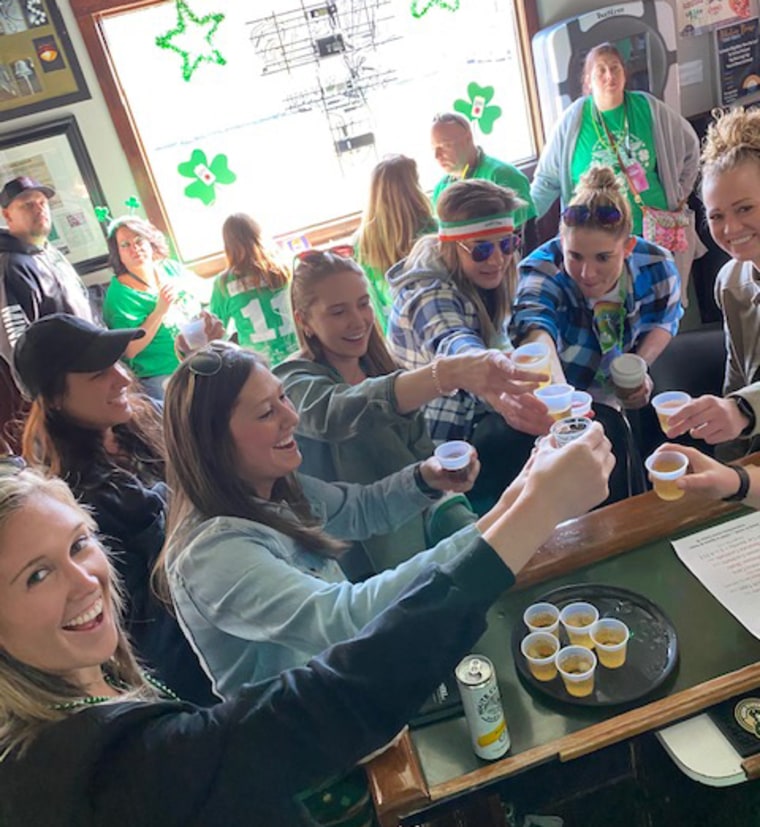
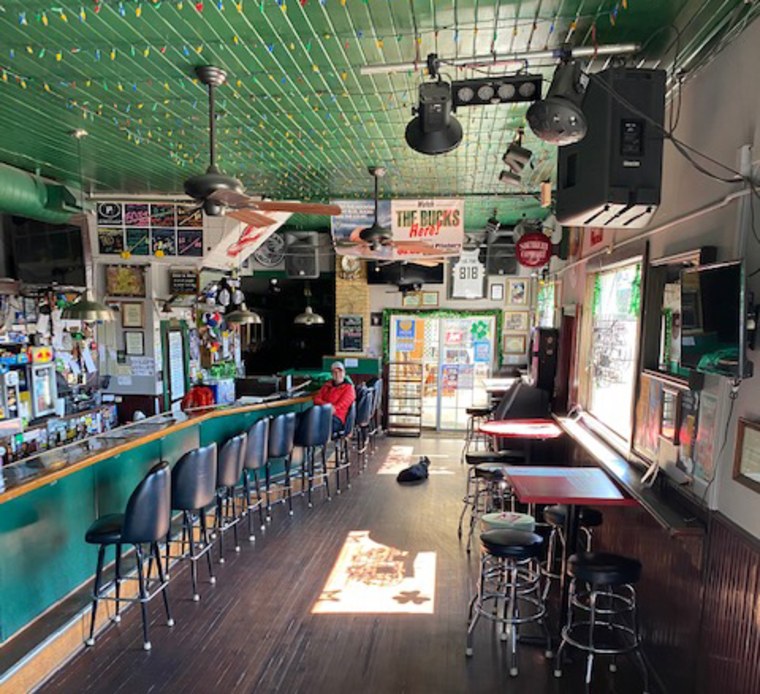
In compliance with citywide guidelines for nonessential businesses, Frayne locked the doors of Ginger’s on March 15, two days before St. Patrick’s Day and what would have been the bar’s 20th anniversary. Through the darkened windows, she peered at the shamrock decorations that still hung on the walls and started to cry.
“The bar business is recession proof — it’s not pandemic proof, though.”
HENRIETTA HUDSON OWNER LISA CANNISTRACI
“It’s really sad, because women-owned businesses are hard anyhow, and women-owned bars are unheard of,” Frayne said. “Usually, they have somebody backing them or something like that, but I did do it by myself, and it’s just blood, sweat and tears to get where I did and keep surviving.”
Ginger’s Bar is one of three lesbian bars still standing in New York City, and one of just a handful left in the entire country. With most, if not all, of these establishments forced to temporarily shutter due to the coronavirus pandemic, their future is uncertain, with several facing the potential of permanent closure.Last call for lesbian bars?
The number of lesbian bars in the United States has always been far fewer than those primarily catering to gay men, even though statistically women are more likely than men to identify as LGBTQ. The peak came in the late 1980s with an estimated 200 lesbian bars across the country, according to a study published last year by Greggor Mattson, an associate professor of sociology at Oberlin College, but the number is now estimated to be 16. These venues include Henrietta Hudson in New York City, My Sister’s Room in Atlanta, Wildrose in Seattle, Walker’s Pint in Milwaukee and Gossip Grill in San Diego.
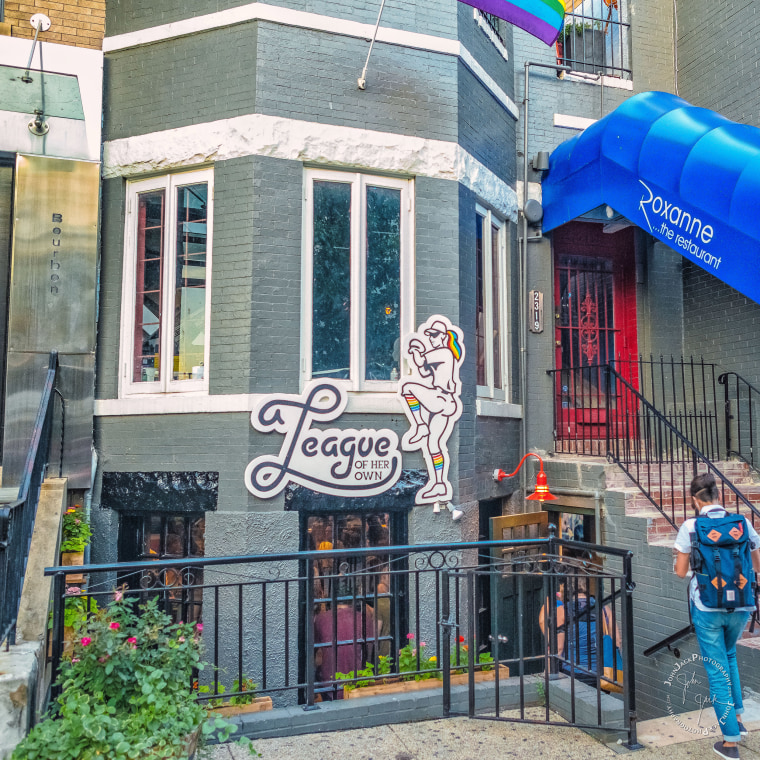
Opening night at A League of Her Own bar, “ALOHO,” in Washington on Aug. 9, 2018.John Gallagher / John Jack Photography
The decline in the number of lesbian bars is part of a broader trend of LGBTQ bars shuttering across the U.S. Throughout the 1980s, there were more than 1,500 such bars, but that number has been steadily declining since the late ‘90s, with less than 1,000 existing today (with the lion’s share of them catering mostly to male or mixed-gender crowds), according to Mattson’s study. These closures, however, have not happened equally: Between 2007 and 2019, an estimated 37 percent of all LGBTQ bars shuttered, while bars catering to women and queer people of color saw declines of 52 percent and 60 percent, respectively, according to the report.
Mattson said even the closure of a single gay or lesbian bar can be a particularly acute loss for a community.
Since the gay liberation movement began in the 1960s, many of these bars have served as the nucleus of America’s “gayborhoods” — refuges where people could organize, raise funds, meet friends and find romance. Mattson said even the closure of a single LGBTQ bar can be a particularly acute loss for a community.
New York City has witnessed the country’s largest rise and fall in lesbian spaces — with about 200 opening and closing over the last century (including bars, cafes, bookstores, and community centers), according to Gwen Shockey, creator of the Addresses Project, a digital tool that tracks the city’s lesbian venues. Shockey said New York saw a wave of lesbian bar openings in the the ‘70s and ‘80s, likely bolstered by the surging feminist and LGBTQ rights movements of the time and the passage of the Equal Credit Opportunity Act in 1974, which made it illegal for banks to deny loans on the basis of gender. This trend, however, didn’t last, with the following decades seeing closures amid soaring commercial rents in metropolitan areas and alternative ways for queer people to meet each other, like dating sites and apps.
Shockey said the loss of additional brick-and-mortar spaces dedicated to LGBTQ people, particularly for women, would be tragic.
“There’s nothing like sitting in a safe space that’s controlled by queer people, and having a conversation, dancing, interacting,” she said. “It’s just so valuable, and it’s so liberating, and it’s enabled me to come out and to find a life for myself.”
In the last five years alone, iconic lesbian bars such as Sisters in Philadelphia and The Lexington Club in San Francisco permanently shut their doors. In New York City, at least 11 bars and clubs frequented by lesbians and queer women have shuttered since 2004, including One Last Shag, Meow Mix and Crazy Nanny’s. Bum Bum Bar, which had been the only lesbian bar in Queens, officially closed last year.
While there are only three lesbian bars left in all five boroughs of New York City — arguably considered, along with San Francisco, to be the queer capital of the U.S. — online listings show there are more than 80 venues catering to gay men or mixed-gender LGBTQ crowds in the city.
In America’s heartland, there are few bars that cater to the gay and lesbian community. Walker’s Pint, Milwaukee’s lone lesbian bar and perhaps one of just two left in the entire Midwest, temporarily shuttered in March after Wisconsin Gov. Tony Evers ordered nonessential businesses to close. With help from her bank, owner Elizabeth “Bet-z” Boenning said she managed to receive a modest loan from the federal Paycheck Protection Program — just enough to cover expenses for about three months. If her bar doesn’t reopen, she said it would be a devastating loss for the local community.
“Women don’t have a place that’s for women other than the Pint, really,” Boenning said, noting that her Milwaukee business is surrounded by several bars that cater to gay men.
Walker’s Pint has been closed since March 17, on what would have been the city’s popular St. Patrick’s Day bar crawl.Courtesy Elizabeth Boenning
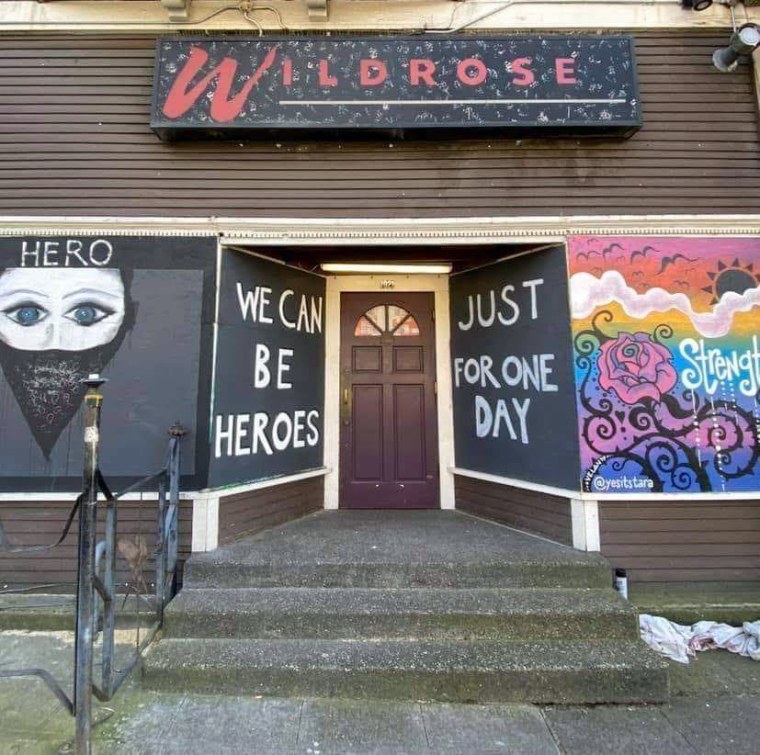
In Washington State, only one lesbian bar remains: Wildrose. Owned by Shelley Brothers since 1984, it has managed to survive sky-high rents in Seattle’s gentrified Capitol Hill neighborhood. In mid-March, as COVID-19 swept through the city, Brothers temporarily closed her bar. If she’s unable to reopen, she said it would be more than the loss of a historic watering hole.
“It’s like a bar in a community center,” Brothers said. “We’ve always just tried to provide a safe space for women to come.”Systemic funding issues
Many attribute the loss of lesbian bars to the high cost of opening and maintaining a bar, as well as the systemic difficulty women often have in acquiring financial support.
“If you look at any funding statistics, they always show you that women-owned businesses get even less than male-owned businesses, or that 4 percent of venture capital goes to women,” said Pamela Prince-Eason, president and CEO of the Women’s Business Enterprise National Council (WBENC).
In mid-March, as COVID-19 swept through the city, Shelley Brothers temporarily closed Wildrose in Seattle.Courtesy Shelley Brothers
The pandemic is likely exacerbating the problem. Millions of small businesses throughout the U.S. have been unable to access assistance through the $2.2 trillion emergency relief package passed by Congress at the end of March. Even before the emergency relief program ran out of money in April, several bar owners interviewed for this story said they were unable to apply for assistance through the online application, which they said routinely froze or crashed, and most of these owners said they lacked relationships with banks that could help them.
While the federal stimulus was meant to help small mom and pop shops, $243.4 million worth of payroll loans went to publicly traded companies, because language in the bill opened the door for many to apply. Within WBENC’s network of more than 16,000 women-owned businesses, less than 1 percent received aid through the first round of stimulus, according to Prince-Eason.
Currently, about 12 million of the 32 million businesses (less than 4 in 10) in the U.S. are owned by women, and the majority of these are small businesses, according to WBENC. Even fewer businesses are owned by LGBTQ people — about 1.4 million, according to theLGBTQ Chamber of Commerce.
If the next round of stimulus leaves out many small businesses again, Prince-Eason said much of the gains made by women-owned businesses — which saw a 58 percent increase over the last decade — are likely to be reversed. “Which is very depressing and demeaning and painful for all people affected,” she said.Online fundraising efforts
As lesbian bar owners nervously await government assistance or the green light to reopen their businesses, and negotiate rent payments with their landlords, many are launching fundraising campaigns to raise money for their overhead costs and their employees.
Boenning — whose Milwaukee pub has been closed since March 17, on what would have been the city’s popular St. Patrick’s Day bar crawl — recently raised $3,695 for her Walker’s Pint staff. “I don’t know what else to do for them,” she said.
Walker’s Pint, Milwaukee’s lone lesbian bar and perhaps one of just two left in the entire Midwest, temporarily shuttered in March.Courtesy Elizabeth Boenning
Nightlife workers stuck at home — bartenders, barbacks, bouncers and performance artists — whose income depends largely on tips, wonder when they will be able to work again. Many who have been unable to get unemployment through their states’ overwhelmed unemployment systems grapple with an uncertain future.
“One day we’ll feel pretty good, and the next day we’ll feel terrible,” Jo McDaniel, a manager and bartender at A League of Her Own in D.C., said. “It’s a real struggle personally to keep my mental health above water.”
A League of Her Own, a bar patrons call “ALOHO” in Washington’s Adams Morgan neighborhood.John Gallagher / John Jack Photography
A League of Her Own and its brother bar, Pitchers, both owned by David Perruzza, managed to raise over $8,000 for staff. Neighboring Washington, D.C., lesbian bar, XX+, managed to raise about $4,000 for staff after not receiving government assistance.
“I’m trying to do all the legit things by applying for this, applying for that, and never get any word about when you’re going to get a grant or if you should get a grant,” XX+ owner Lina Nicolai said, “and so it’s very uncertain.”
Cubby Hole, a popular hangout for queer women in Manhattan, raised over $48,000 for staffers after owner Lisa Menichino was unable to retrieve federal aid. Even with tens of thousands raised, she’s not sure she will be able to sustain her bar through the fall without emergency assistance. “It’s been really scary,” said Menichino, whose monthly expenses total more than $10,000. But she is not giving up hope.
“I’m going to find a way to keep this bar open,” she said. “I have to. It’s like an icon. It means so much to so many people. Even if I have to go into my personal finances, I will.”
My Sister’s Room owners Jen and Jami Maguire are raising money for staff by selling T-shirts online.Courtesy of Jen and Jami Maguire
My Sister’s Room in Atlanta is the only bar that serves lesbian and bisexual women in Georgia, and possibly the entire Southeast. Owners Jen and Jami Maguire are raising money for staff by selling T-shirts online. They applied for emergency aid but haven’t received any. They’re hopeful, but also worried. If the pandemic stretches into October, when Atlanta holds its annual Pride celebration, it would be “very catastrophic,” Jen Maguire said.
“We just want to do what we can to get everybody back to work, but not at the sake of someone losing their life for someone to make some money,” she said. “Safety is number one.”
Many bar owners question how to reopen once the pandemic is over. Typically, people gather in bars whether times are good or bad, Henrietta Hudson’s owner, Lisa Cannistraci, said. Her bar remained open through a number of hard times, including 9/11 and the Great Recession, but she sees this new era of social distancing as an entirely different crisis to navigate.
“The bar business is recession proof — it’s not pandemic proof, though,” Cannistraci, who has raised over $6,000 for her staff, said. Her insurance policy doesn’t cover damage from pandemics, she said. And while she applied early for all the government aid she could, she hasn’t received any assistance.
“I did everything,” she said, “and there’s nothing — crickets.”
With New York City Pride events postponed indefinitely and Ginger’s Bar shuttered until bars and restaurants are allowed to reopen, Frayne is suffering a devastating loss of revenue. For the first time in 20 years, she’s unable to pay rent, and her insurance policy doesn’t cover her pandemic-related losses. She applied for government aid, she said, but hasn’t received any. She worries about her staff, who she said have been unable to file applications through New York City’s paralyzed unemployment system.
“It’s kind of impossible,” said Frayne, who raised over $5,000 for her staff, and is now raising money to save her bar.
So far, Brothers has managed to raise over $36,000 to keep the Wildrose afloat for the time being, but she said it won’t last long. Her annual $30,000 insurance policy doesn’t cover pandemic-related losses, though she said she still has to foot the monthly insurance bill. And her application for emergency aid has gone unanswered. Not knowing the future of Washington state’s last lesbian bar weighs heavy on her.
“It’s minute to minute, basically. It’s up and down. You’ll be all filled with hope, and then it’s like, ‘Oh, my God, this is so horrible,’ and then, ‘OK, we can do this,’ and then ‘Oh, God, this is horrible.’ It just goes back and forth,” Brothers said.‘A stronger economy that includes all of us’
Last week, Frayne returned to Ginger’s Bar to collect the mail that had piled up since she shuttered it in March — mostly bills, she said. Without assistance, she wonders if Brooklyn’s last lesbian bar will ever reopen.
“I mean, after 20 years, do I really want to owe a ton of money with rent and insurance to open a business again?” she said. “I worked too hard; I’m getting too old for it. I don’t know if I can do that again.”
The transgender community, which is one of the populations that has been most affected by the coronavirus pandemic, has been explicitly excluded from contingency plans that seek to prevent the virus’ spread.
Sex workers have been left to their own devices during this health crisis and they can practically only count on themselves. Due to confinement, most of them can’t go out to work, and to stop working is not a choice when they live on a day by day basis and the only housing they can afford are “pagadiarios” (places for which they pay by the day.) Some of the sex workers who can’t get enough money to pay them do not have anywhere to stay during the lockdown or, even worse, they have had to live on the streets where they are more prone to get infected with COVID-19.
Different community-based organizations like Calle 7 Colombia and Fundación Red Comunitaria Trans have created initiatives to mitigate the impact of this situation.
Red Comunitaria, for example, created an emergency fund for sex workers during the pandemic. It has given — aside from safety — economic support, food and housing to thousands of trans people. However, individual private donations alone will not be enough to benefit everyone who needs it.
That is not the only problem the trans community is facing. Many different Colombian cities, including Bogotá, from April 13 have implemented “pico y género”, a gender-based measure that allows only men to leave their homes on odd days, only women to leave their homes on even days and trans people to leave their homes on those days based on their gender identity.
Although this decision was taken as a strategy to diminish both the number of people in the streets and to mitigate the spread of COVID-19, this decree makes non-binary or gender non-conforming people and the trans community more prone to violence.
The main concern with the decree is the police become the identity definer and watchdog. Their use of violence and abuse of power has been a historic phenomenon that has served to kill many people.
As of the date of this publication, they have already been numerous physical and verbal assaults against trans and non-hegemonic gender people. These include the case of Joseph, a trans man who was denied the right to enter a supermarket because the employees thought he was not enough of a “man.”
A similar situation happened in Peru, which alongside Panama also applied this measure. The government rescinded the policy after a video posted to social media showed police officers forcing three trans women to squat while they were forced to repeat “I want to be a man.”
It is understandable that a pandemic’s reality requires the adoption of measures for controlling the spread of the virus among citizens and that some of them demand the restrictions of some fundamental rights, such as freedom of movement and association. All of this is aimed to protect public health, but these policies cannot, in any moment, infringe on nondiscrimination rights.
The Colombian government must therefore listen to the voices of the most vulnerable populations during the crisis, who have been forced to endure unfair exclusion and assume the State’s responsibilities. Countries around the world must adopt mechanisms to restrict movement without using criteria that fosters additional risks for populations that already cope with structural exclusion in society because they are constantly criminalized and persecuted.
A queer teacher, who has worked at the same Catholic school for 20 years, has just been sacked for violating the school’s anti-LGBT+ policies.
According to Dayton Daily News, the teacher was a graduate of Alter High School in Ohio, which is controlled by the archdiocese of Cincinnati, and had taught there for two decades.
The principal of the Catholic school, Lourdes Lambert, told the publication that someone had raised a “concern” about the unnamed teacher with the archbishop.
As a result, the teacher will not have his contract renewed, although he will be permitted to finish the school year, teaching children from home during the coronavirus pandemic.
Lambert said: “It’s a very unfortunate circumstance for the teacher and the Alter community. Some things are taken out of our hands as an archdiocese-owned school.” However, she admitted: “I’m the archdiocese, too.”
The archdiocese of Cincinnati describes homosexuality as “disordered” and “immoral”, and even provides programmes for LGBT+ people and their families to encourage them to never act on “same-sex attraction”.
Teachers at any Catholic school controlled by the archdiocese are forced to sign a “teacher-minister” contract every year.
The contract states that a teacher must “exemplify Catholic principles in a manner consistent with teacher-minister’s relationship with the Catholic Church and to refrain from any conduct or lifestyle which would reflect discredit on or cause scandal to the school or be in contradiction to Catholic social doctrine or morals.”
Examples of this unacceptable conduct include “cohabitation outside marriage; sexual activity out of wedlock; same-sex sexual activity; use of abortion; use of a surrogate mother; use of in vitro fertilisation or artificial insemination” as well as “promoting” any of these things.
If the contract is breached, “the school immediately may terminate the teacher-minister’s employment”.
Supporters have spoken out about the teacher’s dismissal, branding it “blatant discrimination”.
David Beck, a former student at Alter High School, wrote that the teacher had been fired “for being married to a man”.
He continued: “He’s been married since 2016, one year after marriage equality passed…Supposedly some misguided soul found his marriage certificate and brought it to the attention of the archdiocese.
“How convenient that he is fired now, during the pandemic, as to sweep it so easily under the rug. If these reports are true, this is blatant discrimination, and we need to band together to stop it.”
He said he remembered the teacher as “wonderful, kind, with a sense of humour and a creative spirit”, and added: “He should not be fired for his marriage, which, let us remember, is guaranteed as a human right by the constitution.”
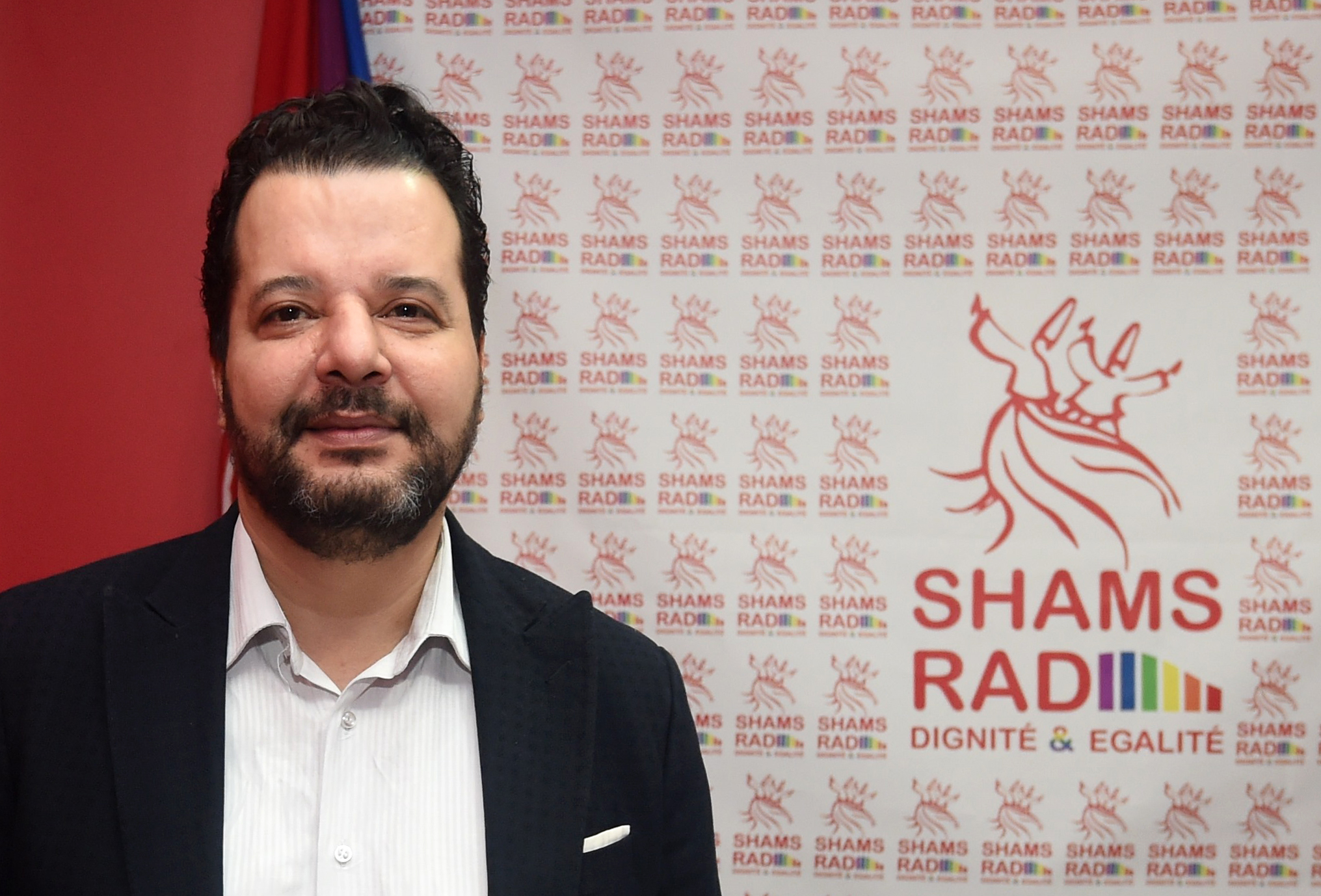
The Republic of Tunisia has become the first Arab state to recognise a same-sex marriage, a Tunisian LGBT+ rights organisation has announced.
According to Association Shams, a marriage settlement between a Frenchman, 31, and a Tunisian man, 26, was legally recognised in Tunisia for the first time on Friday.
Homosexuality is illegal in the north African country and same-sex marriage is not yet permitted, but the marriage in question was formalised in France.
It was officially noted in the birth certificate of the Tunisian registry, allowing the Tunisian man to obtain a visa for family reunification. Both men have remained anonymous for their safety.
Although the news hasn’t been confirmed by the Tunisian state, Shams is celebrating it as a huge step forward for LGBT+ rights in the Arab-Muslim world.
“[It is a] success of which I am very proud,” said SHAMS president Mounir Baatour, adding that it followed a years-long legal battle.
“We won… against the many post-revolutionary political-judicial regimes! This is not the least of my satisfactions.
“To my knowledge, Shams is now the only [LGBT+] legal association in the Arab-Muslim world. This is not nothing and offers us hardly believable opportunities, sometimes beyond our borders.”
“There is no centralisation of civil status data at the ministry of local affairs. We are therefore in the process of verifying the information,” said minister Lotfi Zitoun.
But he added: “If it is true, know that it is against the law. French law does not allow recognition of same-sex marriage by Maghreb countries. There was a precedent, an error committed by the municipality of Tunis. And it has been rectified.”
The LGBT+ and human rights campaigner Peter Tatchell was tentatively optimistic but acknowledged that there is more work to be done.
He told The Jerusalem Post: “This recognition of a gay marriage is a milestone in the Arab world. But it is indirect recognition, and not the legalisation of marriage between same-sex couples.
“Even if it is appealed or overturned, this is a breakthrough that will give hope to LGBT+ people in Tunisia and across North Africa and the Middle East.”
LGBT+ advocates are mourning three trans women who were tragically murdered within a single week in Puerto Rico.
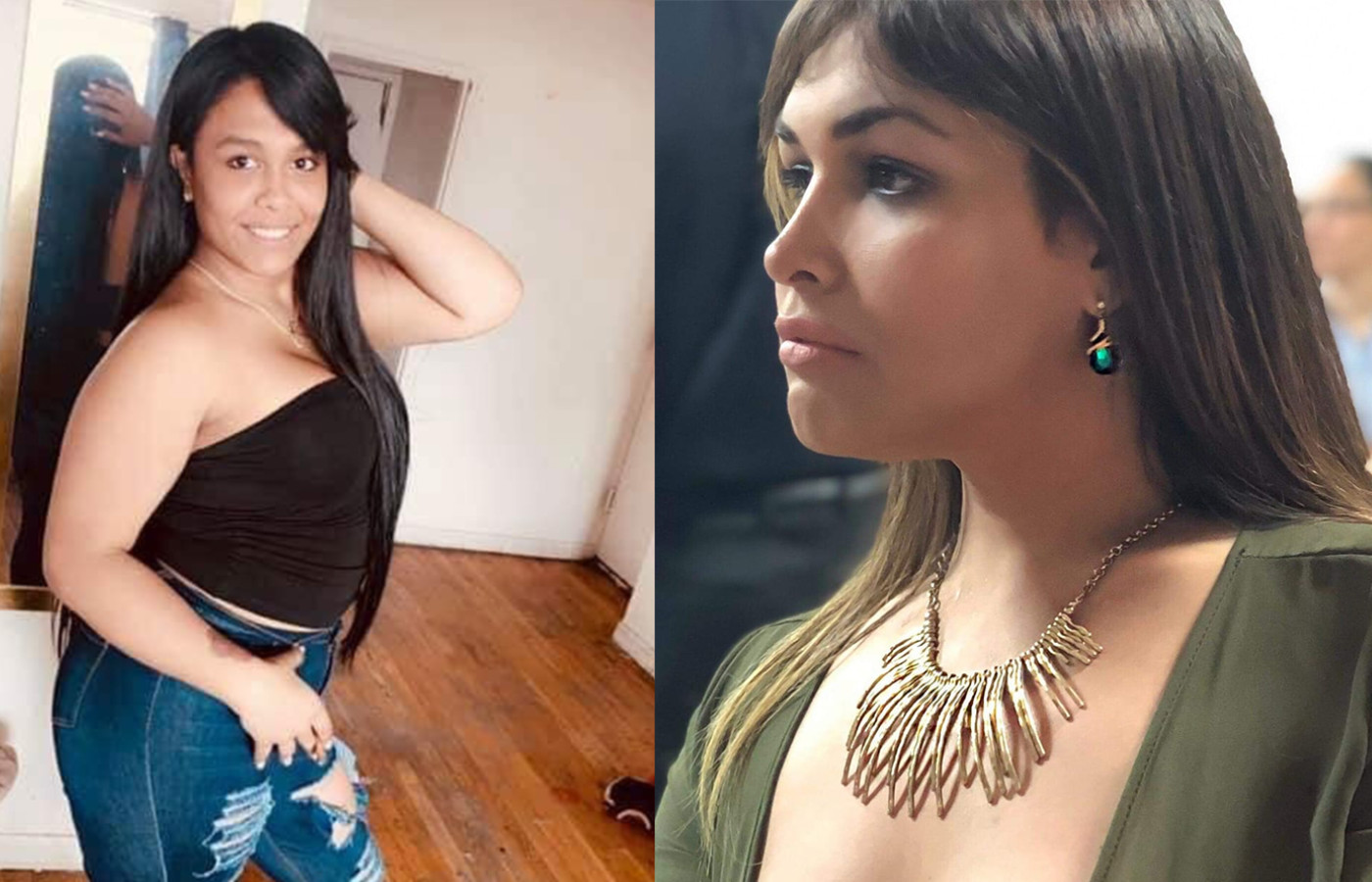
The bodies of Serena Angelique Velázquez Ramos, 32, and Layla Pelaez Sánchez, 21, were found together in a charred car on April 21.
Their deaths were preceded by Penélope Díaz Ramírez, 31, who was killed in a correctional centre on April 13. Her death was not reported until April 27.
It marks the ninth violent death of a transgender person in the US this year, and comes as Puerto Rican activists desperately warn: “They are hunting us.”
“There is no longer any doubt, this is an epidemic of anti-LGBT+ violence,” said Pedro Julio Serrano of Coalition for the Search for Equity (CABE), a Puerto Rican LGBT+ group.
“The police have the obligation to disclose the status of the investigations of at least eight murders, one death without a determined cause and several attacks in which LGBTTIQ people have been injured since January 2019.”
Tori Cooper, director of the Human Rights Campaign‘s transgender justice initiative, agreed that the problem is escalating.
“Penélope did not deserve to die. Transgender people do not deserve to die. Every single advocate, ally, elected official and community member must stand up in light of this horrific news and say ‘No more.’ What we are doing is not enough.”
She continued: “Transgender and gender non-conforming people, especially women of colour, are too often the victims of a toxic mix of transphobia, racism and misogyny.
“People and policy must work together to protect our lives and our well-being. HRC stands in solidarity with all who knew and loved Penélope, and we will continue our tireless fight to ensure a future where living one’s truth can never become a death sentence.”
Six trans candidates said they have been eliminated from the race to represent their communities at county level by the Brooklyn Democratic Party because of their gender.
In March, Nandani Bharrat, Casey Bohannon, Michael Donatz, Derek Gaskill, Paige Havener and Angela LaScala-Gruenewald all submitted petitions to run for seats on the governing body of the Brooklyn Democratic Party.
They are all trans, non-binary, or gender non-conforming, and had all left the gender field blank when they applied to run in the upcoming June and December elections, because there was only a male or female option.
On April 22, the six learned that the Board of Elections had disqualified them from the race – “not because we did not collect enough signatures — but because of our genders”, they wrote in a column for the Brooklyn Paper.
Trans and non-binary Democrats say they are being blocked from representing their communities.
All six said they were eliminated because the Democratic primary ballot currently requires candidates to specify their gender as male or female only.
“Each of us should have the right to run to represent our communities,” the candidates wrote in response to their elimination.
“Removing these gender barriers is critical to fixing our local political system.
“For many, holding a seat on County Committee is the first stepping stone before running for higher office in New York City.
As Democrats, we can and should do better to support people of all genders seeking these elected positions.
They alleged that the Board of Elections later filled out the gender fields without their consent, assigning them false genders based off their names, according to local news.
In the lawsuit, the candidates argue that gender-parity rules, in place to ensure that a certain number of men and women represent each state assembly district and originally intended to encourage more women to join local politics, exclude non-binary people.
In their op-ed, the candidates wrote: “We contend the gender-based discrimination ingrained in Brooklyn’s petitioning process violates the 14th Amendment of the US Constitution and our city and state human rights laws.
“The current requirements to petition for a seat on County Committee neglect a view of gender that reflects our lived experience and the experiences of tens of thousands of New Yorkers.
“As both first-time candidates and former members of the committee, we see how gender and gender-based assumptions permeate our local Democratic Party structure.”
Brooklyn Democrats have eliminated gender rules in other cases.
At a higher level of politics in Brooklyn, these rules have already been eliminated to allow for two women — Rodneyse Bichotte and Annette Robinson — to hold the posts of executive committee chair and vice chair.
This would not have been allowed under the gender-parity rules, which state there must be one man and one woman in these posts.
Eva Nabagala hoped she and her young son would be safe from her family when they fled Uganda for a Kenyan refugee camp – but instead, the 28-year-old says she was attacked and raped there as punishment for being a lesbian.
“I have been threatened with death, I have been beaten, I have been harassed sexually, and I have been sexually abused, raped,” Nabagala told Reuters by phone.
She’s one of a group of around 300 gay, lesbian and transgender refugees in Kakuma refugee camp in northwestern Kenya, who say other refugees repeatedly attack them because of their sexual orientation. The group say police and the United Nations refugee agency, UNHCR, have failed to protect them.
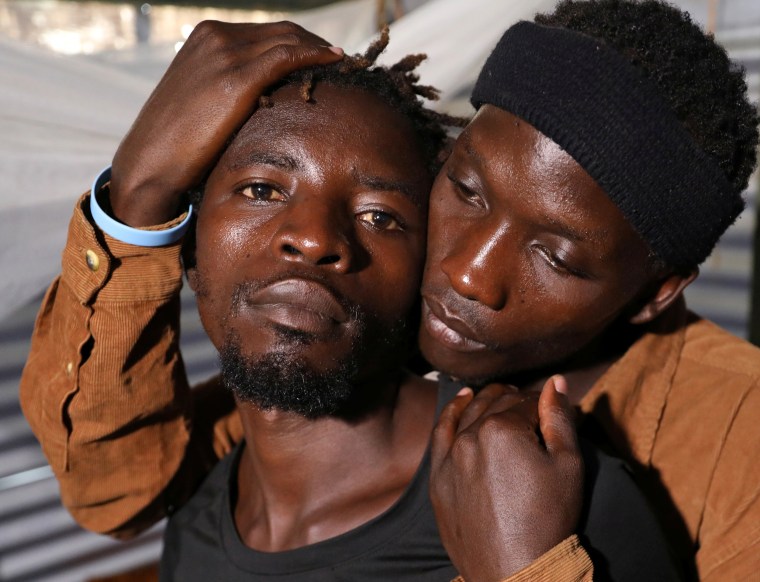
Ugandan refugees Kimuli Brian and Dennis Wasswa, members of the LGBTQ community, inside their shelter at the Kakuma refugee camp.Goran Tomasevic / Reuters
UNHCR Kenya told Reuters that police investigate reports of violence, assault, or other crimes and UNHCR offers support to survivors.
“Whenever we are informed … we do our utmost to provide medical, legal and social-economic support and psychosocial counseling to survivors,” the agency said.
Kenya’s national police spokesman Charles Owino said he was unaware of any violence against the group of refugees.
Nabagala said she and her now two-year-old son came to Kenya in 2018 after her family threatened to kill her because she is a lesbian.
“I ran from my home … because I wanted to be safe, I wanted protection, but it has turned into something the opposite,” Nabagala said.
Stephen Sebuuma, another Ugandan refugee in Kakuma, said refugees armed with iron bars, sticks and machetes damaged their houses on three occasions, injuring four adults and two children.
“Police insult us instead of helping us,” Sebuuma, 32, told Reuters by phone.
Pictures Sebuuma and another refugee sent to Reuters from the camp showed holes punched in the walls of homes made of corrugated iron. Kambungu Mubarak, 31, also from Uganda, said the attackers also burnt two houses.
UNHCR Kenya said as soon as they were informed of the attack, they contacted Kenya’s Refugee Affairs Secretariat, and sent an ambulance. UNHCR also contacted police, who had started investigations, the agency said. But Sebuuma said the police never helped them.
“We have written complaints, people have gotten OBs (Occurrence Book reports) from police. So many of them, and police even sometimes chase us, saying ‘we are tired of you’,” he said.
Same-sex relationships are punishable in Kenya by 14 years in jail. It is rarely enforced but discrimination is common.
Kenya also requires refugees to stay in camps. Some have tried to leave but say life is so hard that they returned. Nabagala left but was raped again in Mombasa, where she had gone seeking shelter, so she came back.
Another refugee, 23-year-old Winnie Nabaterega, told Reuters by phone that she fled Uganda in 2019 after being raped and becoming pregnant. Her father pressured her to marry her attacker. Her daughter, now two, lives with her. She is constantly threatened by other refugees, she said.
“We were told because we were homosexuals … they would put poison in the water,” she said.
LGBT+ activists have confirmed that at least one gay man in Morocco has died by suicide after being hunted down and publicly outed by a transgender beauty influencer.
Gay men in Morocco have been living in terror for the past fortnight, after beauty influencer Naofal Moussa, also known as Sofia Talouni, instructed her hundreds of thousands of followers to use gay dating apps to identify them.
Moussa, whose verified Instagram account had 627,000 followers before it was deleted, used a series of Instagram Live videos to encourage straight women in Morocco to create fake accounts on Grindr and Planet Romeo.
She instructed them to identify as “bottoms” and said that by doing this, they would be able to identify gay men around them during lockdown – going as far to suggest that women might be able to find out if their family members are gay.
As a result, gay dating apps were flooded with fake accounts and images of gay men’s profiles began circulating online.
Homosexuality is illegal in Morocco and any form of same-sex intimacy – including kissing – is punishable by up to three years in prison.
Following Moussa’s videos, multiple gay men in Morocco told PinkNews that they were living in a state of absolute terror: watching as other gay men were outed on social media, beaten up by their families, kicked out of their homes, disappearing and, in several, unverified, cases, killing themselves as a result of being publicly outed.
Now, tragically, reports of gay men dying by suicide in the Muslim-majority country have been confirmed.
“We were shocked when we were contacted by the LGBT+ group in Morocco,” Schmidt said.
“We took immediate action by sending a security message to all our 41,000 users in Morocco, we blocked all profiles created from the time this person addressed her users and contacted Facebook to have the group page taken offline.”
Images of gay men in Morocco are being shared in closed Facebook groups by women following Moussa’s instructions.
A spokesperson for the social-media giant said it was trying to shut these groups down.
“We don’t allow people to out members of the LGBT+ community. It puts people at risk, so we remove this content as quickly as we can,” a Facebook spokesperson said in a statement.
The Samaritans are the UK’s suicide reduction charity and their free helpline number is 116 123.
In the US, The Lifeline offers free, confidential support 24/7 on 1-800-273-8255.