Anti-LGBTQ hate crimes in El Salvador have increased over the last two months.
Unknown suspects in a vehicle on Oct. 27 stabbed Anahy Miranda Rivas, a 27-year-old transgender woman, with a knife on Los Héroes Boulevard in San Salvador and dragged her to death.
The body of Jade Camila Díaz, a trans community leader in Morazán department, was found floating in the Torola River on Nov. 9, three days after she was reported missing. The murder of Victoria, 44, who was brutally killed, was reported on Nov. 16. The body of Oscar Cañenguez was found the next day near San Vicente’s market.
The country’s LGBTQ organizations remain on alert and they have not stopped their constant social media condemnations of the rise in the number of these cases against the LGBTQ community.
“What is happening @FGR_SV @PresidenciaSV? We demand concrete actions! Enough LGBTI deaths!,” Erick Ivan Ortíz, an LGBTQ activist and a member of Colectivo Normal, in a tweet in which the offices of El Salvador’s Attorney General and president were tagged.
Culture Minister Seucy Callejas, whose ministry is charged with the inclusion of the LGBTQ community in government policies on Twitter said, “We condemn social violence, especially that which targets the most vulnerable communities.”
“We are working to uncover the causes of the recent homicides,” added Callejas in her statement that LGBTQ organizations and activists criticized
“The culture minister made a pronouncement by tweet and refers to LGBTI people as most vulnerable communities, noting her discomfort with us,” William Hernández, director of Asociación Entre Amigos, told the Washington Blade.
A trans woman’s disappearance in Santa Ana became public after these crimes against the LGBTQ community took place. This case is the one to which the El Salvador’s attorney general referenced, clarifying a person had been detained for having committed a crime.
“The prosecutor gave more importance to the crime,” Hernández told the Blade. “It was as though they implied that they kill us because we are involved in illegal activities and not because of LGBTIphobia.”
Assemblyman Josué Godoy, a member of the Republican Nationalist Alliance (ARENA) party who represents Santa Ana department, on social media declared, “We have seen over these last few days a series of hate crimes against the LGBT community, primarily against trans women. We must act.” He urged the State to condemn these crimes and act with respect to them.
El Salvador’s human rights ombudsman, via a statement from Julio Guillermo Bendec, condemned anti-LGBTQ hate crimes and said through outrage and social pressure the State must act to curb violence and discrimination against this segment of the community. At the same time, he urged authorities to undertake actions necessary to prevent these events that continue to happen.
The U.N. in El Salvador, which also wanted to show its solidarity with the LGBTQ community, on Wednesday issued a statement via social media and a poster.
“The U.N. system in El Salvador makes a call to national authorities who are charged with investigating these crimes that they punish those responsible, consider transphobia as an aggravating factor, and take urgent measures to prevent more acts of violence based on prejudice and hate towards the LGBTI community,” said the U.N. in El Salvador.
President Nayib Bukele as of deadline had still not issued an official statement or comment on his social media pages about these crimes against the LGBTQ community. Some may see this silence as a setback to the work that organizations have been doing for many years.
“The quality of life conditions for the LGBTI community for which we have been working for many years are falling apart for many people,” Hernández told the Blade. “They possibly think we have not achieved much, but we must keep fighting as long as changes don’t come from the State.”
Nigeria has emerged as the world’s most dangerous country for LGBT+ travel in a new index of global LGBT+ safety released earlier this month.
The LGBTQ+ Danger Index ranks the 150 most-visited countries using eight factors, including legalised same-sex marriage, worker protections, criminalisation of violence and whether, based on Gallup poll findings, it is a good place to live.
Nigeria earned itself a ‘top’ score of -142 on the danger index due to its total lack of LGBT+ protections, alongside the criminalisation of same-sex relationships and propaganda.
Homosexuality is punishable by up to 14 years and, under Sharia law, the death penalty. Even the discussion of LGBT+ rights is outlawed in the strictly conservative country.
Nigeria was closely followed by Qatar with a score of -137, Yemen with a score of -128, and Saudi Arabia with a score of -126.
Russian President Vladimir Putin shakes hands with Saudia Arabia’s Crown Prince Mohammed bin Salman in 2017 (PAVEL GOLOVKIN/AFP/Getty)
If you’re currently planning your 2020 beach holiday, be warned – the popular tourist destinations of Barbados, St Lucia, the Maldives, Tanzania and Kenya weren’t far behind, each with scores of -100 or worse.
Same-sex relationships are illegal in 38 of the countries on the list. In others, such as China, Russia and Indonesia, homosexuality may be legal but censorship laws and lack of criminalisation of violence make them unsafe destinations for LGBT travel.
Sitting happily at the other end of the spectrum, Sweden came out on top as the safest country for LGBT+ travellers.
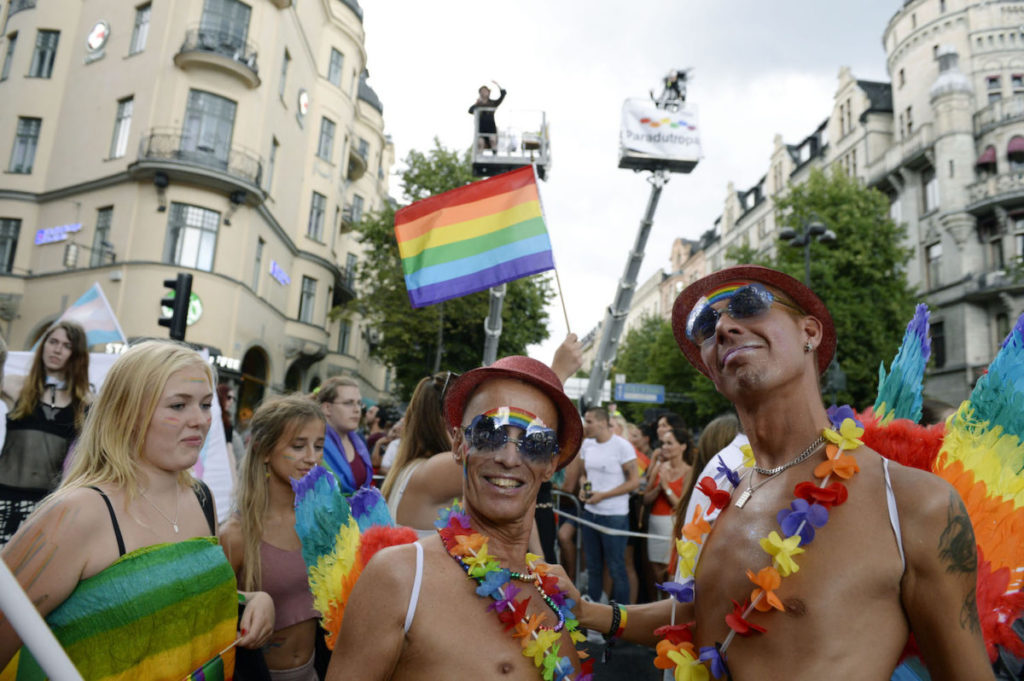
Swedes partying at the Stockholm Pride parade in 2016 (Erik Nylander/AFP/Getty)
Ticking all the boxes on same-sex marriage, discrimination and worker protections, adoption recognition, criminalisation of violence and a strong Gallup poll rating, Sweden earned a great safety score of 322.
Behind it were Canada, Norway, Portugal, Belgium and the UK, all of which are known for being incredibly welcoming to LGBT+ travellers.
Perhaps surprisingly, the US ranked far behind as the 24th safest country for LGBT+ travel. This is because there are no constitutional or federal protections for LGBT+ people in the US, and some states prohibit the “advocacy of homosexuality” in schools.
GLAAD, the world’s largest LGBTQ media advocacy organization, today released the following information to show a disturbing trend by anti-LGBTQ activists who have used anti-trans rhetoric and messaging to influence this year’s contentious elections across the country. The anti-trans ads reached Americans through many mediums and appear to have targeted electoral contests in Kentucky, Louisiana, Mississippi, and Virginia. But despite the onslaught of ads, LGBTQ candidates like Danica Roem and pro-LGBTQ candidates like Andy Beshear were able to win their respective elections.
THE ADS:
Nationwide: The same conservative PAC that is behind the Kentucky ads has cut a seriesof anti-trans spots that culminate in the message: “On Tuesday, November 5, vote against Democrats.” It is unclear where these will air.
Kentucky: A conservative PAC is running ads claiming that that the Democratic candidate for governor, Andy Beshear, is threatening opportunities for cisgender females athletes because he supports “a competitor who claims they are a girl.”
Louisiana: Ralph Abraham, GOP candidate for governor, is running ads stating, “as a doctor, I can assure you, there are only two genders.”
Mississippi: GOP candidate Tate Reeves has made anti-trans comments, insisting to the anti-LGBTQ American Family Association that trans rights would trample on religious freedom.
Donald Trump, Jr. used this anti-trans rhetoric just yesterday, and anti-LGBTQ activists are likely to continue using this tactic into next year’s critical 2020 elections. This anti-LGBTQ campaign is a similar strategy deployed by anti-LGBTQ activists in the 2004 elections, a successful effort which demonized marriage equality.
“The Trump Administration’s incessant attacks on transgender Americans have effectively spread across the country in 2019 state elections, and the public should expect this tactic to be used during critical elections next year too,” said Sarah Kate Ellis, GLAAD’s President & CEO. “The assertions and misinformation in these ads have been debunked time and again, but this ‘top-down’ strategy by anti-LGBTQ activists will only be defeated when the community bands together and fights back.”
The anti-transgender dialogue comes as attacks on the trans community have skyrocketed. So far this year, more than 21 transgender women of color have been murdered, continuing a disturbingepidemic on the community. Further, President Donald Trump and his administration’s 130 attacks on the LGBTQ community have largely targeted the transgender community specifically, including denying trans Americans health care and banning trans people from serving in the country’s armed forces.
Below you will find background information from GLAAD on how anti-LGBTQ activists are using anti-trans language and messaging in their campaigns:
WHAT
With past LGBTQ political footballs like marriage equality no longer playable for them, some conservative candidates and groups are spewing anti-transgender rhetoric and using misinformation about trans people inlast-minute attempts to turn out voters in their favor. A similar strategy was made by the Virginia Republican Party and its candidates, who used debunked ads about immigration days before the 2017 Virginia gubernatorial elections.
WHY
With a president whose own anti-trans record is clear, statewide candidates are following the national party’s lead and using transgender people as a way to get out the evangelical vote.
WHO’S BEHIND THE ADS?
In Kentucky, it’s an organizational PAC called Campaign For American Principles, and in Louisiana and Mississippi, it is the Republican Party’s candidates’ own campaigns. However, the anti-trans push is a mainstream political position that is supported by virtually every conservative group, the vast majority of GOP elected officials, and the current Trump Administration. Which means we are more likely than not to see this push in GOP campaigns up and down the ticket across the nation through November 2020.
FACT VERSUS FICTION
Below you will find the type of anti-transgender rhetoric that is surely to pop up in future political ads across the nation through the 2020 political cycle.
Claim: There are only two genders.
Truth: Human biology is far more complex than a binary. The American Academy of Pediatrics, the American Medical Association, and the American Psychiatric Association all agree that gender identity does not exist in a structured binary.
Claim: Trans women have an unfair advantage in sports.
Truth: This is false, and the so-called “unfair advantage” narrative developed only when transgender athletes began winning their competitions. As the NCAA states, there are about 150 to 200 student athletes who identify as transgender. However, they have not received attention because they haven’t won their matches. Organizations like Athlete Ally have also worked with scientists to confirm that a person’s gender identity does not impact their performance as an athlete.
Claim: Trans rights threaten religious freedom.
Truth: The idea that trans people are in conflict with any law, policy, or statute is 100% built around transphobia. Transgender people are religious and non-religious, Republican and Democrat, conservative and liberal. That’s because transgender people are simply people trying to live, work, and operate in society the same as anyone else.
DOES THIS CAMPAIGN TACTIC WORK?
There are two major differences between the most prominent anti-LGBTQ wedge issue, marriage equality, and this current anti-trans push.
(1) The Democratic Party is largely united in support of trans rights, something that was not true when the big anti-marriage pushes of the early 2000’s led to anti-LGBTQ electoral success.
(2) Public polling shows that a majority of American voters support trans rights, with many polls showing even a plurality of Republican voters hold favorable views.
It’s been one media outlet in particular that has caught the president’s ire, even though it has so far been spared his Twitter rage: the Drudge Report. Publicly, Trump hasn’t said a peep about the highly popular news aggregator run by right-wing media impresario Matt Drudge. But privately, he has simmered over the critical coverage that the site has run and linked to, with regards to the impeachment proceedings.
“What’s going on with Drudge?” Trump has been asking allies since Democratic lawmakers launched the impeachment probe in late September. In recent weeks, Trump has even asked Jared Kushner, his son-in-law and a top White House official—who has had a friendly relationship with the site’s creator—to “look into it” and reach out to Drudge, the sources said. It is unclear if Kushner has done so. The White House and Drudge did not respond to requests for comment on this story as of press time.
According to the above-linked report, Trump receives a daily package of printouts of Drudge headlines since he’s never used a computer himself.
In a first-of-its-kind poll, a new survey from YouGov and Out magazine found that LGBTQ+ voters favor the Massachusetts Senator by a nearly 2-to-1 margin over her Democratic rivals in the 2020 primary race.
In an online survey of 816 likely voters conducted between November 11 and November 18, 31 percent claimed that Warren is their preferred candidate, followed by Vermont Senator Bernie Sanders (18 percent), former Vice President Joe Biden (16 percent), and South Bend, Indiana Mayor Pete Buttigieg (14 percent).
Further down the list, California Senator Kamala Harris came in at six percent, while New Jersey Senator Cory Booker (three percent), entrepreneur Andrew Yang (two percent), Minnesota Senator Amy Klobuchar (two percent), and former HUD Secretary Julián Castro (two percent) also polled in the single digits.
The US Social Security Administration is facing legal action, after refusing to approve survivor’s benefits for a woman whose same-sex partner died before they could legally marry.
Helen Thornton, of Washington, was with her partner Marge Brown for 27 years. The couple raised a son together, and Thornton served as Brown’s carer for three years before her death from cancer in 2006.
However, as Brown died before same-sex marriage became legal in the state, the US Social Security Administration refuses to recognise their relationship – denying Thornton, who is now 64, access to survivor’s benefits that a heterosexual spouse would be entitled to from age 60.
On Thursday, LGBT+ law firm Lambda Legal asked a federal court to override the decision to deny benefits to Thornton and to end discrimination against other same-sex surviving partners who were barred from marriage.
‘We cared for each other in sickness and in health’
Thornton said: “Margie and I were fortunate to share 27 years of love and commitment together on this earth.
“Like other committed couples, we built a life together, formed a family, and cared for each other in sickness and in health.
“Although we wanted to express our love for each other through marriage, discriminatory laws barred us from doing so before Margie’s death.
“Now, in my retirement years, I’m barred from receiving the same benefits – essential to my financial security – as other widows, even though Margie and I both worked hard and paid into the social security system with every paycheck.”
Social Security Administration ‘systemically discriminates’ against same-sex couples
Social Security rules stipulate that couples must have been married for at least nine months to qualify for survivor’s benefits – which excludes people who were in committed same-sex relationships before it was legal for them to marry.
Thornton’s lawyers told the US District Court for the Western District of Washington that the policies result in unconstitutional discrimination.
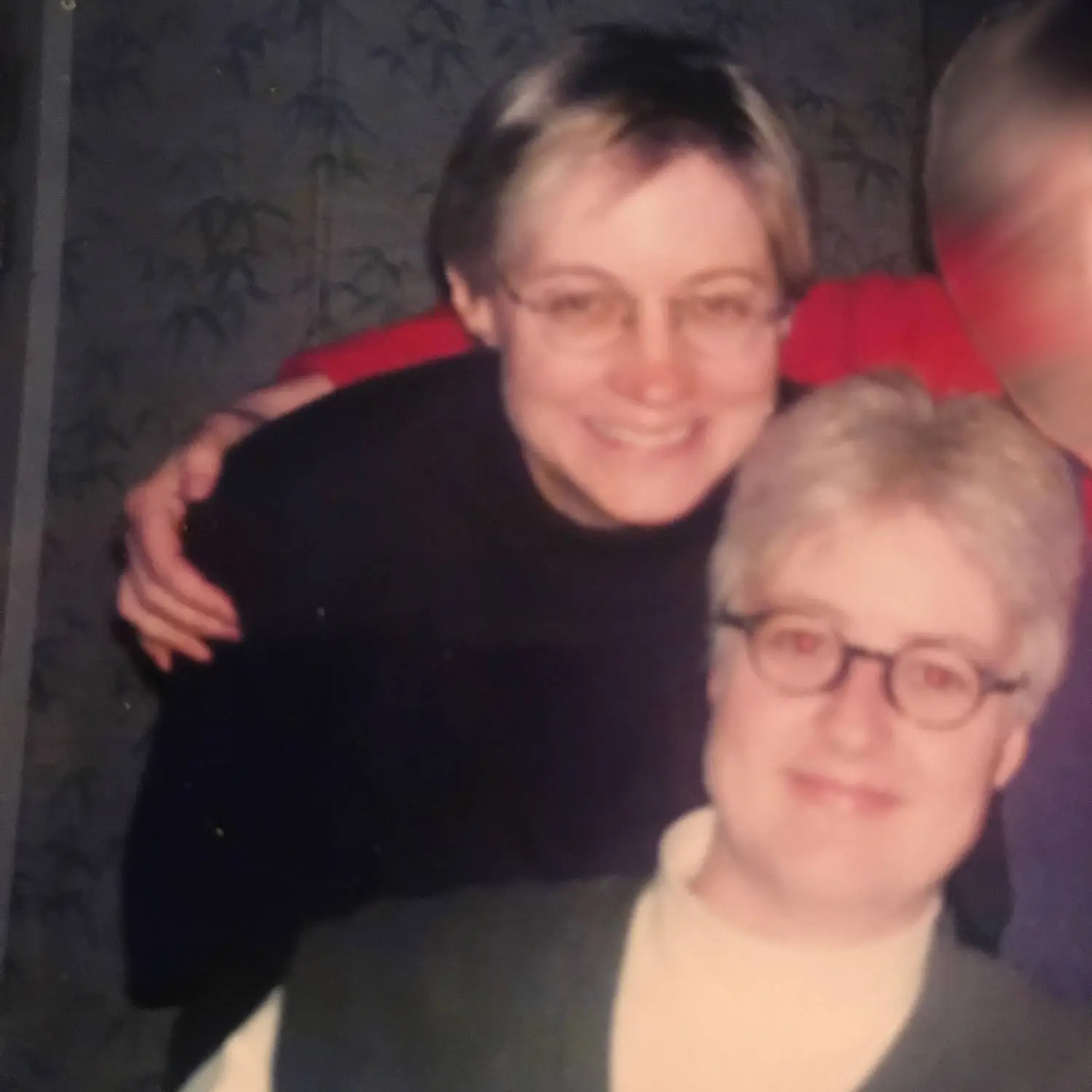
Helen Thornton and her late partner Marge (Courtesy Lambda Legal)
Lambda Legal counsel Peter Renn said: “By requiring same-sex couples to have been married at a time when that was impossible for them under state law in order to access survivor’s benefits, the Social Security Administration is now doubling down on unlawful discrimination that continues to harm surviving same-sex seniors every single month they are deprived of the benefits for which they paid.
“Helen and Marge were together for 27 years. They built a home, raised a child, and paid into Social Security like any committed couple. But because they couldn’t marry, Social Security is denying Helen the essential survivor’s benefits that she and Marge paid for.
“Heterosexual surviving spouses are able to count on the critical financial protection of survivor’s benefits after the death of their loved ones, but SSA casts surviving same-sex partners like Helen aside, even though they paid the same lifetime of contributions from their paychecks.”
Max Richtman of the National Committee to Preserve Social Security and Medicare said: “Same sex partners should not be denied Social Security survivor’s benefits when discriminatory laws prevented them from getting married in the first place.
“Basic fairness demands that they receive the same benefits as married couples. It’s long past time to right this wrong.”
While large cities in blue states — like New York and San Francisco — are well known for their LGBTQ inclusivity, accepting environments can now be found across the country, even in some unexpected places.
The Human Rights Campaign’s annual Municipal Equality Indexrated more than 500 cities and towns based on how inclusive their municipal laws, policies and services are of the LGBTQ people who live and work there. Each municipality was rated on a scale of 0 to 100 based on 49 different criteria including nondiscrimination laws and “city leadership’s public position on equality.”
This year’s report heralded 88 cities with a perfect score of 100, and many of the index’s high-scoring municipalities can be found in states not typically thought of as being inclusive to lesbian, gay, bisexual, transgender and queer people.
Here are 11 small cities (less than 200,000 residents) in red states (those that haven’t voted for a Democrat for president in the 21st Century) that scored at least an 80 on HRC’s Municipal Equality Index.
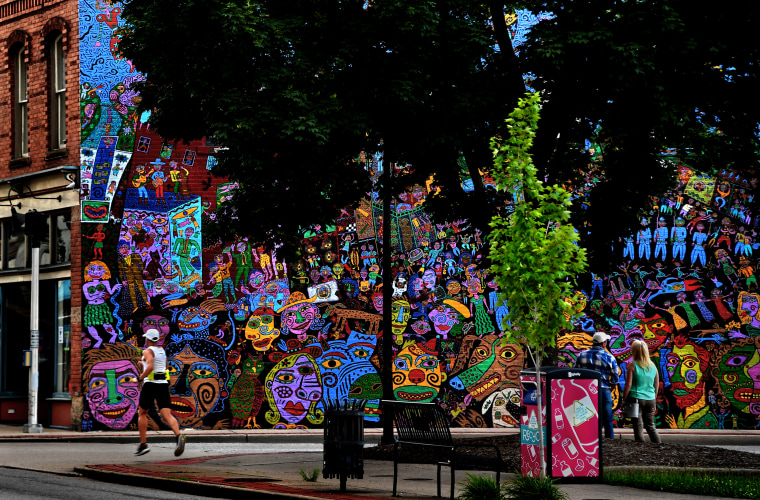
The Midwestern town is home to the University of Missouri and has a bustling nightlife scene with a multitude of gay-friendly spots. The city’s MEI score has risen sharply since 2015 when it received a 74, in large part due to city initiatives like the hiring of a LGBTQ liaison to its police department.
–
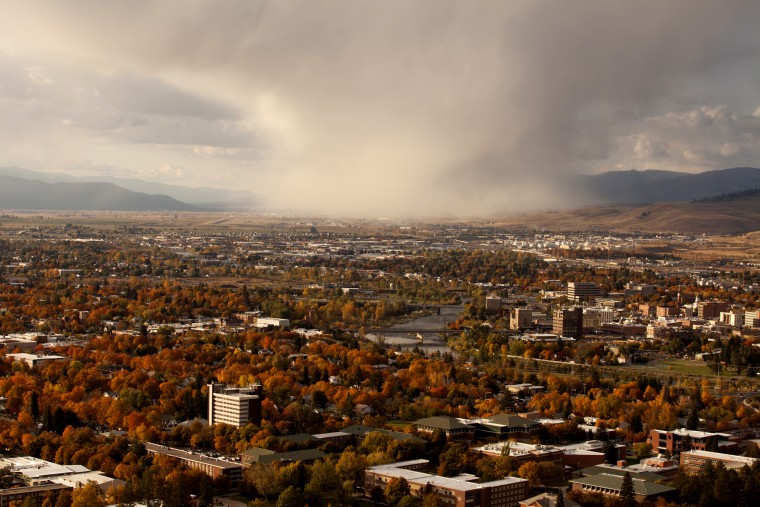
Missoula, Montana
MEI score: 100, Population: 73,000
Autumn in Missoula, Mt.akpakp / Getty Images
For six years, representatives in the mountain state of Montana fought to decriminalize consensual same-sex relations, which was formerly classified as a felony. The law was ruled unconstitutional in 1997, and Missoula has continued to advocate for the equal rights of its LGBTQ citizens since. Last year, the town unveiled a rainbow crosswalk that was planned by Empower Montana’s youth program, Youth Forward.
–
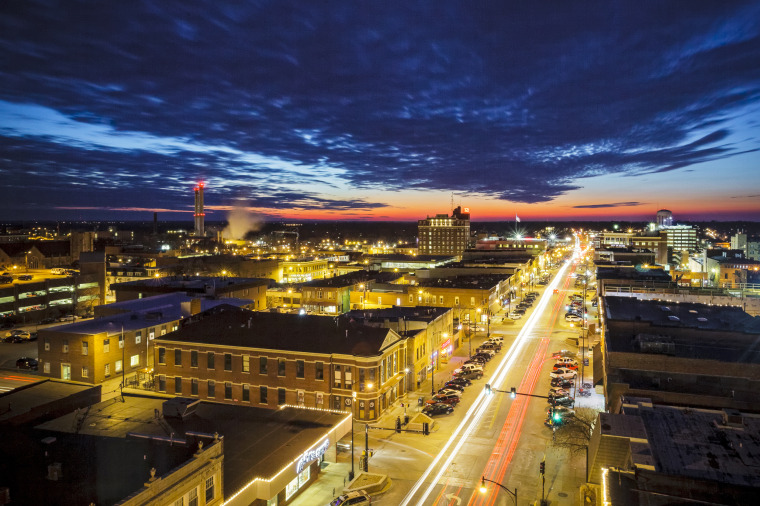
Brookings, South Dakota
MEI score: 100, Population: 24,000
Main Street in Brookings, S.D.Jon Platek
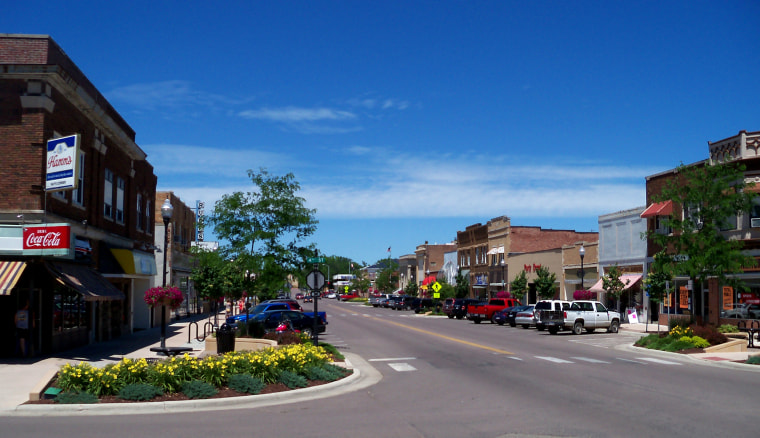
After Brookings received a score of 12 out of 100 in 2013, local leaders embarked on a multiyear mission to bump their rating to 100. It wasn’t until 2018, when the town adopted a nondiscrimination ordinance, that it finally achieved the coveted score. Brookings is an outlier in South Dakota, where the average MEI score is 31, well below the national average of 58.
–
Huntington, West Virginia
MEI score: 100, Population 47,000
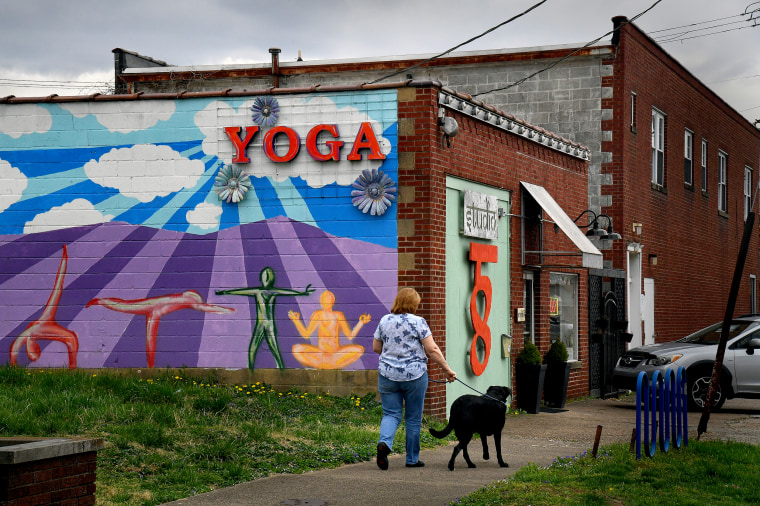
A yoga studio in Huntington, W.V., on April 5, 2019.Michael S. Williamson / The Washington Post via Getty Images file
Since Huntington was first placed on the index in 2012, the small town has more than doubled its MEI score. Aside from anti-discrimination ordinances, the city also launched the Open for All campaign, which encourages businesses to post a sticker that signifies their support of the LGBTQ community. The Human Rights Campaign called the town a “shining beacon of hope” in a part of the country not known for LGBTQ inclusivity.
–
Covington, Kentucky
MEI score: 94, Population: 40,000
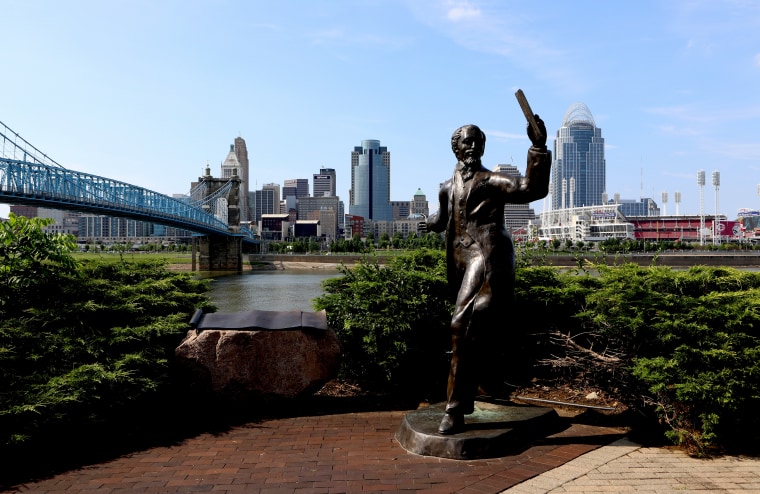
The riverfront in Covington, Ky., in 2017.Raymond Boyd / Getty Images file
In 2003, Covington passed one of the state’s first fairness ordinances, which prohibited LGBTQ discrimination in employment, housing and public accommodations. This year, the city celebrated Northern Kentucky Pride’s 10-year anniversary with a vibrant rainbow crosswalk. The annual pride event’s slogan reads “Y’all Means All.”
–
Norman, Oklahoma
MEI score: 92, Population: 123,000
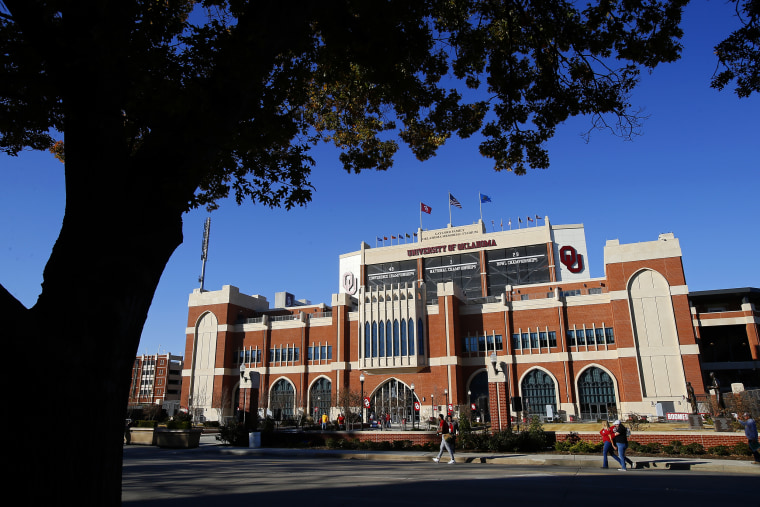
The Gaylord Family Oklahoma Memorial Stadium in Norman on Nov. 9, 2019.Brian Bahr / Getty Images file
Norman, home of the University of Oklahoma, became the first city in the conservative state to pass a nondiscrimination ordinance for LGBTQ people. Norman’s progressive policies toward gay residents is evident in it’s index score, which is 30 points above the second-highest ranked Oklahoma city in the index.
–
Charleston, West Virginia
MEI score 91, Population 45,000
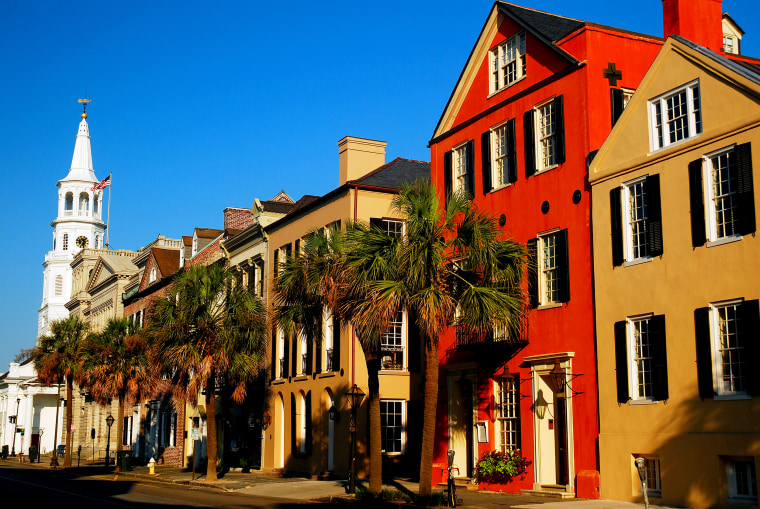
The Elk City historic district in Charleston, W.V.Michael S. Williamson / The Washington Post via Getty Images file
The capital and most populous city in West Virginia has moved to improve the lives and rights of its local LGBTQ community. In May, Mayor Amy Shuler Goodwin announced the creation of the city’s first LGBTQ working group, which will develop anti-bullying policies and LGBTQ-awareness training within the city.
–
Flagstaff, Arizona
MEI score: 88, Population: 72,000
The desert near Flagstaff, Arizona.Steve Smith / Getty Images
Nestled next to ponderosa pine forests and mountain ranges, Flagstaff is particularly inclusive to the LGBTQ community. The city is home to Pride in the Pines, an annual LGBTQ celebration that has featured neon dance parties and performers from “RuPaul’s Drag Race.”
–
Juneau, Alaska
MEI score: 86, Population 32,000
Coastal mountains and houses in Juneau, Alaska.Sergi Reboredo / Universal Images Group via Getty Images file
Juneau is home to the Southeast Alaska LGBTQ+ Alliance, also known as SEAGLA. The group began meeting in 1980 and offered a safe space to same-sex couples, with events that included dance parties, solstice celebrations and potlucks. In 2014, SEAGLA planned Juneau’s first pride event, and the organization has continued to meet and advocate for the LGBTQ community since it’s inception.
–
Manhattan, Kansas
MEI score: 83, Population: 54,000
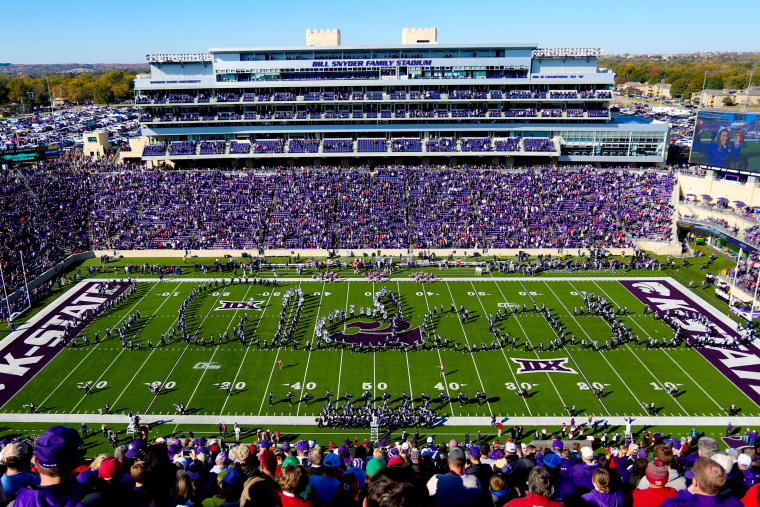
The Kansas State Wildcats marching band during a game at the Bill Snyder Family Stadium in Manhattan on Oct. 26, 2019.Icon Sportswire / Icon Sportswire via Getty Images file
Kansas made strides toward equal protections this year, with the state’s MEI score increasing by 12 points. Manhattan is the second-highest rated city behind Overland Park, a much larger suburb of Kansas City. Kansas State University is in Manhattan and was recently ranked as one of the 25 most LGBTQ friendly universities in the U.S. by Campus Pride.
An Indiana University professor blasted by his employer for “sexist, racist, and homophobic” views penned a lengthy response to detractors, reiterating his notions that gay men should not be K-12 teachers and that women could indeed be “sluts.”
Eric Rasmusen, a 60-year-old business and economics professor at Indiana University’s Kelley School of Business, created a web page to respond to what he called “the 2019 kerfuffle in which the Woke crowd discovered” his social media posts and other comments.
He also responds directly to the university’s executive vice president and provost, Lauren Robel, who earlier this week slammed his views while also saying they constitute free speech protected by the First Amendment.
“Professor Eric Rasmusen has, for many years, used his private social media accounts to disseminate his racist, sexist, and homophobic views,” Robel said in her statement. “I condemn, in the strongest terms, Professor Rasmusen’s views on race, gender, and sexuality, and I think others should condemn them.”
But she said that “is not a reason for Indiana University to violate the Constitution of the United States.”
Kelley School of Business Dean Idie Kesner also posted an open letter to students and staff, criticizing Rasmusen but defending the school’s stance: “While many have called for the professor’s dismissal, there are legal reasons why the University cannot dismiss him over his postings. Like all of us, Professor Rasmusen has First Amendment rights.”
“I open doors for ladies; I say that sodomy is a sin. I am sure that is enough to qualify me for those insults under the Provost’s personal definitions,” the professor said.
He also touched upon some of his views that have drawn criticism.
On alleged sexist slurs: “Is ‘slut’ a slur against women? Not at all. It is a slur against certain women, against a minority of women, and for them it is a justified slur, a descriptive one. A women who sleeps with 100 men in a year is a slut.”
On whether gay men should be teachers: “Homosexuals should not teach grade and high school,” Rasmusen said. But he says he’s OK with them teaching college. “Professors prey on students too, so there is a danger, but the students are older and better able to protect themselves, and there is more reason to accept the risk of a brilliant but immoral teacher.”
On affirmative action: The professor said affirmative action may be right or wrong. “What is clear is that *some* students are admitted because of their race — which means that other students are denied because of their race, since we have a fixed number of spots.”
Rasmusen also said he strives for views that stand the test of time. “What I aim for is a view that stands up to both the 18th century and 21st century critiques, not to mention 1st-century, and to critiques from ancient China as well as ancient Greece. The Provost is taking the opposite tack here, saying that we should not care about what other cultures and times think of our views, only what people in 2019 think.”
The recent attention to Rasmusen was sparked by his Nov. 7 retweetof an article, “Are Women Destroying Academia? Probably.” Rasmusen prefaced the tweet by saying, “Geniuses are overwhelmingly male because they combine outlier high IQ with moderately low Agreeableness and moderately low Conscientiousness.”
Robel said in her statement that while the university will not try to fire Rasmusen, it will take steps to ensure that “students not add the baggage of bigotry to their learning experience.”
No student will be required to take any of his classes, Robel said. In addition, she said he will have to use double-blind grading on assignments to “ensure that the grades are not subject to Professor Rasmusen’s prejudices.”
Transgender women inmates in Colorado claim in a class-action lawsuit that they are targets of physical violence and sexual harassment because they are routinely housed with men.
About 170 transgender inmates are represented in the class with seven women named as plaintiffs in the lawsuit filed Friday in state court in Denver. Gov. Jered Polis and Colorado Department of Corrections officials are named as defendants.
The lawsuit alleges that because the women are held with men without safeguards, they are subjected to abuse and discrimination in violation of the state’s Anti-Discrimination Act.
“The lawsuit claims that the CDOC has discriminated against transgender women solely on the basis of their gender identity and that these women have been subjected to unsafe situations, including severe sexual harassment, physical violence, and rape,” the Transgender Law Center, which filed the suit on behalf of the inmates, said in a summary.
Annie Skinner, a spokeswoman for the Colorado Department of Corrections, said she could not comment on specifics of the lawsuit, but officials are working to create safe and fair incarceration for all offenders.
“Colorado has spent the last several years diligently working to develop and implement thoughtful and informed policies and procedures for the fair and respectful treatment of transgender offenders in our custody, and is considered a leader in this area nationally,” she said in an email.
“We work every day to find the best possible balance between the desire to protect the dignity of all offenders, with the need to ensure their safety.”
The lawsuit highlights the experiences of the named plaintiffs, including allegations by Kandice Raven, 30.
“Because she is a transgender woman in CDOC custody, she has been subjected to numerous brutal assaults, resulting in permanent injuries, including a rape in 2014,” the document states. “She has attempted suicide twice and attempted self-castration as a means to deal with her severe gender dysphoria.”
Jane Gallentine, whose age was not stated, has survived “several rapes,” including repeated attacks by a corrections officer, the lawsuit claims.
“One of her abusers forcibly tattooed his name on her neck to show everyone that she was ‘his property,'” it states. The allegation involves an incarcerated gang member, not the corrections officer, said Denver civil rights attorney Paula Greisen, a lawyer for the inmates.
Amber Miller, 32, was raped by a corrections officer and by male inmates, the lawsuit claims. After she reported one rape, “Amber was stripped naked by a group of male guards, handcuffed, and placed in the hole for weeks,” the suit says.
Because the transgender inmates named in the suit “present as women” and take hormone regimens, they’re often seen by male inmates and even some correction officers as vulnerable targets for crime, said Greisen, lead counsel on the case.
“Sex is a commodity in male prison,” she said. “These women are used as commodities.”
Rape by corrections officers of transgender inmates is under-reported because victims who step forward are often punished with strip searches and solitary confinement, she said.
The lawsuit seeks unspecified damages, “necessary accommodations” and other corrective measures.
Greisen said most of the plaintiffs want to be incarcerated with women not according to their gender assigned at birth.
“What we want is for them to be held in safe facilities,” she said. “And although right now the policy is that their preference is given a priority, we don’t see it happening.”
The Transgender Law Center is based in Oakland, California.
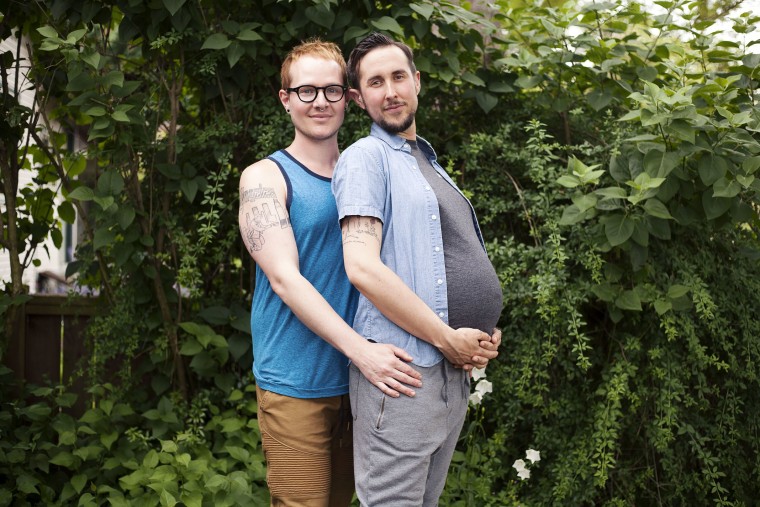
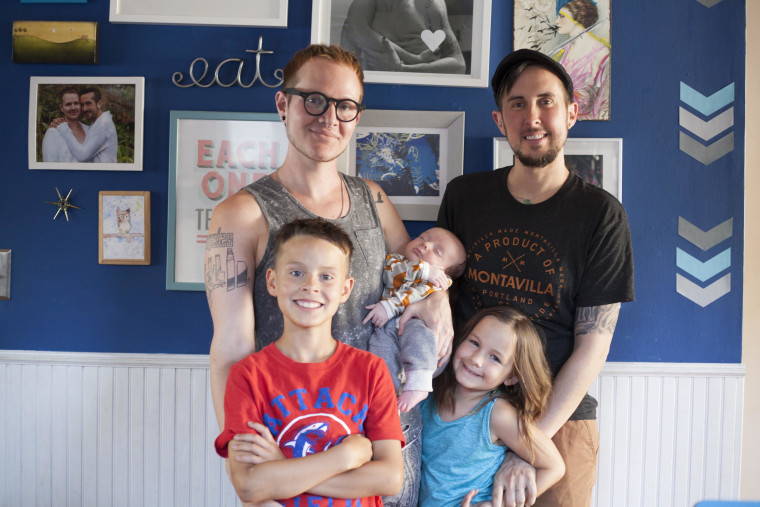
Trystan Reese, a transgender man and community advocate, thought social media would be a great place to share his pregnancy story with the world. Little did he know, he would face several years of “extreme backlash” for doing just that.
“I was pretty excited for the opportunity to start to add more positive stories to the sort of public narrative around what it can mean to be transgender today,” Reese, whose pregnancy story was covered by NBC News and countless other news outlets in 2017, explained.
Biff Chaplow, left, and Trystan Reese before the 2017 birth of their youngest child. Kevin Truong
Over the past two and a half years, however, Reese — who lives in Portland, Oregon, with his husband and three children — has dealt with online transphobia and misinformation circulating about his family. One example of this pervasive harassment involves a photo of Reese while pregnant along with a transgender woman friend. This happy image, shared on Instagram by his friend, was then used without permission in a number of fake stories and memes that appeared across the internet. Reese said the intentionally cruel posts mocked and misgendered them both and falsely claimed his friend was the biological parent of Reese’s child.
“People assume that’s true and run with it, and share with their friends,” Reese said of the transphobic posts, which, after being flagged by NBC News, were removed by Facebook for violating its policies. “People send us ugly transphobic memes that have been made of the best moments of my life.”
Social media: A double-edged sword for trans community
Social media platforms have been vital spaces for transgender people to gather and form a community, according to Gillian Branstetter, a trans advocate and the former spokeswoman for the National Center for Transgender Equality. However, she added, the hostility they frequently face on these platforms make trans individuals more apprehensive about using them.
“The internet was life-changing for transgender people,” Branstetter said. “It’s critical that platforms are providing a safe place for transgender people to find community.”
Reese shared a similar sentiment, saying social media is “both the best thing that ever happened to the transgender community, and it’s also the worst.”
“We’re able to provide immediate, real-time, lifesaving support to transgender people and their families, any time of the day or night, but we are also open to more scrutiny and direct one-on-one harassment and abuse than ever before,” Reese said.
Trystan Reese, right, and Biff Chaplow with their children, from left, Riley, Leo and Hailey, in 2017.Kevin Truong
According to a recent report from the anti-bullying organization Ditch the Label and its analytics partner, Brandwatch, 1.5 million (or 15 percent) of the 10 million transgender-related comments on social media platforms over a three and a half year period starting in 2016 were found to be transphobic.
“The scale of it is quite frightening, and it was quite shocking,” Toryn Glavin, a transgender advocate at the London-based LGBTQ nonprofit Stonewall, said of the report’s findings. “The conversations, how nasty they’ve turned, and how we’ve seen society really kind of polarized in the last few years, and we’ve seen trans communities be one of the scape goats that are thrown under that bus.”
Brennan Suen, the LGBTQ program director for Media Matters, a progressive nonprofit that monitors and analyzes misinformation across U.S. media outlets, singled out Facebook as “one of the biggest bad actors.” He said much of the anti-trans rhetoric found on social media has been spread by far-right publications whose content has gone viral on the platform.
Suen accused the social media titan of “blatantly” allowing The Daily Wire, a popular news outlet founded by conservative pundit Ben Shapiro, to break Facebook’s rules in order to make the site’s content go viral.
“If you look at an analysis of headlines with the word ‘transgender’ in them, the most engaged-with website on that issue was The Daily Wire,” Suen said. “It’s a very successful tactic for them.”
“They know that they can build outrage, they know that they can scare people, and they know that people don’t understand the issue very well,” Suen added. “So they can spread misinformation about [transgender issues], and also get a lot of clicks.”
A recent report from Popular Information — a newsletter created by journalist, lawyer and ThinkProgress founder Judd Legum — found that 14 Facebook pages with a combined 7.5 million followers are exclusively posting articles from The Daily Wire, which regularly publishes anti-LGBTQ stories. The administrators for those pages claim to be unaffiliated Facebook users but appear to be centrally controlled by The Daily Wire, which would be a violation of Facebook’s community standards against inauthentic behavior. The pages frequently share the same articles simultaneously and help the conservative outlet’s content go viral. In September, The Daily Wire received 15,283 engagements per story on Facebook compared to 1,871 for The New York Time, 2,119 for The Washington Post and 6,824 for The Huffington Post, according to the Popular Information report.
In a statement to NBC News, Jon Lewis, the vice president of The Daily Wire, claimed the company has “always worked to comply with Facebook policy.”
“We do not believe that the audience for any page that we operate has been deceived as to Daily Wire’s relationship with these pages, nor did we intend any such deception; indeed, it would be exceedingly difficult to miss that all the posts were from Daily Wire,” Lewis stated.
“In an average month, less than 5% of our total Facebook traffic comes from pages other than Daily Wire or our talent pages — primarily Ben Shapiro,” he added, though NBC News was unable to verify his claims. “Facebook has announced a new transparency initiative, and like other publishers, we have been working to implement it on schedule.”
A Facebook spokesperson told NBC News the company announced the new transparency policy earlier this month that it is applying to the 14 pages exclusively promoting The Daily Wire’s content, but the spokesperson did not confirm how the policy would be applied or whether the pages would removed.
“Since the launch of our new page transparency policy, we are actively reaching out to and reviewing various/numerous networks,” the spokesperson stated.
The Daily Wire, however, is far from the only conservative outlet publishing transgender-related articles to Facebook that are false, misleading, blatantly transphobic or some combination of the three — and many of these stories have gone viral in recent months. Suen estimates that a large portion of the “millions” of engagements received by anti-trans articles — many of which he said paint trans issues as hostile to women and children — come from Facebook.
In September, a story first covered by the Catholic news outlet Lifesite News falsely claimed that hormone blockers used by doctors to delay puberty in transgender teenagers are linked to cancer. The story went viral on Facebook and Twitter and was covered by other conservative outlets, including the Christian Post and The Daily Wire. NBC News later published an article poking holes in these claims.
Then in late October, The Daily Signal, a “multinews arm” of the Heritage Foundation, a conservative think tank with a history of fighting against LGBTQ rights, and the Christian Post both circulated a story about a mother claiming to have lost her college-age children to what she described as “the trans cult” after they transitioned.
Earlier this month, a custody dispute between a Texas couple who disagreed about the gender identity of their 7-year-old child received widespread media attention, which eventually spilled over into state politics. Many right-wing media outlets falsely claimed the child’s mother, Anne Georgulas, a pediatrician, was forcing the child to live as a girl and to medically transition. Following the misleading coverage, a rock was thrown through Georgulas’ window while her children were asleep, and she was forced to close her business after dead animals were left on its doorstep, according to her representative, Karen Hirsch.
Transphobia goes beyond the far-right mediasphere. Katelyn Burns, a Washington, D.C.-based freelance journalist who is transgender, said she regularly deals with harassment on social media, most of it from “trans-exclusionary radical feminists,” commonly referred to as “TERFs” or “gender critical feminists.”
Burns said an image of her and her two young children was mysteriously uploaded to a “gender critical” Reddit in 2017 that she described as a “hive” of virulent anti-transgender feminists. She said members of the group mocked her and her children’s appearances. She said moderators eventually removed the image after she contacted them.
Burns said online harassment is frustrating because anonymous abusers work together to bully trans people across social media platforms.
“Once the harassment starts, it’s really hard to stop it,” she said. “You just have to ride it out until it ends on its own.”
On Twitter and Reddit, also in 2017, a number of accounts circulated another photo of Burns alongside the term “autogynesmile,” a label adopted from “autogynephilia,” a widely criticized and controversial theory invented by sexologist Ray Blanchard that claims trans female identity is linked to a sexual fetish. According to Burns, so-called gender-critical feminists concocted the term “autogynosmile” to mock the way trans women look in selfies. At one point, Burns said, if you searched “autogynesmile” on Google, her picture would be among the first images to pop up.
A number of trans-exclusionary organizations purporting to be progressive feminist groups, including the Women’s Liberation Front, are joining forces with conservative groups to oppose trans rights and spread the narrative that trans activism is hostile to women’s rights. The Hands Across the Aisle Coalition, for example, is an alliance of self-proclaimed “radical feminists, lesbians, Christians and conservatives” who claim to be “tabling our ideological differences” in order to “oppose gender identity ideology.”
Heron Greenesmith, a senior research analyst at Political Research Associates, an organization that tracks anti-transgender rhetoric in mainstream media, said far-right organizations are leveraging gender-critical feminists, whose views Heron said do not reflect the wider feminist community, to give credence to anti-LGBTQ policies and agendas.
“Here in the U.S., mainstream Christian right and Evangelical right organizations have been platforming anti-trans feminists to give anti-trans advocacy the veneer of a much broader base of support than it actually has,” Greenesmith said. “This is a tactic that the right uses all the time: Find a minority member of a marginalized group who are willing to throw other marginalized folks under the bus, in the name of scarcity mindset.”
Whether it’s from the political right, left or center, online transphobia and the spread of false and misleading narratives can have dangerous, real-life consequences, transgender advocates say.
“There’s been a significant amount of research showing a close relationship between online violence and physical violence, and given the steep relationship of mistrust between transgender people and law enforcement, understanding the scope of the threat that people feel is critical,” Branstetter said.
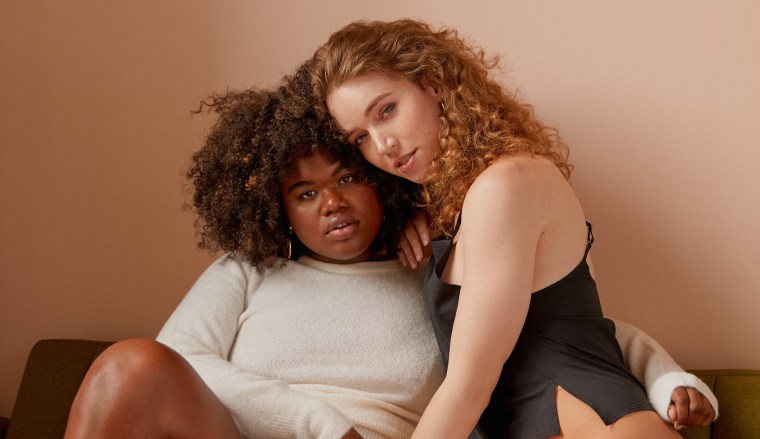
Jari Jones and her girlfriend, Corey.Emma Tim
This relationship between online harassment and physical violence is real-life fear for Jari Jones, a black trans activist who recently starred along with her girlfriend, who is also trans, in the YouTube series “My Trans Life.”
“Media is very powerful, and if we allow that, allow hate, and allow violent behavior with words, people think it’s OK, and that creates an atmosphere of violence for trans people,” said Jones, whose YouTube show received many abusive comments that attacked her gender identity.
“People are more willing to attack a trans person, because they see it on TV, they’re more willing to attack a trans person or say whatever they want to a trans person or a queer person, because they see this online, nobody’s checking them for it,” she added.
According to the 2015 U.S. Transgender Survey, almost half of the survey’s 27,715 respondents reported being denied equal treatment, verbally harassed and/or physically attacked in the past year for being trans. And the FBI’s latest hate crimes report, which was released earlier this month, found a 34 percent increase in reported hate crimes against trans people from 2017 to 2018.
LGBTQ advocates, including Branstetter and Suen, say the persistent — and often unfairly depicted — focus on more polarizing issues, like trans women in competitive sports, deflect public attention away from the high-levels of discrimination and violence the trans community experience.
“There’s so many issues like access to housing, access to economic opportunities, being able to live without the threat of violence, that are never talked about or seen by a wide majority or a wide swath of the country,” Suen said.
Social media platforms say they have taken steps to limit hate speech and harassment, but many civil rights and anti-bullying advocates say they haven’t gone far enough.
In a statement to NBC News, a Facebook spokesperson said the company doesn’t allow “attacks based on gender identity, including violent or dehumanizing speech, statements of inferiority, and calls for exclusion or segregation.” The spokesperson stated the platform removed “7 million pieces of content for violating our hate speech policy, of which we proactively detected 80 percent before people reported it to us” in Q3 2019.
In a June statement, YouTube stated that the company removes content if it determines “the primary purpose of the video is hate or harassment.”
YouTube allowed Steven Crowder, notorious for his anti-LGBTQ rhetoric, to keep his channel, which has over 4 million subscribers, but said it stopped the conservative pundit from running ads after seeing “the widespread harm to the YouTube community resulting from the ongoing pattern of egregious behavior.”
And earlier this month,YouTube removed a video from The Daily Signal in which Dr. Michelle Cretella, a pediatrician, stated, “See, if you want to cut off a leg or an arm, you’re mentally ill, but if you want to cut off healthy breasts or a penis, you’re transgender.” YouTube said it removed the video because Cretella’s statement violated its hate speech policy, according to news reports.
Cretella is the executive director of the American College of Pediatricians, an organization that the Southern Poverty Law Center calls “a fringe anti-LGBT hate group that masquerades as the premier U.S. association of pediatricians to push anti-LGBT junk science.”
Katrina Trinko, editor-in-chief of The Daily Signal, accused YouTube of censorship in commentary published Nov. 5.
“We are especially disappointed with YouTube’s decision because other social media platforms have allowed the video on their platforms,” Trinko wrote. “In fact, the video has more than 70 million views on Facebook. It might have even more if Facebook hadn’t temporarily removed it in July 2018. After our appeal to Facebook, it was quickly restored and remains on The Daily Signal’s page today.”
Last year, Twitter made “misgendering” and “deadnaming” users — referring to a trans person as their sex assigned at birth or by their given name, if different from their chosen name — against its hateful conduct policy. A number of users, including Meghan Murphy, founder of the Canadian radical feminist website The Feminist Current, were banned from Twitter for violating these rules. Murphy disputes she violated Twitter’s rules and unsuccessfully sued the company over the ban.
Burns said she has shielded herself from abuse on Twitter by subscribing to blocklists and by limiting her notifications to only accounts that follow her, but she said abuse has been more difficult to avoid on Facebook. After Burns wrote a viral story for Vox about “gender-critical feminists,” she said a Facebook user angered by the story tagged her in an abusive post on the platform, which then generated “hundreds” of abusive replies from other users. Burns said she reported the online harassment to Facebook, but the company said it would not remove the initial post because, as a journalist, Burns is considered a public figure.
“I couldn’t write again for like two weeks afterwards, because those people got in my head,” Burns said. “They say things, and you start believing it after enough people have said it.”
Reese said reporting abuse to Facebook feels “completely useless.”
“I flag them as hateful, I flag them as untrue, I flag them as bigotry,” he said, adding that the process is like “trying to use my thumb to stop a damn.”
Both Burns and Reese said they use social media to do their jobs, which makes abandoning these platforms impossible.
While preventing online abuse altogether may be impossible, Glavin said social media companies should join forces with trans people to help minimize the online abuse they experience.
“I think really the way forward for social media companies is to work with trans communities and to kind of sit down with trans communities and figure out what is happening, what is the current situation, what are the kind of things that they should watch out for, what are the signs and symptoms that that kind of transphobic bullying is happening, and then trying to build policies around that,” Glavin said.
Reese lamented that there does not seem to be a “coordinated interest” from social media companies in protecting the voices of trans people who are “desperately trying to tell our stories.”
“We’re desperately trying to answer all of our direct messages from trans youth who think they have no hope,” Reese said. “We’re trying so hard to do this positive, life-affirming work, and we’re doing it against brutal odds.”