
JOIN OUR FRIENDS FROM SANTA ROSA COMMUNITY HEALTH ON JULY 14 IN THE AIDS WALK AT SPRING LAKE


| Transcendence Theatre Company continues its 2024 summer season, Broadway in Sonoma, with the world premiere of Don’t Stop Us Now. The brand new production is a creative collaboration between MidAtlantic Men, Queenz That Rock, and Transcendence Theatre Company, conceived and directed by beloved Transcendence performers Simon Pearl and Emily Yates. Don’t Stop Us Now features an exhilarating combination of British and American tunes, a trio of rock divas, and an explosion of song, with Pearl and Yates performing alongside a talented cast of musical artists, each bringing their unique flair and energy to the stage. For one weekend only, California Wine Country’s award-winning premiere entertainment experience will present Don’t Stop Us Now, Thursday, July 25 through Sunday, July 28, in Sonoma’s Field of Dreams in Fazio Field, just steps away from downtown Sonoma.The Queenz That Rock, a dynamic trio of rock powerhouses, features the incredible talents of Charis Gullage, Ruby Lewis, and Emily Yates. The MidAtlantic Men, composed of J.D. Daw, Julian Diaz-Granados, and Simon Pearl, deliver the best hits from the UK and the US with their tight harmonies and soaring vocals. The stellar cast has a range of unique experiences on Broadway, in National Tours, and beyond. Emily Yates is an award-winning vocalist who has performed since the age of eight when she made her debut in Babes in Toyland. She’s held lead roles in 42nd Street and Joseph and The Amazing Technicolor Dreamcoat and has wowed audiences across the US and abroad. Simon Pearl’s extensive career has taken him from Broadway (Les Misérables) to Nickelodeon cartoons, Nurse Jackie, Blacklist, and stages throughout the US and the United Kingdom. The duo has worked with Transcendence for three years. J.D. Daw is known for his Off-Off-Broadway role in I Love My Family, But… and extensive regional experience. Julian Diaz-Granados makes his Transcendence debut and brings his Broadway and National Tour experience from Dear Evan Hansen. Charis Gullage, a native New Orleanian, debuts with Queenz That Rock, having recently performed in Summer: The Donna Summer Musical and Hairspray. Ruby Lewis, celebrated for her Broadway and Las Vegas performances, adds her talent with credits like Cirque du Soleil’s Paramour and the North American tour of Queen’s We Will Rock You.”I can’t wait to bring our collaborative show to Sonoma this summer! Simon and I have worked tirelessly for years to make these groups individually successful, and now with Transcendence joining us, this show is unstoppable!” said Yates. “As part of Queenz That Rock, we’ve been rehearsing and adding new songs in collaboration with MidAtlantic Men specifically for Sonoma, and they will blow you away. I’m thrilled with the talented artists we’ve brought together to perform in Sonoma. I’m incredibly proud of the hard work everyone has put in to ensure you have The Best Night Ever, and an unforgettable journey!” “Transcendence has been a place of creativity and exploration for so many artists over the years. Having cultivated so many relationships at TTC that have had a massive impact on our producing, it is wonderful to come full circle and bring those shows back home,” Pearl added. “I am so thrilled that Transcendence is continuing its tradition of innovation by bringing us in and giving the audience something they’ve never seen before: a show that will have you laughing, cheering, and on your feet. Both MidAtlantic Men and Queenz That Rock are all about breaking the fourth wall and getting to know the audience as much as they get to know us. In the true spirit of Sonoma we can’t wait to build even more community at the field of dreams this summer!”With Pearl and Yates leading as directors of Don’t Stop Us Now, the creative team includes Justin Partier (Lighting Designer), Nils Erickson (Sound Designer/Engineer), and choreography by Sarah Crane, Sierra Lai Barnett, and Sara Garfinkel. Transcendence’s music supervisor, Matt Smart (A Christmas Carol, SF Tour; Hamilton, And Peggy Tour), will serve as the music director, and the performance will feature musical arrangements by Jonathan Brenner, Jacob Kerzner, James Olmstead, Francesco Varatti, and Smart, and additional music by Jeremiah Ginn, Brandon Lambert, Ben Lurye, Alejandro Senior, and Robby Wingfield. The creative team also includes Daniel Simons (Production Manager), Jeffrey Porter (Technical Director), Sarah E. T. Jackson (Production Stage Manager), and Michelle Tuite (Assistant Stage Manager).Special community night performances for Don’t Stop Us Now include Family Night on Sunday, July 28, and Pet Lifeline Night on Thursday, July 25. Each Sunday performance this summer, Transcendence will host a special Family Night, when youth tickets are available for $5 with the purchase of a full price adult ticket. At Pets Lifeline Night, Transcendence’s Broadway in Sonoma partner, the girl & the fig, will generously donate 15% of all ticket sales for this performance to Pets Lifeline, an animal shelter based in Sonoma that protects and improves the lives of cats and dogs in need. The Transcendence ExperienceWith Sonoma Plaza a mere walk from Field of Dreams, guests are encouraged to enjoy dinner, shopping, world-class wine tastings, and all that Sonoma has to offer before and after the show. This season, food trucks will not be on-site at the Field of Dreams. The RBC Wealth Management Gold Lounge at Fazio Field will open at 5:30 p.m. before each performance for Gold level tickets. Fazio Field will open at 6:30 p.m. for all other ticket levels. Guests can enjoy artisanal wines, local beer, and other beverages before the show begins at 7:30 p.m.For the Broadway in Sonoma summer series, Transcendence Theatre Company has partnered with several surrounding parking lots near the Field of Dreams. All patrons who plan to drive must make a parking lot reservation before arriving at the show, either through the online checkout process or by calling the Transcendence Box Office at 877-424-1414 Ext. 1.Individual tickets range in price from $35 to $190. Three-show subscribers will save 20% and receive priority seating and subscriber benefits. Groups of 10 or more will save up to 20%. Both tickets and subscriptions are available now online at BestNightEver.org, or by calling the box office at 877-424-1414 Ext. 1. The 2024 Broadway in Sonoma season sponsors include RBC Wealth Management; Benziger Family Winery; The Press Democrat; Sotheby’s International Realty; Redwood Credit Union; La Crema (Jackson Family Wines); The Alan and Susan Seidenfeld Charitable Fund; Kaiser Permanente (KP); Amaturo Sonoma Media Group, Bank of Marin; Exchange Bank; Jeffrey D. Bean, DDS; SOMO Village; Perry, Johnson, Anderson, Miller, and Moskowitz LLP; Friedman’s Home Improvement; Sonoma Valley Inn; Fairmont Sonoma Mission Inn; Parkpoint Health Club; and Sonoma Valley Authors Festival.The 2024 Season also includes:August 15 – 18Dancing in the StreetA sizzling summer block partySeptember 19 – 22The Gala: A Sentimental JourneyA tribute to classic Broadway and more |
 |
| About Transcendence Theatre Company: Transcendence Theatre Company is California Wine Country’s premiere entertainment experience, thirteen years and counting. Presenting a season of original outdoor musical revues under the stars, an indoor holiday show every winter, and more, our mission is to create extraordinary evenings featuring the best talents from Broadway and beyond. From its primary home within the majestic open-air ruins of the historic winery in Jack London State Historic Park to other remarkable and stunning settings throughout Wine Country and the community, Transcendence Theatre Company is dedicated to providing the joys and benefits of musical theater to all through one of a kind performances, community engagements, and arts education programs. Through its Transcendence For All initiatives, the company partners with local nonprofits to make the arts accessible to youth, seniors, people with disabilities, and more. Transcendence offers free performances and workshops, as well as accessibility features at its productions. BestNightEver.orgFor 10 years, Transcendence Theatre Company (Transcendence) held its summer season at Jack London State Historic Park. However, ongoing compliance with the litigation settlement between the California State Park Ranger Association and the State of California Park Department over the environmental review process and permitting has kept Transcendence out of the park for both the 2023 and 2024 summer seasons. |
If you’ve ever driven into Hollywood south on the 101 freeway, following signs for the Hollywood Bowl and Highland Avenue, then you were met with the sight on your right of the iconic Gothic bell tower at the Hollywood United Methodist Church.
Dedicated in 1930, as Hollywood boomed and Los Angeles stretched west to the Pacific, the church has been “a sanctuary of hope” since the first congregants started to organize in 1909.
That tradition famously took the form of two enormous red ribbons hung on the bell tower in the 1990s.
“Our church has been proud supporters of our LGBTQIA+ family for decades,” Associate Pastor Devon Jones tells LGBTQ Nation. “Especially back in the early 1990s during the AIDS crisis, when people were being turned away from family and friends.”
In response, “We put two huge red AIDS ribbons on our bell tower, letting the community know they were loved and accepted.”
For years, the Hollywood United Methodist Church has pulled out all the stops for the annual LA Pride Parade, which stepped off a stone’s throw from the church on a route through the heart of Hollywood in 2023.
They requisitioned a double-decker Hollywood tour bus for the occasion, spreading a message of joy and celebrating 30 years since they raised those iconic red ribbons that are a clarion call for love and acceptance in the Southland.
“We want everyone to know there are communities of faith like ours that celebrate and are affirming of our LGBTQIA+ family,” Jones says.
“We are the LGBTQIA+ community, and we also have many allies who love and support us. We believe in a loving God who made us all just how we were meant to be.”
Roberta Kaplan, a legendary lawyer in the realm of LGBTQ+ rights and feminism, has resigned from the firm she founded “after clashing with her partners over her treatment of colleagues,” The New York Timesreports.
Kaplan, who is lesbian, represented Edie Windsor in the case that brought down the Defense of Marriage Act in 2013 and more recently represented E. Jean Carroll in her successful lawsuits against Donald Trump for defamation and sexual abuse.
She opened New York-based Kaplan Hecker & Fink in 2017 after 25 years with Paul, Weiss, Rifkind, Wharton & Garrison, a major corporate law firm. She once said Kaplan Hecker & Fink operated “on the principle that there always must be someone to stand up to a bully,” according to the Times.
Kaplan told the Bloomberg news service she was leaving the firm because “it grew in size and complexity beyond what I had in mind, and I wanted to get back to something nimbler.” She is starting a firm called Kaplan Martin with Tim Martin, a partner in Kaplan Hecker & Fink, and two other friends, Steven M. Cohen and Mitra Hormozi, both former federal prosecutors.
But the Times story details tensions at Kaplan Hecker & Fink. “Her departure was announced after The Times informed her personal lawyers that it was preparing to publish an article about Ms. Kaplan that would shine a light on complaints about what some employees said was an unprofessional office culture that she presided over,” the paper reports. Kaplan had been removed from the firm’s management committee, according to the Times.
“Several people whom she worked with told The Times that she had insulted employees, inappropriately commented on their looks and threatened to derail people’s careers,” the article continues. Kaplan’s lawyers said this was not the case. They also told the Times, “There is nothing more unremarkable than trial lawyers using colorful language, criticizing their peers and representing diverse clients with no expectation of ideological purity.”
Kaplan herself gave a statement to the paper, saying, “The work I do is high-stakes and challenging, requiring both toughness and precision.” Because she had fought “some of the world’s biggest bullies, there are people who don’t like me, which comes with the territory, particularly when you are a woman,” she added. “I am proud of my record as a lawyer, colleague and mentor.”
She has been involved in controversies before. In 2021, she resigned as cochair of the board of Time’s Up, an organization founded to assist survivors of sexual harassment and assault, after it was revealed that she had advised then-New York Gov. Andrew Cuomo on his response to allegations that he had sexually harassed employees. Kaplan helped found Time’s Up and its legal defense fund in 2017. Cuomo resigned as governor in 2021 after a report from New York State Attorney General Letitia James found the accusations against Cuomo credible and concluded that he and his associates had committed unlawful retaliation against one of his accusers. Both Cohen and Hormozi have “close ties” to Cuomo, Bloomberg reports.
Kaplan Hecker & Fink will be renamed Hecker Fink as of Monday. “It was Robbie’s decision to leave the firm,” partners Julie Fink and Sean Hecker said in a statement to the Times. “We wish her the very best and look forward to working with her and her new firm in the future.”
Aiden Cordero, 18, was suspended from her Florida high school in February for using the girls’ bathroom.
Cordero is a transgender girl and a senior at Frank W. Springstead High School, in a suburb of Tampa, where, she said, she’s been using the girls’ restroom for the last three years without issues. However, one of a few laws targeting LGBTQ students or topics Republican Gov. Ron DeSantis signed in May 2023 requires that she use either the boys’ restroom or the single-occupancy restroom in the school’s clinic, which she said is far from her classes.
In February, she had an emergency, so she went to the nearest bathroom, which was the women’s restroom, she said. When she returned to class, she said, two classmates told an administrator she had used the girls’ restroom, and she was suspended for the day.
As a result of her suspension, Cordero said, she wasn’t allowed to join the rest of her classmates on a senior trip, which she had paid $180 for. Before the incident, Cordero was considering staying in Florida for college, because she was awarded a Bright Futures Scholarship, which would have paid partial tuition at an in-state university. Due to her experiences in high school, as well as the passage of state legislation targeting LGBTQ rights, she decided to leave Florida and attend college in New York, even though doing so would mean additional expenses.
“I feel like if I went to college [in Florida], I would have to face that for four more years. If I stayed in a dorm out here, I have to be in a male dorm, using male bathrooms,” she said, referring to a Florida Board of Education rule implemented last year that broadened the May 2023 law.
A spokesperson for the Hernando County School District declined to comment on Cordero’s suspension, citing student privacy.
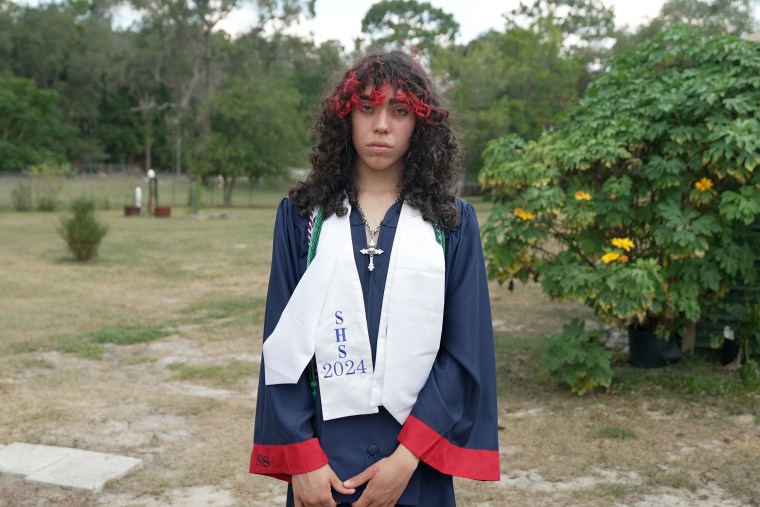
NBC News spoke with Cordero and other students, teachers and parents in Hernando County throughout the most recent school year about effects of laws targeting the LGBTQ community, including what critics have dubbed the “Don’t Say Gay” law, which was expanded in May 2023.DeSantis signed the first version of the law, the Parental Rights in Education act, in May 2022. The original law prohibited “classroom instruction by school personnel or third parties on sexual orientation or gender identity” in kindergarten through third grade “or in a manner that is not age-appropriate or developmentally appropriate for students in accordance with state standards.”
The expanded measure prohibits sexual orientation or gender identity instruction in prekindergarten through eighth grade, restricts reproductive health education in sixth through 12th grade and requires that reproductive health instruction “be age-appropriate or developmentally appropriate for students in accordance with state standards.” The law applies to both public and charter schools.


The LGBTQ students and teachers who spoke with NBC News said the resulting climate has been one of confusion about what exactly violates the law and increased hostility toward anything LGBTQ-related.
Hernando County School District Superintendent John Stratton sent out an email in May 2023 that said teachers should familiarize themselves with the Parental Rights in Education law, according to a copy of the email shared with NBC News. He sent another email shortly thereafter, which was also shared with NBC News, that directed school staff members not to “display any items that can be considered classroom instruction on sexual orientation or gender identity (flags, posters, stickers, etc.).”
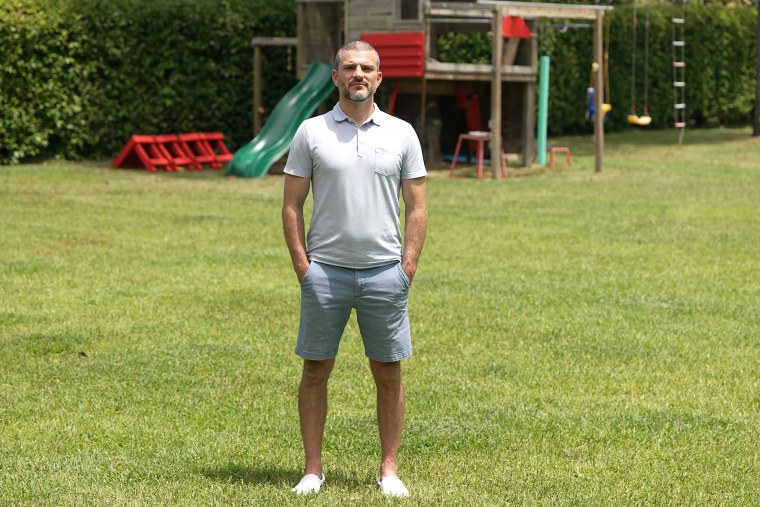
Ian Wald, a digital cinema production teacher at Nature Coast Technical High School in Brooksville, about 50 miles north of Tampa, said he removed a rainbow sticker that was behind his desk at the end of the 2022-23 school year, shortly after Stratton’s email was sent out.“I wasn’t trying to convert anybody; I was just trying to let students know that they were safe in my classroom,” said Wald, who doesn’t identify as LGBTQ.
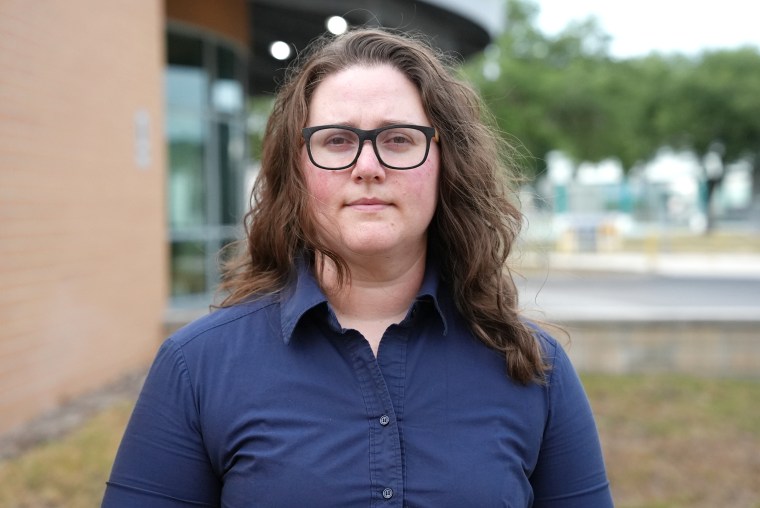
However, teachers who are a part of the LGBTQ community, like Alyssa Marano, said the expanded law made them feel they had to hide who they are. Marano, who was also a teacher at Nature Coast, left her job at the end of the 2022-23 school year because of the political climate surrounding LGBTQ issues in Hernando County and at the state level and got a job as a marketing manager at a local gym.
After having missed the first half of the school year, she returned to the classroom in January.
“When I decided to leave at the end of last year, there were so many emotions, and it was really just a heavy time,” she said. “So I had to put it down.” Now, she added, she’s picking her teaching career back up, hopeful that it will be “a little lighter.”
In March, Florida education officials and civil rights attorneys reached a settlement in a lawsuit challenging the parental rights law that allows students and teachers to speak freely about sexual orientation and gender identity in Florida classrooms as long as it’s not a part of class instruction. The settlement will also allow schools to create anti-bullying policies related to sexual orientation and gender identity and create LGBTQ clubs, such as gender-sexuality alliances. In April, a judge in a separate lawsuit temporarily blocked the restriction on teachers’ use of pronouns that don’t align with their birth sexes. However, that injunction blocks enforcement of the law only against two of the teachers who sued.The settlement doesn’t affect the part of the parental rights law that bars teachers from using names and pronouns for students that don’t align with their sexes assigned at birth or the law restricting trans students’ bathroom use.
Florida has also passed a number of other bills targeting trans youth, including one that restricts trans students’ participation in school sports. Several of the state’s LGBTQ-related bills, however, have been temporarily or permanently blocked in court, including a measure that restricted gender-affirming care for minors and adults, which a judge largely struck down this month. In an emailed statement, DeSantis’ deputy press secretary said the governor’s office plans to appeal the ruling.
Some Floridians have moved out of the state or considered moving as a result of the so-called Don’t Say Gay law. In a report published in January, before the law was expanded, the Williams Institute at UCLA School of Law found that 56% of 133 LGBTQ parents surveyed in Florida said they had considered moving out of the state because of the measure. Another Williams Institute report, which was conducted in March 2023, when the bill’s expansion was being debated, surveyed 106 Florida parents, both LGBTQ and non-LGBTQ, and found 40% said they had considered moving out of the state as a result of the law.
Jon Harris Maurer, the public policy director at Equality Florida, an LGBTQ advocacy group founded in 1997, said that this year the organization heard concerns from more parents and families than ever before.
“Families were afraid to send their children to school because protections had been eliminated, bullying was on the rise, and teachers were being forced back into the closet,” he said. “On top of that, school districts were telling teachers to remove ‘safe space’ stickers and to strip books off the classroom and library shelves.”
School board members from one-third of school districts in the state, representing the majority of Florida’s student population, also reached out to Equality Florida during the 2023-24 school year to say their districts had struggled to interpret the laws and that the state is “refusing to clarify them, amplifying confusion and fear,” Harris Maurer said.
Cordero, who graduated in May and decided to pursue college in New York City, said that though New York isn’t perfectly safe, she hopes to be able to live her “best life” there.
“I’m able to use the women’s bathrooms, I’m going to be able to stay in women’s dorms — just be myself basically,” she said. “When I’m in New York, I’m going to be free.”
The 2025 Tokyo Marathon will allow athletes to select nonbinary as their gender identity instead of male or female during registration. Now, all six Abbott World Marathon Majors — a circuit of the largest, most renowned marathons across the globe — have a nonbinary category for athletes.
“The Tokyo Marathon Foundation is committed to promoting DEI (Diversity, Equity & Inclusion) and aims to be the most inclusive race in the world,” the foundation, which organizes the Tokyo race, said in a news release on Monday.
In 2019, the Tokyo Marathon Foundation signed a pledge to promote gender diversity in sporting events with Pride House Tokyo, an organization that aims to create a safe space for LGBTQ athletes in Japan. Pride House Tokyo has been advising the foundation on best practices to accommodate athletes outside of the gender binary.
In addition to allowing participants to register under a nonbinary category, the next Tokyo Marathon, which will take place on March 2, will provide gender-neutral restrooms and changing areas located at the start line, finish and along the course. There will also be seminars on LGBTQ issues for volunteers and administrators working the event.
Activist and runner Cal Calamia has been a part of a growing effort to bring gender inclusivity into major races since 2022, when they fought for medals to be awarded to the top nonbinary finishers of San Francisco’s Bay to Breakers course. Calamia, who uses both he and they pronouns, has gone on to petition the world’s largest marathons, such as Boston and New York, to enact change.
He has competed in every U.S. Marathon Major since a nonbinary category was established in each.
“I felt a wave of relief and pride when I woke up to an email from my contact at the Tokyo Marathon Monday morning,” Calamia said. “Now, nonbinary marathoners can pursue our dreams of running all of the World Marathon Majors, just as men and women have been able to do for a long time.”
The other five World Marathon Majors — Berlin, Boston, Chicago, London and New York — added their own nonbinary categories in the last few years, starting with New York in 2021. New York made history in 2022 being the only World Marathon Major to award prize money to its nonbinary top finishers.
In its race guidelines for the 2025 marathon, Tokyo did not indicate whether there will be prize money awarded to any of its nonbinary competitors.
Since introducing a nonbinary field, participation of gender-diverse athletes in World Marathon Majors has grown. New York saw a doubling of its nonbinary competitors from 45 participants in 2022 to 96 in 2023. Meanwhile, London had a turnout of over 100 nonbinary competitors in 2023, its first year offering the category.
“The recognition of nonbinary athletes at Tokyo represents the power of the collective in advocating for our inclusion and will have effects across the globe that reach far beyond the running world,” Calamia said. “It’s imperative that these divisions do more than just exist.”
Rabbi Sharon Kleinbaum prepares for her last service at the Masonic Hall in New York on June 28.Andres Kudacki / AP
For more than three decades, Rabbi Sharon Kleinbaum has led the nation’s largest LGBTQ synagogue through the myriad ups and downs of the modern gay-rights movement — through the AIDS crisis, the murder of Matthew Shepard, the historic civil-rights advances that included marriage equality, and mostly recently the backlash against transgender rights.
She is now stepping down from that role and shifting into retirement. The New York City synagogue that she led for 32 years — Congregation Beit Simchat Torah in midtown Manhattan — will have to grapple with its identity after being defined by its celebrity rabbi for so long.
Her retirement also comes at a challenging moment for the LGBTQ-rights movement. Same-sex marriage is legal nationwide, but conservative politicians are enacting restrictions on transgender healthcare, restricting LGBTQ curriculum in schools, and proposing bans on the performances of drag queens.
“I’ve been blessed and privileged to have the opportunity to use the gifts I have, on behalf of God’s vision for the world,” Kleinbaum said in an interview. “I’m very, very lucky that I’ve been able to do this. I just feel like now is the time to make room for a younger generation.”
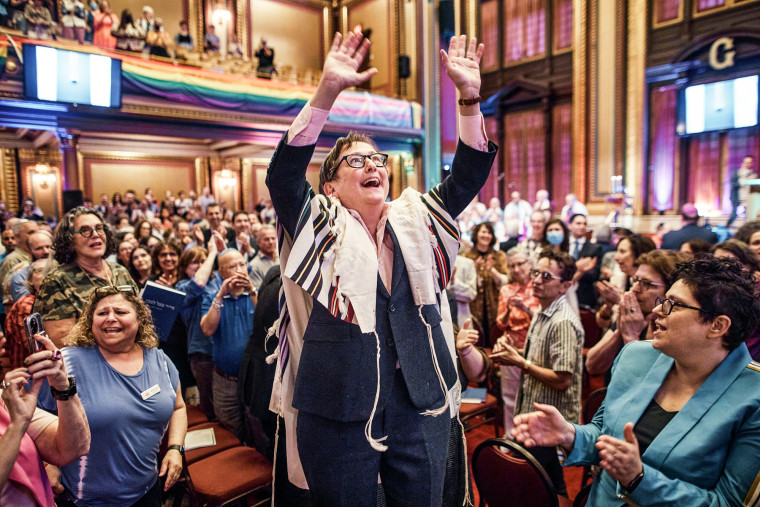
Embraced by her congregation and left-leaning politicians, Kleinbaum, 65, taught an unapologetic progressive vision for Judaism that resonated beyond the enclave of Manhattan and liberal Judaism. When Donald Trump was elected president, Kleinbaum had the synagogue do outreach to Muslims. The congregation also built an immigration clinic to help LGBTQ refugees in hostile parts of the world get asylum in the U.S.
“It is a religious calling to help the immigrant. I see that it is just as deeply important for (the synagogue) as it is leading Friday night services,” Kleinbaum said.
Congregation Bet Simach Torah, better known as CBST, has roughly 1,000 paying members. About 4,000 Jews, from nonreligious to Orthodox, show up to the temple’s High Holy Day services, historically held in New York’s Jacob Javits Convention Center on the West Side of Manhattan.
The temple’s regular congregants have been a Who’s Who of media and LGBTQ historical figures. Edie Windsor, who sued and won to overturn the Defense of Marriage Act, was in regular attendance while she was alive. Andy Cohen, of “Real Housewives” fame, is there regularly. Joan Rivers showed up for Yom Kippur. Kleinbaum’s wife is Randi Weingarten, the head of the nation’s biggest teachers union.
Appointed in 1992, Kleinbaum spent much of her first year burying members of her congregation, many of them dying from AIDS. The need for a salaried rabbi to provide pastoral care was among the biggest reasons for CBST to hire its first rabbi. One of her first funeral services was for a member of the search committee that hired her.
The 1990s brought the increased visibility of gay and lesbians in the public sphere, but also brought the passage of the federal Defense of Marriage Act, which defined marriage as between only a man and a woman.
“She really was doing rabbinical triage work at the beginning, working with a community that ultimately saw (a third) of its members die of AIDS,” said William Hibsher, a member of CBST for several decades who was there when Kleinbaum was appointed.
Hibsher was not an observant Jew in early 1990s, but he said he felt inspired by Kleinbaum’s work as well as the care she provided to his partner, who died from AIDS in the mid-1990s. He later became heavily involved with the synagogue, including serving on its board of directors and helping raise millions for its current location on West 30th Street.
When New York legalized same-sex marriage in 2013, Kleinbaum stood in the park across the street from the marriage bureau and performed same-sex weddings outdoors. Among the couples she married in 2014 were two men who had spent 20 months planning their wedding, which was held in a former Broadway theater.
Kleinbaum hasn’t specified what she plans to do in retirement, but said she’s likely to continue doing social justice work or working in Democratic politics. CBST has given her the title of “senior rabbi emerita” to show a level of connectedness as she steps down, but the bimah at CBST will no longer be hers.
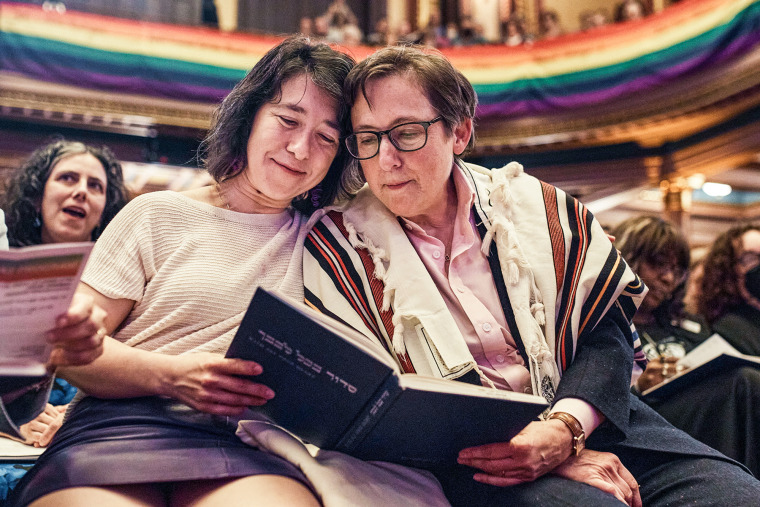
Even people who would be considered her ideological adversaries have found common ground to collaborate with her on issues of religious freedom and human rights.
When President Joe Biden appointed Kleinbaum to the U.S. Commission on International Religious Freedom, which monitors and researches freedom of religious expression worldwide, she served as a commissioner along alongside Tony Perkins, head of the Family Research Council. The council opposes the LGBTQ-rights movement.
“She’s able to step back and see where (two with strong ideological differences) can meet on core issues, and realize here’s where we can find common ground,” said Fred Davie, an administrator at Union Theological Seminary and a longtime friend of Kleinbaum.
Kleinbaum served two terms on the USCIRF. Her first term ended early in 2020 when she decided to focus attention on her congregation amid the COVID-19 pandemic. For her and the congregation, it was familiar territory after the AIDS crisis.
“We knew immediately many of the elements that we had to deal with: isolation, loneliness, fear,” Kleinbaum said. “There were differences, of course, between AIDS, but many things were enough similar that it almost felt like muscle memory.”
For the congregation, there seems to be a degree of uncertainty of what the synagogue will be without her. CBST, like many congregations, skews toward older members; many have been with Kleinbaum since the beginning.
The synagogue named Jason Klein as new chief rabbi earlier this year; he will start on July 1. But the consensus among members seems to be that Kleinbaum is simply irreplaceable.
“I think people, in their heart of hearts, wanted to find a Kleinbaum 2.0 to replace her,” Hibsher said. “There’s a landscape of wonderful progressive synagogues throughout Manhattan. So part of the question for the congregation will be: Is there a need for an LGBT synagogue in the year 2024? I think there is.”
While Kleinbaum laid out her plans to leave CBST a year ago, there were audible gasps at Yom Kippur services last September among the attendees when it was mentioned that CBST would no longer be headed by her. Her second-to-last Shabbat service, held June 21, was a sold-out event. The keynote speaker: New York Attorney General Letitia James.
“Most importantly, she has given us a space,” James said, using her hands to point to the synagogue and its standing room only crowed. “This space. Where we can be safe. Where we can be free.”
| The Night Belongs To You at the Twilight T-Dance, the signature event of Gay Wine Weekend! COMING UP IN 2 WEEKS Reserve your tickets now for the gay event of the season – the Twilight T-Dance at the prestigious La Crema Winery estate. Join us for a night of celebration under the Sonoma sky, dancing to the sounds of DJ Blackwell. Don’t miss this unique opportunity to dance, connect, and celebrate community in a setting that promises unforgettable memories and lasting friendships. Act swiftly to bask in the enchantment of Sonoma Wine Country – reserve your place today and prepare to create cherished memories that will endure for a lifetime! |
  |   |
| GAY WINE WEEKEND COMMENCES IN 2 WEEKS!FRIDAY, JULY 19 |
| THE VIP OPENING RECEPTION Friday, July 19th. 3:00pm-6:00pmVintner’s Resort, Host Hotel Event CenterSponsored by the Russian River Valley WineGrowers Association THIS EVENT IS FOR BOTH MAGNUM & VIP PASS HOLDERS AND VINTNER RESORT HOTEL GUESTS and SPONSORS |
| OVER 15 REGIONAL WINERIES WILL BE POURING THEIR BEST FOR YOU AS YOU ARRIVE IN TOWN. UNWIND AND RELAX WHILE MEETING OTHER GAY WINE WEEKEND GUESTS AT THIS VIP OPENING RECEPTION. FOR PASS HOLDERS YOU CAN PICK UP YOUR PASSES AT THE RECEPTION. AFTER THAT YOUR PASSES WILL BE AVAILABLE AT THE FRONT DESK OF THE HOTEL. MEET YOU THERE! |
| WINEMAKER DINNERS OF GAY WINE WEEKEND FRIDAY, JULY 19TH |
| There are a limited number of seats available at some of ourFriday evening Winemaker Dinners. Grab them while you can and experience an evening of food & wine in some of the most beautiful Sonoma County Wine Country settings. |
| EVERYONE SHOULD SPARKLE!POP-UP GAY BAR AFTER PARTY FRIDAY EVENING OPEN TO ALL |
| STAY AT OUR HOST HOTEL AND BE WHERE ALL THE ACTION TAKES PLACE FROM THE VIP OPENING RECEPTION TO THE SUNDAY DRAG QUEEN BRUNCH & WINE AUCTION. ALL SHUTTLES DEPART FROM THE HOST HOTEL THROUGHOUT THE WEEKEND! CALL DIRECTLY AND MENTION GAY WINE WEEKEND 707-575-7350 |
Approximately 665,000 LGBTQ adults live in Los Angeles County. They make up nearly 9% of the county’s adult population, and they live, work, shop, and seek services throughout the county. This report presents information about their experiences with discrimination and harassment in the areas of education, employment, housing, health care, public spaces, and law enforcement, as well as findings about their health and economic well-being. The report uses representative data collected from 1,006 LGBTQ Los Angelenos who completed the Los Angeles County Department of Public Health’s 2023 Los Angeles County Health Survey (LACHS), including 504 LGBTQ Angelenos who also completed the Lived Experiences in Los Angeles County (LELAC) Survey, which was a call-back study to LACHS developed by the Williams Institute. Survey adults were diverse in terms of sexual orientation, gender identity, race, age, income, and other personal characteristics, reflecting the diversity of Los Angeles County’s LGBTQ population. This report is being published with three other reports to provide a fuller view of LGBTQ adults in Los Angeles County:
Several main themes emerge from the analyses presented in this report:
Key Findings
Demographics
Social Climate and Overview
Family, Friends, and Social Support
Family Formation
LGBTQ Communities and Local Neighborhoods
Religious and Spiritual Communities
Employment
Public Accommodations, Public Spaces, and Safety
Interactions With Law Enforcement
Income and Food Insecurity
Housing Insecurity
Health
Gene Dinah misses his late husband, Robert Malsberry, every day. He misses Malsberry’s cooking, his love for gardening, the way he fixed things around the house and the way he made him feel special and protected.
“He was just great,” Dinah said of Malsberry, who died in 2019. “I couldn’t have had a better partner.”
The memories of the 46 years the men had together are all around him.Malsberry is in the paintings he bought to decorate their home in Fort Lauderdale, Florida. He is in the medals he received for his service with the Air Force. He is in the photos from a lifetime together.
“Oh, this is one of my favorite pictures,” Dinah said as he held a photo of himself and his husband standing in front of lush green shrubs at their home. “That’s our rock garden.”
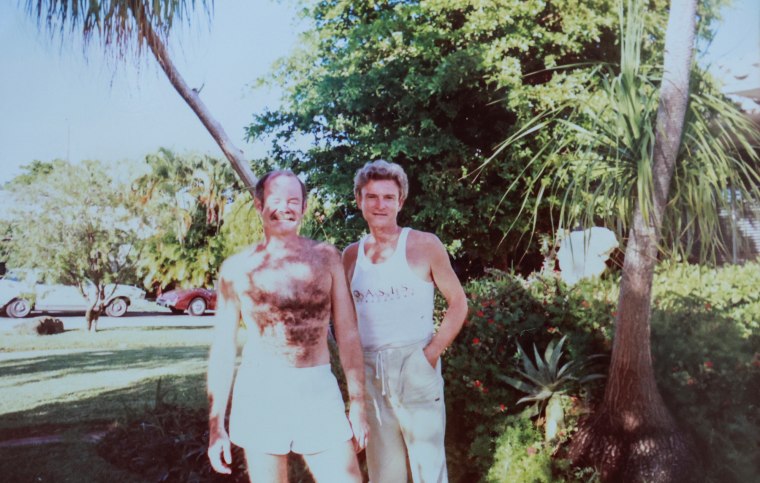
Picking up another photo, he said, “That’s my husband in our dining room in our house in Victoria Park with Cleo, our Persian cat.”

“Oh, this is a good picture,” he continued. “This is my husband when he was an Air Force lieutenant after graduating college.”

They had no children, so when Malsberry was diagnosed with leukemia and later dementia, Dinah became his full-time caregiver. “I took care of him as best I could,” he said.
Malsberry died in 2019, four years after the couple got married in 2015, following that year’s landmark same-sex marriage ruling by the Supreme Court.
“My husband was very happy when we got married,” Dinah said. “I didn’t know how he was going to take it. I really didn’t, because he’d been in the closet, you know, for all those years.”
Dinah was destroyed after Malsberry died. “My whole life was him,” he said.
While taking care of his sick husband, Dinah did not think about his own elder years. Now, at 76, he is one of many LGBTQ elders who have no surviving relatives who can take care of them.
LGBTQ older adults are four times less likely to be parents than older heterosexual adults, and twice as likely to grow old single and living alone, according to SAGE, a national group that offers services and advocacy for LGBTQ adults 50 and older.
The challenges LGBTQ elders face overlap with an aging U.S. population. According to the U.S. Census, the population aged 65 or over grew to an unprecedented 55.8 million, or 16.8% of the total population, in 2020. The number of people in the U.S. that are 65 or older is projected to increase by 47% by 2050.
An older population exacerbates workforce shortages in senior living facilitiesand health care institutions, and while this affects many older Americans, LGBTQ elders face unique challenges when compared to their heterosexual counterparts.
In a report published in 2018, SAGE found LGBTQ elders are far more likely than their heterosexual peers “to have faced discrimination, social stigma and the effects of prejudice.” They are therefore, the report found, more likely “to face poverty and homelessness, and to have poor physical and mental health.”
Since LGBTQ people are less likely to have children, more than half (54%) of LGBTQ elders receive care from their partner and nearly a quarter (24%) receive care from a friend, according to SAGE. More than 20% of older LGBTQ adults have provided care to friends, compared to just 6% of their heterosexual counterparts.
Mitchell Zahn, a coordinator for SAGE in South Florida, said that in heterosexual family units, caregiving tends to have a vertical model, in which the child takes care of their parents.
“But in the gay community, since so many do not have a family, caregiving tends to be with friends, a more horizontal model,” Zahn said. “However, when you age, your friends tend to be older as well and have their own health needs, so our health support is failing as well because we don’t have that intergenerational aspect.”

Dinah is a vivid example of the horizontal model of caregiving. For the four years during which Dinah was his husband’s sole caregiver, he arranged all of his medical appointments, found him the doctors he needed, took care of him through medical procedures, cooked for him, took care of the house and got him all the medical supplies he needed. After his husband died, Dinah had no one to help him with his own health care.
“I didn’t see a doctor or a dentist for four years while I was his caretaker,” he said. “When it was all over, I started going to the doctor, and I found out I had prostate cancer.”
Dinah went through six weeks of radiation treatments by himself.
Discrimination in health care and the fear of such discrimination are major factors that lead to health disparities for LGBTQ elders, according to research. In its 2018 report, for example, SAGE found approximately 20% of LGBTQ people avoid medical care out of fear of discrimination.
Zahn, the SAGE coordinator, said that because many LGBTQ elders grew up in a time when discrimination was more widespread and intense, they tend to fear government and health care institutions.
“People have experienced housing evictions, not having their partners recognized in health care institutions,” Zahn said. “So as a result, many are closeted when seeking services through traditional institutions.”
Zahn said LGBTQ elders may feel judged for who they are, so they may not share everything about their medical history with their doctors, which could lead to misdiagnosis and overall poor health outcomes.
The challenges of aging are even greater for transgender elders and even more for trans immigrants and trans people of color.
More than 20% of transgender people report that a doctor or other health care provider used harsh or abusive language while treating them, according to SAGE, while 50% of trans people reported having to teach medical providers about transgender care.
Morgan Mayfaire, 65, is the executive director of TransSOCIAL, an organization that aims to create a more inclusive community for transgender people. As a trans man, he said, he has experienced prejudice when visiting medical providers.
“When they look at your records, they’re going to see in your list of medications that you’re either taking estradiol or you’re taking testosterone,” Mayfaire said. “The question then is, ‘Why?’ The minute you tell them that it’s because you’re trans, you can see the bias in their face.”
Mayfaire helps train a variety of institutions, including those focused on health care, about best practices when caring for older trans people. He said very few medical professionals have gone through sensitivity training, and those that have, typically don’t train their new hires.
Florida is one of the states that has recently passed legislation seeking to restrict transgender rights, including a law signed by Gov. Ron DeSantis that made it harder for transgenders adults to access gender-affirming care. That law is now on hold after a federal district court ruled it unconstitutional, but Mayfaire said the effects are palpable.
“A lot of the providers that we had before have either left the state and moved somewhere else, or are reluctant to reopen those services,” Mayfaire said.
Andrea Montanez, a trans field organizer in Orlando with the National LGBTQ Task Force, said, “It’s scary to be an elder as a transgender person, to be honest.”
Montanez, 58, said a doctor who had given her great treatment for years suddenly turned curt, cold and distant after she transitioned.
She also suspects her apartment lease was not renewed because she told her landlord she had transitioned.
Mayfaire said housing is another big obstacle for LGBTQ elders.
Half the LGBTQ population live in states with no laws prohibiting housing discrimination against them, and 48% of LGBTQ couples experience adverse treatment when seeking senior housing, according to SAGE.
“There are very few retirement communities for LGBTQ folks to begin with,” Mayfaire said. He added that even at retirement communities that are accepting of gays and lesbians, “it’s very rare” that they accept trans people.
He said he has heard of LGBTQ elders who end up having to go back into the closet in order to be accepted in some retirement communities.
“It’s a little bit more difficult when you’re trans and you’ve transitioned,” Mayfaire said. “How do you backtrack on that and how do you deal with that emotionally and mentally?”
Nearly 60% of LGBTQ older adults report feeling a lack of companionship and over 50% reported feeling isolated from others, according to SAGE.
That isolation can really impact the mental health of LGBTQ elders, many of whom faced the brunt of discrimination and were the pioneers of the movement for LGBTQ rights.
To combat that loneliness, SAGE matches elders with “friendly visitors”: volunteers who donate their time to accompany an LGBTQ elder.
Volunteers sometimes share a meal with an elder, tell stories, watch movies, play board games or just simply talk. Some volunteers check in with their elders with a simple text message or a call.
“I’ve seen some real magic happen between volunteers and participants, some incredible relationships that have formed,” Zahn said.
Craig Rosenblatt is one of SAGE’s volunteers. Sitting next to Dinah on a recent Friday afternoon, Rosenblatt said he volunteers in part to pay homage to and learn from his LGBTQ elders.
“You’ve had experiences that I have not had with bigotry. Where there were a lot of things that I was able to do that you were not able to do, and there’s a lot of things that I was not able to do that people can do today,” Rosenblatt told Dinah.
After his husband died, Dinah said, he was so consumed by grief that he couldn’t manage to put up his Christmas tree for several holiday seasons.
“I just didn’t feel like doing anything for the holidays,” he said. “Grief is a funny thing. It saps your energy.”
Last Christmas, however, that changed, thanks to another SAGE volunteer.
“He got our Christmas tree out, got it working and plugged it in and everything, and that meant everything to me,” Dinah recalled. “The passage of time is a good thing. I know I feel much better now than I did in the beginning.”