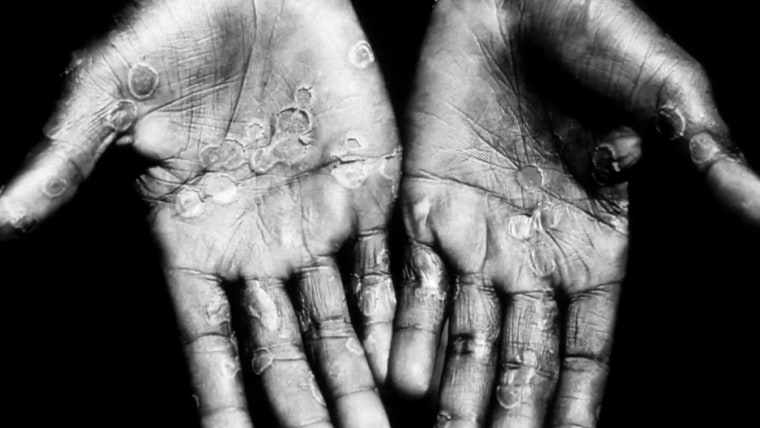
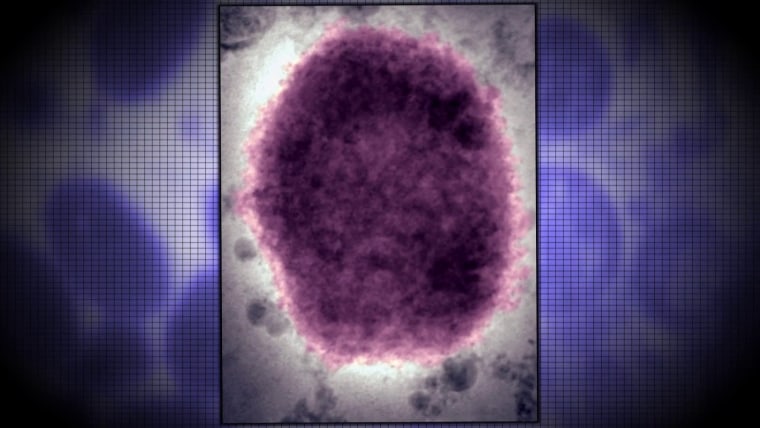
Leading LGBTQ+ charities including GLAAD, and pharma company Gilead have teamed up to support responses to the monkeypox outbreak.
The coalition, which also includes the Human Rights Campaign, the National Black Justice Coalition, the National Center for Lesbian Rights, and the National Minority AIDS Council, was announced on 9 August.
Gilead, which makes PrEP pills Truvada and Descovy, has pledged up to $5 million in global grant funding to support a public education and vaccine hesitancy campaign, a public policy response and a global outbreak emergency fund.
The fund will issue grants of up to $50,000 to pre-existing Giliead grantee organisations that work in regions that have the highest active monkeypox outbreaks.
“Funds may be used to cover expenses such as community mobilisation activities specifically addressing MPV outbreak in communities disproportionately impacted by HIV, operating costs related to HIV testing and service interruptions and essential safety materials,” said GLAAD.
Charities such as GLAAD and HRC will focus on providing critical information about monkeypox to demographics and regions that are being significantly affected by the outbreaks, predominantly gay and bisexual man, and those living with HIV.
“As we saw with HIV, COVID-19, and now [monkeypox], disinformation continues to challenge the LGBTQ+ community,” GLAAD president and CEO Sarah Kate Ellis said.
“This new collaboration will enable creating and distributing content and resources to help our community know the facts and to understand prevention and treatment.
“When communities receive accurate, timely information, they are empowered to take appropriate action, leading to long-lasting, positive health outcomes.”
Giliead executive vice president of corporate affairs and general counsel Deborah Telman said the collaboration would ensure that the “immediate needs of impacted communities” were met, while steering groups away from disinformation which can lead to further spread of the disease.
In an interview with Reuters, spokesperson Rich Ferraro said that “with this partnership, we’ll be able to do more.”
There are currently a total of 31,800 confirmed monkeypox cases around the globe, according to regularly updated statistics from the Centers for Disease Control and Provention (CDC), with 31,425 of those coming from countries that have not historically reported monkeypox.
Because the disease has been found to disproportionately affect gay and bisexual men, there is a fear the outbreak could lead to homophobic stigma.
In America, far-right Republican Marjorie Taylor Greene has become notorious for spreading misinformation on the subject, saying that the disease is a “scam”.
“It’s not a threat to most of the population, and so it’s not a global pandemic, it’s really not, and people just have to laugh at it, mock it, and reject it. It’s another scam,” she said.
The CDC has said that research is still determining whether monkeypox can spread through “semen, vaginal fluids, urine, or faeces” and has only currently determined that it can spread through skin-to-skin contact, which can happen during “intimate contact.”
Mariah Hanson has always loved throwing parties to create a feel-good environment that was easy for people to meet new friends, celebrate their lives and go home with a few extra awesome memories. Under the Club Skirts Marquis, Mariah created the world famous Dinah Shore Weekend in 1991 with just that intention in mind – to create an exciting, community building, life affirming, unimaginably stellar experience for her customers.
She choose the world-renowned Palm Springs Modern Art Museum to host her first Dinah. Mariah knew an event inside this spectacular museum, surrounded by priceless artwork, was just the kind of statement she was trying to make – that our community is worth the very best and she was going to offer it. Mariah’s first Dinah was sold out, packing every room of the museum, where partygoers drank martini’s while surrounded by tens of millions of dollars worth of art.
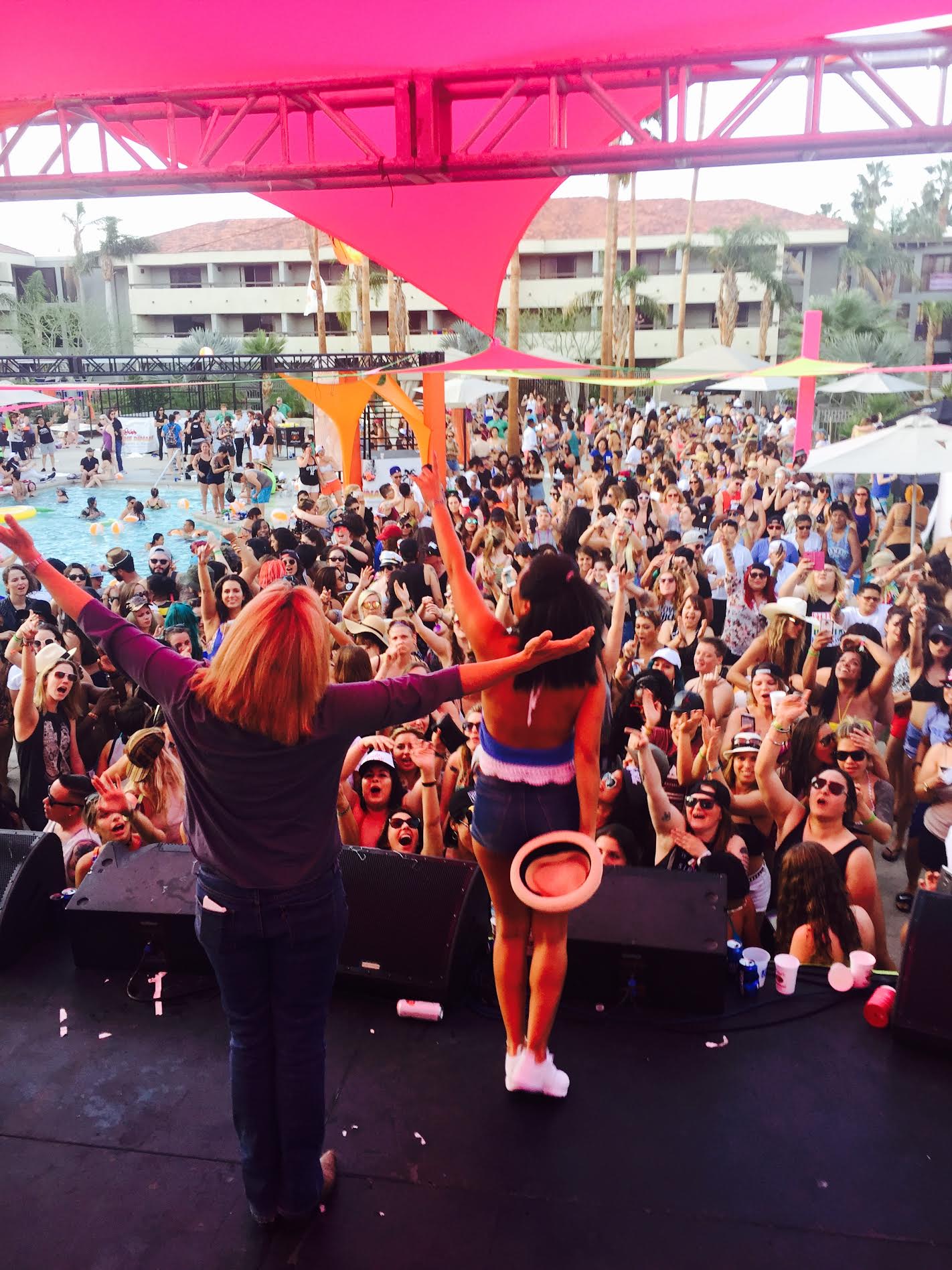
Mariah wanted Dinah goers to feel safe, and inclusive, so she booked entire hotels so that they were 100% The Dinah occupied, brought in national sponsors, popular national recording artists, and kept all events in walking distance to create our very own world within a world. These simple but daring concepts, creating an empowering lesbian world within the city, catapulted the Dinah to international fame. Today, The Dinah is considered the largest lesbian/queer women event in the world.
The Dinah 2022 happens September 21 – 25 with the new Margaritaville Palm Springs serving as host hotel and the location of most of the parties. The overflow Hotel, The Doubletree, is booking now. Go to: www.thedinah.com to see the full schedule and purchase ticket.
Gary Carnivele: What is the history of The Dinah (formerly The Dinah Shore Weekend), which you started in 1991 and how it’s evolved over the years?
Mariah Hanson: I think it’s evolved a lot. I started it when I was thirty-ish and I really had no idea what I was getting into and I thought I’m going to try this. I booked the Palm Springs Museum, which was the state-o- the-art modern art museum. I figured out if you were a corporate member of the museum, you could, for $2500, host a cocktail reception in the art museum. Afterwards the board changed the guidelines to make sure that I could never host another event there. I’m 31 years older and I had the coolest job in the world. I got to drink for free. Now, that I’m older I realized that I need to do something substantial with it. At this stage, The Dinah really reflects my own personal journey which and reflects mine. My desire and commitment to create not only an open platform for LGBTQI+ but an inspiring place that tells stories. One that really speaks to women empowerment in every aspect. Attendees are noticing that the artist I booked prove there are no glass ceiling other than the ones we imagine. At the end of the weekend, people really get the up-lifting vibe that we all have. I feel like people leave the event feeling incredible and I just got an experience all to myself. And that was by design.
GC: What do you have in store for your attendees this year?
MH: it’s a really, special year. The 31st anniversary and so proud of the fact that we have produced a music festival event. People are so ready to get out and enjoy themselves and they belong to this community. We have been denied for 2 years and so I feel like people are really bringing it. There’s also issues that have come to the forefront that we know we won’t necessarily be too we will bet you it’s not but is there and so turn on slot right now that is so in our faces. I think it’s always been there with a certain function of our society and the state but this anti-misogynist, anti-women platform that the far right puts forward where women should be seen and not heard is so mind-boggling to me. It really came to the surface during the Trump administration. He is – in my opinion – very hateful individual and he really helped a lot of the hate come to the surface. He and the GOP stacked the Supreme Court who overturned a woman’s right to reproductive rights. Justice Thomas intimated that he’s going after marriage equality next. What are we do about that? I think when people come together with a kind of commonality we can fight oppression. It’s also a wonderful option to see how powerful we are when we collectively say no more answer
GC: Do you think there will be a political element at The Dinah?
MH: How can you not be political right now as a woman or a member of the queer community. it’s a scary time for all of us but I think it’s especially scary for women, women of color, women od lower social economic status. It’s a really frightening and we must stand up, be strong and say ‘no.’ We’ve done it before and we’re going to do it again. I think that that this time around we have so many more male supporters because we need you! It’s one thing for us to be doing this but we need our male allies more than ever. It’s an awesome opportunity for men to really show up and stand up and I know that they will because those hateful voices that we’re hearing are in the minority and that’s what we should remember.
We all need to stand up, speak up and vote in. The voting blocks that really can swing votes in a national election are all across the Midwestern states. We’re hoping to galvanize younger people, we didn’t the year before. We have been experiencing a certain kind of circumvention of our democracy one where it’s state governments versus the federal government. This is a test about how you can run a country our founding fathers never imagined. Because of technology it’s easier than ever to destroy what is a democratic institution. Trump was very close to becoming a dictator just like all the horrible people he admires so much.
GC: Let’s get back to The Dinah. Tell us about the schedule.
It’s jubilant pool parties and exciting evening events. The Dinah schedule is always very consistent. We start on Wednesday with The Official Dinah Pre- Party to which we’re inviting w the locals who we really appreciate. This year, that happens at Chill Bar, 8 p.m. – 2 a.m. World-class DJ’s, dancing poolside, and cocktails.
It’s the first time we’ve done it in the morning so we’re starting out wild and crazy right from the get-go.
Thursday is our opening party that’s happening at AsiaSF Palm Springs, which is a beautiful location. At midnight there will be a performance by the winner of our ‘Emerging Artist Contest.’
Friday kicks off at Noon with ‘The G(irl) Spot” a pool party, hosted by “The Real L Word’s’ Rose Garcia. DJ’s will provide great music.
Friday night we are at the ballroom at Margaritaville, our host hotel, for ‘The Black and White Ball,’ where Taylor Dayne will perform. Taylor gave me this great deal so that she can bring her band and not just sing to a track. I really appreciate it and Taylor is very supportive of our community. Also, Canada hip-hop artist Haviah Mighty, who is a really a powerful force.
Saturday is our big ‘The L Word Pool Party,’ which includes a ‘Celebrity Meet and Greet.’ ‘Battle of the DJs,’ and a vendor fair. IV4 and Cassidy King will perform. This all happens at Margaritaville Resort 10 a.m. – 5 p.m.
Saturday night we have ‘The Hollywood Party,’ in the Grand Ballroom at the resort. There will be fabulous 11 p.m. performance by Fletcher, an up-and-coming artist who about to bust out into stardom as a recording artist. She’s amazing and I’m so excited we were able to book her.
‘The Sunday Funday Pool Party’ happens at the resort 11 a.m. – 5 p.m. The will be fun games, exciting contests, and daring antics where you can win The Dinah 2023 tickets. Rubber Duck Dive, Best Dyke-ini, Guzzling a Beer Contest are all fun crowd-pleasers.
The Dinah 2022 ends with ‘The Dinah Official Closing Party’ 9 p.m. – 2 a.m. where the nation’s hottest DJs will spin and the winner or our ‘Emerging Artist’ will entertain us with an encore, midnight performance.
GC: Tell us more about the performing artists and how you go about booking them?
Cassidy King is our sleeper hit. I think she’s someone that we’ll all come to know sooner rather than later. She’s so amazing. She’s doing videos that she directs herself that portray our narrative, our stories. She’s all about queer romance, queer friendship, break ups. The videos are interesting because we are normalized in them. Just as we are now in the music industry. Sunday night I love our lineup mostly because for the first time ever it is all queer. And that really speaks to how queer people are willing to be out and front runners now in the music industry. We are breaking so many barriers and changing minds. It’s wonderful because I will tell you it was very hard to book queer acts throughout my career. I would approach big names, that we knew were queer, but they would decline because they didn’t want to be identified with a big, queer event like The Dinah. Her people or her record label would be squeamish. Thankfully, that has changed over these 31 years.
GC: Talk about the host hotel the Margaritaville
MH: Margaritaville, formally the Riviera, has been one of my favorite hotels in Palm Springs, just iconoclastic. Margaritaville changed the decor but has maintained all those beautiful bones. It’s an incredible 5-star hotel with two big, beautiful pools, this fantastic Grand Ballroom, and an inside garden – it’s just very upscale. Now it’s got a more of a Margaritaville theme but it’s still a great hotel with 400 remodeled rooms.
GC: Who attends The Dinah?
MH: Women of all ages really, but it does trend younger. The Dinah is a music festival and so we book performers and our DJs spin music for all ages. It’s also a right of passage and a bucket list item for the queer community. Go to The Dinah at least once in your life. What I love about older women attending is that they get to see how free society has become and how many inroads we’ve made. We can finally get to the point where we could be at 5-star hotel, which is completely booked. The Dinah is considered a legacy event in Palm Springs it’s the cities top 10 events. The whole city welcoming The Dinah’s attendees illustrates who important it is to their community. It’s important that we showcase how much work we’ve done to gain our civil rights because this wasn’t the case 31 years ago. I think queer women love to see how much freedom there is today. Now I can send mailing advertisements in The Dinah envelopes because so many people are out even in small towns across the states. IN the early days some women would chastise me: I can’t believe you didn’t put this in a plain envelope. My mailman now knows that I’m gay. It was heartbreaking. We’ve come a long way baby so h
GC: How many how many women do you expect to attend The Dinah 2022?
MH: I’d say this year we will have 7,000 – 10,000. I think it’s going to be a big year. A lot of local women come but the majority like 95% of the people coming out of all over, many from California but 50% from out of the state. We get a small percentage from out of the country.
GC: I would imagine COVID-19 has really impacted The Dinah.
Last year, I had to cancel it and then I dealt with the nightmare of having to refund as much as I could. My customers were very understanding – kind and patient. I was able to transfer 600 of ticket buyers to this year. The year before, we had zero transmission. I wanted everyone to understand that we need to show the world that we are conscientious and we care about each other. We’re asking people to test themselves before the event breakthrough cases vaccine is no guarantee that you’re Covid-free. We don’t want to be spreading it and we don’t want anyone else to get sick. The tests are 70% accurate and The Dinah needs to follow city, state, and CDC guidelines. We are asking people to please get tested.
GC: Talk about the people that work with you to produce a really amazing event.
There are many amazing women working with me the last couple months. I have about 40 people in Palm Springs that are familiar with the city, its vendors and services. Light and sound is another group of 30 hard-working people. Very mom-and-pop. We love it because we get to do it our way without the bureaucracy of a corporation. There’s a real leaning into what is needed at the time, where is our community is at the time, so we speak every year to what we think needs to be said. I think it’s really important for messaging to lead the way and so we like to do that every year and help inspire people to live bigger and brighter and better lives. And that includes everyone, that includes trans, non-binary, queer, lesbian. I’ve worked with transfolk who really helped me understand that some people are born in the wrong bodies and want to be authentically who they are. I have been very pro-trans in my career. I don’t believe in separatism. I don’t believe in keeping our world so small that people don’t fit in. I think that everybody needs to be invited to the table so when we are producing The Dinah we keep that in mind. You can’t just say: I’m inviting everyone. I want everyone to feel safe at The Dinah. We keep those things in mind because they are important, critical. I’m proud of the fact that we have in that messaging. There are too many people in our community who don’t live in really inclusive parts of our country. We want The Dinah to be the place where we invite you to just come on in let all your isms, all your differences, and all your fears melt away. This is a world where I can live for five days out loud, together being the beautiful people that we are and experience really cool, powerful people. We were together for five days and got to meet people from different backgrounds, from different ways of identifying. We all got along, we enjoyed each other. We found all these commonalities to take that home with us.
GC: Have you ever thought about doing a similar event here in Sonoma County?
MH: Yes, I have. I love what Gary Saperstein is doing with Gay Wine Weekend and I think there’s room for a women’s event. There’s not a lot of convention space here but I think the Renaissance is probably your best bet. We’ve been talking about it recently because this is the first time that I have been here permanently. I bought my grandfather’s house here in Sonoma in 1999 where my mother lived for her final years. I finally came back and feel settled. It’s an opportunity for me to really start thinking seriously about producing a Dinah event here where everyone is invited. Personally think we should always feel comfortable bringing our best guy friends.
GC: How can folks find out more about The Dinah 2022 and purchase tickets
MH: The website in thedinah.com and it is the best way to see the complete schedule and purchase tickets. Although I will say that our social media platforms are also a lot of fun.
GC: Thank you for taking the time to tell us all about The Dinah 2022. Best wishes for a successful event. We’ll wait to hear from you about the exciting event you’ll produce here.
MH: Thank you Gary and we hope to see all your readers at The Dinah.
Anti-LGBTQ+ violence in the UK is rising at a record-breaking rate, alarming police figures have shown.
Reports of homophobic hate crimes more than doubled in five years, shooting from 10,003 in 2016-17 to 26,824 in 2021-22. In the past year the figure soared by 32 per cent – the biggest yearly rise since record-keeping began.
Transphobic hate crimes similarly swelled by 240 per cent, from 1,292 reports in 2016-17 to 4,399 five years later, in what is also believed to be the largest increase ever seen by the authorities.
Across the UK’s 45 territorial police forces, just five reported a decrease in reports of homophobic hate crimes compared to the previous reporting year, VICE World Newsreported.
All others recorded dizzying increases, with Merseyside Police reporting the highest rise from 64 in 2014-15 to 1,618 between 2021 and 2022.
London has emerged as the epicentre of hate crimes based on sexual orientation. The Metropolitan Police Service tallied 3,794 homophobic hate crimes in 2021-22, an increase of 28 per cent from the previous year.
Derbyshire, Humberside, Northamptonshire, South Yorkshire and Suffolk were the only regions that saw hate crimes dip compared to the previous year. But the stats are still higher than five years ago.
England’s capital saw 434 transphobic hate crimes in the past year – once again the highest number recorded by any police force. Manchester followed with 320 hate crimes fuelled by hatred for a person’s gender identity.
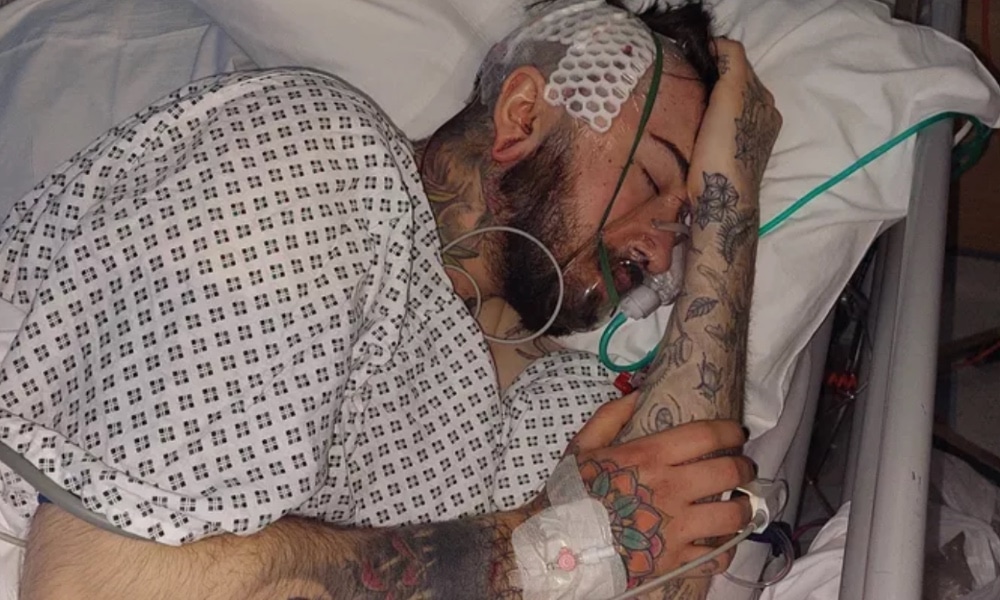
Morgan Fevre was viciously attacked by someone for wearing a sequined jacket. (GoFundMe/Paul Fevre)
“In recent years, we’ve seen a disproportionate rise in official hate crime figures in the UK, but we know we’re still not seeing the full picture,” Leni Morris, the CEO of LGBTQ+ anti-abuse charity Galop, told PinkNews.
Morris added: “This year, in particular, we’ve seen a significant rise in hate crime experienced by the LGBT+ community. The narrative around monkeypox and continuing transphobia in the media contribute to a hostile environment for LGBT+ people.
“These things also make our community more visible in the eyes of the public – and when we are more visible, this often leads to a rise in attacks.”
Yet as alarming as the police figures are, Morris said they actually understate the problem. Galop’s 2021 Hate Crime report showed that only one in eight queer victims of hate crime reported what had happened to them.
Only 14 per cent of anti-LGBTQ+ hate crimes are resolved by the police, the investigative journalism unit Liberty Investigates found.
The police need to do more to protect LGBTQ+ Brits, said Nancy Kelley, the CEO of Stonewall. “As a society, we all need to do more to combat anti-LGBTQ+ violence and call out abuse, harassment and anti-LGBTQ+ sentiment wherever we see it, but we also need a greater commitment from the police to take decisive action to follow up and prosecute these offences.
“Hate crime has real and lasting impacts on victims and survivors, and it is important to remember that each of these reports represents a real person,” Morris added.
“There’s still significant work to be done to improve the response to anti-LGBT+ abuse and ensure that LGBT+ victims are given the same level of support as everyone else.”
LGBTQI+ individuals are more likely than their counterparts to exhibit suicidal behavior. According to data reported by the Centers for Disease Control and Prevention, in 2019, nearly half of students identifying as gay, lesbian or bisexual reported seriously considered suicide. These students experienced a near fourfold increase in suicide attempts compared with heterosexual students. LGBTQI+ adults are also at greater risk of suicide. According to the Substance Use and Mental Health Services Administration’s (SAMHSA) 2020 National Survey on Drug Use and Health, 15.9 percent of LGB respondents ages 26 to 49 reported serious suicidal thoughts within the past year, and 2.1 percent reported a suicide attempt.
The experiences of stigmatization, rejection, trauma, victimization, microaggressions, homophobia and transphobia all contribute to this elevated risk. Conversely, support and connection between LGBTQI+ youth and their family or caregiver, peers, school and community, can promote better mental health, fewer negative outcomes and stronger resilience. The federal government, along with public and private sector partners, plays an important role toward building this affirming support and connection.
On July 16, SAMHSA led the nationwide transition to 988 as the easy-to-remember number to reach the 988 Suicide & Crisis Lifeline — an important step forward to strengthen and transform crisis care in our country.
Historically there have been notable gaps in accessing needed care for suicidal, mental health and substance use concerns with marginalized groups often facing additional barriers and inequitable outcomes.
SAMHSA is committed to enhancing access to crisis services for LGBTQI+ youth, including through the 988 Suicide and Crisis Lifeline, and has outlined a number of critical activities. These include enhanced training, service linkage to specialized care and creation and testing of direct chat portals and interactive voice response menu options.
In addition, research shows the training and expertise of the counselors who respond to crisis contacts matters. A recent survey of 12- to 25-year-old callers conducted by the Trevor Project revealed that nearly half indicated they called specifically because of LGBT-affirming counselors.
Recent federal appropriations direct $7.2 million to provide specialized services for LGBTQ youth within the 988 Lifeline. SAMHSA has been working closely with its partners to do so. Given both youth preferences for digital tools like text and chat and the particular needs of LGBTQI+ youth, such enhancements in access are critically important strategies to promote engagement.
The implementation of 988 and expanding access to affirming support for struggling LGBTQI+ youth is a critical first step in saving lives, decreasing stigma and linking those in need to compassionate and effective care. If you or someone you know may be struggling with suicidal thoughts, call or text 988 or chat at 988lifeline.org
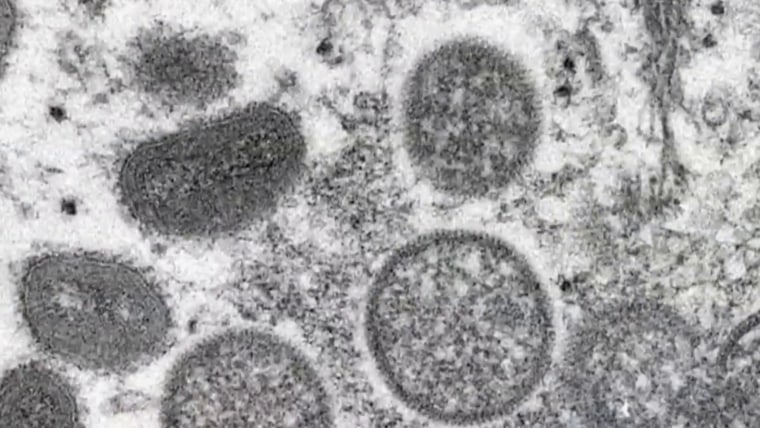
For most of the six decades that monkeypox has been known to affect people, it was not known as a disease that spreads through sex. Now that has changed.
The current outbreak is by far the biggest involving the virus, and it’s been designated a global emergency. So far, officials say, all evidence indicates that the disease has spread mainly through networks of men who have sex with men.
“It clearly is spreading as an STI (sexually transmitted infection) at this point,” said Dr. Tom Inglesby, director of the Johns Hopkins Center for Health Security.
To protect the people at highest risk while trying to contain the spread, public health agencies are focusing their attention on those men — and attacking the virus based on how it’s behaving now.
On Wednesday, the head of the World Health Organization advised men at risk for monkeypox to consider reducing their sexual partners “for the moment.”
But this is a complicated outbreak that may shift in how it spreads and which population groups are most affected. There is also debate about whether monkeypox should be called a sexually transmitted disease, with some critics complaining that the term creates a stigma and could be used to vilify gay and bisexual men.
Monkeypox can spread in nonsexual ways too, and it’s not enough to use condoms or other typical measures for stopping STDs, Inglesby and other experts say.
Here’s what we know.
What makes something an STD?
A sexually transmitted disease is commonly defined as one that mainly spreads through sexual contact. But some STDs can be spread in other ways, too. HIV can spread through shared needles. Syphilis can spread through kissing. A common, parasite-caused sexual infection called trichomoniasis has been found to spread through the sharing of damp, moist objects like sponges or towels.
Monkeypox has not usually spread easily among people, and experts are still trying to understand exactly how it moves from person to person. In Africa, where small outbreaks have been common for years, people have been infected through bites from rodents or small animals.
But in May, cases began emerging in Europe, the United States and elsewhere that showed a clear pattern of infection through intimate contact with an infected person, like many other sexually transmitted diseases.
The public health workers who respond to outbreaks play a large role how they are framed. Much of the work on monkeypox has been done by professionals who operate sexual health clinics or specialize in STDs.
Indeed, the U.S. government’s response needs to be led by people with that expertise, said David C. Harvey, executive director of the National Coalition of STD Directors.
“The STD field has a wealth of knowledge and expertise in these areas developed over decades fighting various outbreaks and diseases affecting the very communities … we’re seeing monkeypox taking a toll on today,” Harvey said in a statement.
Who is getting monkeypox?
WHO officials said last week that 99% of all the monkeypox cases beyond Africa were in men and that of those, 98% involved men who have sex with men. Experts suspect that monkeypox outbreaks in Europe and North America were ignited by sex at two raves in Belgium and Spain.
The statistics are the same for cases reported in the United States, according to the Centers for Disease Control and Prevention. As in Europe, cases have emerged in other groups too, including at least 13 people who were female at birth and at least two children.
Last week, the New England Journal of Medicine published a study of hundreds of monkeypox infections in 16 countries. It found that the suspected means of transmission in 95% of the cases was sexual close contact, as reported by doctors. The researchers noted that it was impossible to confirm sexual transmission.
That idea seemed to be further supported by the finding that most of the men had lesions in the genital or anal areas or in the mouth — areas of sexual contact, the researchers said.
Why is there a debate about calling it an STD?
While there is broad agreement among health officials that monkeypox is being transmitted during sexual encounters, some experts debate whether it should be called an STD. They worry that the term unfairly stigmatizes and that it could undermine efforts to identify infections and tame the outbreak.
When a disease is defined as a sexually transmitted infection that mainly affects men who have sex with men, many people may begin to think of it as “a gay disease” that poses no risk to them, said Jason Farley, an epidemiologist at the Johns Hopkins School of Nursing.
That’s what happened in the early days of the AIDS epidemic in the 1980s, which contributed to the spread of HIV to other groups. Farley said.
“We learn nothing from our history,” said Farley, who is gay.
The WHO recommendation that at-risk men limit their sexual partners is sensible public health advice, he said. But it also amplifies “the message that this is a gay disease,” he said.
“This is the fine line between having a public health approach that focuses on the epidemiology of now, compared to the likelihood of the continued emergence of new cases in” the general community, he said.
“Monkeypox is not a sexually transmitted infection,” he said. “It is an infection that can be transmitted with sexual contact.”
What is known about transmission?
Some researchers have found evidence of the monkeypox virus in semen. A study in Spain found monkeypox virus DNA in the semen of some infected men, as well as in saliva and other body fluids. But the study didn’t answer whether the virus actually has spread through semen.
Sorting that out could affect the understanding of not only how men spread the infection, but also how long they might be contagious. Evidence of some other viruses — like Ebola and Zika — has been found in the semen of some men months after they were thought to be fully recovered.
Meanwhile, scientists believe the primary route of transmission during the current outbreak has been skin-to-skin contact during sexual encounters with someone who has symptoms. In that respect, it’s similar to herpes, some experts noted.
The virus also may spread through saliva and respiratory droplets during prolonged, face-to-face contact, such as during kissing and cuddling — a kind of spread that can occur outside of sex.
Researchers are exploring how often, and in what situations, that kind of spread might happen, said Christopher Mores, a professor of global health at George Washington University.
“We would do ourselves a disservice to try and exclude anything from the realm of possibility at this point,” he said.
Officials also say people can catch monkeypox from touching items that previously touched an infected person’s rash or body fluids, such as towels or bedsheets. That is thought to explain the infections of the U.S. children.
Why are these details important?
It’s important to understand exactly how monkeypox spreads in order to give people the information they need to protect themselves, health officials say.
That said, health officials believe those who are currently at the highest risk are gay or bisexual men who have sex with multiple partners. That understanding has shaped much of the work to contain the outbreak, including prioritization of the supply of vaccines and treatments.
The government has been shipping a monkeypox vaccine, but the supply is limited. So far it’s only been recommended as a post-exposure treatment or for people who have had multiple sex partners in the past two weeks in a place where monkeypox cases have been reported.
The vaccine is new, and officials are trying to gather data on exactly how well it works.
A school librarian in Louisiana is suing two conservative activists for defamation after they falsely accused her of putting “pornographic” material in local libraries.
“I’ve had enough for everybody,” Amanda Jones, a librarian at a middle school in Denham Springs, Louisiana and president of the Louisiana Association of School Librarians, told NBC News. “Nobody stands up to these people. They just say what they want and there are no repercussions and they ruin people’s reputations and there’s no consequences.”
Jones’s suit, filed last week, argues that Facebook pages run by Michael Lunsford and Ryan Thames falsely labeled her a pedophile after she spoke against censorship at a July 19 Livingston Parish Library Board of Control meeting. She has also filed criminal complaints with the Livingston Parish Sheriff’s Office against Lunsford and Thames.
During public comment at the July 19 board meeting, Jones voiced her concern that a motion under consideration to evaluate the content of certain sex education books available at the public library would lead to the banning of books containing LGBTQ content.
“‘While book challenges are often done with the best intentions, and in the name of age appropriateness, they often target marginalized communities such as BIPOC and the LBGTQ community,” Jones said at the meeting according to the lawsuit.
“The citizens of our parish consist of taxpayers who are white, Black, brown, gay, straight, Christian, non-Christian, people from all backgrounds and walks of life, and no one portion of the community should dictate what the rest of the citizens have access to. Just because you don’t want to read it or see it, it doesn’t give you the right to deny others or demand its relocation.”
“If we remove or relocate books with LBGTQ or sexual health content, what message is that sending to our community members? Why is your belief system any more important than others’?”
Lunsford, who runs conservative group Citizens for a New Louisiana, attended the meeting and spoke in favor of restricting books with sexual content. In the weeks following the meeting, Citizens for a New Louisiana’s Facebook page posted numerous posts about Jones.
“Why is she fighting so hard to keep sexually erotic and pornographic materials in the kid’s section?” one post, which featured Jones’s picture, read.
Thames’s “Bayou State of Mind” Facebook page also posted a meme depicting Jones and accused her of “advocating teaching anal sex to 11-year-olds.”
Jones said she has not left her house in two weeks due to comments on some posts encouraging violence against her. At the same time, she has raised $20,000 to fund her lawsuit against Lunsford and Thames via a GoFundMe campaign.
“If this takes four or five years, I’m going to fight these people on this,” she said. “Even if I lose, I could say I stood up to them.”
It’s back-to-school time! Did you know that Sonoma County Library has educational resources for everyone, no matter your age? Whether you’re a parent of a school-age child or a student yourself, we’ve got you covered. See below to find out how the library can support you during the school year—and beyond! All you need is your library card.
For Kids
Immerse yourself in science. Dive into environmental issues and discover how things work with our science databases. From hundreds of 3D interactive models to in-depth research on scientific topics, there is a whole world of digital science to explore.
Explore the globe. CultureGramsprovides country reports on daily life and culture, including the background, customs, and lifestyles of the world’s people.
Get your read on. Turn the page with Bookflix, a resource that pairs classic picture books with a related nonfiction eBook, puzzles, and games for preschoolers through third grade.
Check out more kids’ back-to-school resources here.
For Adults
Jumpstart your future. Earn your high school diploma—for free!—with Career Online High School. Featuring a flexible timeframe and an online classroom environment, students can complete coursework according to their own schedules.
Learn at your library. The Sonoma County Library Adult Literacy Program provides one-on-one tutoring for adults who want to improve their English language and reading and writing skills. Call 707-544-2622 for more information.
Prepare for success. Build your resume, take practice tests, and sharpen your skills with LearningExpress Library. Including reading, writing, math, and basic tutorials, this resource equips adult learners with the tools they need to succeed.
Check out more adults’ back-to-school resources here.Get ReadyThank you for being a member of the Sonoma County Library community. Visit us online or in person at one of our branches. Be sure to check out open jobs at Sonoma County Library here. Questions? Please call your local library branch or click here to send us a message. Recursos de regreso a la escuela para todas las edades ¡Es hora de volver a la escuela! ¿Sabía que la Biblioteca del Condado de Sonoma tiene recursos educativos para todos, sin importar su edad? Aunque sea usted un padre de un niño en edad escolar o si usted es un estudiante, lo tenemos cubierto. Echa un vistazo a la siguiente selección de recursos para el año escolar, ¡y más allá! Todo lo que necesita es su tarjeta de la biblioteca.
Para niños
Sumérjase en la ciencia. Sumérgete en temas ambientales y descubre cómo funcionan las cosas con nuestras bases de datos científicas. Desde cientos de modelos interactivos en 3D hasta investigaciones en profundidad sobre temas científicos, hay todo un mundo de ciencia digital que explorar.
Explora el mundo. CultureGramsproporciona informes de países sobre la vida cotidiana y la cultura, incluidos los antecedentes, las costumbres y los estilos de vida de las personas del mundo.
Sigue leyendo. Pase la página con Bookflix, un recurso que combina libros ilustrados clásicos con un libro electrónico de no ficción relacionado, rompecabezas y juegos para niños en edad preescolar hasta tercer grado.
Echa un vistazo a más recursos de regreso a la escuela de los niños aquí.
Para adultos
Impulsa su futuro. Obtenga su diploma de escuela secundaria—GRATIS!—conCareer Online High School.Con un marco flexible y clases en línea, los estudiantes pueden completar los cursos de acuerdo con sus propios horarios.
Aprenda en su biblioteca. El Programa de Alfabetización para Adultos de la Biblioteca del Condado de Sonoma proporciona tutoría individual para adultos que desean mejorar su inglés y sus habilidades de lectura y escritura. Llame al 707-544-2622 para obtener más información.
Prepárese para el éxito. Cree su currículum, realice pruebas de práctica y perfeccione sus habilidades con LearningExpress Library. Incluyendo lectura, escritura, matemáticas y tutoriales básicos, este recurso equipa a los estudiantes adultos con las herramientas que necesitan para tener éxito.
Echa un vistazo más recursos de regreso a la escuela para adultos aquí.PrepáreseGracias por ser miembro de la comunidad de Bibliotecas del Condado de Sonoma. Visítenos en línea o en persona en una de nuestras sucursales. Asegúrese de consultar los trabajos disponible en la Biblioteca del Condado de Sonoma aquí. ¿Preguntas? Por favor llame a su biblioteca local o haga clic para mandar un mensaje.If you would like to manage which emails you receive from us, please click here. Si desea gestionar los correos electrónicos que recibe de nosotros, haga clic aquí.
Roe v. Wade was overturned by the Supreme Court on June 24. Six conservative justices chose to remove a person’s right to an abortion. The decision uprooted much of America and caused women to feel like their bodies were an unsafe place to live in. Regulation of women’s bodies by a conservative cohort of mostly white men is wrong.
Recently, the Biden administration issued an executive order that will reverse the fateful Supreme Court decision so that women may still have access to abortion services. I hope these efforts succeed.
Despite the potential reversal, it needs to be made clear that abortion, and all reproductive rights, are an intersectional issue. Countless Instagram posts, memes, captions, and news articles are talking about how women will suffer. Women will most definitely suffer from a reversal of Roe v. Wade, but transgender men and other nonbinary people will suffer too.
Transgender men are fully capable of having pregnancies. It is imperative that people remember our right to an abortion as well. Many transgender men either forego going on testosterone therapy for a while to have a baby or choose to become pregnant before starting hormone therapy. This is fine and a perfectly normal process to opt into.
Transgender men also deserve legal and affordable access to Plan B pills, just like all women should. Much of our body still works in the same way that a biological female’s would, despite doses of testosterone.
Tangentially, trans men also partake in the medical conversation about contraceptives and other medicines that prevent STI infection. Trans men who choose to have sex with men need affordable access to condoms and birth control.
They also need safe and affordable access to PrEP, which prevents HIV transmission. Recent federal guidance will make PrEP free, or borderline free, which is a step in the right direction. Gender nonconforming patients should also ask doctors about any differences in PrEP’s effects on bodies assigned female at birth versus those assigned male at birth.
All sorts of people — women and others — are threatened by the Supreme Court right now. The conservative cohort of justices sitting in D.C. is simply ruining America’s future.
The treatment for ectopic pregnancies and septic uteruses is an abortion. People have already been dying because they can’t access these safe and legal abortions. The cruelty being inflicted on these bodies is unrivaled.
But it’s time we include all sorts of genders in the conversation on abortion.
Isaac Amend (he/him/his) is a transgender man and young professional in the D.C. area. He was featured on National Geographic’s ‘Gender Revolution’ in 2017 as a student at Yale University. Amend is also on the board of the LGBT Democrats of Virginia. Find him on Instagram @isaacamend.
Janani Ramachandran, 30, says she’s always lived at the intersection of two isolations.
As an openly gay South Asian woman growing up post-9/11, she felt that few people could understand her specific experience — and that representation was nonexistent.
“I think it definitely is difficult for LGBTQ South Asians to feel their full selves in different spaces,” she told NBC Asian America. “I can feel uncomfortable in predominantly LGBTQ spaces, because I see very few people that look like me. In predominantly South Asian spaces, I also sometimes feel uncomfortable in not being reflected.”
Running for Oakland City Council this year, Ramachandran hopes to change that. If she’s successful, she’ll be the city’s first South Asian councilmember and the only LGBTQ woman councilmember in the state.
Her run is reflective of what experts say is a demographic shift in the country’s politics. Since 2018, the number of LGBTQ Asians running for office has more than doubled. This year, that group is bigger than ever.
“We’re navigating a very challenging last couple of years with anti-Asian hate combined with anti-LGBTQ hate,” said Albert Fujii, press secretary of Victory Fund, an organization that supports LGBTQ people in politics. “It really says something about these candidates that they’re willing to be very visible.”
Two years into the Stop Asian Hate movement, Fujii says the changing climate for Asians has caused a dramatic increase in community members getting political.
“I think that for so many folks who are interested in public service, sometimes it takes an event or a rough couple of years to be the catalyst for getting to that moment where enough is enough,” he said.
In 2018, only 20 candidates nationwide identified as both Asian and LGBTQ. In 2020, that number only marginally increased, with 23 Asian LGBTQ names on the ballot. This year, there are 41, according to Victory Fund.
“Obviously, we have a long way to go in terms of addressing that representation gap,” Fujii said. “But we’ve come a long way.”
Sam Park, 36, a Korean American and the first openly gay man ever elected to Georgia’s state Legislature, says being the only Asian person at his Atlanta elementary school was surprisingly good practice.
“I was terrified of running as an openly gay candidate, especially with my experience of growing up as a gay Asian in the South,” said Park, who is a Democrat and was elected in 2016. “As a son of immigrants who came from humble beginnings, politics seemed inaccessible.”
He watched laws pass over the years codifying discrimination in Georgia and demonizing the LGBTQ community. Even in his own home, he said, he battled layers of conservatism.
“One was just being in the South and being in a conservative culture,” he said. “That was reinforced by growing up in a Korean house, which leans more conservative. … And then, I grew up a Southern Baptist. So I heard growing up that if you’re gay you’re an abomination. You go to hell.”
He spent his youth and early 20s reconciling being Korean American and being gay, he said, and as a community leader, both now feed seamlessly into his work. Much of his time in office is spent combating anti-Asian hate, whether that be granular incidents of violence or organized rhetoric from political machines.
“The blatant xenophobia and racism that we’ve seen from Trump and Republicans in trying to scapegoat Asian Americans for the worst public health crisis in this country’s history,” he said. “I think it’s really made us [Asian Americans] understand why political participation is so important.”
Running for reelection, he sees an entirely different landscape for Asian representation than when he first started.
“When it comes to Asian American political power and participation, we’ve seen a marked increase over the past five to six years, but really highlighted during the 2020 election,” he said. “In 2016, I was the only Asian American serving in the state Legislature. Now, I think there’s five or six, and each of them have made history in their own right.”
Having lived in both the U.S. and India, Ramachandran says she can draw parallels.
“Bangalore shows a lot of the same problems that Oakland does when it comes to gentrification, affordable housing, pollution, infrastructure and, of course, corruption,” she said.
She’s grown up watching her mom fear dealing with police, and she’s experienced firsthand the misogyny that comes with trying to succeed as a woman. When she ran for the California state Assembly last year, she recalls many people in her life urging her not to.
But her campaign was more successful than she could have imagined, she said. After making it to the runoff, she ultimately lost to Mia Bonta.
The race ahead feels distinct, she said. There’s a potential for it to culminate in many “firsts” for her, but overall, Ramachandran says it represents a much broader cultural shift in who gets to run for office.
“I remember so clearly everyone telling me not to do it just over a year ago,” she said. “I want to show people that this is changing. Voters are ready for things that are new. And if we’re going to say we support LGBTQ leadership, API, women leadership, our own communities have to step up.”
Leigh Finke has won Tuesday’s Democratic primary election for Minnesota’s state House district 66A. The journalist, advocate, and filmmaker will now advance to November’s general election, where she will face off against Republican nominee Trace Johnson.
A win in November would make Finke the first out transgender state legislator ever elected in Minnesota.
On Tuesday morning, Finke posted a photo of herself and her team on Twitter, along with a simple celebratory message: “We did it. We won.”
Endorsed by the LGBTQ Victory Fund, Finke was named one of the organization’s “Spotlight Candidates.”
“From safeguarding abortion rights to addressing economic inequality to expanding protections for trans people, Leigh has a persuasive and critically important agenda that voters are clearly enthusiastic about,” Victory Fund president and CEO Mayor Annise Parker said in a statement Tuesday. “We are confident Leigh’s win tonight is a clear sign to our community—and LGBTQ kids in particular—that hate will not triumph. Leaders like Leigh prove over and over again that our community is strong, united and ready to lead our nation into a kinder and more accepting future. Backing down has never been in our DNA, especially when our freedoms are on the ballot.”
Last year, Finke spoke at a rally for former Hastings, Minnesota, school board chair Kelsey Waits, who faced harassment after her daughter Kit was outed as transgender.
“Kit’s trans identity was turned against their mother,” Finke said. “This is a despicable, vile act that must be condemned.”
“Take a look around,” she said. “This is what happens when trans kids are attacked. We show up. We show up and that’s not going to stop.”