Nearly three-quarters of LGBT people have experienced mental health issues because of work, a survey has found.
The poll, commissioned by Business in the Community with HR firm Mercer, found 72 percent of LGBT people have experience problems as a result of work.
A quarter of LGBT employees (26 percent) said they had hidden their identity at work in the last year because they were afraid of discrimination, it also found.The survey, conducted by YouGov, was published ahead of World Mental Health Day and shows LGBT people are disproportionately affected by mental health issues.
The results show only 60 percent of LGBT employees feel comfortable being open about their sexual orientation at work, while 32 percent of managers have disguised that they are LGBT due to fear of discrimination.
Twenty-nine percent of bisexual employees said they had hidden their identity.
BAME LGBT employees are more than twice as likely as white employees to have experienced negativity from customers and clients (23 percent compared to 11 percent).
Seven percent have been physically attacked by colleagues or customers in the last year, rising to 15 percent of BAME people, 20 percent of non-binary people and 30 percent of senior leaders.
The research calls for employers to break the culture of silence that surrounds mental health and to invest in basic mental health literacy for all employees.
The research, conducted by the Human Rights Campaign, found that 46 percent of LGBT employees in the US hide their sexuality at their place of employment.
This represented just a four percent drop from HRC’s 2008 Degrees of Equality report, which was created before Barack Obama’s presidency, before same-sex marriage was legalised across the US and before transgender rights became a prominent issue in the civil rights struggle.
More than half of workers (53 percent) said they had heard jokes about lesbian or gay people at least once in a while at work.
A further one in five queer employees reported to HRC that they had been told or had colleagues imply that they should dress in a more feminine or masculine manner.
Nearly one-in-three LGBT+ people said they had felt unhappy or depressed at work.
A new national survey captures the feelings of a strong majority of Americans who believe that businesses should not be allowed to deny services to people based on their sexual orientation (81%) or gender identity (80%). In a comparable question, 75% of Americans believe that when a business opens their door to the public, they should be open to all and serve everyone on the same terms. The results of TheHarris Poll®, conducted in conjunction with Out & Equal Workplace Advocates, may be found in full online at https://theharrispoll.com/americans-insist-that-businesses-should-be-open-to-all-and-the-government-needs-to-do-more-to-protect-lgbtq-rights/To amplify this finding, the survey also reports that nearly 9 out of 10 (89%) Americans say they are very likely or somewhat likely to support or shop at a business that does not discriminate on sexual orientation or gender identity, along with race, ethnicity, national origin, sex, religion or disability. By the same overwhelming margin (89%), Americans also say they are very likely or somewhat likely to work for a business that does not discriminate on all these characteristics.
Erin Uritus, CEO of Out & Equal Workplace Advocates, welcomed the results: “In our extensive experience, Americans are sincerely accepting and welcoming. These ingrained beliefs are mirrored by business leaders who understand that all forms of discrimination are toxic for the marketplace and workplace. Out & Equal has helped shape and accelerate this culture by educating corporations and advocating for the equality of LGBT workplaces for over two decades.”
Uritus added that the post-Masterpiece era today has emboldened corporations to strengthen their commitment to nondiscrimination. This past June, the U.S. Supreme Court narrowly ruled in favor of a Colorado baker who relied on his religious beliefs to refuse to prepare a wedding cake for a same-sex couple. “The tide is rising for acceptance globally and not just here in the U.S. That evidence is best shown by the many multinational brands and executives who join us at this year’s Summit.”
These and other findings were included in the 2018 Out & Equal Workplace Survey, released today. This popular study was conducted online between September 13 and 17, by TheHarris Poll® in conjunction with Out & Equal Workplace Advocates among 2,006 U.S. adults, of whom 184 self-identified as lesbian, gay, bisexual and/or transgender. First launched in 2002, the unique Out & Equal Workplace Survey is a highly trusted barometer of attitudes surrounding LGBTQ issues in the workplace and the longest-running national opinion survey of its kind.
These survey results were formally presented today by John Gerzema, CEO of The Harris Poll. Gerzema is considered a pioneer in the use of data to identify social change and help leaders and organizations anticipate and adapt to new trends and demands. He appeared at a featured panel today at the 2018 Out & Equal Workplace Summit in Seattle, the world’s largest gathering of LGBTQ business leaders and professionals and joined by more than 300 Fortune 500 corporations and guests from over 32 nations.
“Despite America’s polarization during this charged election cycle, the Harris Poll reflects the truth that fundamental fairness matters deeply to most Americans” said John Gerzema of The Harris Poll. “The pace of change towards acceptance of LGBTQ equality continues to set high marks, and underscores why so many business leaders are outspoken champions for the community.”
2018 Out & Equal Workplace Summit
The 2018 Out & Equal Workplace Summit concludes today in Seattle, Washington, successfully attracting a record 6,000 attendees from more than 32 countries. LGBTQ executives, employees and straight allies, along with human resources and diversity professionals, representing a broad cross-section of the nation’s leading companies—a majority from the Fortune 500 — are participating in this year’s Summit, focused on achieving workplace equality and inclusion.
This Harris Poll was conducted online (in partnership with Out & Equal with guidance and support from Witeck Communications) within the United States between September 13 and 17, 2018, among 2,006 adults (ages 18 and over), of whom 184 self-identified as gay, lesbian, bisexual and transgender. Figures for age, sex, race, education, region and income were weighted where necessary to bring them into line with their actual proportions in the population. Propensity score weighting also was used to adjust for respondents’ propensity to be online.
All sample surveys and polls, whether or not they use probability sampling, are subject to multiple sources of error which are most often not possible to quantify or estimate, including sampling error, coverage error, error associated with nonresponse, error associated with question wording and response options, and post-survey weighting and adjustments. Therefore, The Harris Poll avoids the words “margin of error” as they are misleading. All that can be calculated are different possible sampling errors with different probabilities for pure, unweighted, random samples with 100% response rates. These are only theoretical because no published polls come close to this ideal.
Respondents for this survey were selected from among those who have agreed to participate in The Harris Poll surveys. The data have been weighted to reflect the composition of the adult population. Because the sample is based on those who agreed to participate in The Harris Poll, no estimates of theoretical sampling error can be calculated.
These statements conform to the principles of disclosure of the National Council on Public Polls.
About Out & Equal Workplace Advocates
Out & Equal Workplace Advocates is the world’s premiere nonprofit organization dedicated to achieving lesbian, gay, bisexual and transgender workplace equality. Out & Equal collaborates with Fortune 1000 companies and government agencies to provide a safe, welcoming and supportive environment for LGBT employees. For over two decades, since 1996, Out & Equal has worked with executives, human resources professionals and Employee Resource Groups to provide leadership and professional development, education and research.
Out & Equal hosts an annual Workplace Summit, where employees and experts from around the world gather to share strategies and best practices to create workplace equality, inclusive of all sexual orientations, gender identities and expressions. For more information go to www.outandequal.org.
About The Harris Poll®
The Harris Poll is one of the longest running surveys in the U.S. tracking public opinion, motivations and social sentiment since 1963 that is now part of Harris Insights & Analytics, a global consulting and market research firm that delivers social intelligence for transformational times. We work with clients in three primary areas; building twenty-first-century corporate reputation, crafting brand strategy and performance tracking, and earning organic media through public relations research. Our mission is to provide insights and advisory to help leaders make the best decisions possible. For more information, or to see other recent polls, visit us at TheHarrisPoll.com and follow us on Twitter @HarrisPoll.
About Witeck Communications, Inc.
Witeck Communications, Inc. (www.witeck.com) is a leading strategic marketing communications firm, specializing in outreach, advocacy and engagement with LGBTQ communities. In 2003, American Demographics magazine identified Bob Witeck one of 25 experts over the last 25 years who has made significant contributions to demographics, market research, media and trend spotting for his path breaking work on the LGBTQ market.
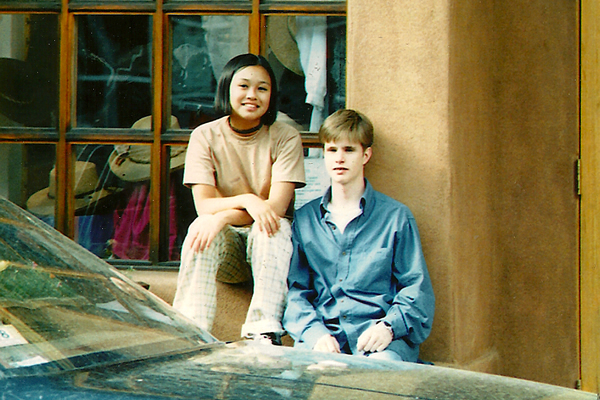
Matthew Shepard, on right. (Photo courtesy Michele Jouse)
Twenty years ago this month, when Matthew Shepard, a 21-year-old University of Wyoming student, went to a bar, he likely wasn’t thinking he’d die that day or that his all-too-brief life and horrific death would put a human face on homophobia and hate.
How could Shepard have foreseen on Oct. 6, 1998 that Aaron McKinney and Russell Henderson would entice him to step into their vehicle and then tie him to a fence outside Laramie, Wyo.?Then beat him mercilessly – striking his head, as the Blade reported, with the barrel of .357 Magnum pistol?That the day after this blood-curdling attack, he’d be found and taken to a Colorado hospital? That this would be too late and he would die five days later on Oct. 12, 1998?
Two decades later, Shepard’s murder is still horrifying and incomprehensible. It shouldn’t be surprising that McKinney invoked the “gay panic” defense – alleging that Shepard, in the vehicle, groped him. (McKinney and Henderson have been sentenced to life in prison without parole. They said originally they intended to rob Shepard; $20 was stolen from Shepard’s wallet.)Today, in the age of marriage equality, the “gay and trans panic” defense is still legal in 47 states, according to the National LGBT Bar Association. Still, our hearts break trying to understand how Henderson and McKinney could have committed such a brutal act.
In “October Mourning: A Song for Matthew Shepard,” Lesléa Newman, a poet and author of “Heather Has Two Mommies,” struggles to comprehend Shepard’s murder. “Deliver a baby/Read War and Peace/Fall in love/Fall out of love/,” Newman writes in the poem What You Can Do in Eighteen Hours, “…Wait to be discovered/lashed to a fence/Shivering under a blanket/of stars.”
On Oct. 26, Shepard’s ashes will be interred at the Washington National Cathedral. The Cathedral is an ideal choice for his final resting place, Matthew’s mother Judy Shepard, said in a statement. “Matt loved the Episcopal Church and felt welcomed by his church in Wyoming,” she said.
In December 1998, shortly after Shepard died, his parents Judy and Dennis Shepard founded the Matthew Shepard Foundation.“For the past 20 years, we have shared Matt’s story with the world,” Judy Shepard said in her statement on the upcoming interment of her son’s ashes at the Washington National Cathedral. “It’s reassuring to know he now will rest in a sacred spot where folks can come to reflect on creating a safer, kinder world.”
This reassurance is needed now more than ever.
If you’re queer, whether you were alive when Shepard died or born after his murder, you’ve likely experienced hate-based violence or lived under its shadow.Years ago in the 1990s, my late partner and I walked to the grocery store after dinner. As we walked, a man from a passing car yelled out “you dykes!”He didn’t physically hurt us, but the verbal violence and threat of physical violence were there.
A few years ago, I waited for a bus at my bus stop. Suddenly, a man came up from behind and roughly twisted my arm, while screaming, “I hate you, fucking dyke!”
I’m acutely aware that I’m cisgender and white (as was my late partner).The rate of violence cisgender white people fear and experience has historically been lower, and received more attention, than the hate-filled violence directed at transgender people and people of color.Charles Blow, the New York Times columnist and author of the memoir “Fire Shut Up in My Bones,” grew up in poverty in rural Louisiana. His older cousin, Blow, who is black and bisexual, told the Blade, was tied to a bed, beaten and murdered because he dared to be openly gay. “This hate crime against a black man, unlike Matthew Shepard’s murder didn’t receive media attention,” he said.
Shortly before Shepard was killed, James Byrd, Jr, a black man, was brutally beaten and murdered by white supremacists. After years of advocacy, the Matthew Shepard and James Byrd, Jr. Hate Crimes Prevention Act was passed in 2009. HCPA added sexual orientation, gender identity and disability to the 1968 federal hate crimes law.
Unfortunately, despite this legislation, hate crimes haveincreased against LGBTQ people, particularly against transgender people and people of color. Hate violence-related homicides of LGBTQ people between 2016 and 2017 increased by 86 percent, according to the Anti-Violence Project.
For Trump, hate has become a weapon to energize his base. We need to work for a “safer, kinder world” ASAP.
Petter Wallenberg is fundraising for Uganda’s first LGBTI space. | Photo: Rainbow Riots/Facebook
10 October 2018
A minister condemned Uganda‘s LGBTI community for planning to build a safe space in the capital Kampala.
This would be East Africa’s first center for lesbian, gay, bisexual and transgender people.
Providing the community with such a space would be a milestone for the African nation.
Gay sex, in fact, is still illegal in Uganda under colonial laws. Therefore, even organizing a Pride march might be dangerous for those involved. In 2016, police officers raided Uganda Pride and held hostage participants.
The minister said: ‘They can’t open a centre of LGBT activity here’
After months of planning and a fundraising campaign, however, authorities have told Rainbow Riots activists their project is illegal.
Simon Lokodo, the country’s minister for ethics and integrity, said opening the community center would be a criminal act. It would violate the law that currently criminalizes homosexuality.
‘They will have to take it somewhere else. They can’t open a centre of LGBT activity here,’ he said.
‘Homosexuality is not allowed and completely unacceptable in Uganda.’
He furthermore added: ‘We don’t and can’t allow it. LGBT activities are already banned and criminalised in this country. So popularising it is only committing a crime.’
‘His condemnation cannot stop us’
Nonetheless, LGBTI activists are continuing their fight and going ahead with their project.
Despite opening the center in Kampala might put their freedom at stake, they are hoping to open the center in 2019.
They have already raised the equivalent of $4,000.
‘I feel saddened by it, but not surprised,’ founding director of Rainbow Riots Petter Wallenberg told GSN.
‘As a gay man who has lived through modern day gay liberation, I have seen homophobia in many shapes and forms before. I have been in dangerous situations in Uganda and other places and it doesn’t deter me from fighting. We tend to forget that these kinds of homophobic attitudes were normal in Europe and the US not long ago. But they changed because we fought back,’ he also said.
Trans activist Alicia Houston also expressed her outrage at the minister’s statement.
‘Our country is facing a lot of serious challenges like corruption and killings, and LGBTI people are doing no harm by only wanting to exist. He should accept that LGBTI people do exist,’ she told GSN.
‘Of course LGBTI people feel so bad because the idea with this centre is to help us develop our talents and skills and give us something to be proud of. His condemnation cannot stop us. This centre is not a criminal act.’
Stacey Abrams emerged from her SUV on a busy Midtown Atlanta street corner on Sunday with a declaration to make to the throngs of voters attending the Atlanta Pride Parade, the annual celebration of LGBT rights in the heart of the city. “We’re here because we stand together, because we know that allies do not run from fights. And because we know we all have pride in Georgia,” she told cheering supporters, adding: “We stand with you and not against you.”
Shortly after, she became the first major-party nominee for governor to march in the parade, a vibrant spectacle that attracted just about every major corporation in Atlanta, dozens of political candidates and tens of thousands of Georgians. Her contingent, led by a group that included U.S. Rep. Hank Johnson and former 6th District hopeful Jon Ossoff, hoisted rainbow-colored flags and stark-blue Abrams signs.
Straight people, apparently (Pexels and ItsAlexJackson/twitter)
A tweet highlighting how straight people sexualise small children has gone viral.
A common accusation aimed at people who try to educate children about LGBT+ issues, or at least let them be their true, potentially queer selves, is that they are ‘sexualising’ kids.
In July, Doug Mainwaring, a writer for LifeSiteNews, wrote on the site that June — which is celebrated as Pride Month around the world — should be called ‘Let’s Sexualise Children Month.’But, of course, in this heteronormative society we live in, it’s actually straight people who are more commonly guilty of pushing their expectations onto children.
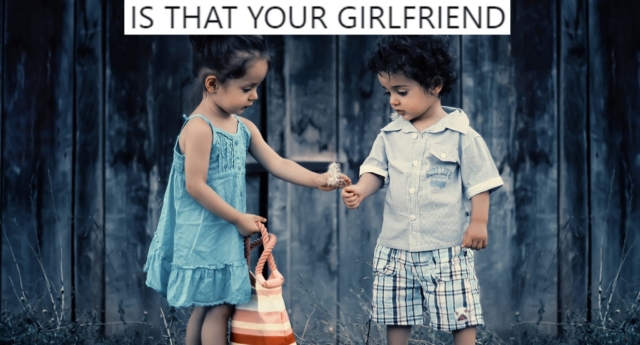
And it was this point which American activist Alex Jackson made in an excellent fashion on Sunday (October 14), writing: “straight people: gay people are forcing their sexuality onto their children.
“Straight people, to a 5 year old boy talking to a girl: IS THAT YOUR GIRLFRIEND.”
“Straight people, to a 5 year old boy talking to a girl: IS THAT YOUR GIRLFRIEND” (ItsAlexJackson/twitter)
This observation clearly struck a chord with lots of people, as it has attracted more than 110,000 retweets and likes in less than 24 hours.
Many of these fans were people who readily shared their own experiences of straight adults pushing their own sexual experience on children, and even babies.
One wrote: “This girl i went to school with on fb posted she was pregnant and her friend goes ‘i hope its a boy so [her kid] can play with him, or if its a girl [kid] can be her boyfriend’ THE THING AINT EVEN FULLY FORMED AND THEY WERE DOING THE BOY/GIRLFRIEND THING LOL.”
“THE THING AIN’T EVEN FULLY FORMED AND THEY WERE DOING THE BOY/GIRLFRIEND THING” (OccultAlien/twitter)
Another tweeter commented that “onesies that say ‘CHICK MAGNET!’ and ‘don’t let my dad know you’re staring at me’ and shiz like that makes me feel so yucky inside.
“Hopefully that trend will die off soon 😅” (ashlynnlee_14/twitter)
“I don’t think parents that say and buy things like that really know what they’re doing is wrong, but hopefully that trend will die off soon 😅.”
And others told stories of when they were personally affected by straight pressure.
“I’m embarrassed to say that this was done to me, speaking to a grown woman, by my dad, who knows I’m gay. I’m 27 yall,” one person tweeted.
“I’m embarrassed to say that this was done to me, speaking to a grown woman, by my dad, who knows I’m gay” (vetos_/twitter)
Another said that their family “kept asking me about having a girlfriend since I was in preschool, so I really thought I had to even though I liked boys instead of girls.”
“I really thought I had to even though I liked boys instead of girls” (Naegi26/twitter)
And yet another commenter wrote that “my coworker says her 9 month old is flirting with me because he loves touching my hands and playing with my fingers as if thats not what all babies do.”
“As if that’s not what all babies do” (ikywtmyg/twitter)
Over the past year, anti-LGBT+ critics have said that drag kids Desmond is Amazing and Lactatia are the result of children being sexualised by queer advocates.
A group of mothers even launched an attack against Aldi because the supermarket chain stocked David Walliams’ The Boy in a Dress, a book they said was part of an “agenda to groom and sexualise” children.
‘I’m extremely scared,’ says Khairul, a young gay man from Brunei.
‘Khairul’ (not his real name) would only speak to GSN under the condition of anonymity out of fear of persecution in his home country.
‘Being gay in Brunei is something which means keeping it to ourselves and trying not to be open about it. There’s an invisible pressure which keeps us hidden,’ he says.
‘It really scares me to think that if they find evidence that proves I’m gay or conspiring against Sharia Law [by virtue of being] LGBT, then I’m scared that they might actually take action, and have the reasons to, I don’t know… Put me through conversion therapy, a trial, jail, a fine, or maybe execution.’
Tucked away on the island of Borneo and surrounded by the East Malaysian state of Sarawak, the tiny country’s majority-Muslim population of around 420,000 live under the absolute monarchy of Sultan Hassanal Bolkiah.
In May 2014, Hassanal announced that Brunei would begin the full implementation of Sharia law, to be introduced in stages over a number of years. The strict Islamic laws carried harsh sentences for a number of actions deemed offensive.
There was, perhaps, no group more affected than the LGBTI community: those found guilty of homosexual sex, the law decreed, would face punishment of death by stoning.
Almost overnight, Brunei was thrust under the global spotlight. The backlash against the anti-LGBTI laws was swift; with the international press leading the charge of shared outrage, celebrities and public figures began voicing their shock and revulsion, promising to boycott businesses with ties to Brunei.
Brunei in proximity to its neighbors in Southeast Asia
But real political action against the oil-rich nation was virtually non-existent. The initial shock soon faded, and the media cycle moved on.
In the four years since, the country’s move towards implementing Sharia law continues. For Brunei’s already marginalized LGBTI community, the possibility of prosecution, and perhaps a gruesome death sentence, is a lingering fear which never goes away.
Forced underground
In the space of a generation, various nations around the globe have seen rapid gains for LGBTI rights. This has largely been achieved through persistent political campaigning, relying on public visibility, and mobilization of the LGBTI community and its allies.
In Brunei, such forms of activism are an abstract concept. The mounting pressure has essentially forced the LGBTI community underground, to the point where it becomes a logical stretch to use ‘community’ as an accurate descriptor. Any attempt at open advocacy in Brunei is met with severe legal and social repercussions.
The pressure to conform can force many people to forcefully reject or suppress homosexual feelings. In some cases this can manifest in extreme forms, with gay men undergoing conversion therapy in attempts to ‘cure’ themselves.
‘I know one person who went through conversion therapy, and [he’s] acting as a straight man now, and married to a wife and has children,’ says Khairul. ‘I’m not sure what kind of therapy — I don’t even want to know, because I’m too scared to know what he went through.’
In Khairul’s experience, attempts at community building or reaching out to other gay men is restricted to the online space.
‘Social media is a good medium. But public social media, like Facebook, Twitter, or Instagram, if we were to say that we’re from Brunei and we’re gay, and we don’t tell our real identity, the Brunei community will actually go immediately on a “riot” and give extreme negative comments to everything,’ Khairul says.
‘I wrote an (anonymous) article about being gay, and reading some of the comments then I felt attacked, like “The ministry of religious affairs should deal with this,” or “You should be converted – it’s not too late,” or “We can save you if you come back to your religious roots”.’
Real connections are also difficult to build. The fearful climate leads closeted men to look to the online space to seek out secretive, non-committal sex over genuine relationships.
‘We were raised in this controlled community, and if we know that we’re gay then we have no rights, to be married, to have children, so we might just opt to have just sex with other men; we don’t care who they are,’ Khairul says.
The challenge of advocacy
‘Brunei [is] certainly the most conservative country in Southeast Asia,’ says Matthew Woolfe, founder and director of The Brunei Project, the only group whose main focus is advocating for LGBTI rights in Brunei.
‘I think that conservatism extends to the LGBT community. In general, the LGBT community in Brunei is much more low-profile than most other countries, and, whereas many of Brunei’s neighbors do have strong LGBT advocacy networks that have been quite vocal and have been campaigning for LGBT rights for some time, then, unfortunately, that just isn’t there in Brunei.’
The Sultan of Brunei, Hassanal Bolkiah, is thought to be one of the richest people in the world | Photo: YouTube/Alux.com
A native of Australia, Woolfe founded The Brunei Project in 2015 after hearing about the country’s adoption of Sharia law.
‘Something just clicked with me when I heard about these laws that were being implemented, and how unfair they are, and certainly how unjust and terrifying some of the laws are,’ says Woolfe.
The current reforms to implement Sharia law are still ongoing. Implementation of the second stage of the three-stage process — which includes the laws which can see the execution by stoning for homosexuality — is expected to begin within the next year.
Although the burden of proof for death by stoning is high – at least four people must testify to having seen the individual commit a homosexual sex act – and the law has not yet been implemented, just the thought of it has pushed the LGBTI community further into hiding.
‘I think people in Brunei, in general, are very afraid to take a risk,’ says Khairul. ‘Everyone wants to see change, they want things in the country to improve, they want their basic rights like to speak out, and so forth, but while they want those rights and they want to change, there are very few people who are actually willing to take the risks necessary to push for that change, and to advocate for that.‘
‘In general, I do feel extremely frustrated about the people who are don’t even want to fight for their rights for being gay, as they feel like it’s impossible,’ Khairul adds.
‘That’s one of the big challenges with LGBT advocacy in Brunei,’ says Woolfe. ‘People are relying on their private networks, and keeping it within those networks for support, but they’re not reaching out to these other organizations where they could potentially draw from their experience to start forming some sort of advocacy movement within Brunei.’
Reaching out to Southeast Asia’s LGBTI community
The Brunei Project has firsthand experience of the challenges in trying to organize for such a cause in the country.
In 2016, the group hosted a low-key get-together for members of the LGBTI community in a hotel in Brunei. Though it went off without incident, when Woolfe later attempted to reenter Brunei he was stopped by immigration officials and told he had been effectively blacklisted and barred from re-entering the country.
‘Initially, I thought: “OK, where do I go from here?”’ says Woolfe. ‘Hopefully one day I’ll have it overturned. It does make it harder doing this work.’
Since then, Woolfe has begun developing ways to conduct his work for The Brunei Project in absentia.
‘A lot of the work that we had done, and continued to do, we based on social media,’ he says. ‘I continue to make new contacts through social media [and] continue to work with these contacts who are based in Brunei, it just means that I can’t visit the country myself.’
The Sultan Omar Ali Saifuddin Mosque in Brunei
The situation has also added urgency to the group’s efforts to forge connections with LGBTI groups in neighboring countries. Recently, The Brunei Project has begun building ties with LGBTI community support group Oogachaaga based in Singapore, offering gay Bruneians a nearby community to reach out to for help and support.
‘We have received a small number of clients connecting with us from Brunei, talking about feeling isolated with no local LGBTQ community resources, finding it difficult to live closeted lives, which in turn impacted their relationships with loved ones,’ Leow Yangfa, Oogachaaga’s executive director, said via email.
‘Not surprisingly, there were also concerns about their mental health and psychological well-being. The Brunei Project recently reported that there has been an increase in the number of suicides. Hence, in addition to offering our online counseling services, we also connected The Brunei Project with suicide prevention hotline and email services in Malaysia (Befrienders) and Singapore (Samaritans of Singapore).’
‘I feel like it’s going backwards’
While spreading the word and building connections with neighboring human rights groups is a necessary step, it is still very much a start. Brunei remains a conservative and closed-off country, where the fear of legal and social persecution has become nigh-on instinctual in the mindsets of many LGBTI Bruneians.
This is also at a time of heightened fear for the country’s LGBTI community. Though the transition into Sharia law has encountered delays, the Bruneian government is expected to see through its full implementation within the next few years.
In this respect, optimism is in short supply when considering the future of LGBTI rights in Brunei.
‘Unfortunately, I don’t see any sort of mobilization coming in the near future,’ says Woolfe. ‘I think that there’s a fear that if they do become more vocal and more active that may actually be to their detriment. From what I’ve gathered, there tends to be a feeling that if they keep a low profile and not get noticed, then they may be able to get through it.’
‘I feel like it’s going backwards and getting to a worse situation,’ says Khairul.
‘In all honesty, I feel like I can’t do much. I feel like I can’t even help my community by protecting them. If someone was out openly and they get attacked I’d feel like I’d need to protect them, but I’m scared that I can’t.’
Philadelphia-based Catholic Archbishop Charles Chaput, who once said sexually active gays cannot take communion, now denies the existence of LGBTI people at all.
Archbishop Chaput claims that church documents should refrain from using the term ‘LGBTQ’ in any official documents. He also blamed the church’s sexual abuse crisis on liberal beliefs about sexuality.
‘There is no such thing as an “LGBTQ Catholic” or a “transgender Catholic” or a “heterosexual Catholic,” as if our sexual appetites defined who we are; as if these designations described discrete communities of differing but equal integrity within the real ecclesial community, the body of Jesus Christ,’ Chaput said in a 4 October speech at the church’s Youth Synod in Rome.
The full text of his speech was published online by the UK-based Catholic Herald.
While many Catholics urged the Church to become more accepting of LGBTI individuals, Chaput disagrees. A working document for the Synod said, ‘Some LGBT youths, through various contributions that were received by the General Secretariat of the Synod, wish to “benefit from greater closeness” and experience greater care by the Church.’
Chaput objected to this language.
‘“LGBTQ” and similar language should not be used in church documents, because using it suggests that these are real, autonomous groups, and the church simply doesn’t categorize people that way,’ he said.
‘Explaining why Catholic teaching about human sexuality is true, and why it’s ennobling and merciful, seems crucial to any discussion of anthropological issues. Yet it’s regrettably missing from this chapter and this document. I hope revisions by the Synod Fathers can address that.’
According to Chaput, young people are being influenced by a ‘culture that is both deeply appealing and essentially atheist’. He blamed this culture for the Church’s sexual abuse scandal that has come to light in recent years.
‘The clergy sexual abuse crisis is precisely a result of the self-indulgence and confusion introduced into the church in my lifetime, even among those tasked with teaching and leading,’ he said.
‘And minors — our young people — have paid the price for it.’
Chaput was chosen by the US Conference of Catholic Bishops to represent the group at the synod. Additionally, he is a member of the synod’s permanent council. This year’s synod opened 4 October and runs through 28 October.
‘[Chaput’s message] is a perfect example of how some church leaders have been so blinded by ideological homophobia and transphobia that they cannot perceive plain human facts accurately,’ wrote Francis DeBernardo of LGBTI Catholic advocacy group New Ways Ministry.
‘His comments reflect the dangerous avoidance mentality that is the cause of the clergy sexual abuse scandal and so many of the ills which plague the Catholic Church today.’
‘There are LGBTQ Catholics and transgender Catholics and heterosexual Catholics, just as there are Italian Catholics, elderly Catholics, disabled Catholics, Latin American Catholics, traditionalist Catholics, poor Catholics, educated Catholics, and so many other distinct groups within our big tent church,’ DeBernardo continued.
‘If Chaput interprets LGBTQ as a sinister designation that must be expunged, the responsibility for such an interpretation is his own fault and a result of his own ignorance to better understand the reality of LGBTQ Catholic people.’
This new protection comes just months after the state passed three bills giving trans residents of Jersey more rights.
LGBTI advocates are celebrating New Jersey’s recent guidance. They say it’s putting the state among national leaders for protecting trans students from unaccepting families.
Still, some parent and family groups argue that schools shouldn’t be keeping such significant secrets from families.
‘We always have believed that any discussion that affects our students should be an all-inclusive discussion,’ Rose Acerra, president of the New Jersey PTA, told NJ.com. ‘[We] could never fully support anything that leaves the parent voice out.’
While parent involvement in a child’s gender identity is ideal, it’s not always a reasonable option, according to Aaron Potenza of LGBTI advocacy organization Garden State Equality.
‘If a student tells you, “If my parents hear this they are going to throw me out,” then we don’t want school districts notifying parents,’ Potenza said.
David Rubin, longtime school board attorney for New Jersey districts, is among a group of lawyers advising school districts in this instance. According to them, parents don’t necessarily need to be told their child’s transgender identity. Further, educators don’t need parental permission to embrace a student’s gender (such as using preferred pronouns) in school.
However, this new guidance is not legally binding. Rather, it’s the Education Department’s interpretation of a 2017 state law reinforcing transgender students’ rights. This means, though not legally binding, it will likely be respected.
‘It is something you can point to as at least some source of authority,’ Rubin said. ‘It provides guidance and cover for school districts who may have angry parents confronting them.’
Transgender children often face unaccepting families and hostile living situations. Discovery of one’s trans identity could lead to them being kicked out of their homes or even physically abused.
‘The sad reality is that too many transgender and gender nonconforming youth may be placed in further danger by schools forcefully outing them to unsupportive family,’ said Brenda Barron, director of public policy for LGBTI advocacy organization GLSEN.
Since the United States Department of Education began a rollback of protections for trans students, many school districts have been looking to their respective states for guidance.
‘School districts have been asking for this guidance for some time,’ said Department of Education spokesperson Mike Yaple.
New Jersey’s new guidance was drafted with the help of the recently recognized Transgender Task Force. It puts the state up with the dozen others who have sent school’s instructions for dealing with trans students.
‘I would put this up there with the best of the best,’ Potenza said of New Jersey’s guidance.
Facebook has blocked ads containing LGBTI material for being ‘political’.
Adverts for everything from a gay fairy tale cabaret in Las Vegas to a Spanish-language social group for Latino men were deemed political by the social media site’s monitors. This is despite none of them containing any form of advocacy or political views, according to The Washington Post.
This comes as Facebook tries to regulate the use of its site for political means after Russian-state actors were accused of using adverts to sway the 2016 US election and the UK Brexit vote. The site uses both automated and human monitors to filter out content.
Facebook’s new policy requires people using ads for political purposes register with the company. For this, the user would need to divulge a lot of personal information. This includes a driver’s license or passport, a personal home address, and the last four digits of a Social Security number.
However, their public database found that these innocuous LGBTI adverts were deemed ‘political’. This means they’d have to register with the company in order to post them. Many told The Post they didn’t know this option existed.
Facebook told the paper that the majority of these were made in error.
A shaky history with LGBTI people
Yet the company has taken steps recently that seem out of line with this desire to curb the use of politics on their site.
Once the news became public, the company took down the ad, blaming it on a mistake in the ‘micro-targeting algorithm’. However, it’s unclear how these ads were not considered political, as gay conversion therapy is illegal in many places around the world.
‘We are against Pinkdot in Singapore’, a group of people who oppose Singapore’s annual pride event, Pink Dot, were removed for violating the community standards.
However, the group was put back up. A Facebook spokesperson claimed that the page should not have been removed entirely, only some of its posts.