Lights. Camera. Take Action. Frameline42 Features 52% Women Filmmakers and Cutting-Edge Stories from 39 Countries

|
|
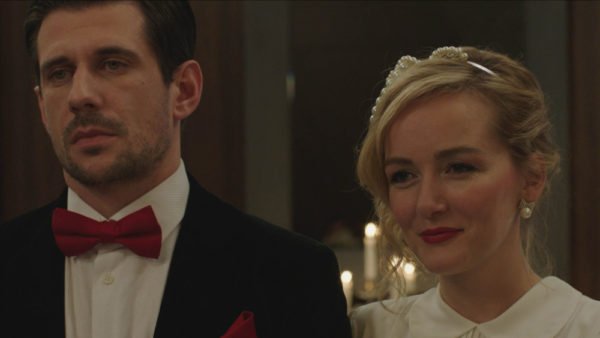
LGBT movies made in Kosova are such a rarity (if there are even others besides this one) it is inevitable that coming from a country still torn apart by strife, and culturally deeply homophobic, that any such films would never be allowed a happy ending. For once that is hardly a spoiler but the acceptance of reality in a society where it is not actually illegal to be homosexual, but it is nigh on impossible to be openly gay and survive.
Kosovian filmmaker Blerta Zeqiri’s debut feature film combines a powerful indictment of her country’s troubling political climate with a most tender and touching love story that will have you reaching for a box of Kleenex more than once.


It starts off very raw at a freezing cold receiving facility on the Serbian border where Bekim (Alban Ukaj) is accompanying his fiancee Anita (Adriana Matoshi) for the latest round of unclaimed bodies from the war have been exhumed in the hopes they can be identified. Anita’s parents have been missing since the war, but she does not find them here, as they drive back home together, there is this unspoken fear that she never will find out what happened to them.
There is a flashback of how the two first met when Bekim made a move on Anita in the Bar that he owns when she was more than a little drunk and they happily ended up in bed. Now their impending marriage is like a chance for Anita to finally move forward and maybe start making her own family.
When they arrive back in town they discover the arrival of Nol (Genc Salihu ) Bekim’s best friend who had suddenly left Kosova two years to go to live in France and become a successful musician. The three of them hang out and get drunk together, but over the next few days, Anita soon senses that the presence of Nol has not just unsettled Bekim, but it has also changed the dimension between the two of them.
When Anita demands an explanation from Bekim he allows her to think that the great secret love of Nol’s life that he has lost and needs to be consoled about, is his sister Zana (Vjosa Abazi) when the reality is that it is Bekim himself.
Bekim is torn between being with the real love of his life or by doing the right thing by marrying Anita, but in the culture he has been brought up in, and which he feels he has no alternative to than to continue to live in, he doesn’t see himself having any choice.

As much as our sympathy automatically lies with these two men, Zeqiri also subtly points out that Anita is also a victim here by getting married to a man who doesn’t really love her. This is, after all, a story of a new marriage that is trying to start without burying any of their past.
Zeqiri shoots the scenes between Nol and Bekim with an extraordinary open tenderness which will probably shock her fellow Kosovians. In fact, they also lead relatively comfortable lives which are in very sharp contrast to the scenes of wretched Serbs caught in midst of the conflict who now most still fear for their very lives.
Superb pitch-perfect performances from the three main actors actually resulted in them winning a special Award as an ensemble at a Film Festival recently.
The Marriage is an exceptionally wonderful thought-provoking drama that is completely engaging and makes a fascinating contribution to contemporary queer cinema.
 Posted by queerguru at 17:47
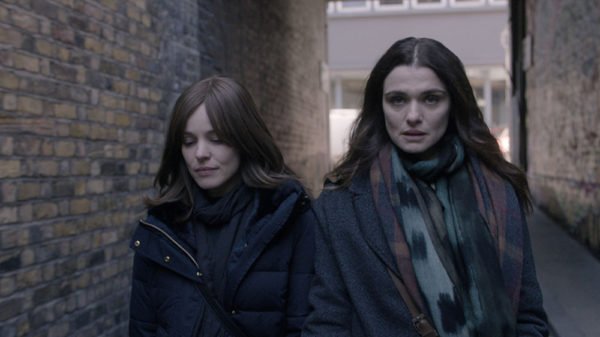
Disobedience is the first English language film for award-winning Chilean writer/director Sebastián Lelio, and with it, he continues his theme of stories that are centered around strong unique women. First, there was ‘Gloria’ followed closely by his Oscar-winning A Fantastic Woman that starred Daniela Vega a trans actress, and now comes this tale of a lesbian love affair within London’s Orthodox Jewish community.
Ronit (Rachel Weisz) is an ex-pat photographer based in NY who suddenly gets a call that her estranged father, a celebrated Rabbi in London, has died. Her initial reaction is to get drunk and then have anonymous sex in a bar bathroom, but then she sobers up and gets on a plane back to the home she left un a great hurry several years ago.
She is met at the door of the Shiva by a very surprised Dovid (Alessandro Nivola) her old childhood friend and the Rav’s protege. He reluctantly lets her in and when they start catching up on each other’s news. Ronit discovers Dovid has married Esti (Rachel McAdams) who had been more than just a friend to Ronit.
Dovid insists that Ronit stay with them, which judging by her reaction, Esti thinks is rather awkward. As do the rest of Ronit’s extended family who hardly welcome the return of the prodigal daughter with open arms. A fact born out by the obituary in the local paper which states that Rav had no children at all. Ronit’s attempt to find some resolution with grieving for her father is further exasperated when she discovers that he left her nothing in his will, giving everything away to the Synagogue.
From the moment Ronit first enters the house there is obviously some unspoken business between her and Esti which is just all conveyed in looks, but when they are eventually alone, Esti confesses that she went behind her husband’s back to have someone call Ronit about her father because she wanted to see her again. Slowly we learn that the Rabbi had walked in on the two being intimate one day, and hence Ronit took flight, and Esti was pressured into marrying Dovid.
Suddenly Esti who had been a dutiful wife shakes off her timidity and steals a kiss from Ronit, an incident that gets back to the school where Esti teaches. It propels the two women to escape to a Hotel in central London for one night of passion which sees Esti being totally uninhibited, unlike her usual weekly obligatory Friday night sex with Dovid.
It is inevitable that Esti at least cannot go back to the married life she signed in for, but can she put aside her timidity for a moment so assert for what she wants, whatever that is?
Lielo co-wrote the script with Rebecca Lenkiewicz, based on the novel by Naomi Alderman that Weisz, who was also a producer on this, had optioned as a project for herself. Playing a martyred Jewish woman is no stretch for this Oscar-winning actress as we saw in Denial, but it was for Canadian and American ‘wasps’ McAdams and Nivola who were so convincing in their roles. The drama may have ostensibly centered around Ronit, but it is the finely nuanced performance of McAdams as the conflicted Esti that really captures our sympathy.
It was also refreshing that Dovid was not made out to be the villain of the piece and Nivola captured him so perfectly as the troubled soul who maintained his integrity to the very end. This is a compelling performance that added such depth to the whole drama.
Leilo’s steady direction in a part of the world which must be so alien to him was remarkable, and mainly because he ensured that this very rather beautiful and touching love story steered well clear of ever becoming a melodrama
Posted by queerguru at 14:12
|
|
|

Calling a movie Funny Story is rather a brave move which can lead to unfulfilled expectations especially when your plot has its fair share of tragic incidents too. This feature from Michael J Gallagher whose work is usually created for the small screen. is full of good intentions and does at least start off on full of laughs, but then at the end gets way too muddled to be really funny
It starts with Walter (Matthew Glave) an aging actor who has coasted a very comfortable living out of once playing an action hero who has now become something of a cult figure. He may have only had one role on the screen, but in his personal life he has had several and the movie starts with him trying to dump his latest very young girlfriend (Daiyse Tutor) who is far too interested in her cellphone to listen to him. However when he comes to the punch line ‘we’re finished’ she trumps it with “I’m pregnant”
Then what had been an odd couple road movie morphs into something much more difficult and rather awkward when they arrive at the vacation house packed with women and Nic comes out to her startled father and announces that Kim is, in fact, her fiance who she is about to marry the very next day.
Now Walter has two pieces of major news that he has to tell Nic about but he is faced with the dilemma of trying to decide if and how he should share with her as she prepares for what could be a doomed marriage after all.
Up to this point, the movie is deliciously funny thanks in part to the pitch-perfect performances of the three main actors. Walter’s awkwardness with his daughter’s sexuality is handled clumsily and seems some out of keeping with a man who has lived and worked in Hollywood all his life. The muddle that follows (which we cannot go into without spoilers) takes some of the gloss off the humor, but it has its heart in the right place which makes you want this engaging wee drama to succeed.
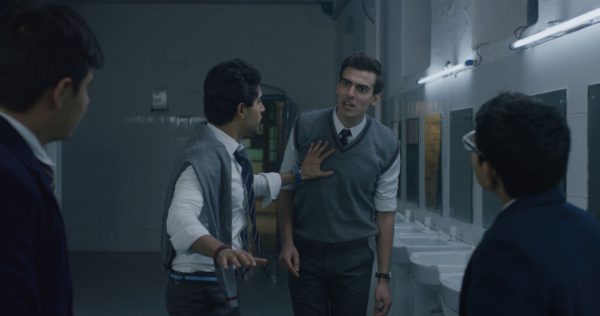
This very prestigious all-boys boarding school in India which is the setting for The Noblemen is obviously a remnant of British colonial days and the children are still expected to practice the age-old rituals and codes which should have been banished years ago. Here in this very formal setting, the pupils are reluctantly bound by an outdated hierarchal system which too often allows the senior boys to use the younger sons as their slaves.
This then is the story of 14-year-old-Shay (Ali Haji ) who, because he hates sports and prefers drama class, is labeled a sissy and gay by other boys. Devoted to his invalid mother who he is allowed to call via Skype once a week, and who has promised that she will be well enough to finally visit him on Founders Day at the end of the term.
Shay’s only two friends are Ganesh (Hardik Thakkar ) who is the butt of everyone’s jokes because he is so overweight, and Pia (Muskkaan Jaferi)the rather spunky daughter of the new history teacher and thus the only girl pupil in the school.
When Shay and Pia are given the leading roles in the Founders Day production of Merchant of Venice, it really upsets Baadeal one of the wealthier older boys. He wants to follow in the footsteps of his father who is a Bollywood movie star and this would have been the perfect part to show off his talent. Equally important is the fact that he wants to be with Pia and he sees this as a perfect opportunity for him to get close to her.
When Baadeal’s clumsy attempt to bribe Mr. Murli (Kunal Kapoor ) the drama teacher fails, he enlists Arjun (Mohammed Ali Mir )a school captain and its leading bully, to ‘persuade’ Shay to give up the part. Despite all the brutal force they apply to get him agree, Shay stubbornly refuses as he wants to be able to perform for his mother.
It’s a relentless battle of brawn against wit, and even Ganesh gets drawn into it in such a way that it almost costs him his life, but it isn’t until Mr. Murli becomes aware of the situation and gets involved, and tries to help, that it really gets out of control.

Once Mr. Murli goes public with the story and Shay is now outed and humiliated by being labeled a rat by almost the entire school, taking a leaf out of The Merchant of Venice he seeks his own bloody revenge.
The Noblemen brings home the point that in such an insidious regime where bullying still persists it is a breeding ground for even more homophobia. The biggest offense that any of these boys can have is being gay, and the brutal punishment administered to Shay just reinforced his long-held fears about the consequences even more. That this can contribute to making someone so ashamed of their own sexuality that they will take such extreme measures is indefensible, but as this film proves, makes for a very compelling bloody drama.
The Noblemen is the feature directing debut of filmmaker Vandana Kataria, and is unusual for an indie film that it boasts one major Bollywood actor in its cast: Kunal Kapoor as the liberal drama teacher.
|
||||||
|
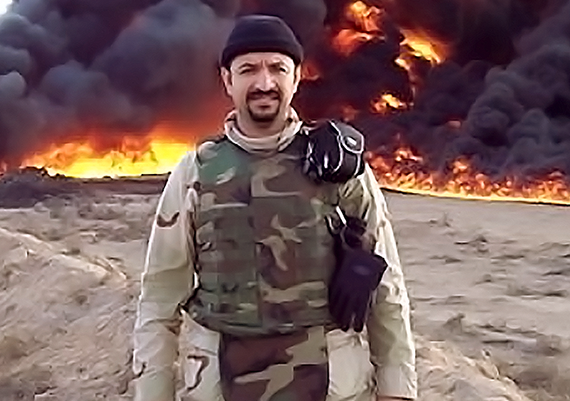
Ten years in the making this new excellent documentary from filmmaker Erin Palmquist is the engaging story of Ghazwan Alsharif an Iraqi refugee and former translator for the U.S. military. After years of service helping the American invading forces, he was wrongfully accused of espionage and tortured by the military police in Iraq for some 75 days before being rescued by a US Colonel who he had served and who personally vouched for him.
When the Iraqi militia learned of his work with the US Forces they first threatened his family and then bombed his home. His parents who ironically had been the ones who had initially encouraged him to help the Americans liberate the country now ostracized him for refusing to give up his war work.
Despite the US Government’s avowed aim to help re-settle Iraqis who had risked their lives working with the Armed Forces (in those days anyway) the reality of actually being allowed to immigrate to safe haven in America involves a long and arduous procedure which does not guarantee success. Alsharif was one of the very rare lucky ones who managed to be awarded a place in an International Refugee scheme which enabled him to get to San Francisco.
Over the years Palmquist and her crew regularly returned to visit Alsharif and see how he was managing to adjust to his new life. It would be wrong to underestimate both the upheaval and suffering of being forced to give up your own home and culture purely to survive. He was not only ostracised by his entire family back in Iraq, but his divorced wife now living in London rarely allowed him even phone contact with their son.
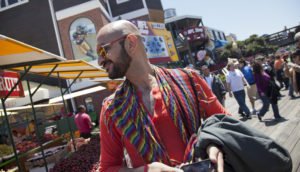
A major plus side of his new life was that it was now safe for Alsharif to finally come out as a gay man, but when his photograph with other gay men appeared on Facebook, his brothers called from Iraq to demand that they are taken down. Then in 2012 when he lent his support to the group campaigning to stop Iraqis being killed back home just for being gay, his family contacted him again to tell him to desist. An American Arab explained that the family could be totally excluded from Iraq society if it was known they had a gay son, which may seem severe but pales in comparison with the knowledge that this could easily cost Alsharif his very life.
He is by all counts a very affable man, with a passion for his work as a chef (he even got his 5 minutes of fame appearing on Food Network program). He has a new group of friends, American citizenship, and a gratitude for his freedom which almost makes up the loneliness he feels he can never escape from.
In a very similar story that was the subject of the movie Out of Iraq, the two gay Iraqis involved had each other, and after almost insurmountable obstacles managed to finally settle in the U.S. together. That’s what Alsharif seems to feel he is missing in his life. Perhaps that’s a good enough reason for a follow-up documentary.
Posted by queerguru at 21:12
Although a flood of queer films are being celebrated in the mainstream, there’s still something missing from the roster of movies that have been released.
Whether it’s Moonlight, Call Me By Your Name or Love, Simon being celebrated through gleaming accolades in Hollywood, there’s one poignant act about queer coming of age films: They are not favouring the depiction of lesbian women.
According to GLAAD – the Gay and Lesbian Alliance Against Defamation – gay men comprise an overwhelming 83 percent of LGBT representation in the media, while lesbian characters featured on our screens at 35 percent of the rate.
In 2017, the organisation also found that of the 2016’s top films just 18 percent included LGBTQ characters.

“Gay men seem to be so much better represented [than lesbians], although I’d say they get slotted into the camp niche and the diversity of their representation is consequentially restricted,” a spokesperson for the Arts Trade Union Equity said to studybreaks.com.
“Gay male representation is improving, although camp gay men are still the norm, especially in comedy scenarios.”
Even on TV screens, explicitly lesbian dramas do not seem to make the silver screen’s grade.
Although flourishing bisexual characters can be seen in the likes of Riverdale, shows such like Everything Sucks! have been discontinued to a great deal of backlash.

Starring Rachel Weisz and Rachel McAdams, the film follows a young woman who returns to her Orthodox Jewish home after learning about the death of her estranged father.
Unable to deny her feelings for her best friend, she rekindles her love for the woman who is now married to her cousin.
However, UK fans will have a bit of a wait on their hands when it comes to the adaptation of the Naomi Alderman novel, which will be coming to British screens on 28 September 2018.
However, whether it’s Disobedience or Love, Simon, one thing is apparent: None of these title roles are being played by queer actors.
Perhaps it’s also worth asking the industry if it will only change when it puts queer actors on the screen – and introduces them into the lofty ranks of the industry.
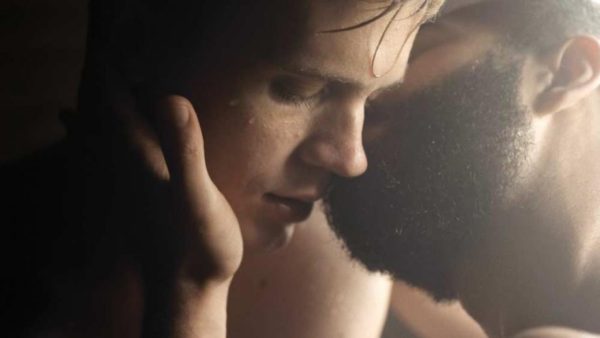
For his debut feature movie, London based Finnish filmmaker Mikko Makela has returned home to tell his compelling tale of a romantic summer encounter between an unlikely pair that literally sizzles on the screen.
Leevi (Janne Puustinen ) has been studying in Paris and comes back home to somewhat reluctantly help his estranged father (Mika Melender) renovate their old remote county cottage so they can sell it to help re-finance their ailing family business. The two men couldn’t possibly be more different with their opposing views on practically every aspect of their lives. The father is a gruff conservative, and it is not just Leevi’s sexuality that disturbs him but his son’s insistence on taking up French citizenship to avoid being conscripted into the Finnish Army that he totally hates.
It soon becomes obvious that Leevi has no skills or inclination for the work at hand and so his father is forced to employ the services of a contractor to help with the rebuild. However In the isolated community they live in, the pickings are few and far in between, and the only candidate is a Tareq (Boodi Kabbani) a Syrian refugee who was once an architect. The father however is fit to explode and cannot refrain from a stream of racist comments.
Luckily Tariq doesn’t speak Finnish so although he may pick up on the father’s unfriendly welcome, he is unaware of the extent of his attitude. However, though the workmanlike Tariq and geeky studious Leevi appear to be totally opposite and no more than just merely polite to each other, the moment the father is called back to town, they quickly discover they have a great deal in common.
What then flourishes in the father’s subsequent absences is a deep and profound relationship between the two young men, which when its physical side manifests becomes a very sensuous and loving experience. However, with the thought of the end of summer looming and with Tariq wanting to reunite with his Syrian family, and Leevi intent on getting back to Paris and his studies, they both know that there are tough decisions that must be made very soon.
It is a remarkably mature debut from Makela who very competently tackles several issues at once, from Leevi’s sexuality, his father/son relationship and also the growing unrest in the world about refugees and immigrants. The romance aspect is handled beautifully thanks to not only the very real chemistry of the two lead actors pitch-perfect performances but also Makela’ s direction that avoids the usual pitfalls of indie gay moves that always make the physical encounters seem like a poor soft core porn films.
The film has been in the works for some time so the fact that one of the protagonists is a hunky foreign manual worker that falls for a local lad, just like in God’s Own Country, is pure coincidence, but one we feel sure that audiences will be happy if it does become a trend.
A Moment In The Reeds leaves you wondering what would happen if the story had ended differently, and maybe Makela will be tempted to make a sequel to his very entertaining tale. He is a fresh new voice in queer cinema a genre which Finland suddenly seems to be adopting after last years Tom of Finland and Screwed. Long may he, and his fellow filmmakers continue.
Posted by queerguru at 07:08