It seems that the celebrity death rate has started climbing of late. But really, it’s just that the famous people and pop idols of my generation are starting their natural return to the cosmic unknown. So they loom larger in my consciousness and the loss of them feels more profound.
My generation is the first television generation. We were the first kids who stayed home sick from school and watched soaps with mom, watched Captain Kangaroo in the morning before catching the bus, and then caught frisky game shows and heartwarming sitcoms with the family at night.
Straight people control the narrative, which means Duke’s camp role in Valley of the Dolls is lost in the remembrances.
Like me, you may have had an odd identification with Cathy and Patty, the identical cousins on The Patty Duke Show. One was a wild and all-American teenager, the other was prim and used words too big for the other kids. Cathy, the British cousin, stood out for her rare manners and delicate tastes. She was different. On the other hand a hot dog made Patty lose control — so yeah, that was me too.
Patty and Cathy could easily be seen as both sides of a closeted teen of the mid-century.
Patty Duke died on Tuesday, at age 69. Her story is one for the ages: A Broadway actress in her early teens, she became an Oscar-winning actress for playing Helen Keller in The Miracle Worker, then solidified her iconic status as a television sensation, recording artist, and more. Then there were the rough years: The disclosure of her bipolar disorder, followed her amazing book, Call Me Anna, and her heroic work as a mental health activist.
All these things are mentioned in the obituaries I have been browsing. But what about Valley of the Dolls? Someone has to be mentioning it.
In my Facebook feed, I keep seeing friends of my age ask why nobody is mentioning this film, which is on every gays-of-a-certain-age’s list of top 10 camp films. This makes me wonder what will happen when Faye Dunaway dies. Will we all pretend the Mommie thing never happened?
Maybe they are avoiding mentioning Valley of the Dolls because it was generally thought of as a bad movie. But whether a movie is good or bad matters less than its overall impact in the long run. And culturally V.O.D. still has a big impact.
Because Valley of the Dolls came out in 1967 and I was 13, I was not allowed to see it. But by my robust teen years, my pre-gay friends and I were seeing V.O.D. at the drive-in with contraband beer and teen angst. I saw it once on a double bill with Beyond the Valley of the Dolls, a Russ Meyers potboiler that was surely an inspiration for John Waters.
Jacqueline Susann’s Valley of the Dolls, published in 1966, was a sensational book that claimed to rip the lid off the shocking-behind-the-scenes world of showbiz. Reading it now is about as exciting as Peyton Place. But back then it was hot stuff, so the film was highly anticipated, and the roles were coveted.
It was one of the first films I memorized large portions of the script to parrot with my friends — a timeworn ritual among gay companions. It had the addictive setup of four main women characters, like so many other plots that gay men love (Golden Girls, Designing Women, Sex and the City). Because of that, you were expected to pick the character you most identified with, and then become them. Needless to say, I was Duke’s character, Neely O’Hara, the booze- and dope-addicted superstar, supposedly based loosely on Judy Garland. (Ironically, there are kinescope screen tests of Garland playing the hoary Helen Lawson role, which were made before she was canned from the film.)
There were high hopes for Duke’s performance in the film. She was pedigreed, and beloved for her television work. The film was a stinker. But oh, what a glorious stinker. And Patty Duke’s performance is right up there with Faye as all time campiest performance on film. The gowns! The drugs! The cat fights! The thousands of dollars of fake hair! Patty held nothing back. She risked all. And while she was demolished by the critics, she became a goddess of camp to men of my generation.
This led to countless parodies and remakes. There were drag queen homages and sing-a-longs in land-locked midwestern states. I saw a great version in the ’90s with Jackie Beat as the imperious Helen Lawson (played by Susan Hayward in the film).
The other female leads, Sharon Tate and Barbara Parkins, competed for audacious camp. Lee Grant slid in a stealth performance as the controlling sister. Susan Hayward was the only one who seemed to know what kind of movie she was in, and so she was least victimized by the process.
It was Patty Duke, with her take-no-prisoners technique that is most memorable, and at the risk of overusing a word, iconic. I have sat in darkened living rooms with other men in their 50s and 60s watching the DVD of Patty’s final scene in the alley behind the theater after her disastrous non-performance in a stage show. These same men have been laughing and reciting the lines along with the whole film for years. But when Neely collapses in the grit and mud and screams out to her god of doubtful existence, we all have a reverent hush. It is gut-wrenching. She epitomizes the greatest moments of camp by combining artificiality and pathos in equal measures.
So while few of the obits mention Valley of the Dolls, me and all my other friends of a certain age want to thank you, Patty, for giving us a character we could emulate, imitate, and recover from. You are Neely O’Hara.
A last-minute competition submission landed Kevin Rios at Sundance presenting Made of Sugar, a documentary short about his experience growing up in a Cuban family, wrestling with his sexual identity, and moving to New York City. Shot in moody-romantic black and white and boasting old footage from his family’s personal archives, Rios has become a filmmaker to watch, one whose story is relatable to many LGBTs hungering for inner-understanding, but also fiercely original and illuminating.
Out: Tell us about Made of Sugar. How did you get it to Sundance?
Kevin Rios:Made of Sugar is a personal film that I made in my last semester at New York University. The film reflects on my family, my first years living away from home, and how our Cuban culture is evolving. I finished the film mid-2015 after graduating college and a close friend from Miami had heard about the Sundance Ignite and Adobe Project 1324 short film challenge. I casually uploaded the film without thinking twice about it. I thought the film was deemed inappropriate, but a few weeks later I received notice I was a finalist and finally one of the winners. The winners of this challenge were flown out to Park City to attend the Sundance Film Festival as part of the Sundance Ignite program.
What was that experience like? Did you meet anyone memorable?
It was overwhelming in the best way possible. Sundance is on every aspiring filmmaker’s radar, and through this program I got to experience it in such a unique way. I never would’ve imagined the great events, panels, films, staff, and fellow winners I got to network with. A highlight of the week was meeting Nate Parker, who wrote, produced, directed and starred in The Birth of a Nation, and will undoubtedly become a huge star over the next year with his powerful film about Nat Turner.
How was Made of Sugar influenced by your upbringing?
Growing up in Miami it was impossible not to hear stories of Cuba. The tales of what our families went through to get to the States were on a loop throughout my childhood. There’s a palpable fondness of the island and its pre-revolutionary ideals that you can feel through the older generations. Unfortunately, Cubans are mostly conservative and old fashioned in their beliefs, which put me in a difficult position growing up queer. I hid a lot of my feelings and created a forced masculine exterior in order to fit in. These moments in life and fears were a direct inspiration while filming Made of Sugar. Not only was the film tackling my own upbringing, it shed light on how my mother felt leaving her home for a new country and the idealistic memories of what Cuba use to be.
Did your cultural background and sexual orientation clash?
My cultural Background and sexual orientation butted heads for a while. As soon as I came out, I began to reject my Cuban culture that caused me to suppress my sexuality for so long and truly believed I was just an American. I didn’t want to be associated with a culture that cared more about the stories in some book than the lives of the men and women right in front of them. Moving to New York for college was the first time I felt like an outsider in terms of ethnicity. I began film school with an open mind and realized that looking into the history of my culture was the only way to discover my own voice in film. I couldn’t whitewash myself. Mine and my family’s stories were the ones I was born to tell through film.
Still from Made of Sugar
How did your family respond to Made of Sugar?
My family was extremely supportive and willing to assist during production on various phases of production by providing family footage and photographs, as well as acting and recording voiceovers during principal photography. The film first premiered in Miami at the Revolt Film Festival and I was terrified. I thought for a quick second that I used their image and our culture to tell a selfish story. To my relief, I was received with open arms after the screening, which just solidified the true core of Cuban culture: Family. Overall they were extremely proud of me and it opened a dialogue with my family about my sexuality, career path and my resilience throughout my teen years in hiding.
Who are some of your creative influencers?
Xavier Dolan, Sofia Coppola, Lance Acord, Spike Jonze, Wes Craven, Pedro Almodovar, Jean-Luc Godard, Bob Fosse, Martin Scorcese…just to name a few.
Why are you drawn to film? What makes it an important art form?
I’ve always wanted to entertain. Film has had a profound effect on me since I was a child. The blending of several crafts—acting, costumes, music, photography—are all elements I have interest in. Film combines my interests into a focused medium that can inspire change in people. Film has the power to educate and illuminate and I’ve always wanted to be a part of that process.
What’s next? Working on anything new and exciting?
I’m working on an untitled short film to entice people to help fund a feature version that will take place in Havana, Cuba. After this experience with Made of Sugar, I’ve decided to dive into my family’s past and tell stories of Cuban families affected by the Revolution. I hope to join forces with my cousin in Havana who is also a filmmaker, to tell the story of my mother’s return to Cuba after many decades, with her mother’s ashes in hand.
Peter de Rome was one of the very first gay pornographer filmmakers who made small intimate and highly erotic movies in the early 1960’s when it was still illegal to be gay let alone partake in homosexual acts in public. He was an Englishmen who emigrated to New York in the 1950’s lured by the prospect of working in the movie industry as a publicist, but when his first job was delayed he ended up working as a Salesman in Tiffany’s on Fifth Avenue where Audrey Hepburn had Breakfast!
De Rome took himself from selling expensive jeweled baubles in Manhattan to quitting town to help the Civil Rights movement in the Deep South before coming back to the City again to publicize Hollywood movies by day and make his own short porn films by night. These were the heady days when gay sex was totally about having fun and being playful and whilst most gay porn was about getting the audience aroused so they could just beat off, De Rome’s was so much more than that. He put stories into them and even when they were based on, and starring, random men he picked up in the streets to have sex with, he incorporated the whole scenario into a narrative.
They certainly contained full and explicit sex but much more than this, they were sensual, fully of suspense and tension, and highly erotic with a twist. His personal preference for hunky black men became a very strong feature in his work, and one of the ground-breaking elements in Adam and Yveshis first full length feature that he eventually made in Paris in 1974, was the fact that he included an orgy scene that only included black men.
His work was often played at private parties and as word spread through the homosexual demi-monde it attracted some very famous fans such as Warholwho wanted to a make a film with him, and William S Burroughs who sent him an idea for another film. We learn all about this and about de Rome’s life in general in a new documentary filmed now just before he almost reached his 90th birthday. Despite the fact that his porn had made hm quite the celebrity in the US, and getting him a small Retrospective in Amsterdam in the 1970’s, they were never ever shown back in the UK at all. That is until 2012 when the BFI showed a selection of them at the London Gay & Lesbian Film Festivaland had them added to their National Archive.
His work represents an essential part of gay history on so many levels. Not just because of the whole spectrum of people that it brought de Rome into contact with …..Sir John Gielgud was a big fan who wanted him to film a story he had written …. but because it represented a time of innocence, when even though the Law placed restrictions on homosexual liberty it was still somehow much freer with people fully exploring their sexuality for the first time. The advent of the AIDS pandemic stopped all that and De Rome packed his camera away for ever thinking it inappropriate to keep filming sex which seemed to be the very thing that was now killing a whole swathe of our community
It’s a fascinating story although documentarian Ethan Reid lets this profile ramble on unnecessarily at times and whilst the elderly and totally charming De Rome can be forgiven for often repeating himself, Reid does us all a disservice for his rather clumsy editing. Despite this the disarming and charming De Rome (who would have preferred the title Grand Daddy of Porn) and the very explicit clips of his movie make this rather inadequate documentary so worth sitting through as he and they are gems. They will also intrigue enough to want to see more , and you can do that now as several are on a collected DVD of his work.
This rather touching and gentle gay drama which is a very impressive debut from newbie filmmaker Sudanashu Saria, takes on an even greater than usual resonance by the mere fact that it is set in India where homosexuality is still illegal. However in fact the movie, evidently shot very much on the down-low, showcases how these gay men in contemporary Indian society seem totally at ease with their sexuality and the story that unfolds focuses intently on their own relationships with each other.
It all starts with Sahil a young music producer attempting to pack his rucksack for his upcoming weekend trip away but he is struggling in the dark as Alex his boyfriend has neglected to pay the electricity bill for their tiny apartment. He had also left the gas stove on which is another reason for the couple to bicker, but by the tone of their argument it appears that they really don’t need much of an excuse to start quarreling. By the time Alex later drops him at the airport they are barely talking and Sahil refuses to give him a farewell kiss.
He is at the airport to meet his old friend Jai who is now a hot shot on Wall Street in NY and who has flown back to Mumbai for just 48 hours to close a big deal that he has been working on for some time. Before he has to attend that meeting, Sahil whisks his friend off to the lush Indian countryside for some fresh air and exercise and so that they can catch up with each other. Whilst Jai questions Sahil about the state of his volatile relationship with Alex, he oddly never even mentions his own home life in the US. They both however enjoy a closeness with each other which seems to hint that they may have had another type of relationship in the past, but as everything is unspoken and hinted at, we are never really quite sure.
It is hard to tear the workaholic Jai away from his laptop and cellphone which causes some friction, but none quite as much as when one night he actually crawls into bed with Sahil. His advances are rejected, albeit somewhat reluctantly, and the rest of their very short trip in the mountains sees a lot of longing looks from Jai at Sahil ,and although Sahil allows him to steal a kiss, nothing else happens.
Back in Mumbai ensconced in their rather luxurious hotel suite before the meeting starts, matters take an unexpected turn when Jai forces his hand. Shocking as it is, Sahil stays for dinner at which they are joined by Alex accompanied by some young boy who had been keeping him company for the weekend. The atmosphere during the meal is strained to say the least and it is obvious that Sahil’s feelings for his boyfriend have sunk to an all time low. Even so, it is nigh on impossible to even guess how the remainder of Jai’s stay is going to work out for any one them and what will actually happen before this night is over.
Loev may have a totally different tenor than a European queer movie but it still strikes a chord with its measured tone and its heartfelt sentiment. It blends the needs and desires of a gay culture that may be less active publicly than most but it is one which still goes through all the usual dilemmas and highs and lows in its search for happiness and establishing relationships. Saria leaves out several parts of the puzzle of this story to ensure that not everything fits neatly into place, and so that we can draw our own conclusions along the way. An added dimension to is that Loev also serves as his own public coming out too.
Despite the nature of the subject of his movie, Saria had no trouble finding local actors willing to taking on these roles. It was as one Casting Agent told him, a rare chance for an Indian movie actor to do more than just dance as that is all Bollywood usually demands of them. He chose well too as both Shiv Pandit playing Jai and Dhruv Ganesh as Sahil put in extremely convincing performances that made the movie work so well.
Loev is a remarkable and delightful first queer Indian cinematic foray and Saria has set an impressive high bar for other filmmakers in his community to aim for.
Highly recommended.
P.S. One sad note young Dhruv Ganesh died of TB soon after Loev was completed, the movie is dedicated to his memory.
To us non-residents of Harlem the fact that 25 years after Jenni Livingston’s seminal documentary Paris Is Burning,‘voguing’is very much alive in the dance clubs and community spaces in this corner of New York is quite a shock. In fact it’s been re-shaped and re-invented to bring it more in line with the needs and dreams of it’s present day exponents who, we learn from this new movie, are mainly at-risk LGBTQ youth. There may be much more of a political edge to the stories of the young people who feature in Kiki than in Livingston’s earlier film, but the seemingly unlimited vitality and energy and sheer fabulous creativity is still very alive in the community who take the thriving voguing culture very seriously.
Directed by a young Swedish visual artist Sara Jordenö who co-wrote the movie with Twiggy Pucci Garcon who is the ‘housemother’ of the House of Pucci and one of the leading lights of the movement. They both take pains to show that what this tight knit community does much more than just creating a safe zone for LGBT youth, as it provides them with an outlet for their energies and talents and a way for them to express their sexuality. Their numbers include an increasing number of trans men and women, and others who are beginning their transitioning. There are some who simply want to retain a fluidity to their sexuality and reject labels in favor of individualistic ‘realness’.
With jobs worse than scarce because of transphobic attitudes and the cost of gender adjustment extremely expensive, many of the kids take to sex work as the accepted norm. Their conversations regarding dealing with puberty and gender issues without a traditional nuclear family are both enlightening and probably more disturbing to us than it is to them as they generally seem to find the inner strength and the support of their friends to deal with this.
They all belong to a House …. the name for a team who participate in the contests….. and each has a silly pseudo-pretentious name like the House of UnBothered Cartier … and is run by a male housemother. Working as a collective gives them all a sense of community that they can relate too. Being a young person of color is still not easy even in this day and age and in a metropolitan area like NY. A great many of the house members have to deal with HIV and homelessness, the latter as a result of being thrown out by their families.
The irony is that when one of their number lands a job for a non-profit support group as an advocate for LGBT homeless, he gets invited to Washington for a reception at The White House. Whilst there in his hotel he gets a phone call telling him that there is another addition to the homeless count. It’s him. His Landlord has evicted him without warning and notice.
Whilst the movie suffers for some patch editing, that pales into insignificance of the scenes of all the exuberant dancing and posing which is perfectly electrifying . On the dance floor all thoughts of troubles disappear and the atmosphere reeks of such positiveness and it gives these young kids the sheer determination to take responsibility for themselves and their futures. The voguing scenes were filmed over a three year period, and during that time and through their appearances we get to know (and love) many of the regular participants as each tells their story.
The optimism and sheer joy that exudes is highly infectious which is remarkable when one considers how marginalized this rather neglected community is. During last summer when the country was celebrating the SCOTUS decision that legalized same-sex marriage, one of the Harlem kids remarked without even a hint of malice that it had only happened because middle-class white gays had wanted it.
And another of the interviewees summed it up even better with ‘It’s important that people see this film and know that we are as strong as f–k! He’s absolutely right, and you would be a fool to miss him and it.
The openly gay Mexican filmmaker Julián Hernández has won the prestigious Teddy Award for Best LGBT Feature Movie from the Berlinale twice, which is an exceptional achievement that has only been matched by the late British auteur Derek Jarman. Hernández’s last feature film (for which he won his 2nd Teddy) and which was probably his best too, was ‘I Am Happiness on Earth’ and it was typical of his raison d’etre with its sparse dialogue and it’s emphasis on the aesthetics of some handsome Latino men, and very little attempt to include a conventional plot. Now he has extended this forward in a series of short movies mostly directed by him, but one also from his occasional collaborator Roberto Fiesco.
The anthology simply titled Mexican Men is of five encounters that are sensual and seductive and that are the somewhat esoteric results of these two highly imaginative filmmakers. Fiesco’s contribution “Trémulo” has the nearest thing to a traditional narrative as it tells the tale of young soldier who goes into a small barber shop on the eve of Mexico’s Independence Day. He spies the young apprentice and so returns at night when the shop is closed off so that they can celebrate the holiday together.
Hernández’s best contribution is a short documentary with the very specific title of ‘Young Man at the Bar Masturbating with Rage and Nerve’. It’s the tale of Christian an attractive 24 year old dancer and hustler who is seemingly good at both of his careers into which he pours his heart and soul. He is a very affable young man who lives life as it comes and who deserves to succeed, but whether he will is never really that certain.
The other three very accomplished short films are : Wandering Clouds : where two men meet up to dance in the water at the local swimming pool but have to deal with an unpleasant homophobe; Atmosphere : an intriguing odd table about a mysterious outbreak; and To Live : the shortest but most sexually charged of all the tales.
Lilly Wachowski of the famed filmmaking sibling duo has come out as transgender.
In an exclusive published Tuesday by the Windy City Times, Wachowski wrote her coming out was the culmination of a year-long saga of media outlets threatening to publish stories on her transition, including a recent incident when a Daily Mail reporter appeared on her doorstep. Throughout the powerful statement, she writes she made the choice to come out on her own terms in an effort to counter “demonized and vilified” portrayals of trans people in the media.
“Being transgender is not easy,” she wrote. “We live in a majority-enforced gender binary world. This means when you’re transgender you have to face the hard reality of living the rest of your life in a world that is openly hostile to you.”
Wachowski notes she is “one of the lucky ones,” and has the support of her friends and family. The news follows the transition of Wachowski’s sister, Lana, in the early 2000s.
The Wachowskis are known for their science fiction blockbusters, including “The Matrix” trilogy, the dystopian “Cloud Atlas” and the ongoing Netflix series “Sense8.”
GLAAD released a statement on Tuesday celebrating Wachowski, while noting that journalists “must learn that it is unacceptable to out a transgender person.” The group has long condemned the outing of trans people, pointing to very real threats of firing, eviction, loss of family and death.
“She should not have been forced to disclose her transgender identity before she was ready to do so,” Nick Adams, director of programs for transgender media, said.
Wachowski notes that despite progress over the past few years, society needs “to elevate the dialogue beyond the simplicity” of a before-and-after when it comes to transgender people.
“My reality is that I’ve been transitioning and will continue to transition all of my life,” she wrote. “I will continue to be an optimist adding my shoulder to the Sisyphean struggle of progress and in my very being, be an example of the potentiality of another world.”
You can read Wachowski’s full statement over at the Windy City Times.
Filmmaker Aaron Brookner set out to find the lost negatives of ‘Burroughs : The Movie’ a critically acclaimed film made by his uncle Howard Brooknerwho had died of AIDS in 1989 aged just 34 years old. Before his untimely demise Howard had made just two feature documentaries …..the other one was on Robert Wilson the avant garde Theater Director …..and he had also just shot his first narrative film ‘Bloodhounds of Broadway’ which was in post-production at the time of his death.
The 1983 movie on the celebrated queer writer and Beat Generation poet William S Burroughs got Howard involved with some of seminal cultural icons of that period including Warhol, and in fact Tom DeCillo was the cinematographer on the film, and sound recordist was a a very young unknownJim Jarmusch. It is in fact Jarmusch who now helps Aaron in retrieving Howard’s archives that have remained untouched for years in Burrough’s old windowless basement bolt hole in The Bowery known as The Bunker. It had all been left in the care of the eccentric poet John Giorno who for some unexplained reason, initially obstructed Aaron in his quest. Once they do get their hands of this wealth of material, Aaron is able to eventually produce a restored version of his Uncle’s classic film which is later released by The Criterion Collection, and this documentary however is how he got to piece it all together.
The picture he paints of his Uncle starts with his own personal recollections and all the home movies as the two were obviously very close even though Aaron was still a child when Howard died. Much of the detail is filled in by the writer and English Professor Brad Gooch who was a model back in those days when he was Howard’s boyfriend and they lived a rather bohemian life in the Chelsea Hotel. Gooch’s own memoir of that time called ‘Smash Cut’ goes into great detail, and now on camera he talks fondly of Howard’s fiery energy and sheer determination to live life to the full, even after he had been diagnosed with AIDS.
It was very fierce tenacity which propelled this unknown kid from Great Neck, Long Island into winning the trust of the Burroughs crowd, but persuading major actors such as Madonna, Matt Dillon, Randy Quaid and Jennifer Grey into starring into ‘Bullets’ even though it was his first feature film. There are times when Aaron tracing his Uncle’s footsteps that he seems visibly shocked at the high esteem that Howard was held in by his peers and many others who may have normally been out of his league.
This excellent and very touching profile also serves as a fitting reminder that Howard Brookner was a remarkable and gifted filmmaker, but also of the wealth of talent and all the other extraordinary people we lost in the AIDS pandemic. Howard refused to take AZT simply because it impaired his ability to make his movie, and that was the most important thing in the world to him, more so now that he knew that his time alive was very limited.
In his farewell note to his parents, who although they had difficulty accepting his sexuality, they still loved Brad , Howard wrote :- It really isn’t a problem having a short life as long as you have ed it doing exactly doing things that really mattered to you …. and that is exactly what I have done. Uncle Howard was one of the very best LGBT movies at Sundance and is sure to surface in a Film Festival/movie theater near you soon.
If, by chance, you’re unfamiliar with the name Joe Dallesandro, you likely know his image, which has been ubiquitous in pop culture for more than four decades. His muscular physique, chiseled features and flowing tawny locks made him a popular photographic model, while his uninhibited and often fully-nude turns in a trilogy of films (1968’s Flesh, 1970’s Trash and 1972’s Heat) produced by Andy Warhol and directed by Paul Morrissey established “Little Joe” as an instant and enduring iconic sex symbol to gay men around the world. His sensual film work inspired Lou Reed to devote a verse in his anthem “Walk on the Wild Side,” and his likeness was used on the cover of The Smiths’ debut album and infamously on the front of the Rolling Stones’ Sticky Fingers record. Over the years Dallesandro continued to work in front of the camera with many notable directors including Louis Malle, Jacques Rivette and John Waters. Today, Dallesandro, now 67, lives a somewhat less heady existence with wife Kim in Hollywood, where they manage an apartment building while working on Joe’s memoir. To show appreciation for his devoted gay fan base and to help troubled LGBT youth, Dallesandro has donated personal memorabilia and signed photos to raise funds for The Trevor Project, which provides assistance for suicidal queer teens. “He epitomized a special time and place in our culture,” says Phil Tarley, curator of the auction and event which takes place in Hollywood February 6. “Back then to be out was to be an outlaw and who would’t want to fantasize about being in an outlaw gang with ‘Little Joe’ Dallesandro.” Tarley notes that Joe was warm and generous in wanting to support the organization and the amazing things that they do. You can bid on the silent auction here.
Dallesandro spoke with Queerty about why he’s working with The Trevor Project, saying goodbye to costar Holly Woodlawn and whether Lou Reed’s lyrics are factual.
Queerty: You’ve donated photos that will be auctioned at a benefit this weekend for The Trevor Project, where you’ll also be the guest of honor. How did you become involved with the organization?
They asked me. My wife keeps me updated with organizations like this and this is a really great one. We put together come photo collages. It’s good for people to have something like this to turn to. Fortunately, no one in my life has suffered like this, but I think the work they do is very important.
You have grandchildren now. What are some of the lessons you’ve learned over the years that you try to impart to them and other young people?
Well, my grandchildren aren’t old enough to have any problems right now. I was just with my grandson two days ago. He’s eight years old. Life to him is great and a video game. He’s as happy as can be. We’re going to spend some more time together this summer. He and his pops are going to come out to be with me for a little bit. For young people, I’ve always believed we should have someone we can talk to. I know lots of runaways. I was one of those kids who thought he was grown up at 15. You’re not at that age, but I thought I was an adult. So I know how we can get out there and run around with a lot of wrong information. Lots of people need help and people with the right information to give them.
Along with Billy Name, Brigid Polk, Jane Holzer and Viva, you’re among the last surviving Warhol superstars. To what do you attribute your longevity?
I made Paul Morrissey my mentor and I listened to what he’d tell me. He warned me about the fame and about the press. He told me that if I was going to believe all the beautiful things people said about me, I had to believe all the ugly things, too. I just made that my truth. People can feel how they feel about who I portray on screen. That has nothing to do with who I am as a person. I don’t have to fall into that trap. I watched a lot of people with the Warhol group fall into that thing about being “superstars.” I just looked at what they were doing and said they were “stupidstars.” [Laughs]
You were also busy raising a family. I presume that responsibility helped keep you somewhat grounded.
Pretty much, yes. That’s the thing that keeps everybody grounded. When you have children you have to make sure they’re all right. Yeah, they helped keep me grounded.
I’m a big admirer of the trilogy of films you made with Paul. I think they were both ahead of their time in terms of your matter-of-fact nudity and viewed today they offer riveting snapshots into a bygone era.
I did two types of films. The Warhol films were a lot different from Paul’s trilogy. They still were Warhol films because Andy did show up and would participate int he sense that he’d pay for us to make them. They were Andy Warhol films because back then if I had any problem with the nudity… Back then Paul would tell me it called for some nudity. I’d ask him why and he’d say, “Joe, these aren’t sleazy films. These are films that will one day be shown in museums. These are Andy Warhol films. These are art movies, Joe!” I had to trust that what he was telling me was the truth. And the fact is, these movies have had a long walk. I thought they’d disappear, but they’re still here.
How did you first come to the attention of Warhol and Paul Morrissey?
I think everybody knows this story. It’s the story of the famous Campbell’s soup. This guy was famous for Campbell’s soup and I wanted to go down there and get a bowl of soup. I loved that soup. They told me this guy was shooting a movie down there. When I got down there and watched what they were doing I thought it was a home movie. This was not a real movie. It looked like a home movie to me. They didn’t have any soup, the bastards. [Laughs] When they asked me to do a small role in one of the films, I said sure I’ll do it. That was a 24 hour movie that Andy was shooting but it was cut down into a shorter film before it was released in the 24 hour film. It was shown only once in its entirety. When they cut it down it was a film called The Loves of Ondine and that was my first movie with the Warhol people. When Paul approached me at the end of the shot, he said I need you to sign this release. I started laughing. I said, “For what? You’re not going to release this movie. It’s just for you guys.” He said, “No, no, this is a real movie.” I just laughed and signed the release because I couldn’t believe it. I told him I’d keep an eye out for it. I turned out to be wrong about it all, but the soup I got burned on.
There’s a popular John Waters quote in which he said you changed male sexuality in the movies forever. Was there any discussion while making Flesh and Trash that they were groundbreaking?
It was mentioned. I had to believe what they told me. When I went to Europe and did Frankenstein and Dracula, which were the last two I did with the Warhol people, I decided those would be the last movies I would do with them. I had a couple of films I was already signed to make in Italy so I decided I wouldn’t make art films anymore, I’d only make shoot -em ups. I did a lot of those silly films in Italy. My manager at the time reminded me that since people expected me to do those kind of films I needed to continue so France was my place to work with art directors. I got to work with a lot of great directors. There was Louis Malle, Serge Gainsbourg, Jacques Rivette, who just passed away. It’s an interesting list.
Holly Woodlawn, Jackie Curtis, Joe
You inspired a verse in “Walk on the Wild Side.” Did you know Lou Reed was writing about you before the song was released?
Here’s how that went. Here’s the story from the maestro Paul Morrissey, who has become a real angry man in his old age. Back in the day when Lou had left the Velvet Underground and wanted to continue his career and write some songs, he couldn’t think of any material to write about. Paul suggested he write a song about the people in the Factory. He went to a couple of the films we were in. He saw Flesh and from that he wrote lyrics that are supposed to identify who I am. It had nothing to do with who I am. He’d never met me. We’d never spoken. For me. the savior was the line “and the colored girls go doo doo doo…” It had a great chorus.
I’ve been with a lot of people who’ve passed away so when I was with Holly she was taking her last breath. I recognized it right away. I was able to say a prayer and wish her on her way to a heavenly spot. Hopefully, everything that hurt her down here will never follow her anywhere else. We hope to do a nice memorial to her. It’s going to happen. We’ll see.
It’s been a watershed year for transgender people. How do you think your colleagues like Holly and Candy would fare if they were coming up today?
I think they’d be much happier people. I believe fear and anger cause people to get cancer. I don’t know exactly how Candy passed away but I heard she’d been eaten up. How much of that can we contribute to the pain she had from outside sources? I just think that the way things are today, it’s much easier for people to deal with than back then. But we had a lot of fun back in those days. People came from all around trying to do the Warhol thing. It was great that Paul put people like Candy and Holly in his films. Andy loved to talk to them. It’s not like my life led to my hanging out with people like Candy and Holly. I got to see them on the sets of these movies. What I had going for me is I’m a very friendly and nice guy. I made them feel very comfortable while improvising a movie. Holly could talk really fast. She was going to take control and not let anybody else talk. It was a good thing.
You posed for a series of nude photographs while you were still a minor. How do you prevent those photos from being distributed now?
The way I fight against it, well there’s not much I can do except remind my fans that I was really very, very young when these were taken. I shouldn’t have had myself in that position, but I was. I believe children should be protected. I wouldn’t want that to happen to my son. I didn’t have that kind of protection. I wasn’t looking for it because I thought I was all grown up. One thing led to another that made me feel abused. I’m going to write about it in this book I started.
I’m glad to know you’re finally working on a memoir. What’s your life like these days?
I stopped acting a long time ago. As a building manager, I have 90 tenants and I interact with all of them on a regular basis. It’s difficult working with young people. It really is. Except I have some celebrity to me so they at least take a moment to listen to what I say. There used to be a lot of older people living here, but they’ve died off over the years and now there are a lot of young people. When I started working here about 80 percent of the doors were broken. People here are poor. That’s why they pay such low rent. They don’t have money to go live anywhere else. If there’s no one here to give them the spare key when they lock themselves out, they kick their doors down. It’s not like they can afford to call a locksmith. As a manager I’ve been here and am available to the people. They call me at all hours of the day and night to get back into their rooms.
As someone who’s emblematic of a more hedonistic time, what are your thoughts on the state of the country and the upcoming presidential election?
I don’t watch the news. When I was young, I’m from the Woodstock era, I thought by the time that I was this age everything would be different. I thought everyone that was like me back then would be all grown up and running things and things would be different. They’re not. It’s worse with churches and the way people are. There’s still a lot of people who are not able to deal with other people’s choices. I think it’s no one’s business what choices other people make. Everybody should be free and allow people to have what they need in their lives.
Your life seems to have been largely informed by serendipity. How much of your success over the years do you attribute to ambition and how much to being in the right place at the right time?
All of it was being in the right place. I was not an ambitious person who wanted to be an actor. I showed up and thought of acting as a job I liked doing. I never thought of it as “let me see if I can get this role over this other person.” If someone else was up for the same part as me, I’d say let them have fun with it. I’d only do films that people really wanted me to be in. It wasn’t me being so ambitious and probably I did a lot of really stupid films. I had fun doing them, though. Every time I did one it felt very natural to me. They could never work me too hard. I don’t care if the day was 16 hours long. It was always just what I was meant to do. I only stopped doing it because I felt casting people and agents were too disrespectful to the actors. I had to let it go. I don’t like to be angry about anything so when I find myself getting angry, it’s time for me to let it go.
For more information on the auction and tickets to the Trevor Project benefit, go here.
If you’ve been observing the 2016 Sundance Film Festival from afar, you’ve surely heard about two films that are receiving the lion’s share of attention for distinctly different reasons. The first is The Birth of a Nation (above), an often-compelling real-life tale about Nat Turner, the heroic black preacher who led a slave revolt in 1831 Virginia, which shares a title with D.W. Griffiths’ 1915 blockbuster that is today viewed as an ugly homage to racism. The drama, which marks an impressive directorial debut for charismatic actor Nate Parker (Beyond the Lights, The Secret Life of Bees), made headlines for its record-shattering acquisition price of $17.5 million dollars, as well as being considered a welcome antidote to the charge of white bias in the film industry. In numerous interviews, Parker declared that he wants his film to act as an agent of change.
Another film that grabbed headlines is Swiss Army Man, which was dubbed by wags as “the Daniel Radcliffe farting corpse movie.” The film, helmed by music video vets Daniel Scheinert and Daniel Kwan, stars the former Harry Potter actor as a dead man discovered by Paul Dano’s character, who at one point rides Radcliffe’s lifeless body like a flatulence-propelled Jet Ski. There were countless walk-outs during the film, yet there were nearly as many fans who touted its potential as a future cult favorite.
As always, the festival showcased a number of queer-themed narrative films and documentaries. Other People, which follows a young gay man who sets aside his dreams of becoming a comedy writer to care for his dying mother, was the opening night selection. The autobiographical comedy is the directorial debut of Chris Kelly, a talented staff writer for Broad City and Saturday Night Live, and offers insightful performances from Fargo‘s Jesse Plemons (a young Phillip Seymour Hoffman look-alike) and veteran comic actress Molly Shannon. A very realistic sex scene between Plemons and Zach Woods caused several uptight audience members to head for the exits.
The documentary Holy Hell received a lot of pre-screening attention due to the fact that the name of its director wasn’t disclosed. A very gripping non-fiction look at a secretive utopian community led by a creepy as fuck charismatic guru, until his followers uncover some incredibly disturbing secrets about him. The director was eventually revealed to be Will Allen, a gay man who’d been a follower for more than two decades and he offers a unique insider’s perspective on cult life, although he prefers the term “community.” Allen told the audience that keeping his identity secret until he finished editing the doc prevented interference by the guru, who now resides in Hawaii, and the people who still follow him. Allen also revealed that he didn’t feel safe while working on the film and joked that he was even nervous there might be followers in the audience.
Another insider-access documentary, Kiki, can be seen as a descendent of Jennie Livingston’s beloved Paris Is Burning, as it follows a group of young urban queer kids dedicated to the fierce world of voguing battles in the Kiki scene of New York City. While the dance-off scenes are, naturally, relentlessly entertaining, the film also sheds insight into the plight of at-risk queer kids of color.
Uncle Howard chronicles the short life of film director Howard Brookner, who helmed acclaimed docs about beat legend William S. Burroughs and maverick theater Robert Wilson as well as one of Madonna’s early films Bloodhounds of Broadway, before he died of AIDS at age 35. Howard’s nephew Aaron uses a video diary kept by his uncle as well as a treasure trove of outtake footage he located in Burroughs’ “bunker” to offer both a loving valentine to his late uncle and a perceptive glimpse in the gay artistic scene in 1980s New York.
In the late 1990s JT LeRoy held much of the world enthralled as a literary wunderkind as readers reveled in the provocative tales of his sordid childhood. Presumed to be a drug-abusing transgender prostitute from rural West Virginia, LeRoy was, in fact, the nom de plum for Laura Albert, a forty-something punk rocker and phone sex operator from San Francisco. Albert tells her side of what was referred to as the greatest literary hoax of the century in Author: The JT LeRoy Story, Jeff Feuerzeig’s fascinating non-fiction film tapestry.
Other distinguished films that aren’t queer-specific include: Becoming Mike Nichols, a rollicking look at the life and career of the great director who gave us film adaptations of Who’s Afraid of Virginia Woolf? and Angels in America, produced by HBO; Norman Lear: Just Another Version of You is a valentine to the innovative producer who broke new ground with a string of hit sitcoms in the 1970s, produced by PBS; Director Spike Lee’s Michael Jackson’s Journey from Motown to Off the Wall examines the life of the late pop icon from his early days performing with his brothers until his decision to pursue a spectacular solo career, will premiere on Showtime in February; Halal Love (and Sex) is a witty and very progressive comedy from Lebanese director Assad Fouladkar that might forever change perceptions of Muslim women as they search for love and relationships.
Several of the films mentioned above are still looking for distributors so keep an eye out for opportunities to see them at other festivals around the globe. For a more comprehensive list of LGBT movies that premiered at Sundance this year, go here.


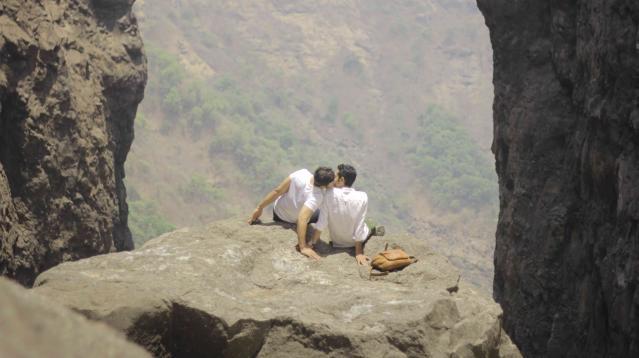 He is at the airport to meet his old friend Jai who is now a hot shot on Wall Street in NY and who has flown back to Mumbai for just 48 hours to close a big deal that he has been working on for some time. Before he has to attend that meeting, Sahil whisks his friend off to the lush Indian countryside for some fresh air and exercise and so that they can catch up with each other. Whilst Jai questions Sahil about the state of his volatile relationship with Alex, he oddly never even mentions his own home life in the US. They both however enjoy a closeness with each other which seems to hint that they may have had another type of relationship in the past, but as everything is unspoken and hinted at, we are never really quite sure.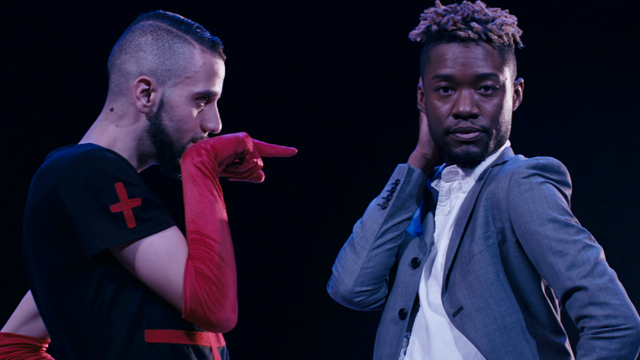


 Queerty: You’ve donated photos that will be auctioned at a benefit this weekend for The Trevor Project, where you’ll also be the guest of honor.
  Along with Billy Name, Brigid Polk, Jane Holzer and Viva, you’re among the last surviving Warhol superstars. To what do you attribute your longevity?
  How did you first come to the attention of Warhol and Paul Morrissey?
 There’s a popular John Waters quote in which he said you changed male sexuality in the movies forever. Was there any discussion while making Flesh and Trash that they were groundbreaking?
 You were one of the last people with
  I’m glad to know you’re finally working on a memoir. What’s your life like these days?
 As someone who’s emblematic of a more hedonistic time, what are your thoughts on the state of the country and the upcoming presidential election?


